

















Life doesn’t go as swimmingly as it should for everyone. There are many forms of trauma lurking around every corner, eagerly waiting to dropkick us when we’re not looking. It’s about time we talked about how we should protect people from re-experiencing their past trauma with trigger warnings (TWs). Trigger warnings are the Kevlar vests that help protect us when we psychologically need it most. They can’t protect us from everything, but they can help us survive the visual assault.
The Doubting Thomases of the World
Trigger and content warnings allow us to mentally prepare for a potentially distressing reaction from whatever our personal trauma may be. The funny thing about something as simple as a brief warning label at the start of a book, movie, or other form of entertainment is that there are naysayers out there claiming this generation is too coddled, believe it or not.
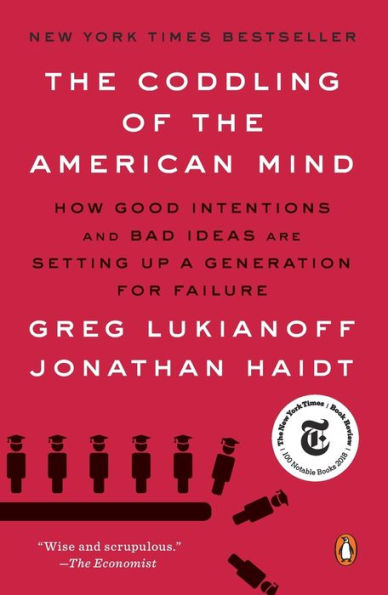
Actor and comedian John Cleese is a prime example, when he said, “The idea that you have to be protected from any kind of uncomfortable emotion is what I absolutely do not subscribe to.” Jonathan Haidt, author of The Coddling of the American Mind: How Good Intention and Bad Ideas Are Setting Up a Generation for Failure, wrote that “Avoiding triggers is a symptom of PTSD, not a treatment for it.” And while that may be true in some cases, it doesn’t account for the fact that the act of avoiding triggers is also a form of self-preservation.
These Debbie Downers often believe that the Millennial generation brought these namby-pamby warnings upon us, which means they’re not only wrong about the necessity of labels, but also about their origins.
Trigger warnings provide people with the necessary equipment to prepare themselves for potentially disturbing content afoot, allowing us to brace ourselves against the onslaught of upsetting imagery coming our way. For me, it’s car accidents.
I was in a pretty bad car accident when I was eight, and it completely altered my life’s trajectory. My plans were derailed in ways that 68 surgeries couldn’t fix, and the headaches are a constant reminder of who I once wished to be. I know that’s at the extremely mild end of the scale and that there can’t be warnings for everything. However, I think about how I feel when I see or read about a terrible car accident. At that moment, I’m back at the scene, and I have the slightest fraction of an inkling of what it must be like for people who’ve experienced sexual assault, other violent crimes, or even suicide to see it on screen or read about it in even greater detail.
The Reality of It All
Any time someone goes through a traumatic event, there’s roughly a 5% chance that they could develop PTSD. For women, it’s estimated that 8% of us will suffer from PTSD at some point in our lives, due to the inherent added dangers. People deserve a fighting chance to grit their teeth and nerve their way through it, if they so choose.
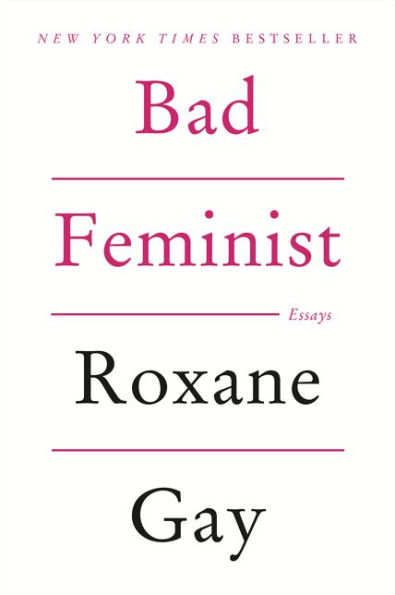
Roxane Gay wrote in Bad Feminist that “Trigger warnings aren’t meant for those of us who don’t believe in them, just like the Bible wasn’t written for atheists. Trigger warnings are designed for the people who need and believe in that safety. Those of us who do not believe should have little say in the matter. We can neither presume nor judge what others might feel the need to be protected from,” and that hit home.
The History of Trigger Warnings
Trigger warnings were the brainchild of some unknown women in the ‘90s. No one knows how, exactly, but TWs started as an online warning to protect women from viewing triggering message board posts about sexual assault. It afforded women the power to choose whether they were in a place where they could read about the trauma without setting off a full-blown psychological explosion or not.
In Bad Feminist, Ms. Gay states that trigger warnings give you the opportunity to “steel yourself and continue reading, or protect yourself and look away.”
Ms. Gay states, “This is the truth of my trouble with trigger warnings: there is nothing words on the screen can do that has not already been done. A visceral reaction to a trigger is nothing compared to the actual experience that created the trigger.”
That said, several studies and meta-analyses out there suggest trigger warnings are a hoax. They claim that not only do these warnings not affect the viewers, but that they can actually have a negative impact on them. They found that warning the participants induced worse anxiety than in those who had no trigger warning at all.
Here’s the Hitch
Now let’s talk about the problem with those studies: they were extremely limited in terms of the number of participants, some didn’t include people who’d experienced trauma, and the meta-analyses in some cases only included a few studies, making the results questionable at best.
I firmly believe that TWs offer people the choice to view the material or flip the page. Some survivors are capable of reading about their form of trauma as long as they can mentally prepare themselves. Others would rather bypass it altogether. Either way, they’ve decided what’s best for them and the place they’re at, and there’s something honorable about that.
How far is too far with trigger warnings?
The British Board of Film Classification placed a trigger warning on certain scenes in the movie Wicked. Thanksgiving was labeled on Facebook in certain “Happy Thanksgiving” posts. As silly as those are, the solid answer to that question is that we need to draw the line at TWs for LGBTQ+ content. Come on, people.
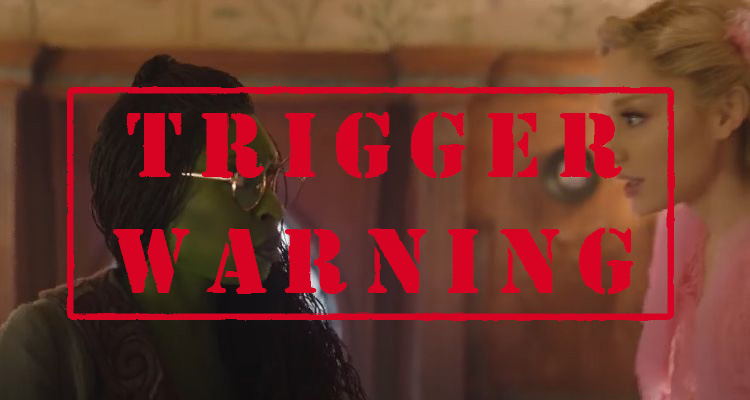
The queer community is rightfully vexed by the suggestion that their very existence deserves a warning label because heterosexual people might get their panties in a twist by the sight of same-sex romantic interaction. If we’re going to go that far, why not start posting TWs for the traditional male-female love or kissing scenes? Isn’t it only fair? Why does one orientation offend people but not the other? Now we’ve grown too sensitive.
In Bad Feminist, Ms. Gay wrote, “Somewhere along the line, we started misinterpreting the First Amendment and this idea of the freedom of speech the amendment grants us. We are free to speak as we choose without fear of prosecution or persecution, but we are not free to speak as we choose without consequence,” and I think that, in some instances, those consequences are warranted.
Why would there be trigger warnings on LGBTQ+?
People feel seen, heard, and even validated when they read about or see individuals like themselves. Why should that only extend to more traditional forms of intimacy? I turned to Quora and was left somewhere between hysterically laughing and incredibly pissed off at the typical stance on the topic.
The majority of the posts began with “I’m not homophobic, but…” I hate to tell you, but you are, in fact, at least a little homophobic if you have to add an addendum to that statement. There is no but. If you can’t tolerate same-sex couples briefly showing affection toward each other, it means you’re not okay with other people living their lives and creating their own happiness, and that in and of itself is not right. There was even one suggestion that someone should create a website that lists which movies do not feature same-sex interactions, creating a safe space. Is that not the craziest thing you’ve ever heard?
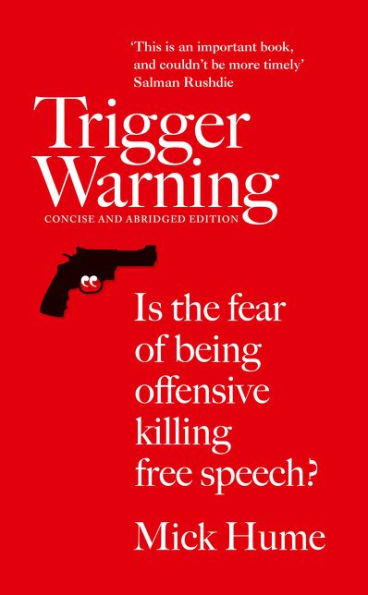
In Mick Hume’s book Trigger Warning: Is the Fear of Being Offensive Killing Free Speech?, Mr. Hume states, “To say that you believe in free speech ‘but’ is not simply to qualify your support, but to dissolve it altogether. Free speech is not something you can sort-of believe in on a scale of 1 to 10.” Of course, Mr. Hume also goes on to say that “There is no right to be offended,” which can be interpreted as rather wonky.
I’m not sure I completely agree with that. I think that, yes, being offended may be a step too far in the wrong direction, but being uncomfortable is perfectly acceptable. People can feel awkward with images they see because they differ from their values, but to be full-blown offended is, indeed, blowing it out of proportion. Much like survivors of violent crimes, the party in question has the ability and the right to skip past the so-called offensive material and go about their day unscathed.
This is just another case of irrational behavior in the U.S. … and the world. People have a long history of abhorrent behavior toward marginalized communities, and I think the LGBTQ+ community is just the latest trend to that end. However, what boggles my mind is that there have never been warning labels for any of the other aforementioned communities. What makes LGBTQ+ so different?
I say let bygones be bygones. Let’s forgo the sugar-coating. People must be able to withstand a minor amount of discomfort (if that’s what they feel) at the sight of another way of life, while still feeling secure in their own methodology. In this day and age, that should be a given. For shame.
For survivors, trigger warnings can be incredibly useful tools. These little blurbs empower people to take control of their lives, restoring their autonomy. Ignore the Gloomy Gus of the world. They have often never experienced real trauma, or they might also be from an older generation when they were taught to rub some dirt on it and get right back in the game, and suppressing that trauma is just about the unhealthiest thing you can do.
As for TWs and the LGBTQ+ community, that’s just an uproarious abomination. If the material offends you, don’t read or watch it. However, you choose to proceed, well, I think that would be a perfectly appropriate situation to say rub some dirt on it. After all is said and done, I promise, you’ll be fine with no lasting effects.
Are you interested in reading more about trigger warnings? Click here.
Do you want to read more? Take a look at our Bookshop.com shelf!
