

Trigger Warning: This article and the books within contain discussion of Homophobia, Sexual Assault, and Mental Health, which some readers may find upsetting. Please exercise personal care.
The LGBTQ+ experience is undoubtedly one filled with complex traumas, personal hardships, and societal struggles, leading to a media culture where queer characters are often killed off by the end of their respective stories. Although this trope seeks to highlight how the lives and deaths of queer people continue to be shaped (and even caused) by heteronormative traditions, cultural norms, and conservative law-making, it can become emotionally draining for queer audiences, as well as highly damaging to the representation and perceptions of queer people by the rest of society.
After all, if the only LGBTQ+ characters being featured in the mainstream media are those who are ostracised, living their lives in shame, dying from AIDS, or getting murdered, this leads to an extremely warped and potentially dangerous notion of a reality wherein freedom, love, and joy are wholly impossible and unimaginable things for LGBTQ+ people and communities to experience.
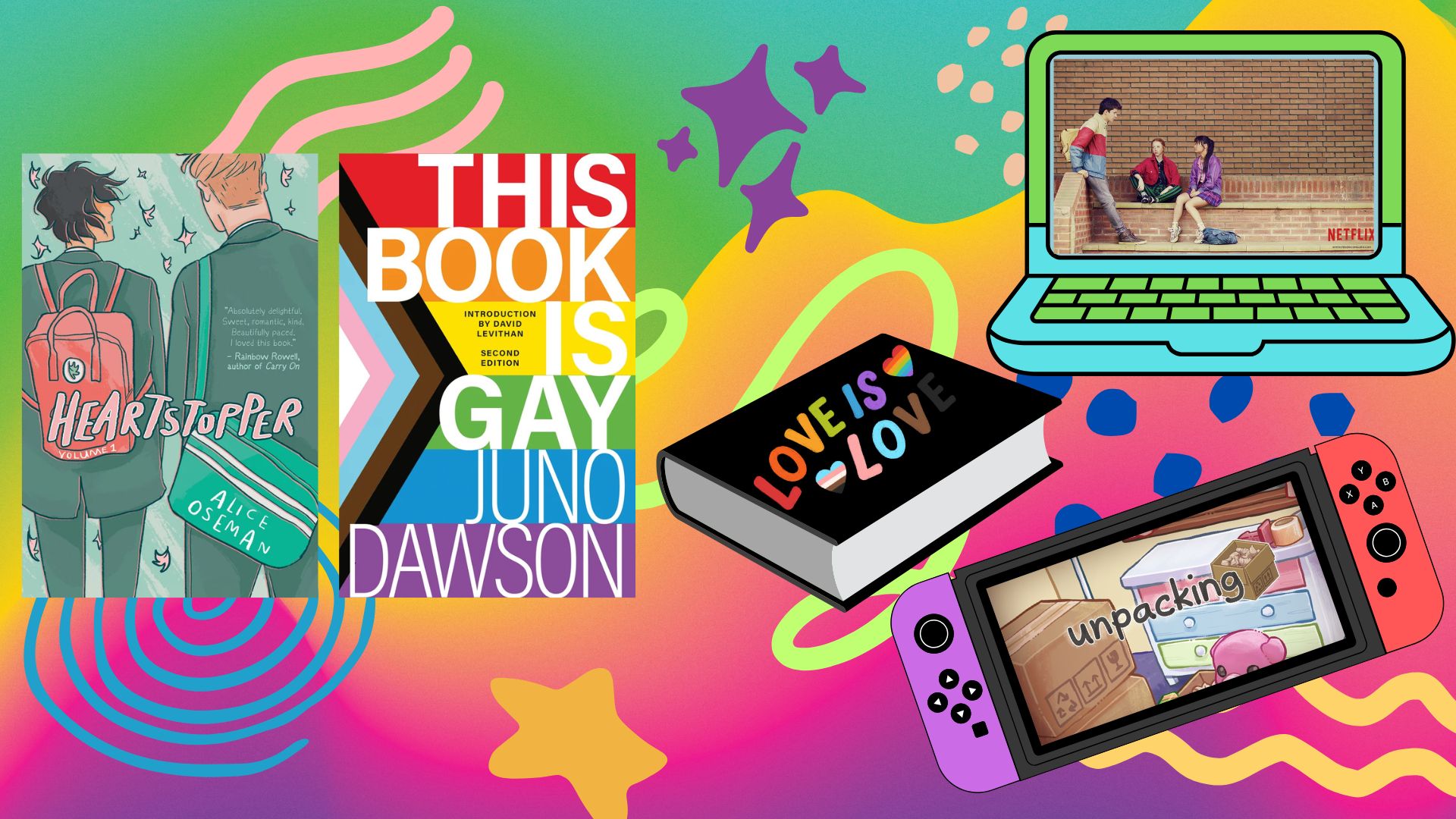
The iconic books, TV shows, movies, and games showcased in this article thus refuse to conform to this harmful convention; instead working to loudly and proudly present the happy, long lives queer people are simultaneously capable of experiencing, in spite of the obstacles they may face. Fill your bookshelves, screens, and gaming consoles with these uplifting, heartfelt queer stories, where the lovable LGBTQ+ characters they focalise are sure to get the happy endings they truly deserve.
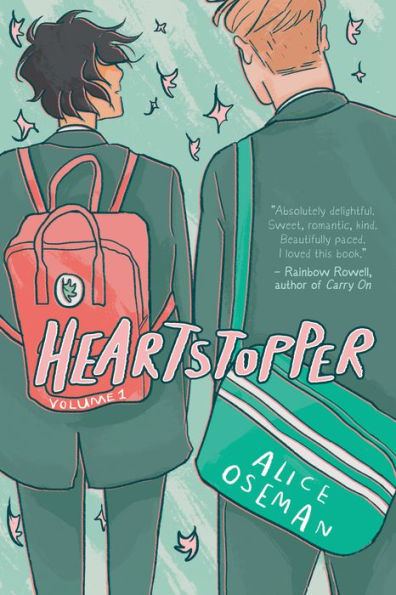
Heartstopper by Alice Oseman
Heartstopper is a widely well-known and much-loved coming-of-age graphic novel series by Alice Oseman, following the romance of British teenagers Nick Nelson and Charlie Spring. These two central characters attend an all-boys grammar school, where they explore their unexpected love and are made to confront challenges of identity and homophobia from their peers. The series’ key themes are first love, friendship, the awkwardness of coming out, and the struggle to embrace yourself for who you truly are.
The joy and challenges of self-discovery and eventual acceptance are highlighted in Charlie’s journey as an openly gay boy, and in Nick’s initial exploration of (and confusion about) his own bisexuality. The series tackles sensitive issues such as bullying and mental health problems, but is overall a relatable, heart-warming story that fondly examines the complexities of friendship, sexual orientation, gender identity, and love in a way that deeply resonates with its audience.
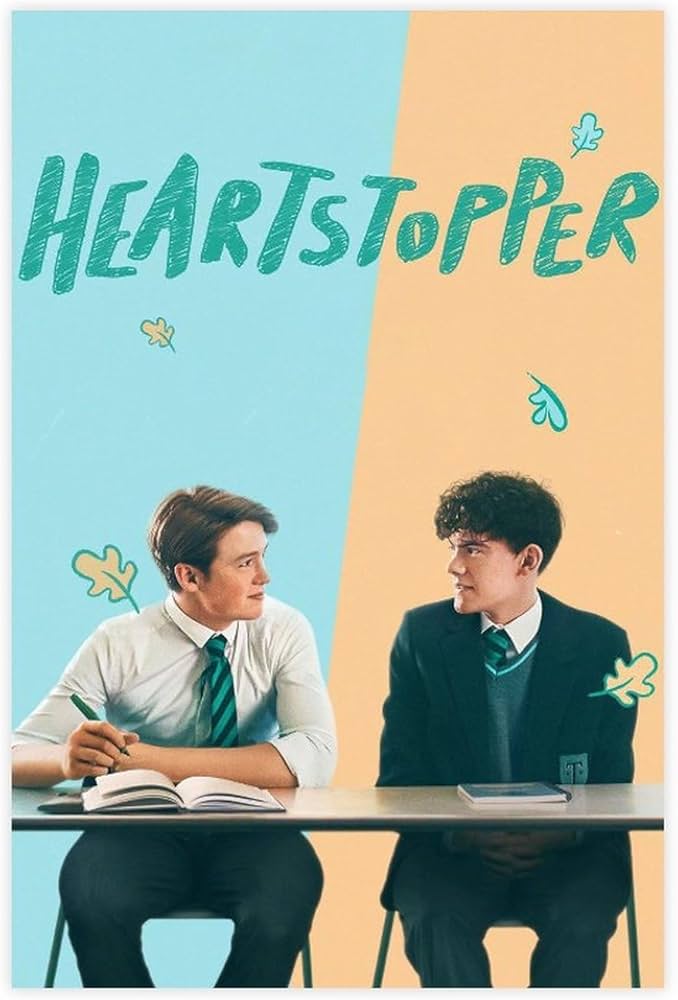
Netflix recently adapted it into a multi-award-winning show, which, true to the graphic novel’s original tone, tackles a host of important themes and issues with humour and empathy. This is the perfect read or watch for anyone on the lookout for positive and inclusive LGBTQ+ representation that remains light-hearted while also delving into the difficult stuff.
“I thought… I just really liked you as a friend… a best friend… because, like, I want to hang out with you all the time and I just love everything about you… but I kept wanting to… I don’t know… hug you and hold your hand and then yesterday, when you suggested it, I- I really wanted to kiss you.”
Alice Oseman, Heartstopper
Simon vs. the Homo Sapiens Agenda by Becky Albertalli
Featured on the National Book Award Longlist as one of the Best Young Adult Novels of 2015, Becky Albertalli’s Simon vs. the Homo Sapiens Agenda is a delightful coming-of-age and coming-out-story that focuses on the titular protagonist, Simon Spier. Simon is a closeted, gay, 16-year-old high-school student with a love for musical theatre, living with his family in the unassuming Atlanta suburbs. Unbeknownst to his friends and loved ones, Simon has adopted an alter-ego named ‘Jacques’, and has fallen in love with his fellow anonymous, closeted classmate, ‘Blue’, over email.
The two grow ever-closer as their romance blossoms, that is until class-clown blackmailer, Martin, discovers Simon’s secret and threatens to publicly out him if he doesn’t play wingman and help him get Simon’s friend, Abby, to go on a date with him. Faced with the threat that his sexuality may soon be exposed, Simon must find a way out of his comfort zone if he is to protect both ‘Blue’ and Abby, and prevent losing them both — the former of which is becoming more flirtatious and eager to meet in real life by the day.
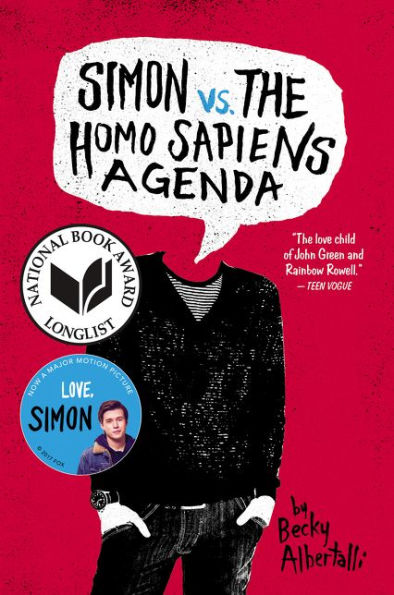
Simon vs. the Homo Sapiens Agenda was adapted into a popular YA movie called Love, Simon (2016), which was released by Twentieth Century Fox to immense commercial success and critical reception. Both the book and the film tell a heart-warming story about how true love can often be the key to self-acceptance, and how the support of our closest friends and loved ones offer us enriching and deeply-meaningful ways in which we can make sense of the world, as well as of ourselves.
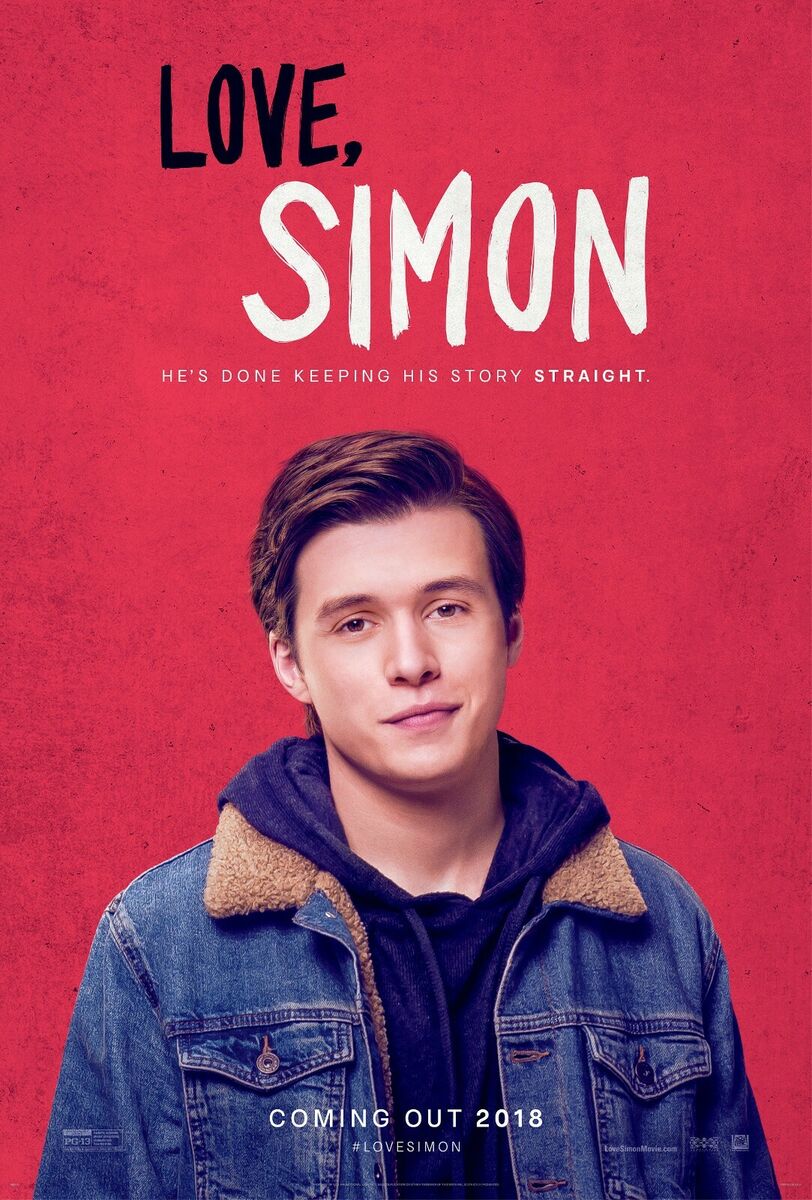
“But I’m tired of coming out. All I ever do is come out. I try not to change, but I keep changing, in all these tiny ways. I get a girlfriend. I have a beer. And every freaking time, I have to reintroduce myself to the universe all over again.”
Becky Albertalli, Simon vs. the Homo Sapiens Agenda
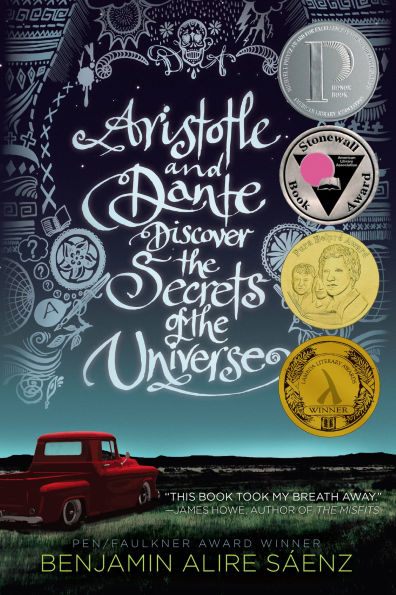
Aristotle and Dante Discover the Secrets of the Universe by Benjamin Alire Sàenz
Aristotle and Dante Discover the Secrets of the Universe by Benjamin Alire Sàenz follows the story of two Mexican-American teenagers, Aristotle ‘Ari’ Mendoza and Dante Quintana, who form an unlikely bond in 1980s El Paso, Texas. Aristotle is an introspective loner who initially clashes with outgoing, charismatic, intellectually brilliant Dante, but their shared experiences, as well as an accident that affects them both, forge an enduring friendship. Together, the two boys navigate complex family dynamics, societal pressures, and work to figure out the nature of their evolving feelings for one another.
Set during a period of significant cultural and historical transformation for Mexican-American communities, Ari and Dante come to understand the power of true love and self-acceptance, offering profound explorations into identity, sexuality, and the search for meaning in a conflicted and confusing world.
Testament to the novel’s enduring relevance and success, Aristotle and Dante Discover the Secrets of the Universe was adapted for the big screen by Blue Fox Entertainment in 2022, providing a new medium through which the novel’s celebration of friendship, love, self-discovery, and acceptance could be experienced by new audiences.
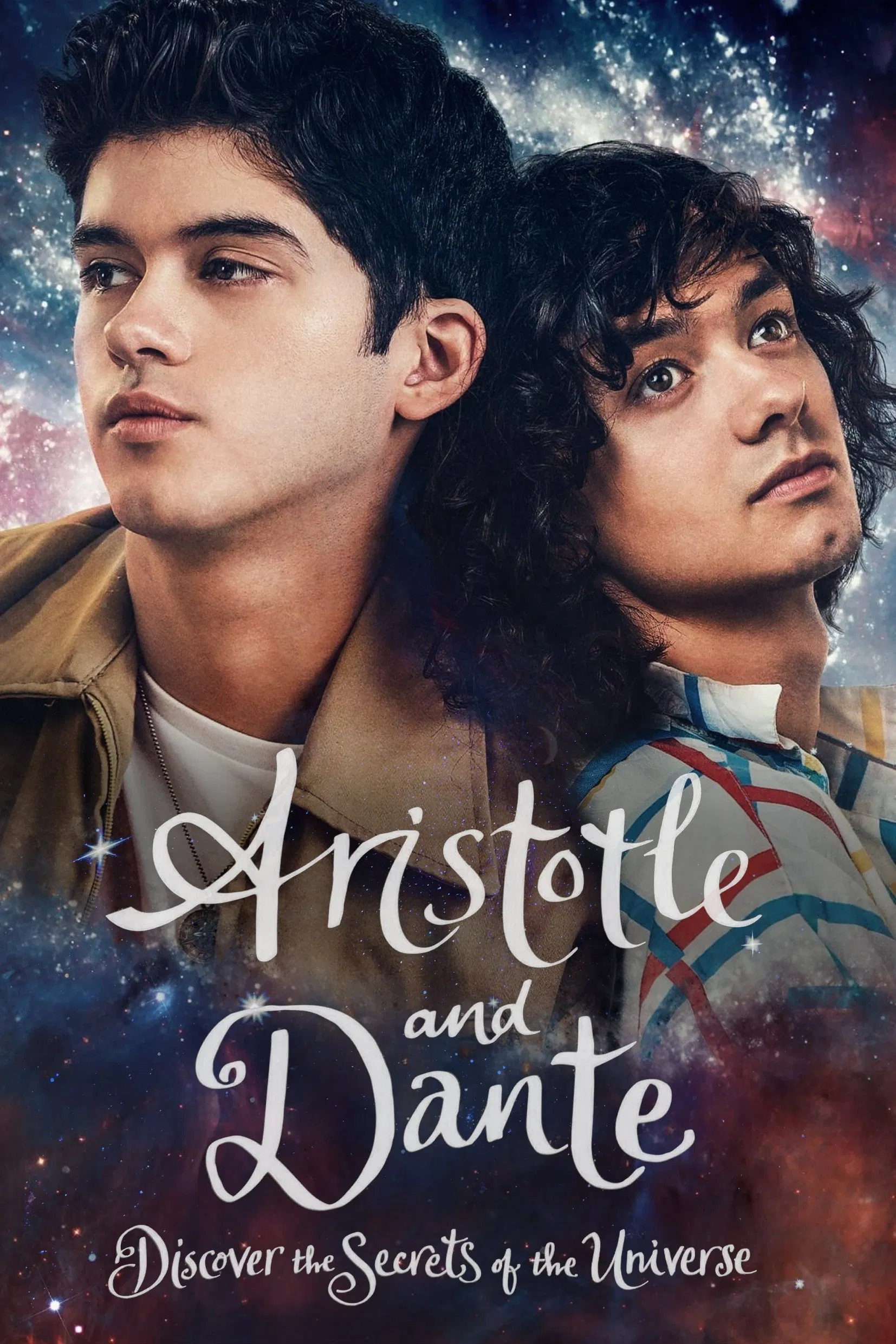
“I wanted to tell them that I’d never had a friend, not ever, not a real one. Until Dante. I wanted to tell them that I never knew that people like Dante existed in the world […] I wanted to tell them that he had changed my life and that I would never be the same, not ever.”
Benjamin Alire Sàenz, Aristotle and Dante Discover the Secrets of the Universe
This Book is Gay by Juno Dawson
This Book is Gay is a non-fiction book by Juno Dawson, illustrated by artist Spike Gerrell. It was first published in the UK in 2014 but has subsequently reached international acclaim as “a manual to all areas of life as an LGBT person”, and “a guidebook for young people discovering their sexual identity”. This Book is Gay has frequently faced censorship and been banned in the United States for its shameless portrayal of queer lives and love stories, as well as for its intention of educating people in an age where internet misinformation is rife.
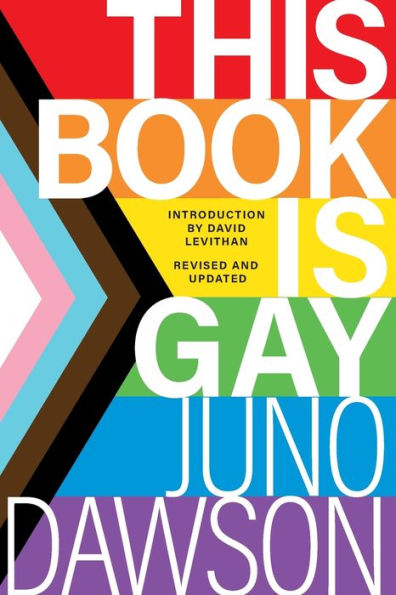
Dawson’s experiences working as a sexual education and wellness teacher greatly influenced her decision to write the book, with each of the book’s thirteen chapters focusing on a different aspect or concern of LGBTQ+ life. The book wonderfully merges sex-ed discussions, the debunk of harmful queer stereotypes, LGBTQ+ history, along with intimate testimonies from members of the community. Dawson here seeks to enlighten her readers on “the well-being […] and the nurturing side” of sexual relationships, stating that “was really important to [her], so that young queer people can picture a future for themselves as well-adjusted queer adults”.
But I’m A Cheerleader (dis. Lionsgate Films)
The lead character of the comedy-drama film But I’m A Cheerleader (1999), Megan, considers herself to be a typical American teenage girl. She is popular in school, excels in cheerleading, and even has an attractive, football-playing boyfriend (although she’s certainly never felt crazy-in-love with him). She’s therefore completely stunned to find out that her parents believe that she’s a lesbian and have decided to send her to True Directions, a boot camp designed to convert her sexuality.
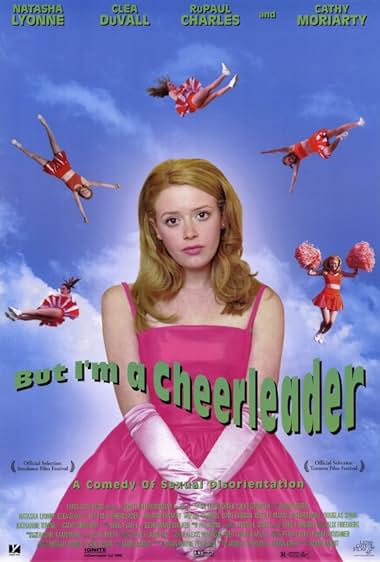
There, she meets the rebellious and unashamed teen lesbian Graham, whom Megan, in spite of her ongoing denial, bemusement, and confusion, begins to develop romantic feelings for. Lionsgate’s But I’m A Cheerleader‘s enduring legacy and iconic pop-cultural impact are testaments to its ongoing appeal to queer audiences. It is often considered a WLW cult classic and highly praised for its positive messaging, humour, and heart.
Bottoms (dis. Metro-Goldwyn-Mayer)
Metro-Goldwyn-Mayer’s satire film Bottoms (2023) tells the story of unpopular lesbian best friends PJ and Josie, who unwittingly start a high school fight club in a desperate attempt to meet girls and lose their virginities. However, PJ and Josie soon find themselves way over their heads when the most popular students begin beating one another up in the name of self-defence.
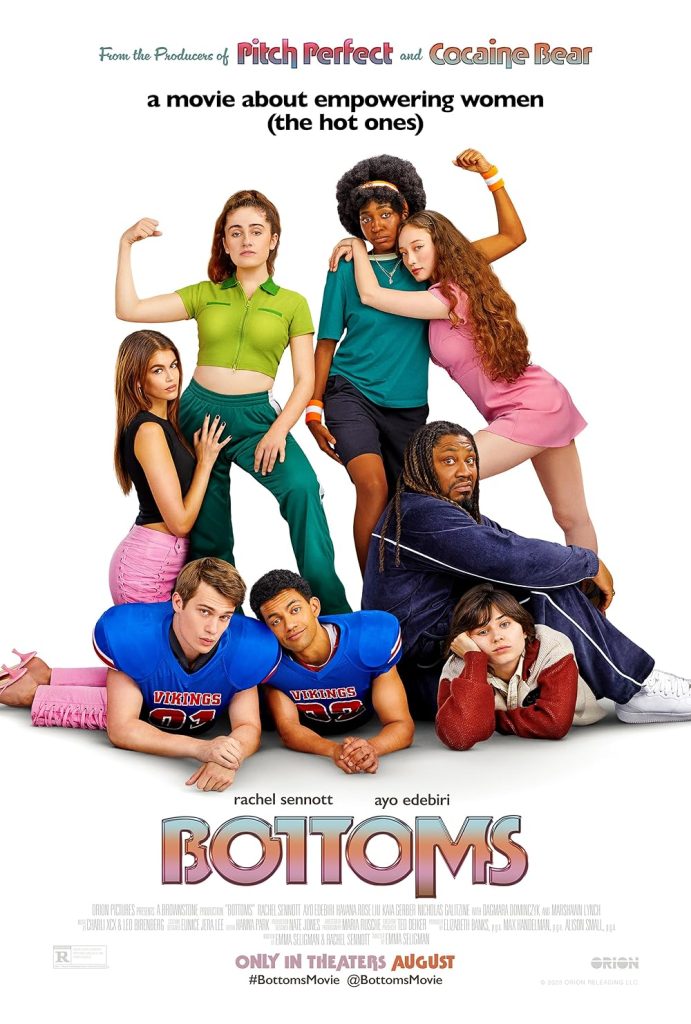
Offering up a darkly unique blend of humour and relatability, Bottoms has strongly resonated with queer audiences and has been praised for its cast of quirky characters, strong female leads, and its exploration of lesbian identity and self-acceptance. The film’s ‘internet brain’ humor and ironic, self-deprecating style make for a greatly entertaining watch, whilst its nuanced insight into themes of body image, sexuality, and high school-specific pressures promises to engage spectators and make them think.
Sex Education (dis. Netflix)
Netflix original series Sex Education (2019) is a British coming-of-age comedy-drama following the intertwined lives of sixth-form students and the challenges they face regarding identity, sexual intercourse, and romantic relationships. The show confronts themes of consent, mental health, and the importance of valuing and respecting varying perspectives from your own. Using the shockingly poor sex-ed that young people receive in schools as the premise for the show, central protagonist Otis Milbourne (virginal teenage son of a sex-therapist) embarks on a thought-provoking journey of self-discovery alongside a quirky and lovable cast of queer characters.
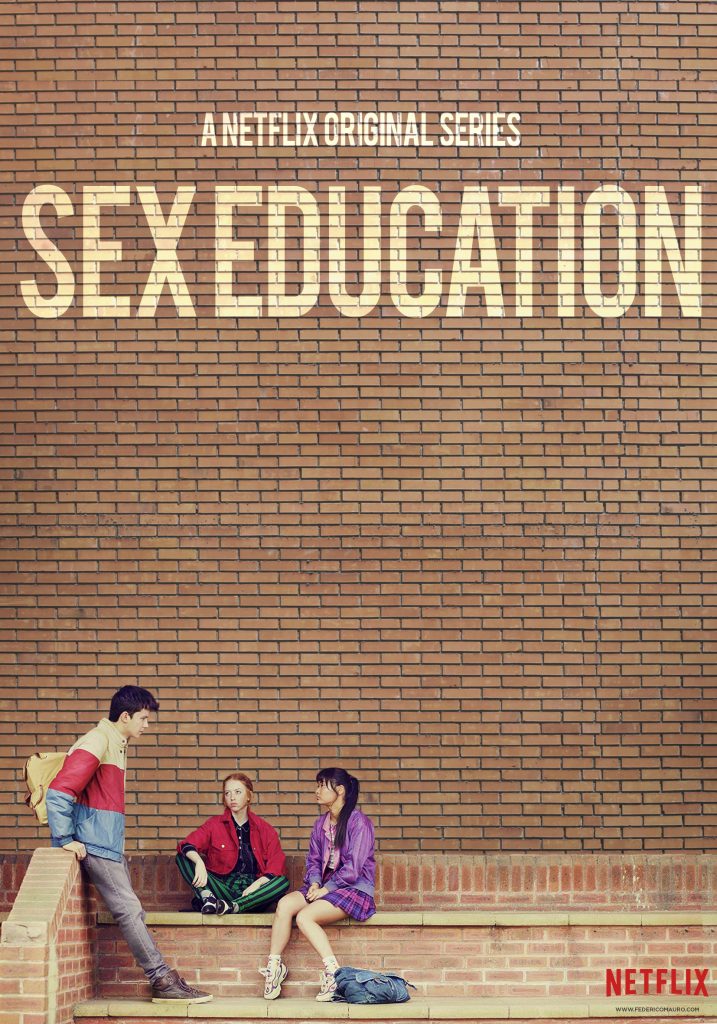
Helping his troubled peers work through their anxieties around sex and intimacy, Otis discovers the true complexity of human relationships — both the romantic and platonic — and uses this to explore his own identity in relation to others. Praised for its diverse and uplifting portrayal of queer relationships, this is a show that invites audiences of all ages and backgrounds to embrace their sexuality, and to feel affirmed that no one is ever unworthy of true love and connection.
Night in the Woods (dev. Infinite Fall & Secret Lab)
Night in the Woods (2017) is a single-player adventure video game developed by Infinite Fall and Secret Lab. The story takes place in a world of zoomorphic humans, with users playing a young feline named Mae. At the game’s beginning, she drops out of college to return to her hometown. There, she discovers some unexpected changes that, alongside her gothic crocodile best friend, Bea, she must work to get to the bottom of.
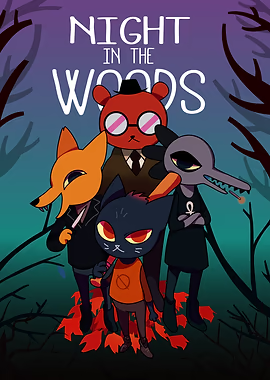
Although the game does not strictly centre human characters, Night in the Woods has been highly celebrated for its representation and inclusion of LGBTQ+ characters, all of whom function as Mae’s trusted friends and conspirators. Whilst most mainstream video games are satisfied with one or two LGBTQ+ characters, Mae’s supportive group of lovable outcasts are almost entirely queer — reminiscent of how marginalised people often forge communities on the fringes of small, conservative towns. This is a must-play for any LGBTQ+ gamers!
A Normal Lost Phone (dev. Accidental Queens)
A Normal Lost Phone (2017) is a puzzle video game developed by Accidental Queens in which players investigate a stranger’s misplaced phone. The game is played entirely as a phone simulation, with users voyeuristically searching messages, apps, and other clues in an attempt to discover the owner’s real identity.

As the story-game progresses, players expose several major events and secrets and learn that the phone owner—a straight, male-presenting person called Sam—has far more to them than initially meets the eye. The game is an interactive and engaging exploration of gender and sexual identities and will leave players instilled with renewed levels of empathy and understanding.
Unpacking (dev. Witch Beam)
Unpacking (2021) is a wonderfully cosy indie game in which players experience the story of a woman’s journey through various life stages as they unpack her belongings in each new home she moves into. Beginning in her childhood bedroom, with each year that passes, there are more and more things to put away and organise — and more and more items to leave behind too.
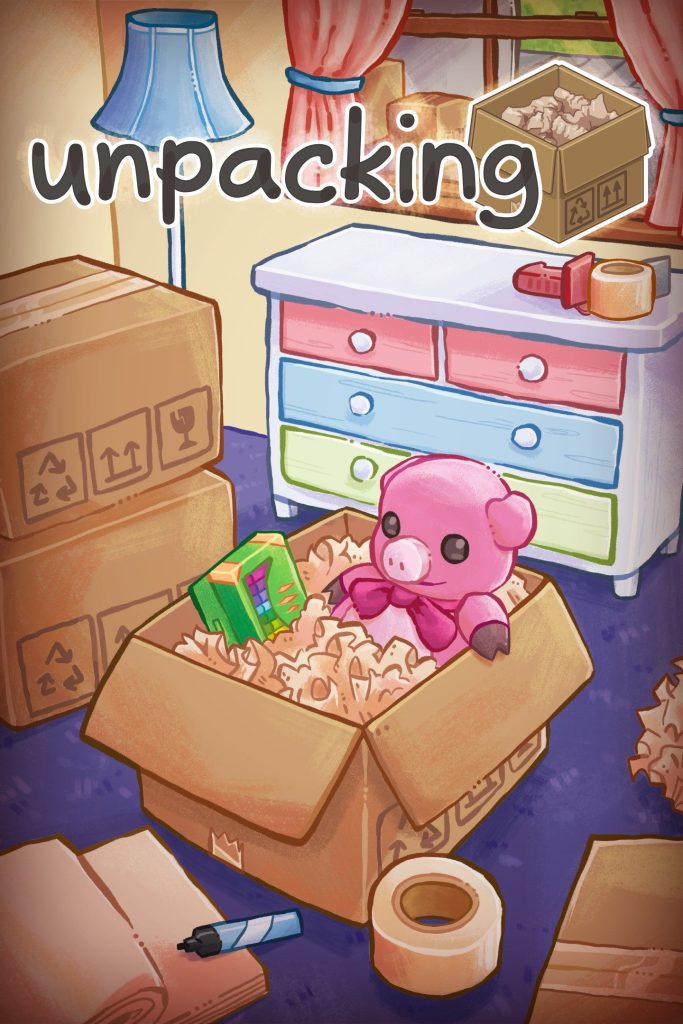
As players progress through eight unique levels, spanning 21 years of the unseen main character’s life, they will begin to recognise her values, interests, growth, and self-acceptance over time, particularly regarding her evolving sexual preferences and identity. The subtle but brilliant storytelling will leave you with a poignant tale about the importance of memory, and a lasting message about how love and the relationships we keep and discard have the power to affect our lives (and nostalgically haunt our homes) forever.
These amazing book and media recommendations offer LGBTQ+ audiences a vital opportunity to experience queer happiness, life-long fulfilment, and love-stories that are poignantly eternal via an array of incredible artistic mediums. Through their unflinchingly optimistic portrayal of queer lives and experiences, each of these books, movies, games, and TV shows work to highlight that joy and liberation is possible for LGBTQ+ people, in spite of the barriers and prejudices that continue (forever failingly) to try and make it untrue. Here, queer characters not only survive, but truly flourish — just as they do, and always will, in real life as well.
To feel safe at all times is a basic human right; let’s work to make this world physically and mentally safe for everyone. Help is available with trained crisis counsellors at the 988 Suicide and Crisis Lifeline (confidential, free, available 24/7/365):
→ Call or text 988
→ Chat at 988lifeline.org
Love this? Read our article: 6 Upcoming LGBTQ+ Adaptations We’re Thrilled To See.
Check out our Bookshop for some more great LGBTQ+ Literary Recommendations.