






Content Warning: This article contains spoilers for certain books. Read at your own risk.
Is there anything juicier than the classic love triangle? Someone caught between two different love interests, both of whom are attractive, charming, and desperate for the MC to choose them — we’ve all heard this story before. The love triangle is popular because it’s a tried-and-true method for incorporating many romance tropes: jealousy, miscommunication, unrequited love, and fighting for true love, just to name a few.
While love triangles and the tropes above make for great drama and entertaining hijinks, they can get tiring. And not to mention, a bit toxic. Haven’t you ever read an MC trying to decide between two love interests and just thought, damn, everyone here deserves better?
What if there was a way to do away with the love triangle but also keep the drama of it? What if we could stop comparing characters in a way that also gave us more queer representation? Join me as I take you on a magical (and informative) journey through the wonders of polyamory. Along the way, I’ll explain why I think polyamory is the thing romances have been looking for. By the time we’re done, you might even feel the same way.
What is Polyamory?
Most romances (and most books in general) focus on one relationship model: monogamous. Monogamy is when two people engage in an exclusive relationship where they only date each other. This is probably the dynamic you’re most familiar with since it’s the one that all media covers in one form or another.
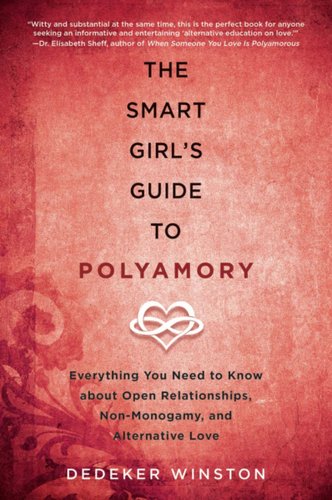
But other types of relationships are just as healthy as monogamy (if done correctly). These other relationships fall under the umbrella term nonmonogamy, which refers to relationships between multiple partners. Because the term includes most dynamics that are not monogamy, nonmonogamy is a broad term with several different and valid models. We don’t have the time to get into all of them, but if you want to learn more, try checking out The Smart Girl’s Guide to Polyamory: Everything You Need to Know about Open Relationships, Non-Monogamy, and Alternative Love by Dedeker Winston.
Even if nonmonogamy is a foreign term to you, you might have heard of polyamory, or someone who identifies as polyamorous. So, what is polyamory exactly?
Polyamory is when someone has multiple romantic and/or sexual relationships with all the people involved consenting. Polyamory looks different depending on the people involved, so it could be someone having multiple steady partners or someone who has a steady partner and also dates other people. The key principle to being poly is that everyone involved is aware of what’s happening and consents to the dynamics at play.
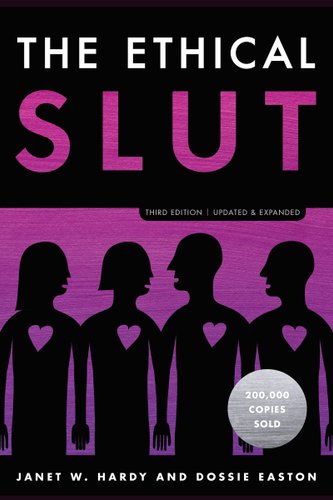
If you’re curious about a more in-depth explanation of polyamory and identifying as polyamorous, I recommend The Ethical Slut, Third Edition: A Practical Guide to Polyamory, Open Relationships, and Other Freedoms in Sex and Love by Janet W. Hardy and Dossie Easton. It’s a good starting point for entering the discourse on the poly identity and has a recently updated third edition so you know you’re getting relevant information.
So, it’s LGBTQ+?
Well, yes and no. There are some examples of straight nonmonogamous relationships — Reverse Harem romances, a subset of erotic romances, often include a woman having boyfriends who are straight. But most polyamorous relationships, specifically those where all members of the relationship are connected, are usually queer in some shape or form.
The beautiful thing about the increasing number of queer voices in literature is that many queer identities are finally making it to mainstream literature. Like Iron Widow by Xiran Jay Zhao; the story sets up for a typical love triangle but reveals the beginnings of a polyamorous relationship when the main character, Zetian’s, love interests also develop feelings for each other.
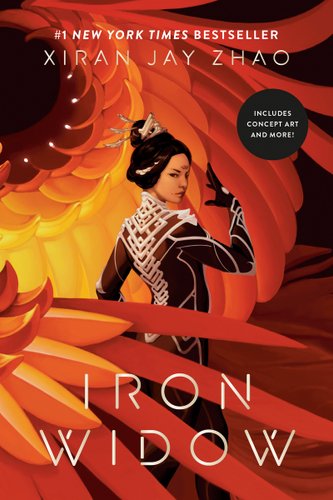
Poly relationships are rare across all genres, but in a YA fantasy that’s published by a Big Five publishing house? Virtually unheard of. The fact that such a popular and successful book featured not only queer rep but poly queer rep is the main reason why I wanted to read the book in the first place.
At the beginning, Iron Widow sets you up to believe it’s going to follow the same love triangle model several YA books before it follows — Zeitan has a boy from home she loves, Gao Yizhi, but when she joins the concubine-pilot program, she leaves him behind to get revenge for her late sister. In this new world of pilots, Zetian gets paired up with Li Shimin, a dangerous criminal and one of the most dominant pilots in the program.
We’ve seen this several times before — in The Hunger Games, The Mortal Instruments series, the Shadow and Bone trilogy — the main character gets caught between a love interest from her familiar, old life, and a love interest from her strange, new life. It’s how many stories show a main character’s struggle to reconcile different sides of themself, choosing who they want to be.
Iron Widow subverts this by doing one important thing: not setting up Gao Yizhi and Li Shimin as competitors. They mean different things to Zeitan, even as she grows to love them in the same way. It’s unfair to pit them against each other because their dynamics with Zeitan are different and incomparable.
When the story doesn’t have to worry about pitting the love interests against each other, there’s time for more character and plot development. That’s where the polyamorous relationship comes in. Since Gao Yizhi and Li Shimin aren’t set up as each other’s antagonists by the plot, the author explores the other possibilities for their dynamic to take shape. Initially, Gao Yizhi infiltrates the pilot program to see Zeitan again, but he grows closer to Li Shimin and develops feelings for him just like he does for Zeitan.
That’s the cool thing about polyamory — when done right, you can see several love stories happen at once. Polyamory isn’t just about eliminating jealousy or having it all, it’s about acknowledging that love and intimacy can manifest in a million different ways. Instead of using monogamy for drama’s sake, maybe it’s time more books take a page from Iron Widow and realize that other solutions make more sense for the story unfolding.
Do We Need Polyamorous Romances?
All this is not to say monogamous relationships can’t be healthy, or that all romances need to be polyamorous. But many love triangles exist because of one crucial fact: a heart can be big enough to love many people at once. By embracing this instead of making it a competition, we could open the doors to a world of new possibilities.
Like any relationship, there are things to be learned from polyamory done right. Open and honest communication, long-lasting devotion, earnest effort to please and nourish–all these and more are active components of healthy polyamory relationships. Reading more stories that delve into these topics gives us more examples of how consent and negotiation are necessary parts of having a partner, and we can never have enough stories about those.
The Future Is Poly
Like all LGBTQ+ identities, polyamory is gaining more ground in publishing. While marginalized identities have always had space in the indie publishing sphere, they are slowly but surely getting representation in traditional publishing as well. Polyamorous characters and romances have started to appear in the queer categories of genres, like S.T. Gibson’s adult fantasy Evocation and the YA fantasy Infinity Alchemist by Kacen Callender.
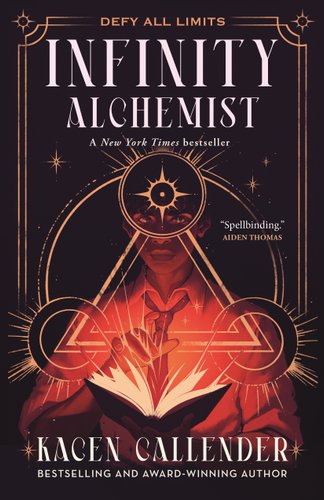
Why is polyamory gaining traction now? There could be a few reasons: One, all LGBT identities are gaining ground in publishing due to marginalized authors breaking into the industry and the fact that readers are vocally requesting LGBT-related stories. Two, independent publishing is easier to do than ever, making it easier for authors to write about what they want without jumping through all the traditional publishing hoops. And three, the most important reason of all, we’re becoming a more diverse and accepting society.
What do you think? Is polyamory the way of the future? Let us know on Facebook, Instagram, or X!
Looking for more bookish opinions? Try this article!
Find these queer reads and more on Bookstr’s Bookshop!