


















Walt Whitman is an accomplished poet whose work is still admired to this day. His most celebrated poetry collection, Leaves of Grass, is the one most often referenced in pop culture. Though it is considered a central part of the American canon, Leaves of Grass, at its core, contains universal themes of the natural world, life, and the body. Within film and TV, this collection is often referenced in association with death, with characters using the text as a metaphor to either look back on a life well-lived or mourn one never experienced.
Join us as we survey a selection of shows that reference Leaves of Grass and discuss the impact these poems have on screen.
Trigger Warning: This article contains references to suicide. Please exercise personal care while reading.
Content Warning: This article contains spoilers for the movies and TV series Dead Poets Society, With Honors, The Notebook, Gilmore Girls, and Anne With an E.
Dead Poets Society
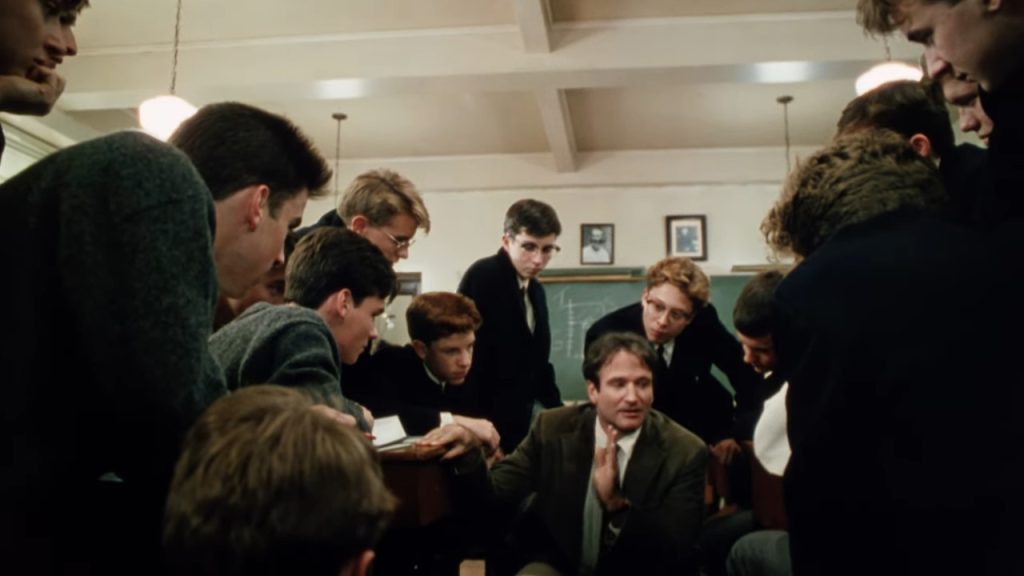
Oh me! Oh life! of the questions of these recurring,
Of the endless trains of the faithless, of cities fill’d with the foolish…
— Walt Whitman, O Me! O Life!
In Dead Poets Society, “Uncle Walt” is almost a figurehead in Professor John Keating’s classroom. An image of him hangs on the wall, and Keating quotes many of his poems to his students, parsing them for the hidden lessons the young men should learn. The first of these poems, O Me! O Life!, is used in one of the most famous scenes from the film. Keating delivers the poem passionately, hitting especially on the closing line, “the powerful play goes on and you may contribute a verse.” He goes on to remind the men of the value of the humanities, encouraging them to embrace all that life has to offer beyond the limited paths presented to them by their parents. The romantic Neil Perry is especially moved by Keating’s words, using them as the impetus to reignite the titular Dead Poets Society and audition for a local play.
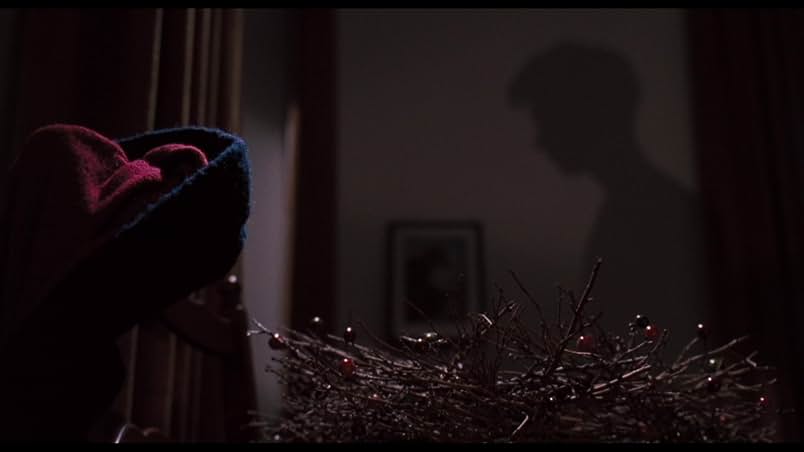
Here Captain! dear father!
This arm beneath your head!
It is some dream that on the deck,
You’ve fallen cold and dead.
— Walt Whitman, O Captain! My Captain!
The other poem from Leaves of Grass that the movie references is O Captain! My Captain!, a piece originally written about President Abraham Lincoln’s untimely death. When Neil Perry dies by suicide, a shockwave is sent through the student body, and his roommate, Todd Anderson, is especially affected. Much like the lines in the poem, Neil’s death feels like a horrible dream to Todd, and he is sickened when the administration manipulates the students into blaming Professor Keating. On Keating’s last day, Todd leads the students in a standing tribute to the teacher, saying “O Captain! My Captain!” to show that Keating’s impact, as well as Whitman’s poetry, will stay with them for the rest of their lives.
With Honors
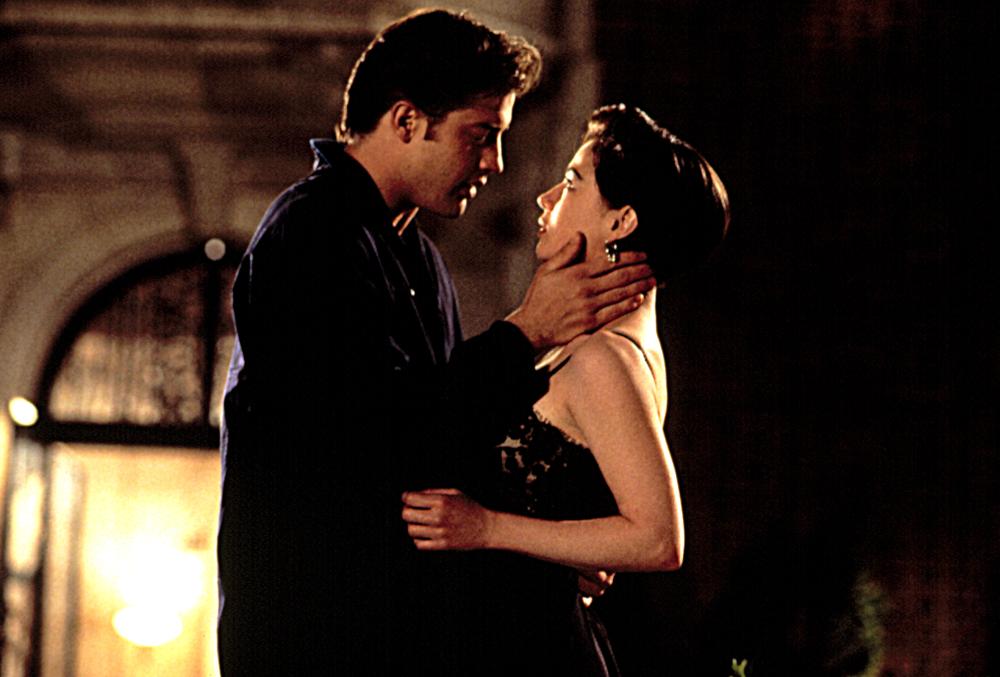
To drive free! to love free! to dash reckless and dangerous!
To court destruction with taunts, with invitations!
— Walt Whitman, One Hour to Madness and Joy
Similar to Dead Poets Society, the 1994 movie With Honors shows an approach to Whitman’s works that embraces both life and death. When senior Harvard student Monty loses his thesis manuscript down a grate that leads into the Widener Library, he finds a homeless man named Simon living there, burning it page by page. Simon agrees to return the manuscript a piece at a time in exchange for food and shelter. As the two spend more time together, Simon begins to impart wisdom on the young Monty, often through Whitman’s poetry. An early case is when he quotes One Hour to Madness and Joy to encourage Monty to confess his feelings to his friend Courtney, reminding him that life is brief and we shouldn’t hesitate when it comes to love.
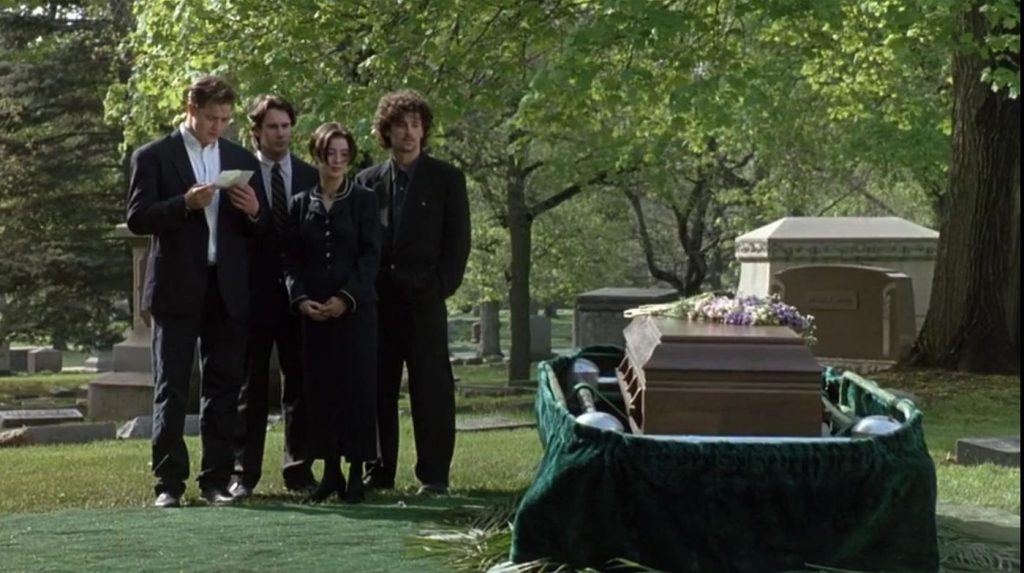
I depart as air, I shake my white locks at the runaway sun,
I effuse my flesh in eddies, and drift it in lacy jags.
I bequeath myself to the dirt to grow from the grass I love,
If you want me again look for me under your boot-soles.
— Walt Whitman, Song of Myself
Before Monty and his friends get to know Simon, he is jokingly referred to as “Walt Whitman’s ghost” by the student body. This serves almost as a foreshadowing of Simon’s actual passing. While lying on his deathbed, Monty and his friends take turns reading from Leaves of Grass, namely the poem Song of Myself, completing the “Whitman’s ghost” illusion. After Simon’s death, Monty returns his copy of Leaves of Grass to the library, as if returning both Whitman and Simon to their old haunt.
The Notebook
The real poems, (what we call poems being merely pictures,)
The poems of the privacy of the night, and of men like me,
This poem drooping shy and unseen that I always carry, and that all men carry…
— Walt Whitman, Spontaneous Me
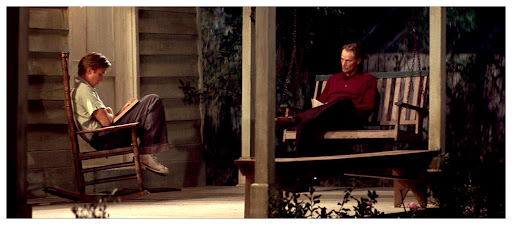
Whitman is first referenced in The Notebook during the early days of Noah and Allie’s relationship. Allie comes to his house one night and hears Noah reading Spontaneous Me from Leaves of Grass. His father tells her that he asked Noah to read Whitman as a child to help him overcome his stutter. Noah is embarrassed, but Allie adores the interaction, and it sets up a main theme in the story of choosing which life to lead. If Allie had succumbed to the trite existence of her parents, her life would’ve never been as rich as the one she eventually leads with Noah.
The body, sluggish, aged, cold—the embers left from earlier fires,
The light in the eye grown dim, shall duly flame again…
— Walt Whitman, Continuities
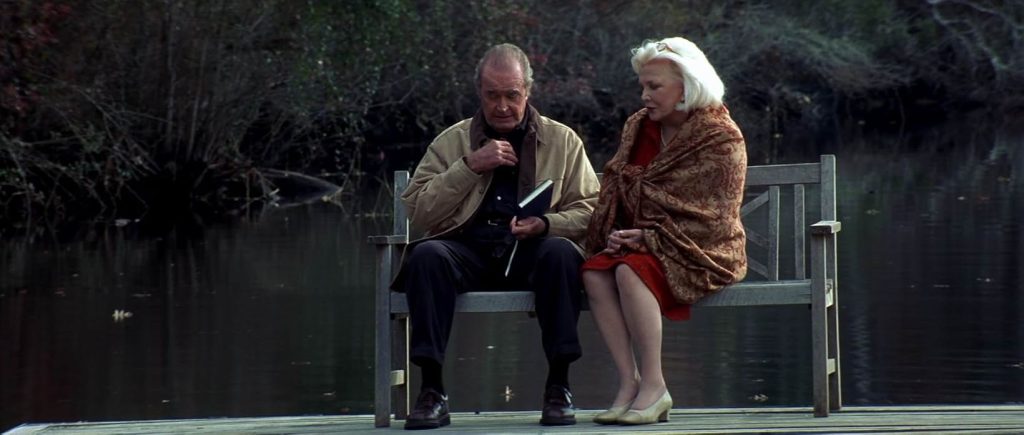
Later, when an aged Noah is trying to reach Allie through her dementia, he quotes Whitman’s poem, Continuities. Symbolically, the poem discusses the idea that nothing is truly lost. Upon hearing Whitman, Allie is struck by a burst of recognition that eventually brings her back to Noah for one last night. Allie wrote their love story down for Noah, promising him that it would “always bring her back,” and it seems that, just like Continuities also promised, she was right.
Gilmore Girls
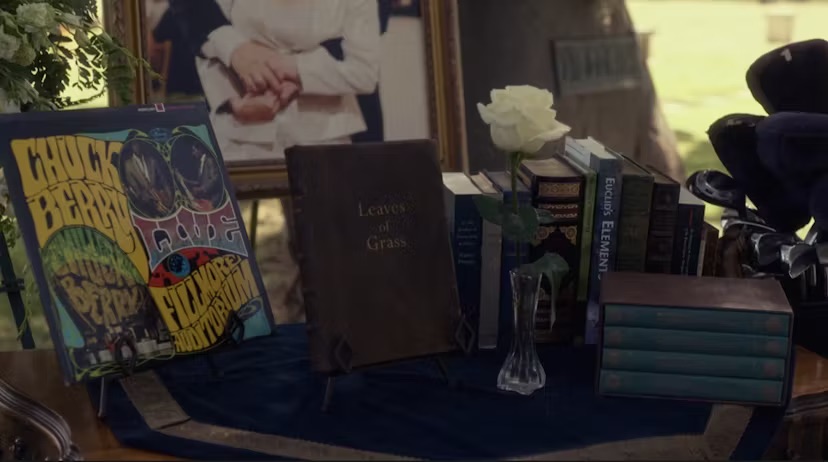
While no particular poem from Leaves of Grass is quoted in Gilmore Girls, it still comes up in relation to death. In the fifth season, Richard gifts Rory a leatherbound Greek edition of the collection, and the two gush over their shared love of literature. Later, in the revival series, Gilmore Girls: A Year in the Life, the same leatherbound book is displayed at Richard’s funeral. It’s a fitting addition to his display, not just because of its connection to his granddaughter, but also because the poetry within it discusses both life and death.
Anne With an E
Afoot and light-hearted I take to the open road,
Healthy, free, the world before me,
The long brown path before me leading wherever I choose.
— Walt Whitman, Song of the Open Road
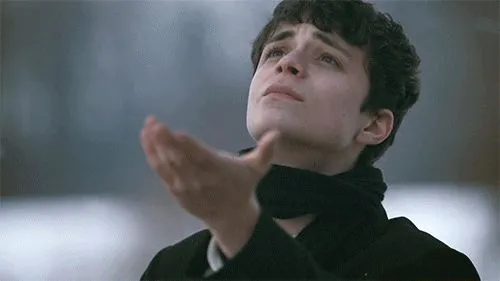
In Anne With an E, Gilbert has an adventurous spirit impressed upon him by his father. In his father’s final days, Gilbert reads Leaves of Grass to him, especially Song of the Open Road. Before his father passes, he asks Gilbert to promise him to take full advantage of life and everything it has to offer. Even though John Blythe’s life was cut short, it was enriched by the experiences he chose to take and the places he traveled to. Following the call of his father and Whitman, Gilbert dreams big, first getting work on a steamship to travel, and later, going off to the University of Toronto to become a doctor.
With such a vast catalogue of poetry, it’s no wonder that Walt Whitman’s many poems have made their way onto the screen. With poignant connections to both life and death, Leaves of Grass is one collection that perfectly pairs with every phase of life.
For another look at Walt Whitman’s influence on pop culture, click here.
Find Leaves of Grass and more on our Poetry bookshelf on Bookshop.
