

















Content Warning: Mentions of institutional and physical violence committed against marginalized groups such as Black, Indigenous, and disabled individuals. While these mentions are brief, please exercise personal care when reading and reflecting on these histories.
What is the Read Across America movement? The National Education Association (NEA) founded the movement and National Read Across America Day on March 2, 1998 (intentionally coinciding with Dr. Seuss’ birthday). As per their mission statement, the NEA “focuses on motivating children and teens to read through events, partnerships, and reading resources that are about everyone, for everyone” because readers “who feel included, recognized, and a part of the world are engaged readers”. The NEA’s actions were a necessary and urgent preventative measure to curtail growing illiteracy in the United States.
The 1992 National Adult Literacy Survey found that “21-23% of U.S adults based on a sample size of 26,000 in 12 states struggled with basic reading comprehension”. The NEA’s efforts and the Read Across America movement are needed now more than ever, as U.S literacy rates continue to drop, with the 2022 National Assessment of Educational Progress showing that “the average reading score for fourth graders is lower than it has been in over 20 years.”
When Read Across America is advocating for engaged readers, what they are advocating for is engaged and empowered participants of our country and society. At its core, Read Across America is a social advocacy movement that speaks to multiple layers of societal oppression in America in a way accessible to our youngest and/or most vulnerable populations. To understand how and why that is, we have to understand the history and role of literacy in our country, particularly along the lines of poverty, race, and disability.
Poverty
According to the National Center for Homeless Education, nearly “1.2 million children were either literally homeless (living in a shelter, or in unsheltered locations such as a car or tent) or doubled up (sharing housing with friends or family beyond a unit’s designated capacity)”. Not only is that more than the total number of children in 28 states, but it also demonstrates tangibly the destructive cyclical nature of poverty within the United States. 75% of homeless children often perform below the reading level for their grade and often find themselves unable to fully integrate themselves into the classroom, falling behind even when given instructional support (if given any).
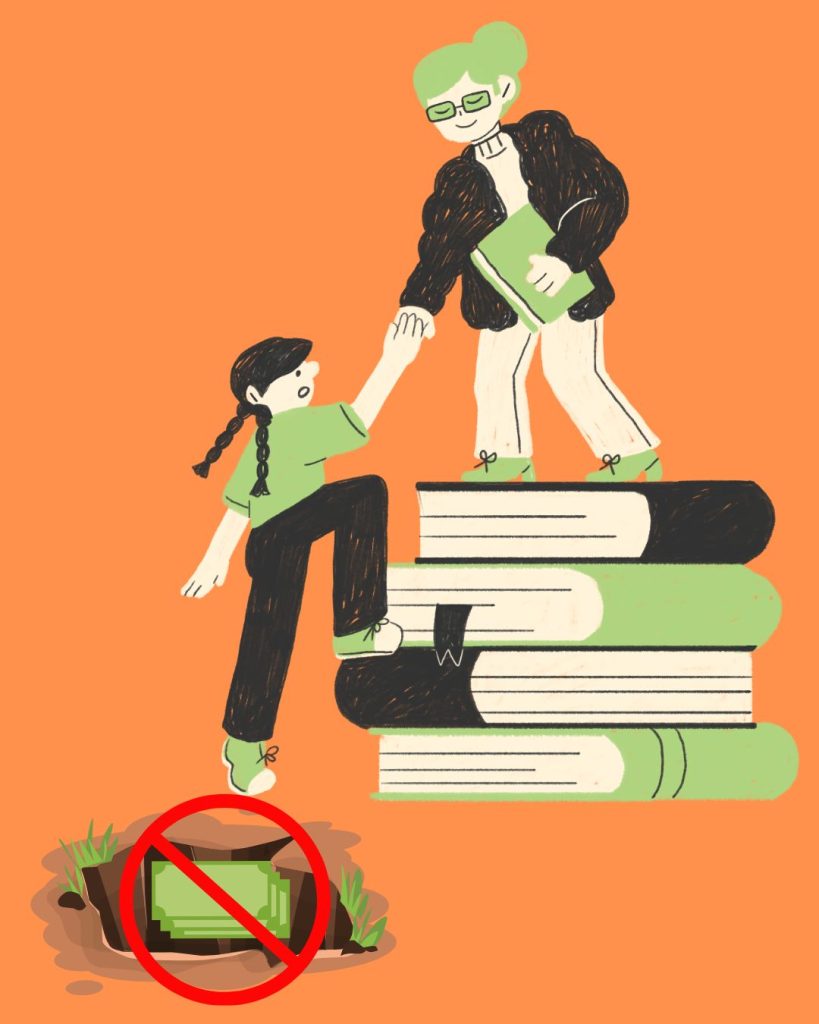
In turn, they are far more likely to drop out of high school if they are unable to catch up by third grade. Consequently, employment and stable housing become a struggle for these individuals, perpetuating their homelessness and rendering them further unable to pursue literacy. A lack of literacy is directly tied to poverty and its continuation. On the other hand, a study in 2014 found that “the presence of a school library of at least 500 books was a strong positive predictor, nearly as strong in the positive direction as the effect of poverty was in the negative direction”. To put it simply, the library, to a certain extent, was able to balance the literacy-draining effects of poverty and reset students for access. In short, books are critical to positively changing situations of poverty, though other structural solutions are of course needed.
Race
Of course, race and poverty are inextricably tied together. As A. Rhea wrote in The Literacy Crisis, “Due to race and gender-based discrimination, Black Indigenous People of Color (BIPOC) earn incomes that are not comparable to their white counterparts, regardless of educational levels and work experience.” However, historically, illiteracy has been weaponized against BIPOC individuals and groups as tools of institutional racism and colonialism to keep oppressive structures and power disparities in place.
From the beginning, Black Americans’ educational experience and access were characterized by struggle and strife. For “approximately the first 250 years of the African American experience (1619-1865) every American colony and later state prohibited or stridently restricted teaching free and enslaved African Americans the rudiments of literacy.” In southern states, laws regarding literacy were particularly limiting and malicious, with heavy consequences (including dismemberment) if enslaved persons were found reading and/or writing.
Other states also heavily disapproved of Black literacy. Literacy was seen as a privilege reserved for White people, in addition to wanting enslaved individuals limited in their means to communicate. Nevertheless, “northern and southern free black leaders recognized the necessity and expediency of education given the group’s limited and insecure existence in the American social order.” Many risked their limbs and lives alike to pursue literacy, and in some cases went on to teach others reading and writing, allowing easier passage and escape to “safe” states and raising social status and survival rates.

For Native Americans and/or Indigenous peoples, language access (and its denial, as well as erasure of Indigenous languages) directly resulted in land and autonomy loss in the United States. In the 17th and 18th centuries, “the settler contract was invoked in political theory and the law of nations in the seventeenth and eighteenth centuries to justify occupation of Native lands,” despite many Native Americans not fully understanding the legal language. Removal directly led to Native Americans being forced into “reeducation” as a means of control. Boarding schools were places where countless Indigenous children “were punished for speaking their Native language [and] banned from acting in any way that might be seen to represent traditional or cultural practices.”
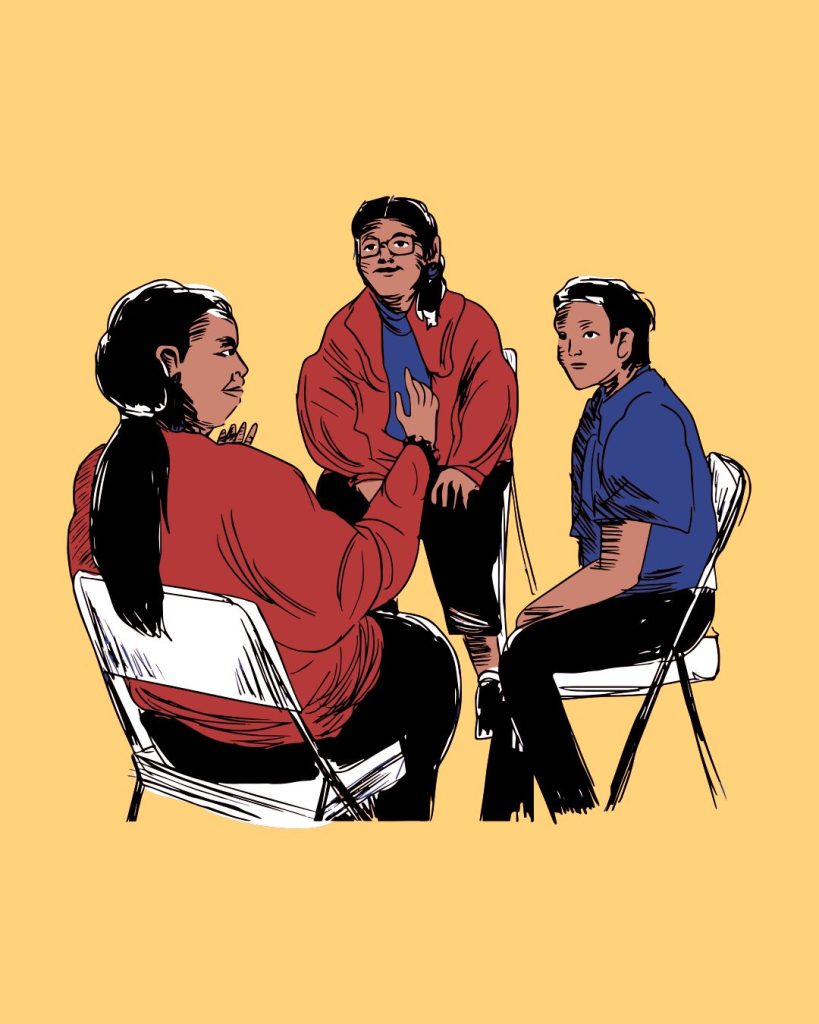
Multiple studies confirm that Indigenous children “almost universally have among the highest dropout rates and the poorest academic results.” Research suggests that a lack of literacy among Indigenous children in North America is a direct result of native language loss. However, providing Native American children with language preservation improves cultural competency and self-confidence, as well as the ability to better navigate educational structures. In short, language is the key to inclusion and for Native Americans to have a better chance of preserving life in the land meant to be theirs.
Disability
Disability is a broad category that encompasses many different identities. One can have invisible disabilities, learning disabilities, chronic pain, and/or physical disabilities of various forms and severities. One thing is clear, however. Across many of these identities, individuals with disabilities can feel “literate misfitting,” a term that refers to “the conflicts readers and writers encounter when their bodies and minds do not fit with the materials and expectations of ‘normal’ literate practice.”
Misfitting occurs when the body and/or mind feels at odds with their environment. Moments of misfitting occur for people with disabilities when they find themselves with access to materials aimed solely at those who are non-disabled. Solutions can look like including graphic novels for learning-disabled students to have access to visual learning, providing options for lights and colored papers as well as Braille materials and audio, or proper desks.
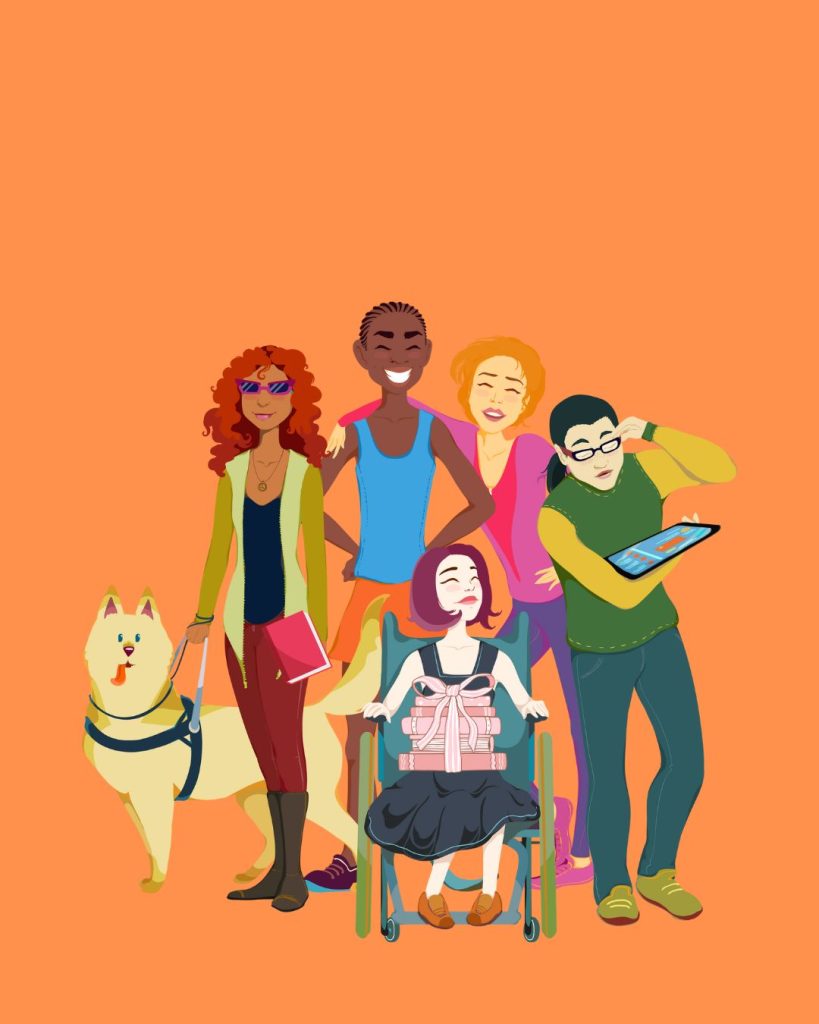
These practices are deeply material because reading itself is deeply material, though non-disabled individuals can take this for granted. As Elisabeth L. Miller writes, “Bodily needs and abilities change over the lifespan — hands stiffen with arthritis, eyesight weakens, memory and access to language alters.” Increasing access for people with disabilities increases access for everyone, which is the socio-material reality of advocacy and inclusion in general.
Ultimately, empowered readers are also engaged readers, and knowing exactly why reading is so important is crucial to Reading Across America. Literacy impacts our ability to engage with each other, understand information to its depths, and how we see and articulate ourselves. It impacts nearly every aspect of our lives, and every societal structure out there. It’s never too late to take up a reading practice, and to encourage the people in our lives — of all ages — to read. When we see ourselves and others on the page, that’s when we can see how we can make real change.
To read more about Read Across America, click here.
To engage more with diverse perspectives, access our Bookshop shelf about Amazing Inclusive Representation of BIPOC Mental Health here.
