

















Retellings are an ever-expanding genre, especially classics like Sleeping Beauty or Beauty and the Beast. Debut author Isabella Stofka self-published her own retelling for a young adult audience in Curses of Lavender. But instead of the classic story of waiting for a prince to wake the princess from her slumber. In this story, the princess saves herself.
In this interview, we speak to debut novelist Isabella Stofka, and hear all about her journey as an indie writer and more about the inspirations behind the fairytale retelling.
About Isabella Stofka
Isabella Stofka moved around a lot growing up until finally settling in Rockville, MD, with her husband and three cats. Ever since she was little, Isabella has woven epic stories in her mind and rambled about them to anyone who would listen. Eventually, she discovered the fine art of writing them down and has never turned back.
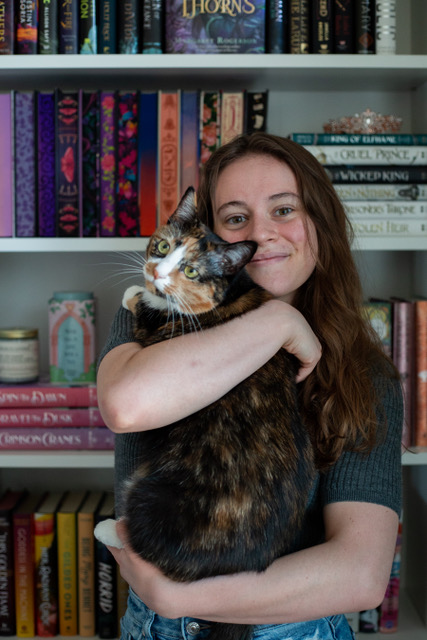
When she is not writing, she is either binge-watching her favorite TV show for the 20th time or devouring a good book — all while getting kitty cuddles of course.
Thanks for talking with us, Isabella. Let’s get started!
Can you give an elevator pitch for the first book in your series, Curses of Lavender, for any readers unfamiliar with it?
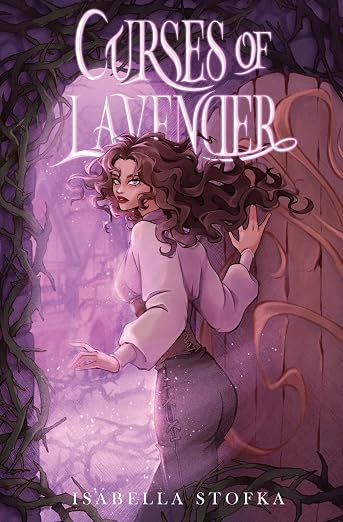
On the verge of giving up hope of ever finding a place to belong, Thicket, who has been an outcast her entire life because of her abnormal dreams, gives one last desperate attempt to fit in, but when things go awry she decides to go through a door in her dreams, hoping to find answers; instead, she wakes up from a sleeping curse to learn that her older sister has trapped her kingdom inside a wall of thorns, and unless she can get past her own fears and stop her, she may lose her only chance at a happily ever after.
Can you tell us a bit about what or where you drew inspiration from to build the fantasy world of the Curses of Lavender series?
I was in the car on a road trip one day, bored, so I decided to look through writing prompts. I stumbled across a picture of a door and thought: “What if someone went through a door in their dreams and woke up?” Then I thought, “That sounds really cool! What fairytale or myth could I connect this to?”

My first thought was Sleeping Beauty. What if she went through a door in her dreams, and that is how she woke up, rather than being saved by a prince? The story spiralled from there.
Diving a bit more into the romance. Thicket’s story is one where she doesn’t need a prince — and by extension, a man — to save her. How does this affect the relationship that develops?
I love this question! For a while, I was so focused on Thicket saving herself and what that meant for her and her journey, and completely forgot about the prince and how being incapable of saving Thicket would affect him. I think just as stories have created an expectation that women are the ones who need to be saved, they have also created an expectation that men are the ones who do the saving. Both the men in Curses of Lavender struggle with feelings of inadequacy when compared to Thicket.

However, like her, they will be forced to come to terms with themselves and find peace in knowing that sometimes physical strength doesn’t define you or your capabilities. I think all three of them lift each other up and help each other heal. Applying that to romance, I wanted to capture that idea the most. That True Love is about finding someone whose presence doesn’t define you, but pushes you to become the best version of yourself.
When creating a retelling of the popular fairytale Sleeping Beauty, were there any unexpected issues that you ran into when portraying the story while wanting to remain original?
With the scope of my reimagining, it changed a lot about the original story, as Sleeping Beauty relies heavily on “the prince saves the princess with True Love’s Kiss” plotline. Since I flipped that on its head, it became a question of how do I keep the elements of Sleeping Beauty alive while also crafting a brand new story that suited the elements I chose to portray?

I managed it by submerging the lore and mythology of the book with the original story, as well as hiding small Easter Eggs within the book. I am still waiting for people to discover some of them, and I cannot wait for the day they do.
We loved the creativity behind how you reimagined Sleeping Beauty. The nature of the dual realities is fascinating. How difficult did you find it to portray the two worlds, the Sleeping World and the Real World?
It was a struggle at first, especially since Thicket’s time in the contemporary world was essential to the plot. I had to weave the two worlds together in a way that allowed Thicket to experience what she needed to push her to her breaking point and abandon the dream world in a way that would still appeal to fantasy readers who may have not been expecting the story to begin in the way that it did.

I also had to put a lot of effort into the parallels of the world. How can I take the rules science determines for our world and match them to a world ruled by magic? It was a careful dance, but I am very happy with the way it turned out.
Relatability is often key in YA fiction. How did you navigate the complexities of Thicket’s anxiety and her burgeoning confidence in a way that would resonate authentically with a young adult audience, ensuring they could connect with her struggles and triumphs?
One theme I wanted to play with is the subjectivity of power. Thicket has all the power in the world, but because of her self-doubt, she often feels powerless. I wanted to show that true strength — true power — comes from within, and that no matter who you are, you have the capability to forge your own fate. I think seeing a heroine who walks the line between confidence and insecurity is so important because oftentimes we see a hero start off as unsure and then become confident in every aspect of their life. To me, that gives the impression that there is this level of perfection we need to reach.

But I wanted to show that you can be both. Thicket will never be without her doubts, and that’s okay — and I wanted young readers to know that it is okay. You can still be you — flaws and all — and still be the hero of your own story. I think by approaching Thicket’s journey from that angle is what makes her so relatable. We can all see the flaws within ourselves so easily, and I hope readers can see themselves in Thicket because of that and grow right alongside her.
Dreams of Dust — the title itself evokes a sense of mystery. Can you paint a brief picture of the atmosphere or central conflict we can expect in the second book?
Curses of Lavender was all about Thicket learning to leave her past behind her and embrace who she is. However, as we can see at the end of the book, her confidence was heavily reliant upon the support of others. Having a strong support group is essential; however, you cannot claim that you embrace yourself fully if your confidence crumbles when that support is taken away.

In Dreams of Dust, Thicket will be tested in numerous ways. Not only will she have to come to terms with herself, but she will have to make tough decisions as a future ruler—decisions that can either end the cycle of repeated history she and her sister find themselves trapped in, or plunge them in even further.
Thank you so much to Isabella Stofka for the great discussions on fantasy in her YA fairytale retelling debut novel, Curses of Lavender. We really enjoyed hearing all about everything fantasy and magic in this story, as well as the experiences you’ve gained as a debut indie novelist. If you’d like to open the door to Isabella and her writing, click here! If you’d like to connect with her socials, you can find her on Instagram and TikTok.
Want to read more YA fantasy? Check out this article!
Want some more YA or fantasy recommendations? Find our Bookstr bookshelf here!
