













Trigger Warning: As one of the central themes of Mark Twain’s classic novel is racism and slavery, this article discusses this and it may be triggering to some readers.
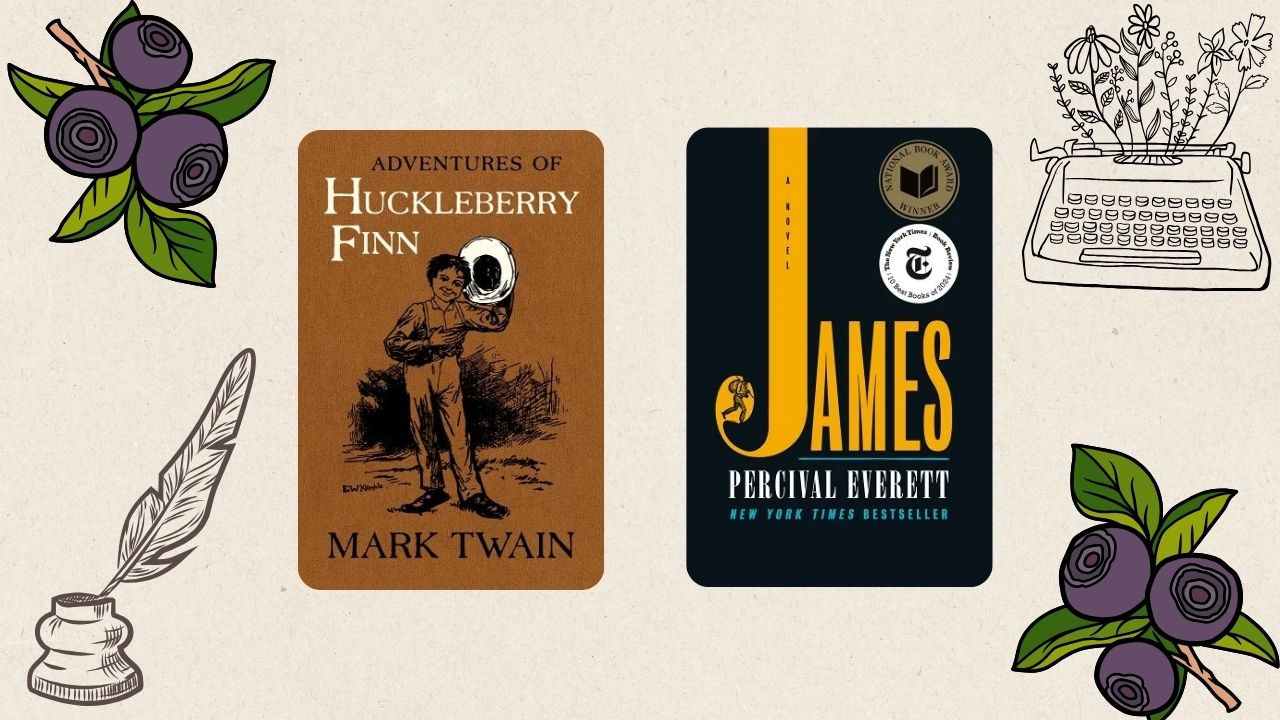
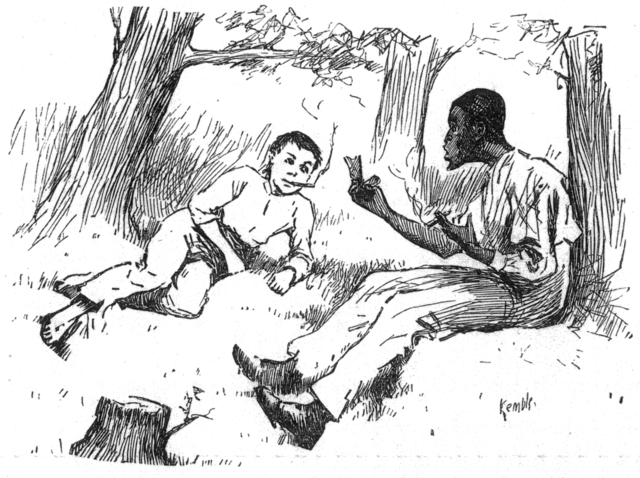
Mark Twain’s The Adventures of Huckleberry Finn was published in 1884, nearly two decades after the American Civil War — a war fought over the existence of slavery of African Americans. Twain’s novel reflects some of the challenges in an evolving and fragile society — topics still relevant even today. The original narrative revolves around two individuals: Huckleberry Finn and Jim Upton. Both are runaways: one running away from an abusive father and the other escaping the clutches of slavery.

At the time of publication, Twain’s book created a frenzy in the literary world. It marks the first book to be banned in the United States. Still healing from racial tensions that would stretch for years to come, some readers were outraged by the friendship between Huck Finn and Jim. Librarians were fuming over using vernacular language in the dialogue, considering the lower-class use not worthy of literature. Still caught in controversy, the novel still receives criticism today not due to the language, but due to the racial slurs in conversation between Huck and Jim.
The Recent Retelling by Percival Everett
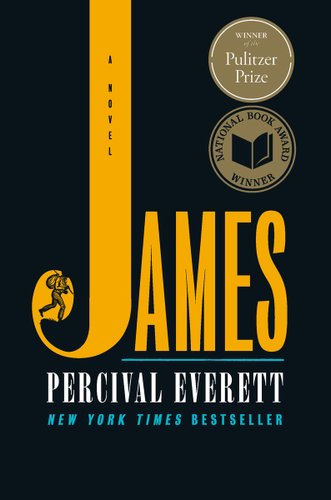
In James, Everett’s take on this classic novel reveals a different perspective than what was presented previously in Twain’s edition. The difference with Everett’s book is readers see Jim’s, or James’, point of view through the narrative. Instead of a runaway slave depicted as unintelligent, Everett paints a different picture of a more sophisticated man adapting to white society by code-switching to appease those around him. As James is the narrator, the readers receive a more accurate depiction of his character, learning that he is desperate to be reunited with his wife and daughter.
“I had wondered every time I sneaked in there what white people would do to a slave who had learned how to read. What would they do to a slave who had taught the other slaves to read? What would they do to a slave who knew what a hypotenuse was, what irony meant, how retribution was spelled?”
James by Percival Everett
The Reception of James
James was met with high-rated reviews throughout the year 2024. We recently reported that it was shortlisted for the 2024 Booker Prize Award. It was also nominated for Goodreads’ Reader’s Favorite Historical Fiction and Reader’s Favorite Audio Book. The novel also won the prestigious National Book Award. In response to the panel for the Booker Prize Award, Everett reflected on James:
“I hope that I have written the novel that Twain did not.”

Other Works by Percival Everett
As a professor of English at the University of Southern California, Everett has spent the past two decades producing fascinating fictional works. We have gathered a short list of favorites to add to your TBR.
The Trees
Set in Money, Mississippi, two detectives uncover an unexpected discovery at a murder scene: a body that resembles Emmett Till. A pattern of similar crimes is discovered throughout the country, leading the detectives to a difficult investigation. In this mystery crime narrative, Everett addresses societal issues of racism, police violence, and the history of lynching.
Dr. No
As an ode to classic Bond films, this story revolves around a mathematics professor named Wala Kitu, who is trying to foil the evil plans of his business partner, John Sill. John’s mission is to break into Fort Knox—not to steal gold, but to steal a shoebox of nothing. The shoebox supposedly will assist John in destroying a town in Massachusetts. The reasoning behind John’s plans is to avenge the assassination of Martin Luther King Jr.

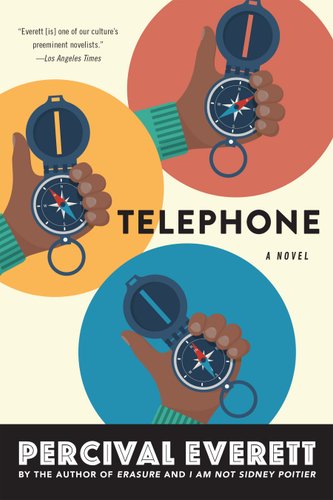
Telephone
Zach Wells is a researcher studying a cave in the Grand Canyon. But when he returns home to his family, he faces mysterious declines in his daughter’s health. Shortly after, an eerie note leads him to New Mexico on a rescue mission. Telephone is a story that unpacks the complexities of loss and grief.
After the success of James, we anticipate reading what Percival Everett publishes next. For now, we welcome you to catch up on his past bibliography.
If you missed it, read about Percival Everett’s nomination in the 2024 Booker Prize Awards here.
Wanna find some more classic recommendations? Explore our Keeping It…Classic… Recs That Is bookshelf.