

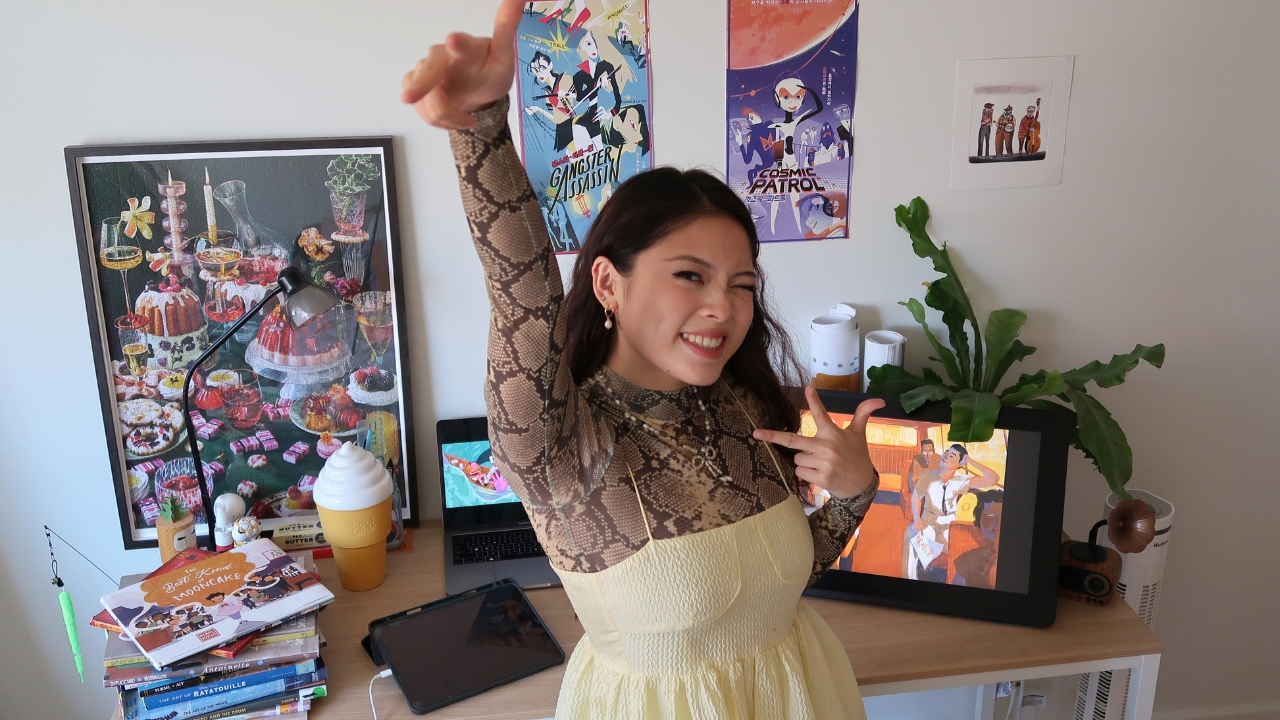
If you don’t already know Pearl AuYeung (Ow-Yerng), let’s fix that. She’s a Mattel toy designer — that’s right, the Mattel — and the author-illustrator behind The Best Kind of Mooncake (2022), a picture book that gives young readers a grounded look at Colonial Hong Kong. AuYeung’s artwork is just as charismatic as she is; some of her passions include sour foods, gel pens, and her cats. But what drives her the most is creating work that’s both authentic and accessible. Read on to learn more about AuYeung as she breaks down her process, interests, and BIPOC representation in media.
Thanks for chatting with us; let’s dive into the interview!
How did your diverse interests and aspirations shape your journey before settling into your field?
At one point, I wanted to be a princess-fairy-mermaid. I also loved history class, so I considered pursuing a career in archaeology. Now, in my work, I do a lot of cultural research and design Disney Princess toys at Mattel!
I think our interests inevitably shape who we are and our abilities. My debut picture book, The Best Kind of Mooncake, started as a research paper in college about how colonialism shaped modern Hong Kong cuisine. The things I learned in both my lived experience growing up in an American settlement in Mainland China under a foreigner status as a Hong Konger (wow, what a mouthful) and the plethora of research into this paper enraged me. It was the emotions that came from both my passion for history and my home culture that sparked this want for collective healing — How can we, as the next generation, as diaspora, as Chinese people, move forward from a violent, oppressive past?
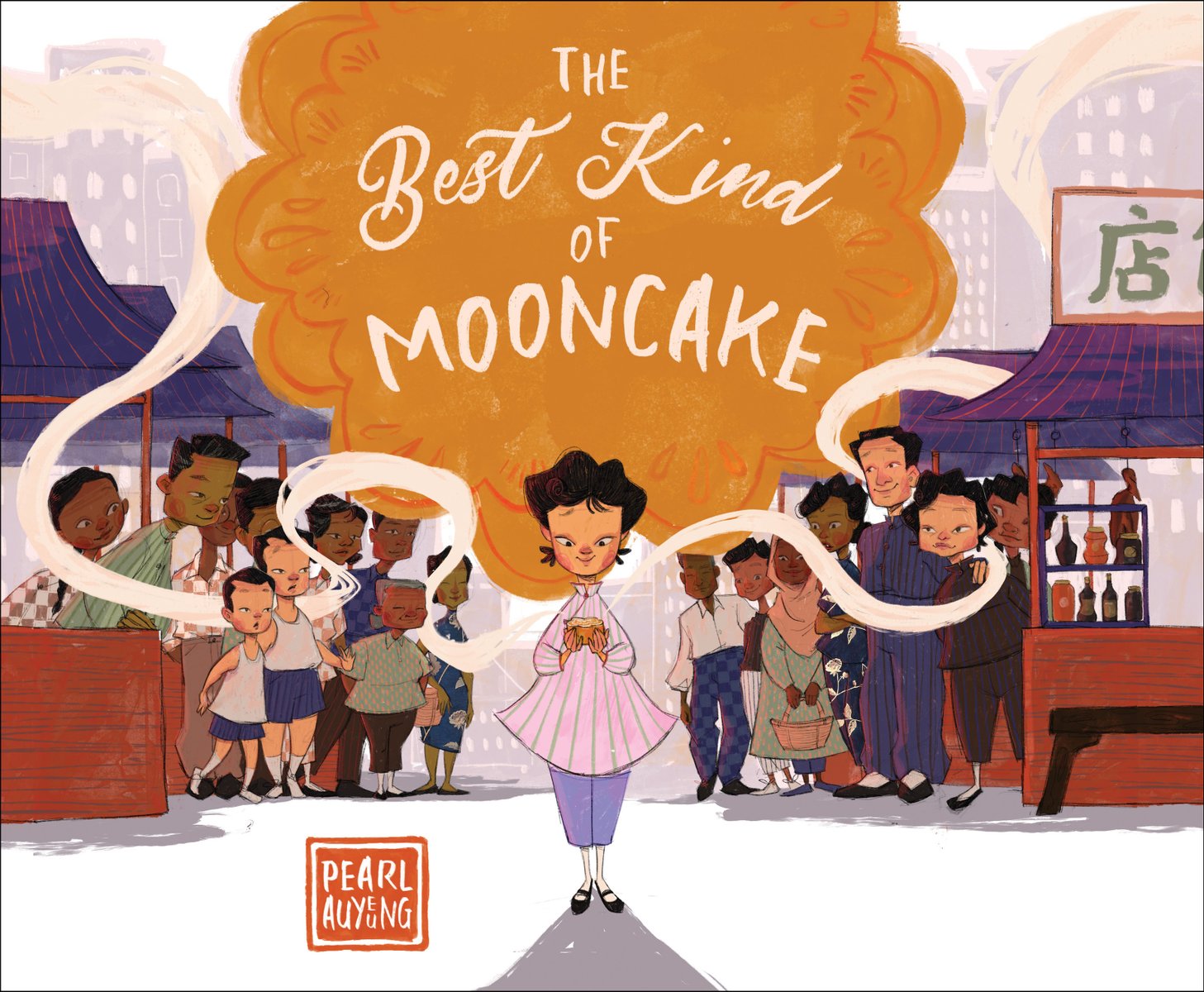
With my training in art school, I learned the ability and value of communicating effectively through visual work. It just so happened that I was also taking a class on picture books at the time and had the opportunity to transform my passion into a product for real everyday people to consume and react to.
It was exactly my interests and aspirations that shaped my path. Would I have gotten my first book deal if it weren’t for my interest in history, illustration, creative writing, and communicating with children? My journey may not have been exactly what I dreamed about as a kid, but I’m really happy with what I do and really love those I work with.
From conception to completion, how do you manage and structure the various stages of your work to bring a project to fruition?
I usually start with word vomit. Don’t think too hard; just spill.
From there, I find keywords or phrases that encapsulate the idea most effectively. Then, I draw thumbnail sketches based on images that come to mind with those chosen words. From there, it’s just continuous refining and refining until I have to let it go. It also helps me to have friends both in and outside of my field of work to provide feedback.
I need structure and something to work towards in order to effectively get things done. This is why a 9-5 works for me. I thrive on the threat of deadlines!
For books, I like to keep the stages of my work as such:
- Concepting/Word Vomit
Get a good playlist going. - Shitty Thumbnail Sketches
Try to draw or print a version of this in the real scale of the final
product. This changes things drastically sometimes. - Round One Rough Sketches + One Sample Final Drawing in Color
I usually share to friends at this stage for feedback. - Revisions
- Colored Rough
This is when I can listen to podcasts! - Revision
- Revision again and again until Final Art is due
- Receive First Proofs
- Revision
The one thing that helped me the most in managing stages of my work is learning to let things go. At a certain point, it’ll never be perfect. And you know what?
Whatever.
Truly — whatever.
There’s always something to pick at and be tortured by, so there’s no sense in wasting more time and energy dwelling when you could be doing other things, like eating something really delicious, or teaching your cats new tricks.
What’s your favorite stationary item?
I love the 0.25mm Muji Hexagonal Gel Ink Ballpoint Pen in blue black. It’s fantastic! I favored it to take notes in class throughout high school and college. It’s why I took thorough notes — I needed any excuse to use this dang pen.
I also love those rainbow multi-tip pens and anything with a cute topper. Honestly, the pro-pick-me-girl propaganda of our childhoods robbed us of so many fun things.
Lastly, I have sticky note pads that look like my two cats. I got them from Daiso, and I love using them for everything possible.
Are you a night owl, an early bird, or a permanently exhausted pigeon?
I’m a random day with the right weather conditions, a great playlist or podcast, and the will-to-live kind of bird.
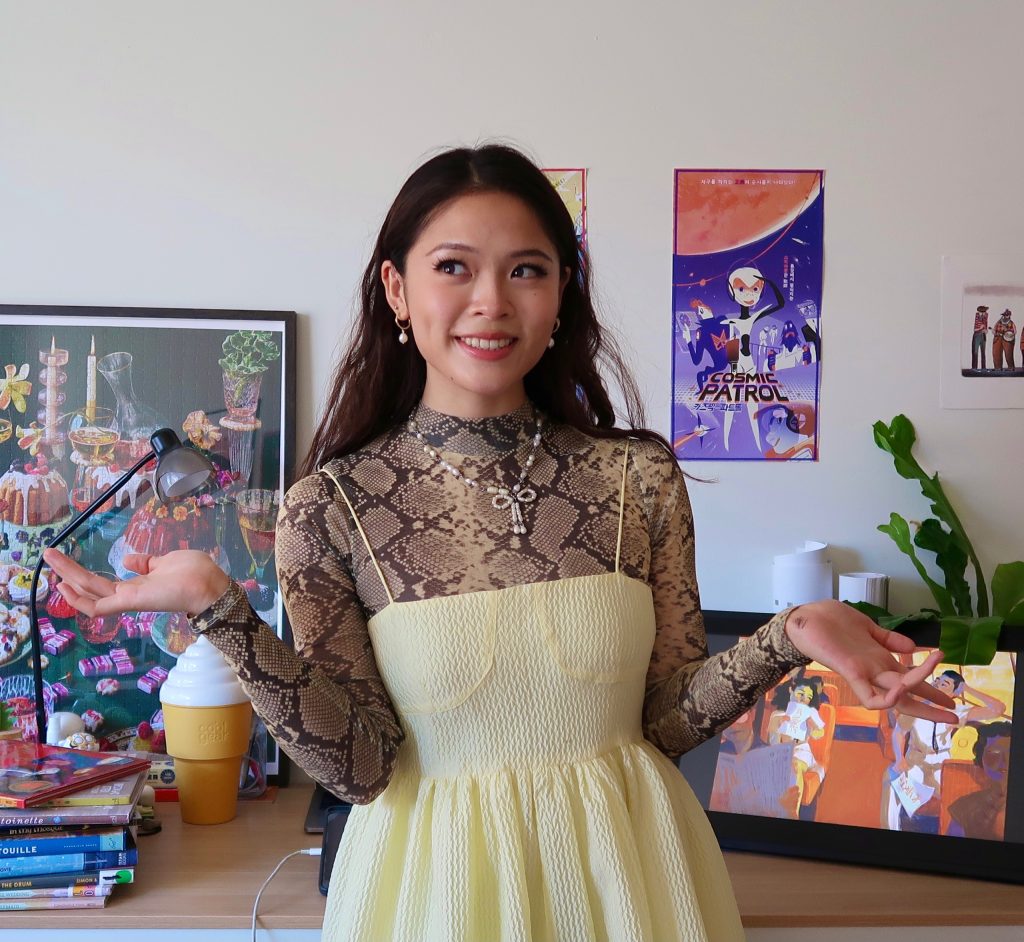
I work in spurts of dedication with long periods of rest and relaxation in between projects. My book career requires a lot of hours on top of my 9-5 corporate job, so I don’t put pressure on myself to necessarily work every morning or night, before or after I get off work. It just isn’t sustainable to live a life like this… I did that during college, and I am, not surprisingly, much happier now.
I need time to hang out with friends, go on slow walks, cook new recipes, admire my cats, read whatever book I’m currently doing book club with my mom on, go to the gym… in order to be able to have a healthy life I enjoy and also create work that I can be proud of.
I used to be really disappointed in myself for not being the type of artist who constantly draws. In hindsight, it may be because I wrongly thought that my identity as an artist would be the biggest aspect of who I was. We spend our entire childhoods working towards what we become as grownups, right? But I’ve since accepted that art is what I do and what I have the privilege to enjoy as a hobby at times. I am also many other things, and that is what gives me strength to wake up in the mornings and be.
What do you see as the next crucial steps in fostering authentic and inclusive representation in storytelling? How can the industry deepen its commitment to diversity beyond surface-level changes?
Honestly, even questions like this — questions with heavyweight, imagining drastic consequences — are only asked to POC, putting all the responsibility on us.
Representation is only the first step. I understand that older generations have a different point of view about how to take up spaces… keeping our heads down, being grateful to be there in the first place, performing a model minority role… But like you said in the question — so far, it’s been surface-level. I’m not sure there’s true radical change yet.
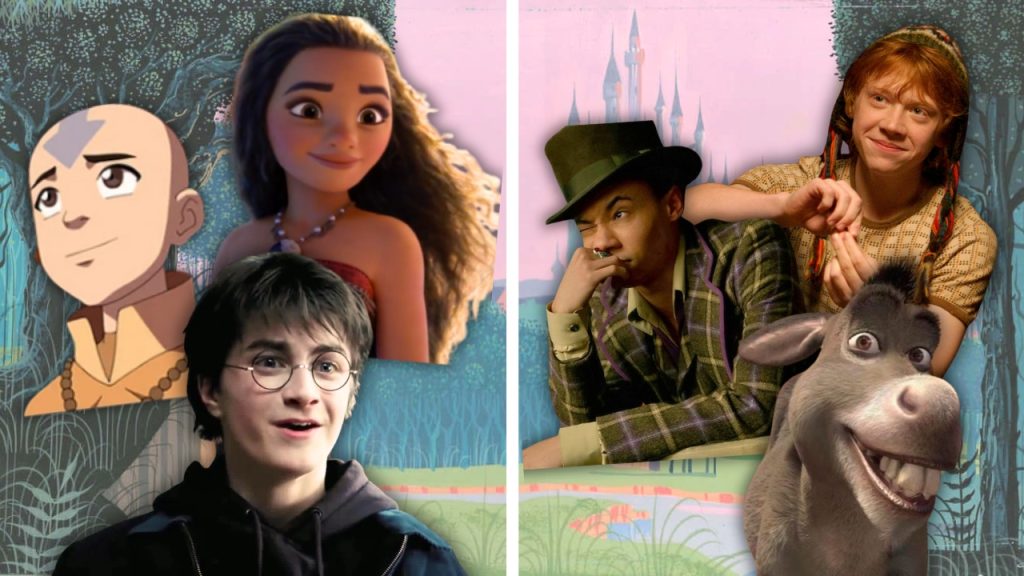
I’m not trying to disregard the strides that prominent POC have made in Western media. But there’s so much backlash regarding BIPOC playing titular roles in movies, e.g., Halle Bailey as Ariel, Zendaya as MJ… And I adore the cast of Everything Everywhere All At Once, but why are they the only Asian people hired for box office hits? Where are the other billions of us? Why do we only deserve to be seen when we’re bankable?
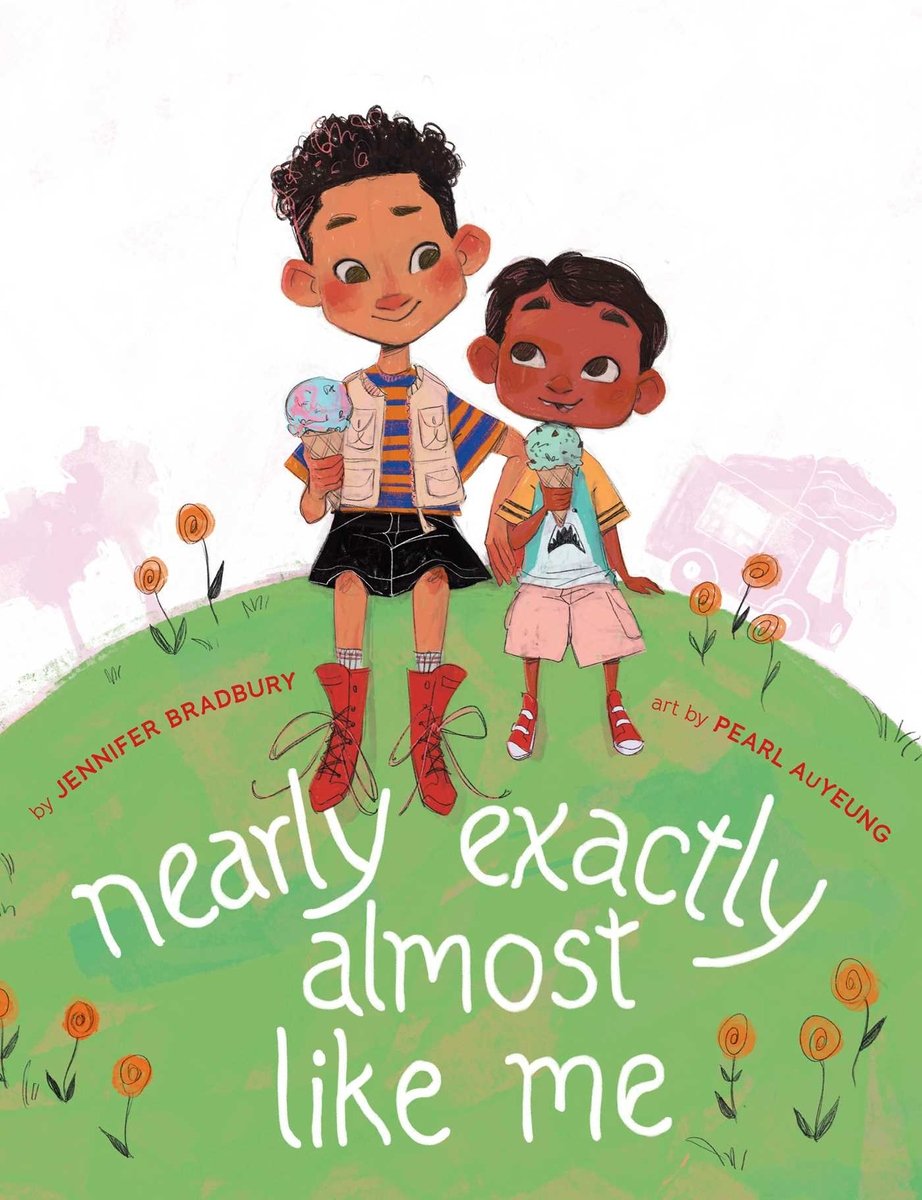
When designing the main cast in my upcoming book, Nearly Exactly Almost Like Me, as a mixed Black and Asian family, my publishers brought up a “concern” that the characters were “too diverse” and there might be backlash.
Can my work, and me by extension, move past the boundaries of ‘Diverse Creators/Work/Stories’ and just be as universal as what society has decided is ‘normal(/white)?’ Why is our existence dehumanized to simply fill a diversity quota? We’re real people with stories that are just as important and relatable, and NOT just during AAPI or Black History month, etc.
Why should we allow BIPOC creators to face white supremacist backlash? How are we really protecting them? Why should we respect, platform, and protect racist opinions?
The industry and culture at large needs true revolution. I can’t tell you how many brainstorming sessions I’ve been in at work where we need to ideate “authentic Black” hair play toys and not a single black designer was part of the conversation. There aren’t enough black designers because black kids don’t even know this is a career path that exists. Heck, I didn’t know I could be a toy designer either until I applied and got the job.
We need to change our work and learning spaces by changing access, by changing class structure, by uprooting greed and pride. It goes back to colonialism, to capitalism. I know what I’m asking for here will take time, and that’s why I’m frustrated, but we are already planting those seeds.
The best kind of artists are visionaries. It’s creators like Pearl who are shaping the industry into a well-rounded, much more creative space. That’s why we decided we’re not done talking. We asked Pearl to participate in Bookstr’s new video series Author Questions, where she drops even more nuggets of wisdom and offers advice to other creatives. Check it out!
Don’t forget to also be on the lookout for her new picture book, Nearly Exactly Almost Like Me, written by Jennifer Bradbury. A story about two brothers who prove that family isn’t always blood. For more information, visit Pearl’s website, or follow her on Instagram for updates on all her projects.
Make sure to find books mentioned in this article on our Female Authors bookshelf on Bookshop.org!
Not done scrolling? Read other Author Interviews here!