





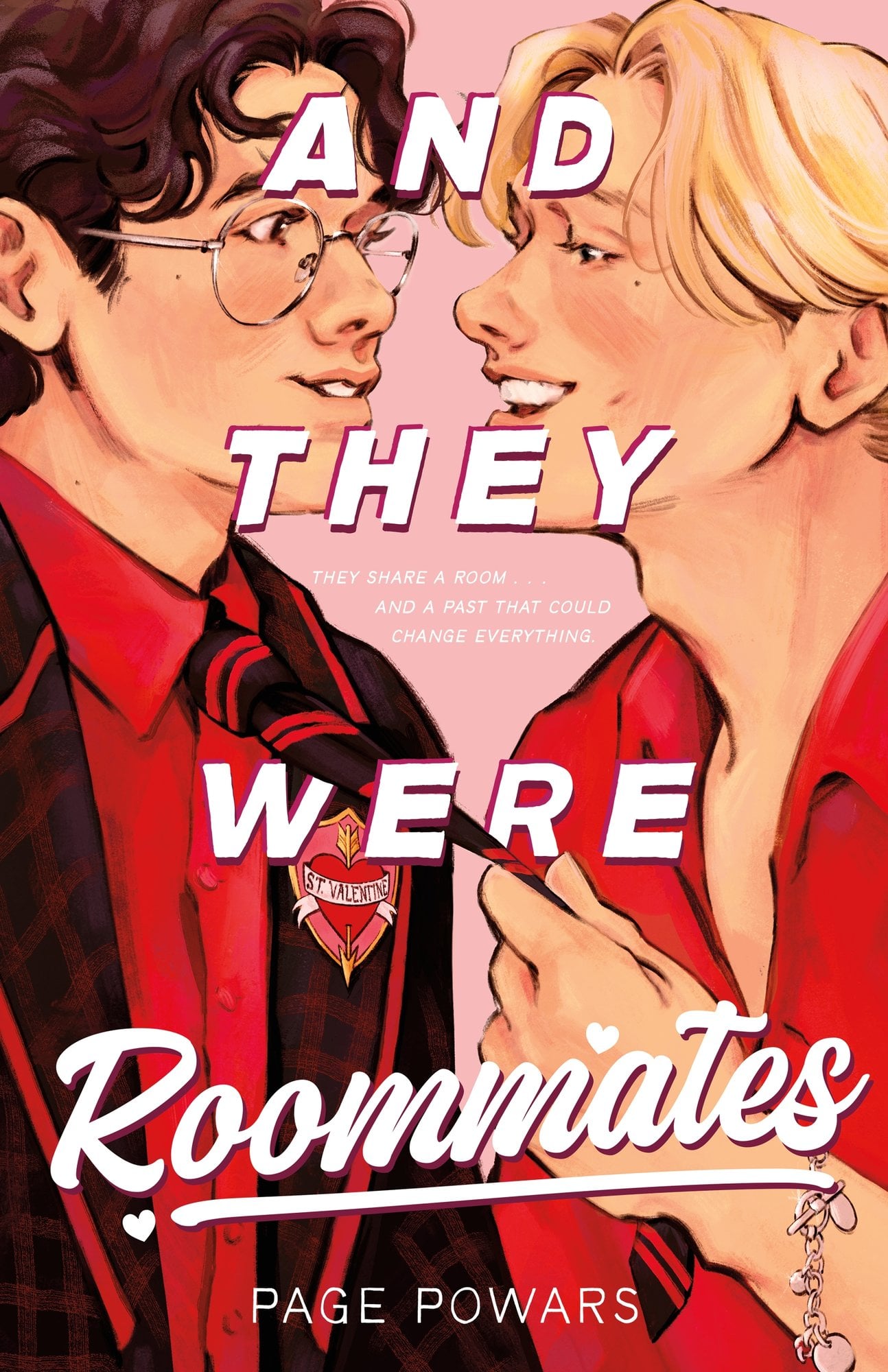
Oh MY. GOD. We have Page Powars sitting with us on the metaphorical stoop to talk about the latest loves he’s writing in And They Were Roommates. Eavesdrop on our conversation as we discuss Excellence Scholar Charlie Von Hevringprinz, a new student at Valentine Academy for Boys. All Charlie wants to do is disappear into the background, pass his classes and make his mom proud. That becomes difficult when he meets his roommate, Jasper Grimes, an outgoing boy who is fascinated by Charlie’s every move. The real cherry on top, however, is that Jasper happens to be the very boy who broke his heart before Charlie transitioned. Let’s dive into every chaotic, swoon-worthy moment.
Who Is Page Powars?
Page Powars is the New York Times, USA Today, and #1 Indie bestselling author of And They Were Roommates, The Borrow a Boyfriend Club, and more coming down the line. He was raised by video game lore that requires stringboard analyses to understand. Now, he writes books for teenagers and adults. He lives in Brooklyn with his partner.
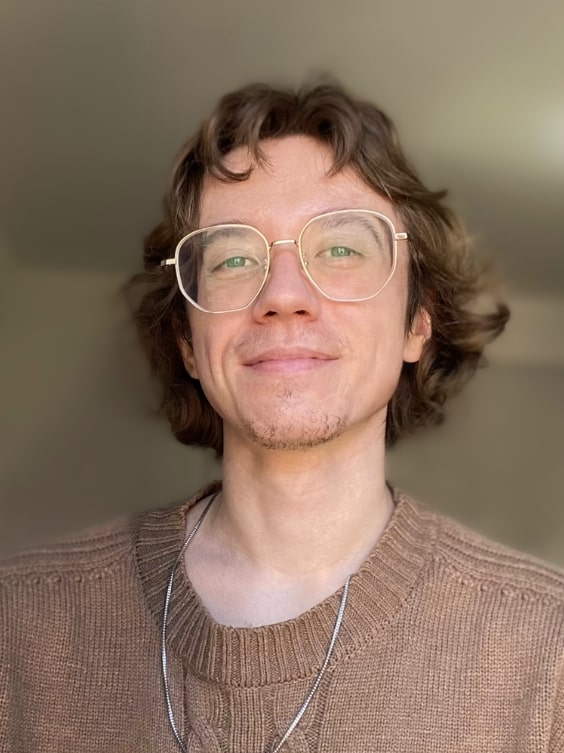
Thank you, Page. Let’s get started!
This book is truly about trans existence, and you really do capture a full spectrum within it. How do you balance that weight with the airy quality that is essential to the rom-com genre?
Comedy is one of the main reasons why I write. I love comedy as an art form and try to study it as much as possible, so I don’t particularly think too hard about whether I’m balancing things. I’m more of the perspective that I’m just writing comedic books that happen to star a transgender person. But I also recognize that there is power in telling these comedic stories via mainstream platforms when we historically only got trauma. I’m thrilled that I get to do it.
It’s very clear that And They Were Roommates is chock-full of pop culture references (from Vine to Dead Poets Society). How has this shaped your characters and your writing as a whole?
I don’t actively try to make pop culture references since they can become dated quickly. Plus, what I think is relevant in my twenties will not be what teens think, embarrassingly enough. But you’re right that my work has been influenced by work I admired growing up. Don’t let anyone tell you that you’re wasting your time in your teens, drowning yourself in fandoms and ships. I’m an author now because of it!
We have to talk about Xavier for a minute, a positive, affirming figure for Charlie. Xavier is especially great when it comes to giving Charlie confidence in his own transition. Is it your hope that other trans readers may look to him as a light and a kindness that is reflected in the world?
I’ve been surprised by everyone’s love of Xavier! Rather, what I think it truly comes down to — a positive relationship between a masculine straight him-bro and a not-quite-that trans bro, like you said. A part of me is sad that this moves people so much, as if this isn’t common. These types of guys, in my life, have always treated me the way Xavier treats Charlie. In fact — generalizing here — but they tend to care the least about my identity out of any demographic. Which could be a whole interview itself… but I also understand that I live in New York City. This may be different elsewhere. I hope more people find this, too.
Recently, you said in a podcast with SuperLit that Jasper is often polarizing for audiences because of the persona he displays in the first half. How did you envision his character in drafting, and how did he become the man we read on the page?
Jasper’s character came to me fully formed. Really, he was my first idea for Roommates and hasn’t changed much since. I knew exactly what I wanted to do with him—how I wanted him to be a challenging love interest both for the reader to engage with and for me to craft as an author. I think easy love interests are bo—ring.
There’s a scene that explores the irony of hiding in a literal glasshouse. Are there any other hidden meanings behind the setting of Valentine Academy or easter eggs about Interlochen Center for the Arts Academy?
Yes! An Easter egg for you: the Jesus lattes were literally sold on campus at Interlochen. I’m not sure if they still are ten years later, but I hope. Roommates’ interior map was based on Interlochen’s map as well. They have writing and piano gazebos and ballrooms…many of the areas where big scenes take place.
And They Were Roommates was not only created with the trans community in mind, but it also has representation within its production in your editor, Nico. How important is it to have diverse perspectives, not only on the shelf and behind the pen, but within the publication process itself?
SO IMPORTANT! I never want to go back. Having a fellow trans man as my editor and mostly queer team behind me has made this process so easy compared to my past publishing experiences, where that wasn’t the case. That’s really the keyword here: Easy. Not just emotionally, but also — unfortunately — capitalistically. They naturally, without any research, know how to pitch the book. How to design the cover. Where to market the book. Who to contact. Because they’ve lived and breathed being queer all their lives. They’ve engaged in queer media and fandoms since they were ten. They can think about how they’d want a book pitched to them. I’ve sold a lot more copies and found the right readers because of this.
I say all of this while having a straight, white woman literary agent, who is my rock and number-one champion. There are exceptions to the rule. I think what’s important, at the end of the day, is ensuring there are at least some queer people in the room who are allowed to make decisions.
Has becoming a NYT Best Seller changed your “reluctant reader” ways, and what does it mean to you that your books could start someone on the path of a bookworm?
It’s the reason I do all of this! I was once eighteen and believed all books were boring and sucked because we only read white classics in high school. Now, I’m an author. If I can change, so can others. I even agreed to title this book And They Were Roommates because that’s a common tag used on AO3, and some teens believe they can only access those types of queer stories through that site. But bookstores are full of these stories, especially now that people from fandom spaces have grown up and become working adults in the publishing industry.
Lastly, what advice would you give to minority (or any) writers who may be nervous about writing about their identity?
Free mentorship programs, which are taught by volunteer authors to help diversify the industry, are still around! We Need Diverse Books Mentorships are a great place to start. They have queer and trans authors you can submit to, who can help you through this process. There’s also Round Table Mentor. Becoming friends with your fellow mentees is a huge help. My fellow mentees from a 2019 program I did are two of my closest friends in the industry.
Thanks again to Page for speaking with us! You can keep up with his work through his website or follow him on Instagram and TIKTOK — and don’t forget to also check out Page’s debut novel, The Borrow-A–Boyfriend Club!
Need more spicy M/M romances? Click Here!
Want to read more LGBTQIA+ reads? Check out our Bookshop here!