





Trigger Warning: The mention of sexual assault, domestic violence, and domestic abuse may be triggering for some readers. Please exercise personal care when reading.
Disclaimer: The views expressed in this article are the writer’s own and not necessarily those of Bookstr. The quotes in this article are provided as is and belong to the person/entity quoted.
I am a survivor of domestic abuse. This is not a sentence that’s offered up easily. It’s not exactly designed for fun fact swaps or icebreaker games. It took me nineteen years to be able to claim it, and that journey is deeply personal and still ongoing. So, why do I mention it today?
Recently, I have noticed that many writers — especially within the romance genre — take a cavalier approach to representations of abuse and assault. Perpetrators’ actions are condoned or defended, and non-consensual sexual acts are cast in a romantic or erotic light. This is worrisome for the literary community. As an avid reader, I believe it is high time that we held these writers and publishers accountable for their actions.
My Trauma Is Not Your Sex Toy
In recent years, a troubling trend has appeared in the romance genre: the rise of abuse dynamics and sexual assault cast in an erotic light. BookTok, in particular, has fed the popularity of the controversial subgenre of dark romance. Some of these books feature questionable consent practices and/or sexual violence and abuse.
Of course, the inclusion of abuse in a novel isn’t inherently bad, even within the romance category. The issue I take with it is when the (often male) love interest abuses the (often female) main character, and the plot either excuses their actions or twists them as forms of love. Penelope Douglas’s book, Nightfall, even goes so far as to say, “Abuse can feel like love.” This rings extremely tone-deaf when, in the United States alone, one in three women and one in four men are sexually assaulted or experience physical violence at the hands of an intimate partner.
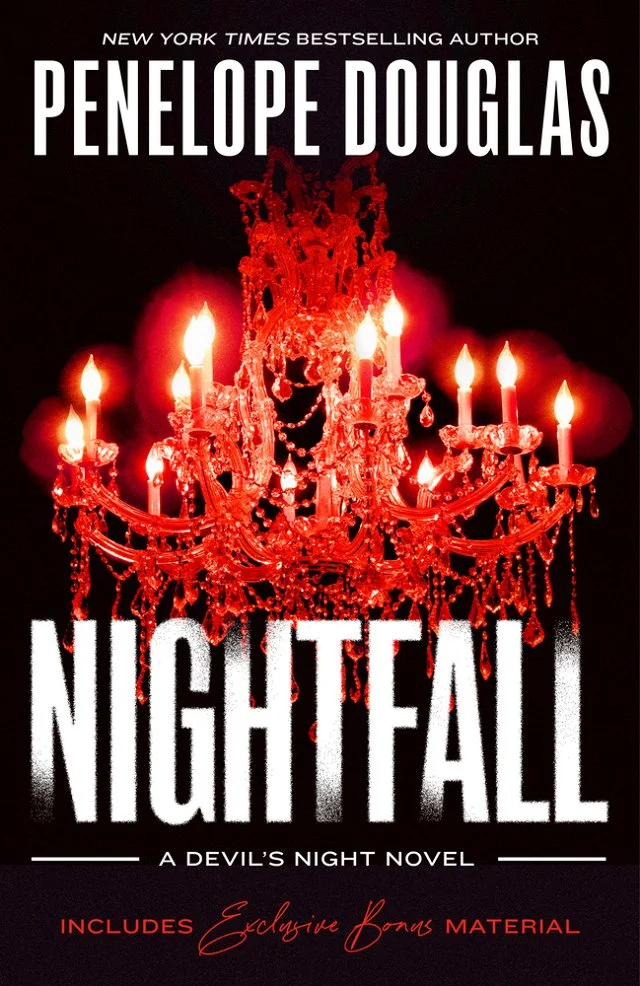
As a survivor of domestic abuse, Douglas’s quote is sickening to me. Romanticizing intimate partner violence is never okay. Many perpetrators never face consequences for their actions, even if they are reported. Societal stigma, unfortunately, does not lie in the survivor’s favor. Publishing stories with harmful relationship dynamics under the romance umbrella only exacerbates this problem. In 2023, the romance genre had grown by 52%, accounting for over a billion dollars in sales. With such a large audience, authors and publishers should be more cognizant of the impact these controversial plots may have.
The Colleen Hoover Problem
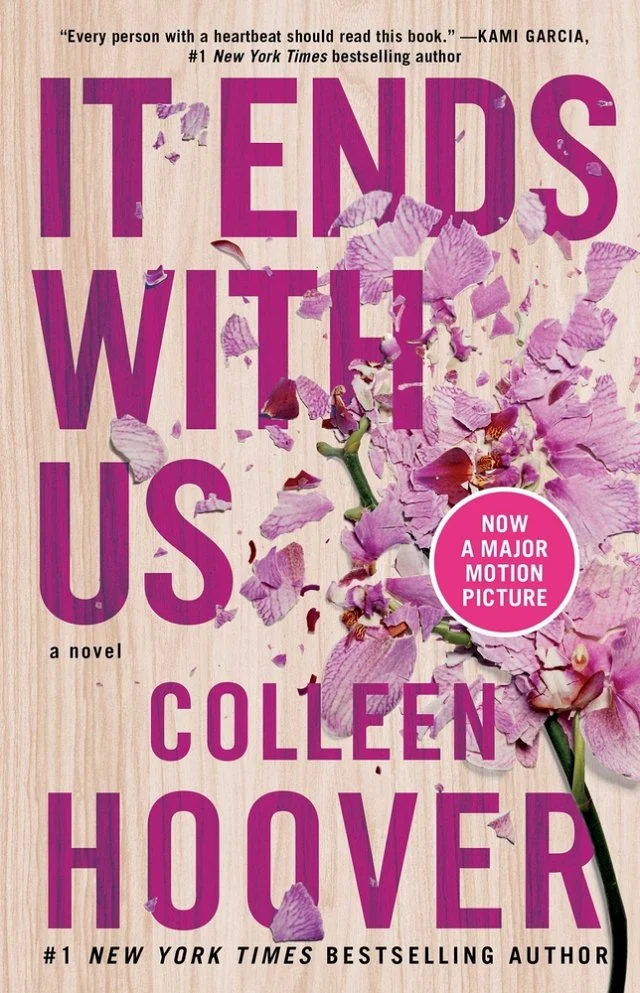
It’s impossible to discuss abusive romance lit without mentioning Colleen Hoover. In 2023, Hoover’s books accounted for 48% of print unit sales. Recently, her most popular novel, It Ends With Us, was adapted into a film of the same name that made nearly $150 million at the box office. The marketing for the film was riddled with controversies, including a planned coloring book based on the novel that was pulled before release due to concerns of insensitivity. If I can’t convince you that a domestic violence coloring book isn’t cute or funny, I don’t know what else I could possibly say.

Unfortunately, It Ends With Us is not the only blot on Colleen Hoover’s record. The morality of labeling any of her books as “romances” is questionable. Though Hoover’s intention is to bring awareness to intimate partner violence, her approach to the material is far from commendable. Readers are encouraged to forgive the abusive characters, who are somehow also the main love interests. Their behavior is excused for being either misguided love or the result of trauma.
Trauma is not a blanket justification for mistreatment. Many perpetrators of abuse were themselves subject to the same pain at some time. We can understand this complexity while also holding them accountable for their actions. My abuser was abused. And yet, they still chose to abuse me in turn. These truths cannot be separated. Regrettably, writers like Colleen Hoover expect their readers to do this.

In my opinion, the biggest problem in this mess falls on the marketing. On Colleen Hoover’s website, her novel, It Ends With Us, is described as an “unforgettable love story,” with no mention made whatsoever that the crux of said story is domestic violence. The abusive character in this book, Ryle, is framed as unable to control his violence while also spurned by his genuine love for the main character, Lily. At one point, he attempts to sexually assault her, saying, “I haven’t proved to you how much I love you.”
Again, I am not claiming that creating complex characters and/or writing about controversial subjects is wrong. However, I do feel that it is the onus of the writer to investigate the influence of their words. Lily’s relationship with Ryle is portrayed as a part of a love triangle. This insinuates that Ryle is a love interest readers could root for, despite his becoming increasingly violent against Lily: he hits her, pushes her down the stairs, and attempts sexual assault. These are troubling themes to show sympathy towards, especially given that 70% of romance readers discover the genre in adolescence.
Tokenism: The Other Side of the Coin
I studied theatre arts for four years, and I used to take umbrage when my peers were especially eager to write or star in productions with abuse themes. They practically salivated at the opportunity to portray these characters, congratulating themselves on how deep and tragic the performances would be. This was completely insulting to me. Survivor’s stories are not an artist’s personal playground. They should be treated with the respect and care they deserve.
By no means does this indicate that survivors are the only people allowed to write or present these stories. However, rigorous preparatory research should be done on the part of the artist. Even if I were to write a novel exploring those themes, I would need to do the same. Just because I am a survivor of one type of abuse doesn’t mean that I am the poster child for every form of it.
Overall, the argument I intend to impart is that abuse in literature should be handled with respect, regardless of the genre. When writers decide to include potentially triggering topics in their books, they have a responsibility to consider how their words will be received. Of course, this doesn’t mean that writers are not allowed to craft morally gray characters, or even describe things like abuse with graphic language. But synopses and book previews shouldn’t hide this information from potential readers. Lastly, depicting domestic violence and sexual assault as twisted expressions of love is unacceptable.
To feel safe at all times is a fundamental human right; let’s work to make this world physically and mentally safe for everyone. We urge you to make the call to seek the help you need if you or a loved one has experienced the devastating effects of Sexual Assault or Domestic Violence.
National Sexual Assault Hotline: 1-800-656-4673
National Domestic Violence Hotline: 1-800-799-7233
For a holistic look into the genre of dark romance and the power of intent, click here.
Check out our Recommendations bookshelf on Bookshop.org to help curate a new TBR.