


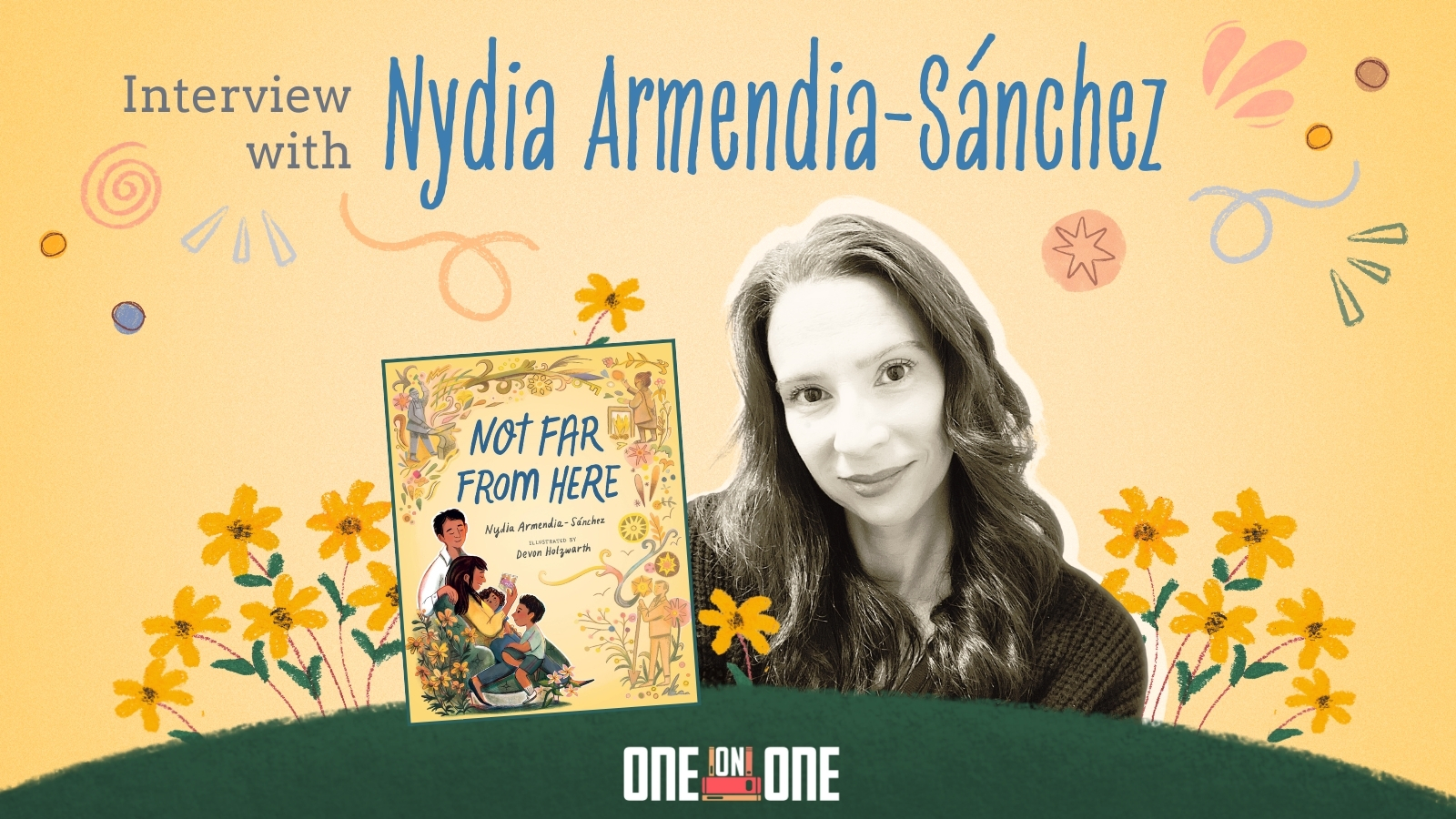
One of the great fascinations of life is that everyone has a unique story of how they came to be. For every person, there is a history that stretches back further than we can imagine to tell the story of their parents, their grandparents, and their ancestry beyond. For so many of us, that story includes a family member having the courage to leave their home and migrate somewhere new and foreign to build a better future for their children. In Not Far from Here, the debut picture book of author Nydia Armendia-Sánchez, one such story is explored, and we had the chance to ask the author about it.
About Nydia Armendia-Sánchez
Nydia Armendia-Sánchez is a children’s book author based in California. Her debut picture book Not Far from Here was released on 10/01/24 with Candlewick Press. Other forthcoming books are Frida Kahlo’s Flower Crown (Abrams Kids, 04/01/25), My Huipil (Candlewick Press, 2026), and a fourth unannounced picture book scheduled for 2027.
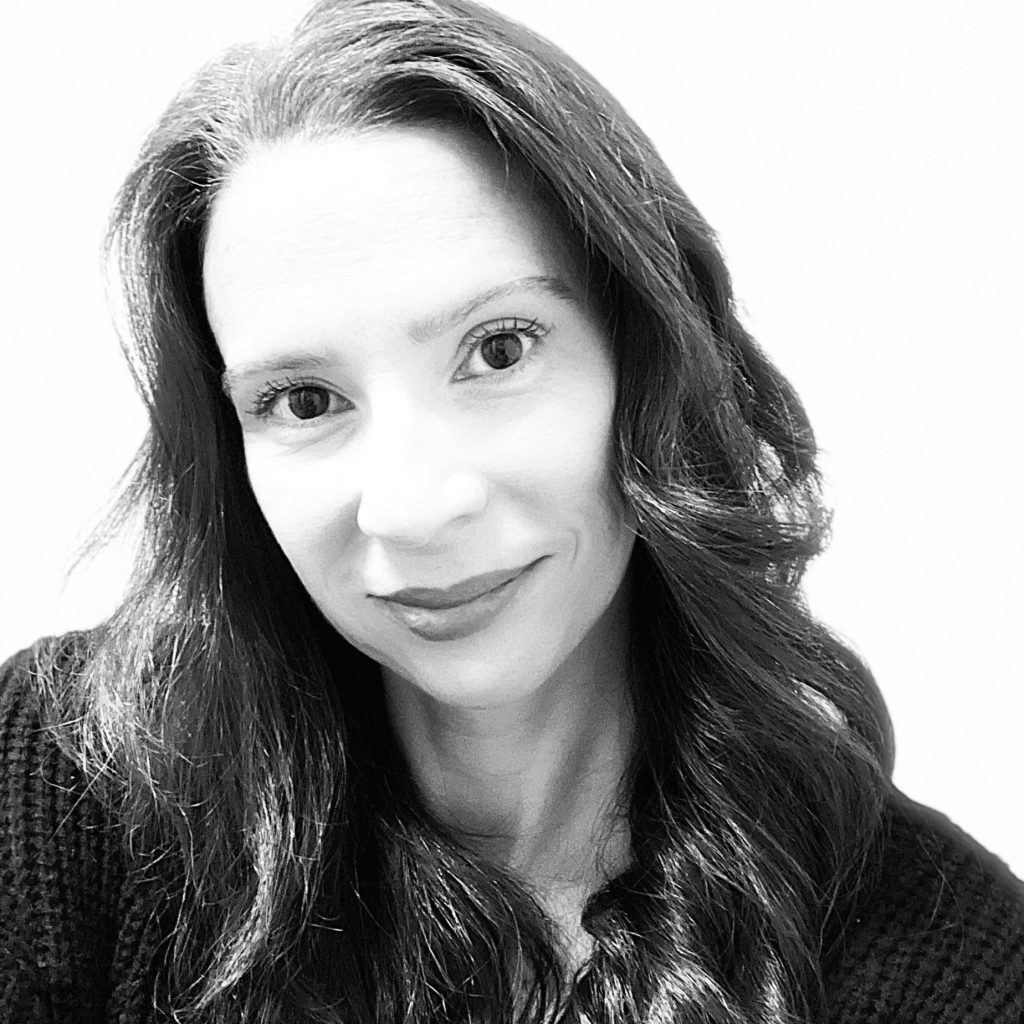
Nydia was awarded the Sustainable Arts Foundation Illustrated Children’s Book Award and named a finalist for the We Need Diverse Books Walter Grant. Her storytelling is inspired by her children as well as her Guatemalan and Basque roots. Nydia strives for inclusivity and diversity in all her creative endeavors.
Thank you so much for taking the time to talk with us, Nydia! Let’s get started.
Can you give a quick introduction to the characters of Not Far from Here and how the story begins?
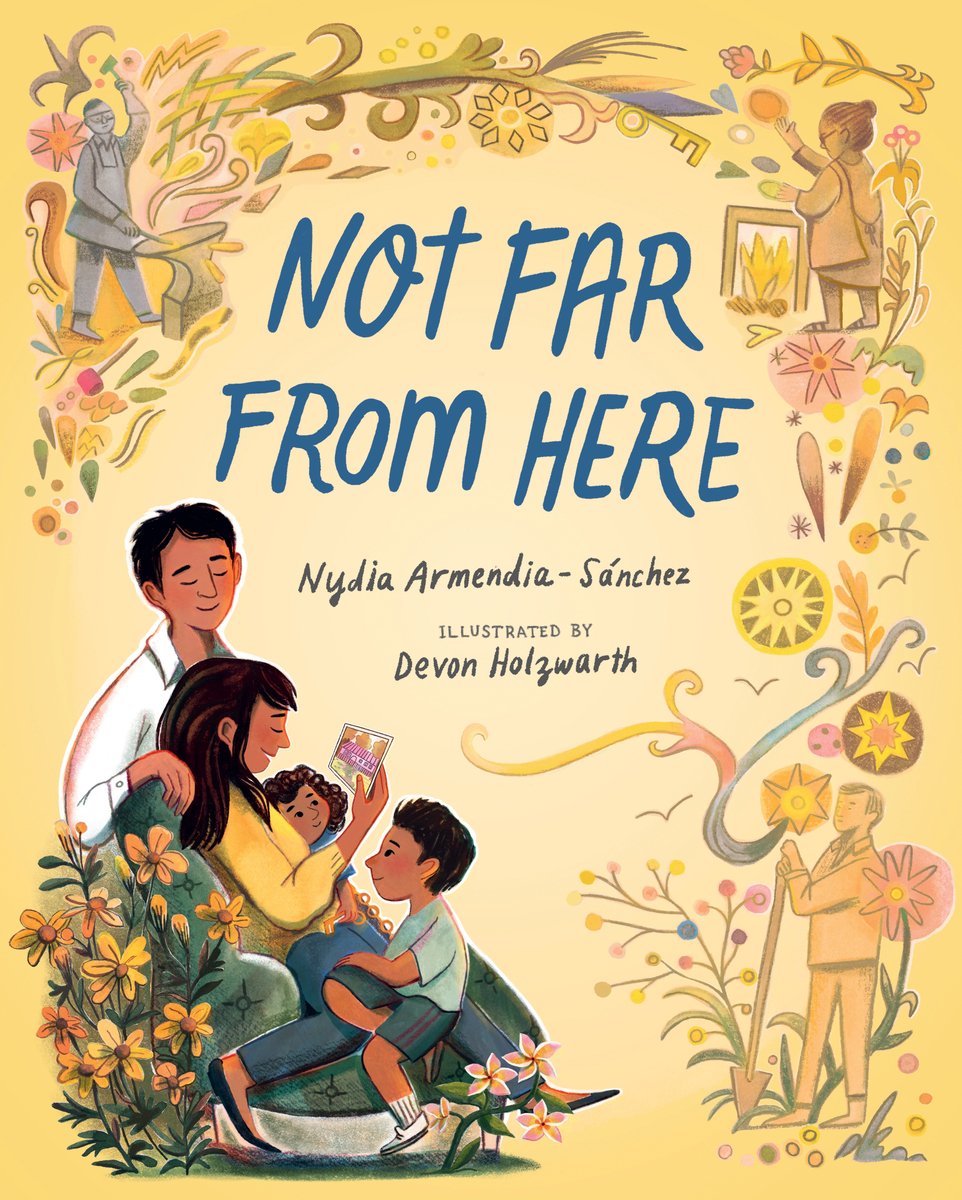
Not Far from Here opens with two curious niños rummaging through an old box of trinkets. They find an old photo and a key and ask mamá to tell them a story. We see mamá and papá actively creating in the home as artistic grown-ups, and since mamá is the storyteller in the family, she begins to share their family story/history.
Can you tell us a little about the inspirations behind Not Far from Here? How much of your family’s experiences were reflected on the page?
Absolutely! Not Far from Here is inspired by my family. In fact, it began as a sort of love letter to my children with the intention of sharing our family history with them and instilling a few values that I hope they’ll carry with them into adulthood. I’d say every page is a true reflection of our story. There is one part, though, that isn’t entirely accurate. My partner and I met while working at a restaurant, not enjoying a meal there. ;)
Why do you think it’s so important for children to know and understand their family histories if they are able? Do you think this is particularly valuable for third-culture kids?
It is important because it helps create the fabric of your sense of self. It grounds you and connects you to people, places, and even feelings, especially when you have a diverse family background where ancestors have immigrated or simply moved around from place to place.

And even if you aren’t able to find out the details of your own family history, that doesn’t mean that you can’t honor that person’s memory or honor that part of your heritage. You are allowed to and you don’t need anyone’s approval or permission.
You do a beautiful job of weaving Spanish and English together to convey the story in Not Far from Here. What inspired the decision to make this book a harmony of the two languages?
This is the way we speak in our household. We are a multilingual family, and we often use translanguaging (or the use of two or more languages side by side) to communicate. Sometimes, we use more English, and sometimes, it’s more Spanish — it really depends on the sentiment of the conversation or topic. It is important to note that this is only one example of how language(s) might be used. Each person’s language journey is different and distinct and one that can evolve over time.

I also wanted to show that there is value in translanguaging. Like many Latine kids of previous generations, I was taught that translanguaging or using Spanglish, as it is commonly known, was “bad” or improper. I’ve come to learn that language is fluid, very personal, cultural, situational, and affected by your lived experiences. Multilingual children should be uplifted and be able to have access to books that explore the different ways in which we can express ourselves linguistically.
Can you describe a particular word or phrase in Spanish that you find difficult to capture in English? Or vice versa?
This is a hard one because there are so many, but I love the word for “love” or, more specifically, the word for profound love. In Spanish, there are two: querer and amar. “Te quiero” means I love you, but “te amo” means I’m in love with you, a deep, swoon-worthy type of love. All of that in one little word. So beautiful, right?
I’ll add a funny anecdote that happened when I was asked to translate the toast from English to Spanish at my uncle’s wedding. I don’t remember the context, but there was some mention about possibly needing “Kleenex” due to the emotional nature of the toast. When I translated it into Spanish, I translated “Kleenex” to “Kleenex” – some words are universally understood. Everyone had a good little chuckle. :)
For your debut picture book, you were able to work with award-winning illustrator Devon Holzwarth. How did you find the process of working with an illustrator on a story like this?
Devon brought the magic to Not Far from Here. She is an amazing illustrator who I can now call a friend, and the process was seamless. Her books have so much warmth and color, and they just make you feel good!
Your next book will be a picture book on the life of Frida Kahlo. Can you tell us a little about it, and what inspired you to bring the story of Frida to young readers?
Frida Kahlo is the first Latine figure I looked up to. As a young artist myself, I was always intrigued by her art and her aesthetic. She spoke Spanish like I did, making me feel connected to her.
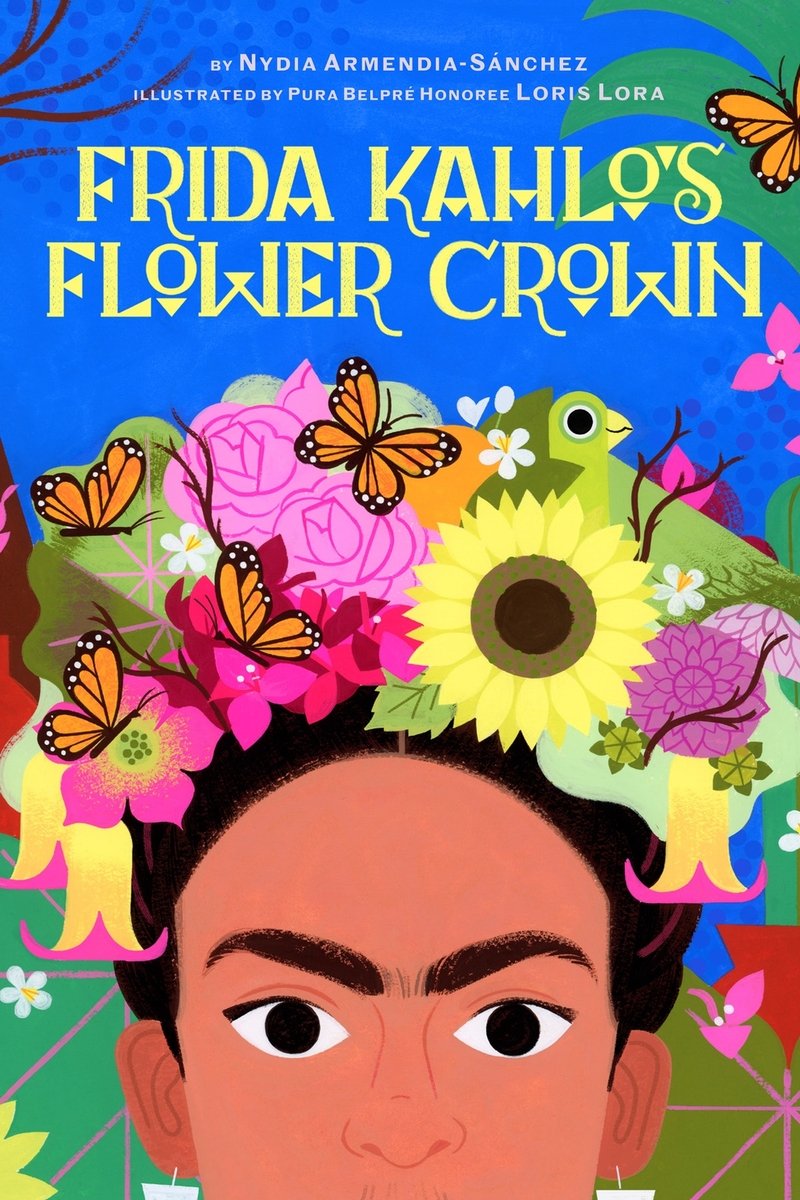
As an adult, I learned much more about her life and her artistic endeavors, but a few years ago, I saw a portrait of her and simply wondered how her iconic flower crown came to be. This prompted me to go down the research rabbit hole, and I was intrigued by the power and influence of nature in her self-image and her artwork. Interestingly, I can remember doodling flowers over and over ever since I could hold a pencil, so I feel that I, too, have a deep connection with the flora, nature, and being outdoors.
Lastly, in honor of Not Far from Here, what is your greatest hope for the future of children’s books and the little ones who read them?
I hope Not Far from Here prompts conversations with their grown-ups about the places they’ve lived, the stories they’ve heard from their own ancestors, and gets them thinking about their own story, made up of thousands of tiny stories that make them who they are.
On a larger scale, I am proud to know many creators (Latine/BIPOC) who are constantly creating and trying to publish books that will engage and impact the youth of underrepresented communities. They are brave and persistent, and it is needed now more than ever.
A huge thank you to Nydia for taking the time to talk with us about her stellar debut! Be sure to find her online at nydiaarmendia.com, or on Instagram, TikTok, and Pinterest. Lastly, don’t forget to add Not Far From Here to your family’s TBR list!
To see more of our talks with authors across the genres, check out our collection of Author Interviews.
To see all of our recommendations for mini bookworms, check out our Bookshop bookshelf.