









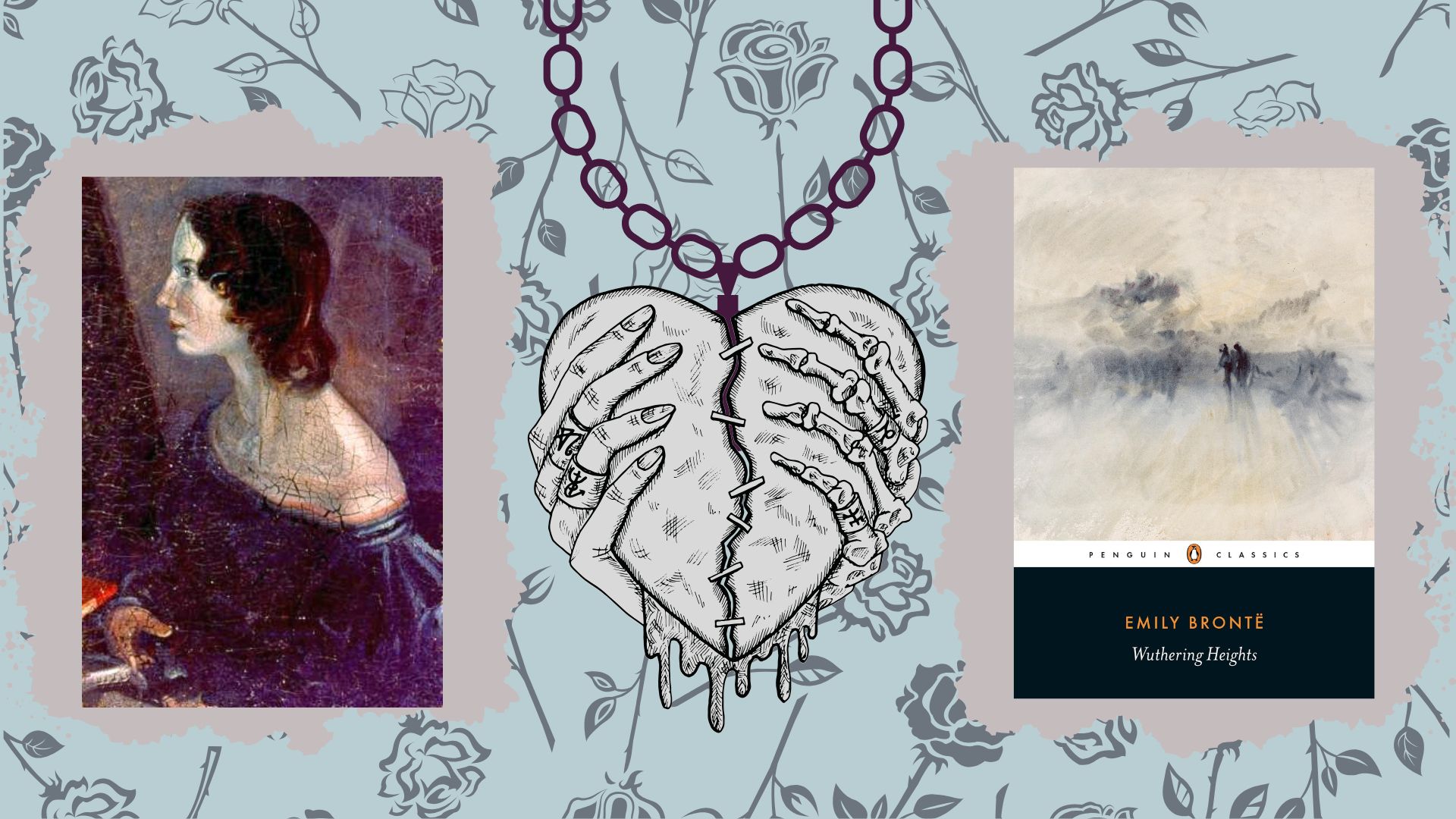
Emily Brontë is an English Gothic Romance writer whose explorations of love, lust, passion, and morality helped to push against conservative Victorian attitudes towards women and marriage, and trailblaze the way for her later forbidden-love, romance-writing successors. In celebration of her 207th birthday, this article seeks to explore the biography of the amazing poet-novelist, and direct readers to some of her most incredible works of literature — conveniently featured in a listicle here so that you can immediately get reading and fall in love with her works just as we have done at Bookstr!
About Emily Brontë
Emily Brontë was the middle of three globally-renowned sister-authors; her older sister, Charlotte, also published her most famous work, Jane Eyre, in 1847, whilst her younger (and somewhat criminally underrated) sister, Anne, published The Tenant of Wildfell Hall just one year later in 1848. All of the Brontë sisters were compelled to write and release their publications under male pseudonyms — Currer, Ellis, and Acton Bell — in an attempt to overcome the prejudices placed against women writers during the 19th century.
As children, the three sisters wrote little books, journals, and poetry together, where they worked tirelessly to construct and depict entire imaginary worlds. Emily was the shyest, but also the strongest-willed and non-conforming of her sisters, with a keen love of animals and nature. Her home in Haworth, situated in the quiet village of Thornton, as well as the captivating beauty of the Yorkshire moors formed the backdrop to her best-selling (and only) novel — capturing the imaginations of readers all over the world, and establishing her status as an enigmatic, reclusive writer of the literary canon.
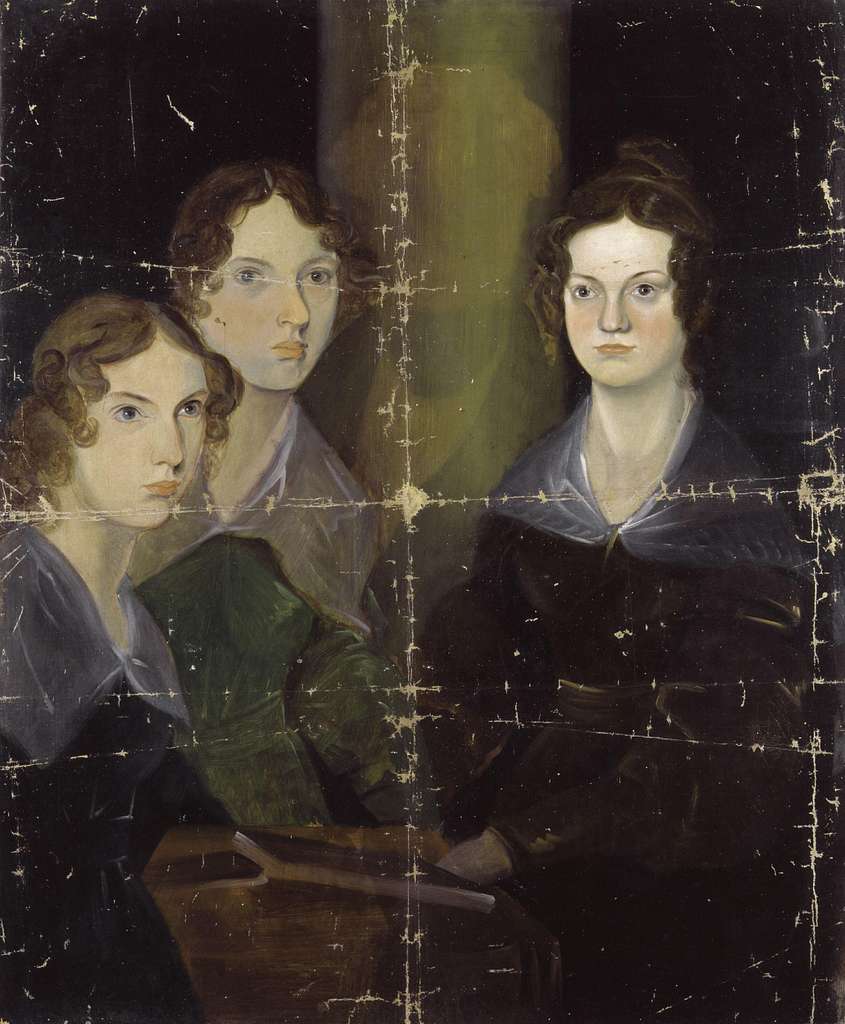
Besides an especially brief period at school, and another as a student teacher in Brussels alongside her sister Charlotte (who would later take inspiration from this time for her 1853 novel, Villette), Emily spent most of her life at home. There, she would help the family servant with chores, play the piano, and teach herself from books. Wuthering Heights was not widely admired or well-received by critics at the time of its publication, with many readers finding the characters too immoral for their conservative Victorian sensibilities. However, the works of Emily Brontë are now considered to be classics of English Literature. Unfortunately, she did not live to see how much people would grow to love and appreciate her art, dying aged 30 in 1848, just one year after Wuthering Heights was released into the world.
The Tales of Glass Town, Angria, and Gondal: Selected Early Writings by Charlotte, Emily, and Anne Brontë
The Tales of Glass Town, Angria, and Gondal: Selected Early Writings is a collection of poems dedicated to the fictional worlds created by the Brontë sisters as children, along with their brother Branwell. The writings are filled with vast, imaginative landscapes that served as early experiments for their later literary exploits. These worlds were fiercely dominated by fantastical characters, romantic entanglements, and political conflicts. Glass Town and Angria, created mostly by Branwell and Charlotte, focused on themes of high-society drama and colonial misadventure, whilst Gondal, written by Emily and Anne, delved into themes of mythology, exile, and rebellion.
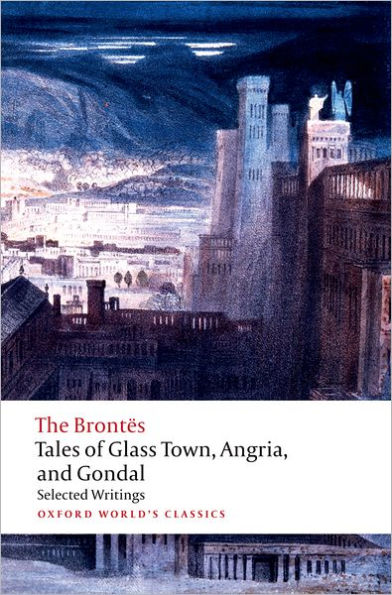
Glass Town and Angria began as a collaborative effort, but rapidly evolved into a world ruled by a tyrannical king, with characters based on historical and military figures, including Wellington and Napoleon. The stories that unfolded within Glass Town typically involved political machinations, wartime battles, and the expansion of empire, reflecting the Brontë siblings’ mutual interest in contemporary personalities and cultural events. Gondal, by contrast, offered a more remote and romanticised setting for Emily and Anne to cultivate. Many of the prose chronicles for Gondal are largely lost, but surviving diary entries and poems give a glimpse of a world proliferated by passionate relationships and mystical happenings.
This book supplies readers with a textured, rich immersion into the writing of the Brontë sisters, whilst also offering an apt starting-point wherein one can track the writing progression of Emily more specifically. Her early exploration into, and curiosity about, complex political and social themes foreshadow the more mature, skillful work she created later on in her life — thus making this collection a must-read for any Emily Brontë fan.
O wander not so far away!
— Emily Brontë, A.G.A to A.S., a Gondal poem
O love, forgive this selfish tear.
It may be sad for thee to stay.
But how can I live lonely here?
Wuthering Heights by Emily Brontë
Wuthering Heights by Emily Brontë tells the passionate and destructive love story of Heathcliff and Catherine Earnshaw, set against the tumultuous backdrop of the Yorkshire moors. The story begins when Heathcliff, a foundling, is taken in by the Earnshaw family at Wuthering Heights. He and Catherine quickly develop a deep soul-connection, but their adoration for one another is complicated by differences of social class, with divisions being set even further when she chooses to marry Edgar Linton — a wealthy, highly-respected man.

Heartbroken and filled with a thirst for vengeance, Heathcliff leaves Yorkshire and returns several years later, now wealthy and educated himself. He seeks to destroy the lives of those who wronged him as a young man, leading to tragic consequences for everyone. The novel deftly examines themes of revenge, social class, love, familial trauma, the power of nature, as well as the consequences that intense relationships can have on subsequent generations of people. This is a book you will not be able to put down, and which will stay with you long after reading.
You said I killed you-haunt me, then! […] Be with me always-take any form-drive me mad! only do not leave me in this abyss, where I cannot find you!
— Emily Brontë, Wuthering Heights
The Night is Darkening Round Me by Emily Brontë
Emily Brontë’s The Night is Darkening Round Me is a poem famous for its bleak exploration into themes of death, defiance, isolation, and despair in the midst of overwhelming circumstance. The poem depicts a lonely speaker who is trapped within an ever-darkening, eerie landscape — battling against both external elements like stormy weather, and internal struggles too.

The oppressive atmosphere and inability to move both contribute to the speaker’s powerful refusal to be held in submission and their determination to find strength in spite of their suffering.
Clouds beyond clouds above me,
— Emily Brontë, The Night is Darkening Round Me
Wastes beyond wastes below;
But nothing drear can move me;
I will not, cannot go.
No Coward Soul Is Mine by Emily Brontë
Fresh out of the newly released Penguin Archive comes No Coward Soul Is Mine, a heart-wrenching new selection of poetry from Emily Brontë. Here, we confront a soul who is unafraid to probe her own mortality, as well as the enduring cruelty and beauty of nature. This collection profoundly captures her lifelong passion and indomitable spirit, exposing the depths of a tortured human heart to reveal what can only be described as true poetic genius.

The titular poem in this powerful anthology reflects Brontë’s courage and faith in the face of adversity. It reframes her belief in immortality, individual freedom, and her unfailing ability to face a life of challenges with a sense of pride and fearlessness. Written in a poignant, emotive verse, this collection showcases the very best of Emily Brontë’s literary mastery and prowess.
Though Earth and moon were gone
— Emily Brontë, No Coward Soul is Mine
And suns and universes ceased to be
And thou wert left alone
Every existence would exist in thee.
Emily Brontë has left an indelible, irreplaceable mark on the literary world. Her sole novel has left a lasting impression on the gothic romance genre and continues to persist in its modern-day relevance. Wuthering Heights has truly transcended its time, providing readers, both current and contemporary, with a raw and unflinching look at human passion, whilst additionally seeking to expose the callous nature of the English Victorian aristocracy against those who were different.
Emily Brontë’s psychological depth continues to resonate deeply with audiences, with Wuthering Heights having been subject to countless film adaptations and being continuously reimagined by present-day romance writers. Emerald Fennell, award-winning director of Promising Young Woman (2020) and Saltburn (2023), is set to direct the upcoming 2026 film version of Wuthering Heights with Warner Bros. Pictures; a film that is set to star Jacob Elordi and Margot Robbie in the leading roles. There is no testament greater than this to Emily Brontë’s lasting impact on literature and to the mark she has eternally left on the hearts of everyone who reads her.
Are you as obsessed with Charlotte, Emily, and Anne as we are at Bookstr? Read our article: 12 Exquisite Brontë Sisters Quotes on Love, Life, and Loneliness.
Head over to our Bookshop to discover more tantalising Classic Book Recs.