

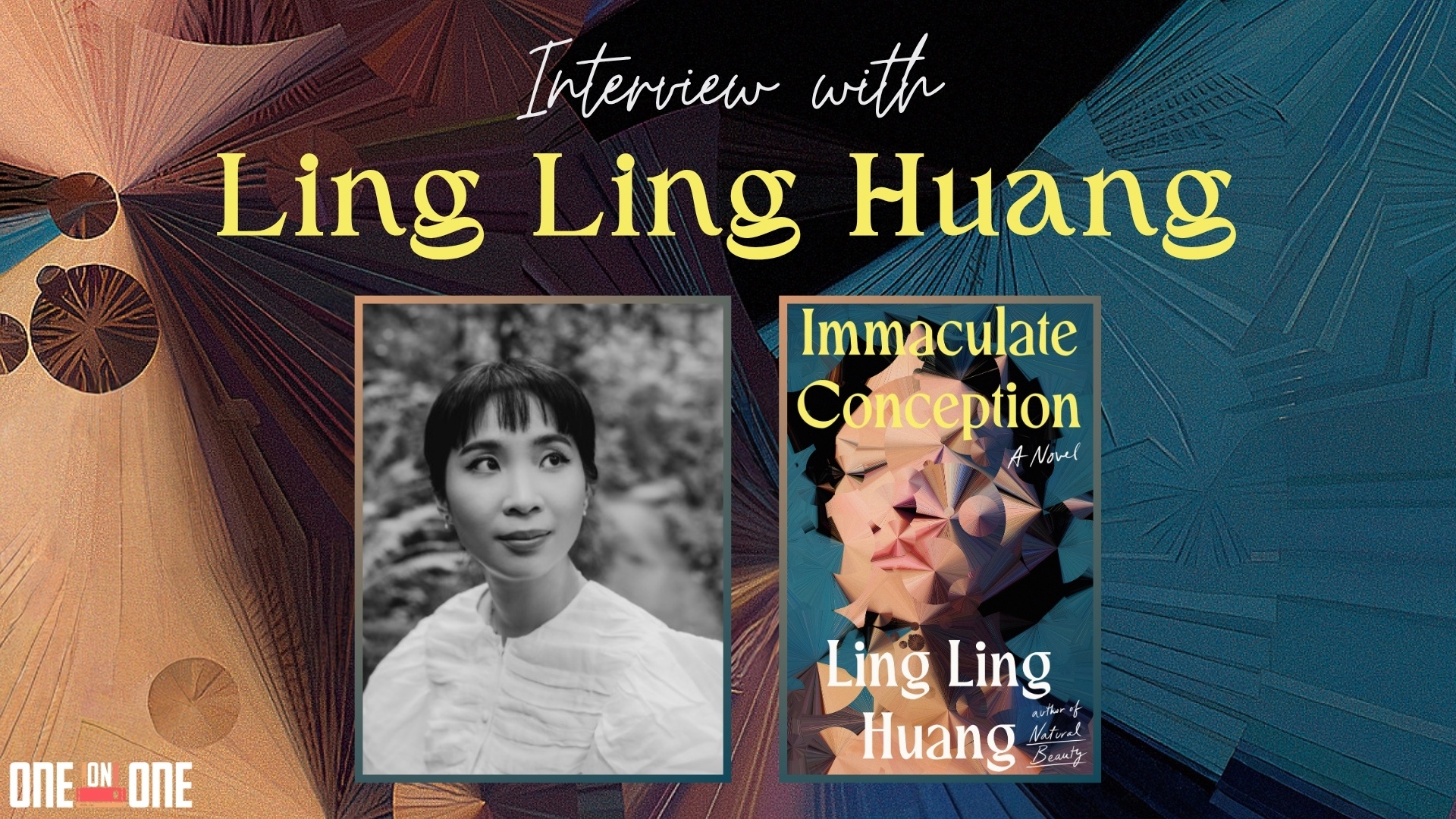
In her most recent novel, Immaculate Conception, readers are catapulted into a modern dystopia that is sure to hit a little too close to home. Immaculate Conception follows the unsettling ravelling and unravelling of the complex friendship between two female artists, Enka and Mathilde. Filled with razor sharp commentary on the potential and disastrous consequences of integrating generative AI into the arts and the fine line between love and possession, Immaculate Conception is the perfect pick for any lover of speculative fiction.
Read on to hear Ling Ling discuss her creative process and how the emergence and integration of technocracy in artistic spaces inspired her newest novel.
About Ling Ling Huang
Ling Ling Huang is a writer and Grammy-winning violinist. She has played with numerous ensembles, including the Oregon Symphony, Grand Teton Music Festival Orchestra, ProMusica Chamber Orchestra, and the Experiential Orchestra. Her debut novel, Natural Beauty, was released in 2023. It became a Good Morning America Buzz Pick as well as a New York Times Editors’ Choice and earned her the Lambda Literary Award for Bisexual Fiction. Immaculate Conception, her latest novel, was released in May 2025.
You can follow Ling Ling on her website and on Instagram.
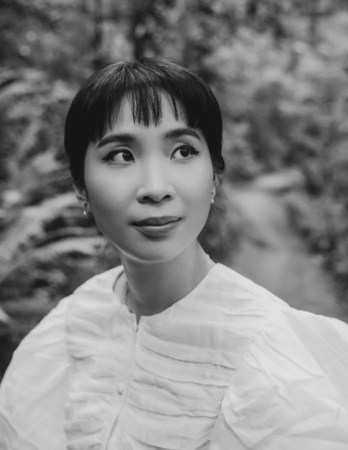
Thank you for joining us, Ling Ling. Let’s get started!
There are really visceral visuals that come through in your works. In an interview with Writer Writer Pants on Fire, you said that you almost feel like it’s impossible to write about a woman’s experience without going into the horror genre. How has that enriched your writing, especially in conjunction with the dystopian genre?
Thank you! I’m glad they are visceral to you! I have to be honest and say that I think very little about genre when I’m writing. Even with Natural Beauty, I never set out to write in the horror genre, and similarly, I wasn’t thinking about the dystopian genre with Immaculate Conception.

I’m interested in trying to tell the truth of what it feels like to be in a body, at a specific moment in time, as a victim or in complicity with the labels that are applied to said body. The experience of being a woman in this particular country, and of a specific color, has always been horrific, increasingly so. Not that it’s all bad — but as a writer, I’m interested in exploring where we go from here, and unfortunately, that often leads me to bleaker places.
Speaking of visuals, congratulations on Natural Beauty’s adaptation to screen. Is there a particular idea you hope to expand on within an episodic format?
A lot of Natural Beauty was kind of a Trojan horse for the classical music I love so much! In an adaptation, I’d love to hear and see the reality of a musical life similar to the one I’ve had the privilege of living: the portrayal of the joy and difficulty and solitude of trying to perfect a craft.
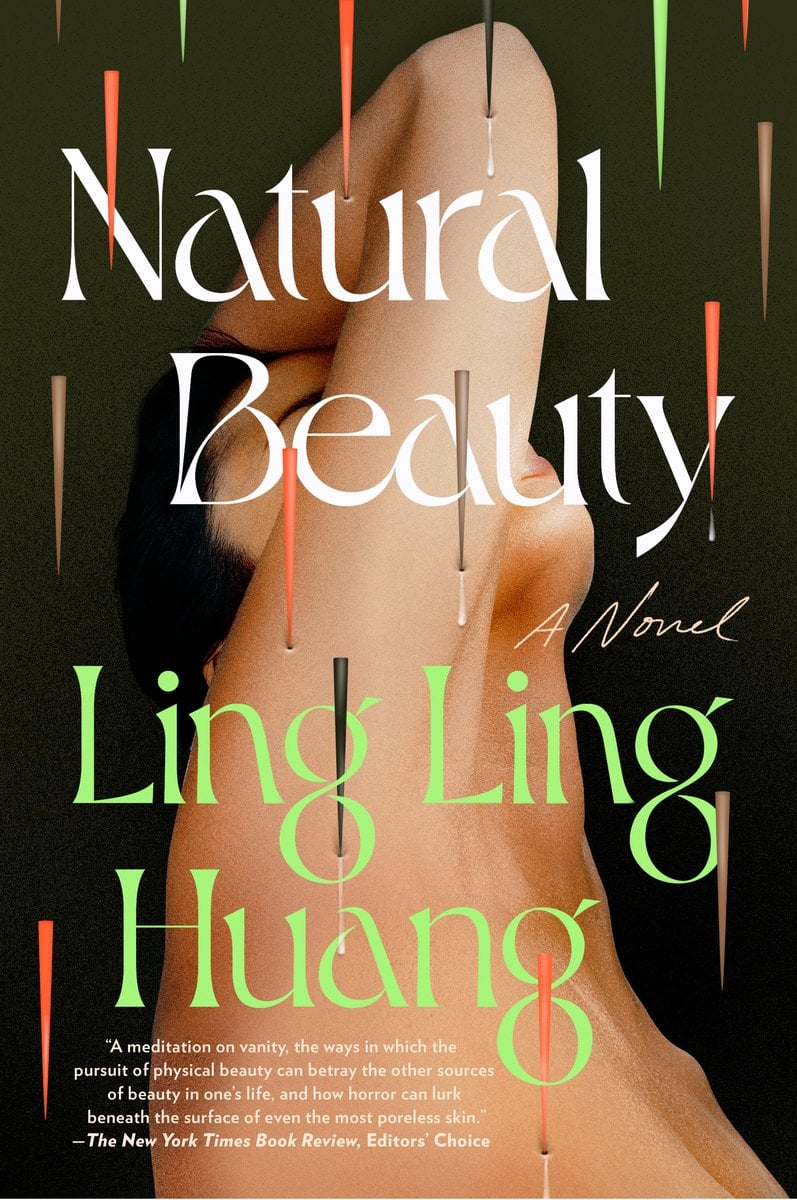
The way in which you have crafted the landscape of both your novels provides such an unnerving and uncanny feeling to the story. Can you talk us through the process of crafting these settings?
A lot of the landscapes depicted in both novels are ones I’ve been fortunate enough to experience in real life! Holistik isn’t exactly like the beauty and wellness space that I worked in. But I wanted to capture the same feelings of awe that I had. First as a customer and then as a new retail worker and how those feelings changed into something more unnerving, as you say.
One of the places that deeply influenced Immaculate Conception is Valentine, Texas. During the pandemic, I quarantine-camped in the Big Bend/Marfa area. Driving around and being in the immensity of that desert landscape was so humbling and inspiring. Crafting these settings in their novel forms was probably easier because I was just translating the feelings I had and the images that stayed with me.
You wrote a piece for The Literary Hub in which you called yourself a translator between music and words — where the goal isn’t fluency but connection. How has writing influenced your relationship with music and vice versa?
My relationship with music and with writing have certainly both deepened because of the other. All kinds of feelings are ignited by one for the other, and it’s that kind of cross-pollination that most excites me about pursuing more than one thing. There was a Shaker – or maybe a Quaker — quote I once read about how you need to apprentice four trades in order to master one. I think about that a lot when I’m struggling to balance practicing, writing, and now, being a mother.
I used to think that people didn’t take me as seriously as a musician in conservatory because I always loved reading and taking other classes, despite still practicing 8 hours a day. But now, I really believe that love and work are transferable. The time I put into being with my child and the time I put into writing and practicing — I trust that they’re connected, even when that connection isn’t always clear.
There’s an interesting feeling of desperation that comes from your main characters: they both crave authenticity and realness in a world full of masks and artificial technology. Were these similar motivations intentional, and how did you go about capturing their innate humanity?
Our increasing participation in both the beauty industry and the technology industry speak to how both industries are predatory in nature… preying on our “innate humanity.” I see these industries as being very intertwined. We do crave authenticity and realness! We want to be known but fear being known as we are — and that’s how the technology industry drives us to the beauty industry.
And the beauty industry drives us to use technology to share those parts of ourselves that we’ve tweaked or worked on. It’s a constant loop that feeds on insecurity and loneliness, and I don’t believe true satisfaction can be found with either. It’s very interesting to me to try and depict these industries that make promises geared toward our humanity but fall so short.
Privacy, specifically the lack of, is a really potent theme in Immaculate Conception. Why was it so important for you to draw attention to this idea, and what do you think it says about society as we creep closer to this reality outside of fiction?
Privacy is such a luxury in the real world today. Surveillance is everywhere. Nowhere more potent in the fear of being surveilled. So many of our movements and the things we do — maybe even the thoughts we think — are affected by the chance that we might be being watched or recorded. That has had a profound effect on me as a musician and the way that I perform.
I wanted to draw attention to this, especially as it pertains to the art space because artists often translate something unspeakably private and personal into a medium of their choice for public consumption. I’m very interested in the space where markets and personal experiences meet and how they affect and encroach on one another.
On the topic of privacy, you have a way of writing these women which makes the reader feel like they’re intruding on their most intimate moments. Did you always know that these characters were going to represent sensuality and sexuality in this way?
I didn’t know! The way I write women, I think, comes from an obsession I’ve had from a very young age. I’ve always been fascinated by the performance of gender that comes from beauty rituals, the specific socializations of women in spaces together vs. apart, and I’m especially interested in women for whom everything takes a backseat to their ambition and creative impulses.
I’ve seen and experienced how women have to modify or alter themselves in different spaces, and I think that’s why I’m so interested in this kind of intrusive writing. I want to know what they’re like without their masks and their manners. I want to see the writhing desire and ambition beneath it all. Most interesting to me is to see the collision between the desire and the manners — the ambition and the masks.
Connection is stressed throughout Natural Beauty and Immaculate Conception. How did you balance this desperation for connection in the characters, and how did that inform the narrative going forward?
It’s true that connection is a connector between both of my books! Both of the main characters have to choose between inauthentic and authentic forms of connection. I think the desire for authentic connection informs my narratives because it’s such a real life issue. The choice between authentic and inauthentic connection is one, I think, that we all have to make daily — to varying degrees.
For instance, every moment that I’m with my child, I have to decide if I want to scroll on my phone or be really present and available. It can be difficult to choose to be available instead of entering a world — the internet — in which everything is available to me. But I know that only one of those connections actually matters and is real to me. Lately, I pretend that I’m my child’s internet. An idealized version of it. Whatever they want — love, attention, knowledge, or information of some kind — I can offer it all.
Lastly, what advice would you have for an artist of any medium who is navigating this new world of technology that interferes with human creativity?
A lot of the decisions being made about new technologies are thrust upon us, but we don’t have to accept their existence passively. We’ve been through these things before now, like the advent of social media, and we know now that companies don’t often have our best interests at heart. We have to be the ones who ask the ethical questions, who preserve empathy and truth.
We can’t afford to be passive, and as art makers and creative people, I truly believe we can make a difference as to how and how much of these new technologies are accepted into our artistic vernacular. We have to watch out for the slippage, the erosion that ease promises to offer us in artistic mediums that are difficult and often not instantaneously rewarding. But our voices and our usage or lack thereof is important and makes a difference.
Thank you, Ling Ling, for an insightful and thought-provoking interview! You can pick up Ling Ling’s newest release, Immaculate Conception, from your favorite bookstore, or from one the links above. Trust us: you do not want to miss out on this thrilling and sharp portrait of an all-consuming, female friendship.
Looking for more author interviews? Click here.
Find Immaculate Conception on our Bookshop shelves and add it to your TBR, today!