



Have you ever had a person in your life who seems to shift between personalities without warning, almost like a monster suddenly takes over for the person you thought you knew? For ten-year-old Angus Gettlefinger, the protagonist of Kerry Madden-Lunsford’s new middle grade novel Werewolf Hamlet, it’s his older brother Liam, a teenager struggling with addiction in ways that impact the entire family. We had the opportunity to sit down with Kerry and talk about her latest book, the real-life circumstances that inspired it, and the power of art to transform and heal.
Trigger Warning: This article discusses drug use and addiction, the mention of which may be triggering for some readers. Please engage in self-care as you read.
About Kerry Madden-Lunsford
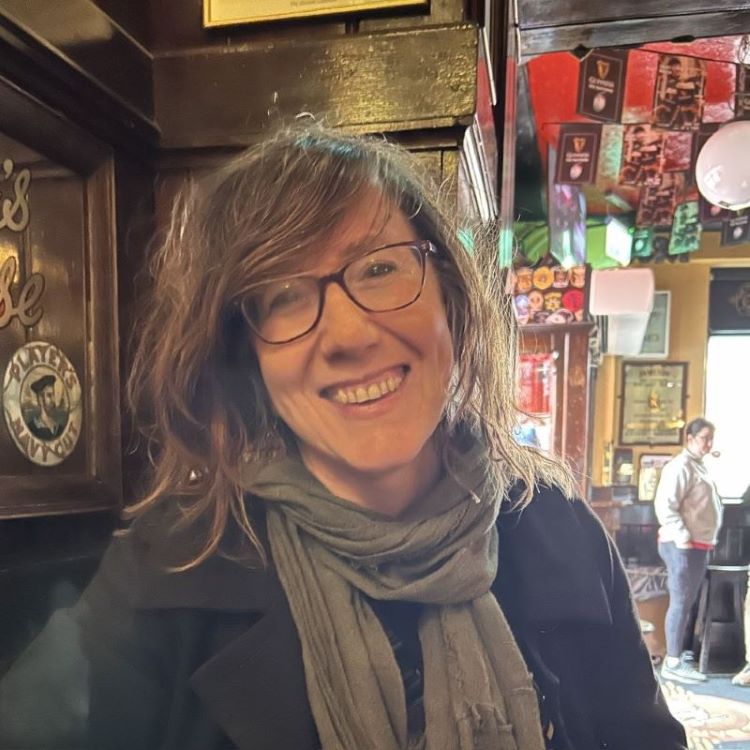
Kerry Madden-Lunsford has been a regular contributor to the LA Times Op-Ed page. For several years, she directed the creative writing program at the University of Alabama at Birmingham, where she is still a professor, and taught in Antioch University’s MFA program in Los Angeles for a decade. She is the author of the picture book Ernestine’s Milky Way and also wrote the Maggie Valley trilogy, which includes Gentle’s Holler, Louisiana’s Song, and Jessie’s Mountain. Her book, Up Close: Harper Lee, was one of Booklist’s Top Ten Biographies for Youth. Her first novel, Offsides, was a New York Public Library Pick for the Teen Age. Kerry is the mother of three adult children and now lives full-time in Birmingham, Alabama.
Thank you so much for taking the time to speak with us, Kerry. Let’s get started.
Angus is such an interesting fifth-grader, but he’s got a lot going in his life for such a young age. What he’s dealing with at the start of Werewolf Hamlet?
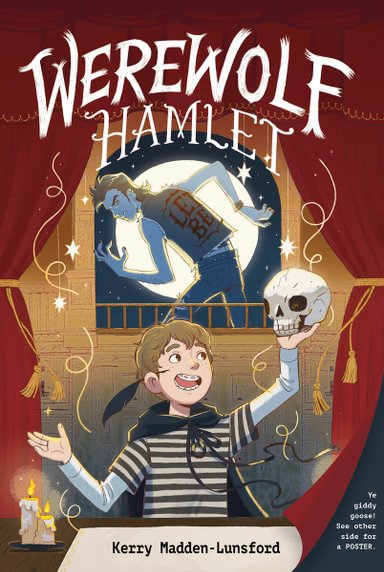
Werewolf Hamlet is the story of Angus Gettlefinger, a fifth-grade boy minding his own business (mostly) and living his fifth-grade life, who would like his big brother, Liam, to start acting like a normal brother again — preferably by Friday. Angus does have a lot going on in his life in Los Angeles, with his teacher asking what his fifth-grade legacy will be, his family in dire financial straits, and his mentor older brother going off the rails. Angus is a little bit of a fixer, and he’s not a big fan of change, either. He wants to fix his beloved big brother, who is changing before his eyes. He thinks if he puts on Hamlet with werewolves, Liam will see how he acts like a werewolf and he’ll stop drinking and using. He also wants to convince his fifth-grade teacher that werewolves are cool, and she’s not buying it.
Angus aims to use his werewolf stage adaptation of Shakespeare’s Hamlet to help his brother understand the impact his addiction is having on his family and their relationships. Do you find that interpretive art can have that kind of transformative power?
I do think interpretive art can have transformative power. Angus has a vision, and he believes if he can convince others — like his teacher, Mrs. Loudermilk — to believe in his vision, anything can happen. He’s got to go for something big because things in his life and in his family are spinning out of his control. Art takes us to places beyond ourselves, but Angus also discovers that there is real art in letting go and allowing the love to shine.
What inspired the character trait of Angus’s love of classic Hollywood and the script-format interludes in which he has imagined conversations with his Golden Age film idols?
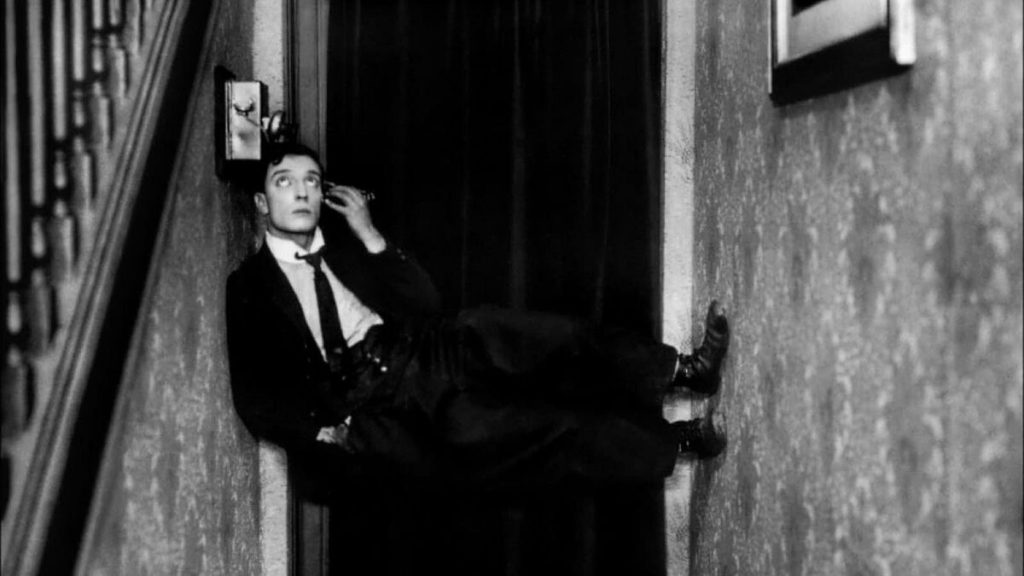
My son loved Charlie Chaplin, Buster Keaton, and Lon Chaney movies as a boy, and he used to like to dress up in costume to go to the video store to rent movies. Sometimes, he was Charlie Chaplin and other days; he was the Phantom of the Opera. Raising kids in LA, you get a real sense of old Hollywood, and you see glimpses of it in the old black-and-white films. I thought it would be fun to imagine a kid calling upon the Golden Age film idols for advice when things aren’t going his way. I loved imagining Chaplin, Keaton, Chaney, and Houdini coming together to offer words of wisdom.
We understand that this story comes from a very personal place as well. Can you tell us a little about what inspired it?
My son struggles with addiction, and it’s been the hardest journey as a family. He was a lot like Angus at ten and a lot like the teenage Liam. Everything we tried as a family to do to “rescue” or “save” or “fix” didn’t help, and it certainly didn’t give our son the dignity to figure out his life. Every time we swooped in to save the day, we were, in essence, telling him he couldn’t do it himself. In a way, I wrote this book to honor his beautiful and creative spirit. We were just so scared, and his behavior was so beyond our control. Since what I was doing wasn’t working and I felt so powerless, I tried to think of what I could do just for right now, and so I took a novel I was already writing and shifted the focus to a little brother who wants to save his big brother.
Many people would argue that issues like addiction — especially for an underage character — are too “heavy” for middle grade audiences. Why do you think that younger readers need access to these stories?
I saw for myself how our youngest child’s face changed from one of openness to closed and guarded around her big brother when things got bad. It made me so sad because they were so close when she was little. A counselor had also advised me to “write the book for the kids who need it” when I was complaining and freaking out about being unable to reach our son. Our son had always loved books and words, but no words, spun in myriad ways, could reach him. So, I took my mother angst and poured it into Angus, and then I wrote on a Post-it note: “It’s for kids!” and somehow, I was able to find the humor in the pain. I wanted to write a story for kids to know they are not alone, and even more importantly, it’s not their fault when someone else is making scary choices.
What was it like trying to balance authentic realism in the more serious moments of Werewolf Hamlet with the lighter, more humorous scenes? Do you think that this balance is true to life as well?

There’s a scene that happened in real life in the novel. Our dachshund brought an apple to the dinner table, and the apple had a hole in it, and it was clearly used as a pipe to smoke pot. In my fury, I called it “a bong” and my son corrected me. “Not a bong, Mom! A bong is…” I can’t remember if he called our dog a “narc,” but it was suddenly a funny and explosive family dinner scene to write with everyone trying to change everyone’s mind and control the situation. I also loved writing the quieter moments between the brothers, and I found their banter using the Shakespearean Insulter funny to play with in the scenes.
Lastly, in honor of Werewolf Hamlet, if you were to turn the story into a playlist — or jukebox musical! — what three songs would need to be on/in it?
I would love old silent movie soundtracks and, of course, some of these old classics about bad moons rising and werewolves: Bad Moon Rising by Creedence Clearwater Revival, How Will the Wolf Survive? by Los Lobos, and I Put a Spell On You by Screamin’ Jay Hawkins.
A huge thank you to Kerry for taking the time to talk with us about Werewolf Hamlet! Be sure to find her online at kerrymadden.com, or on Instagram, Facebook, Bluesky, Substack, TikTok, and Pinterest. Lastly, don’t forget to add Werewolf Hamlet to your TBR list!
To see more of our favorite middle grade reads, check out this article on the Best Middle Grade Books of 2024.
To see all of our recommendations for young bookworms, check out our Bookshop bookshelf.