







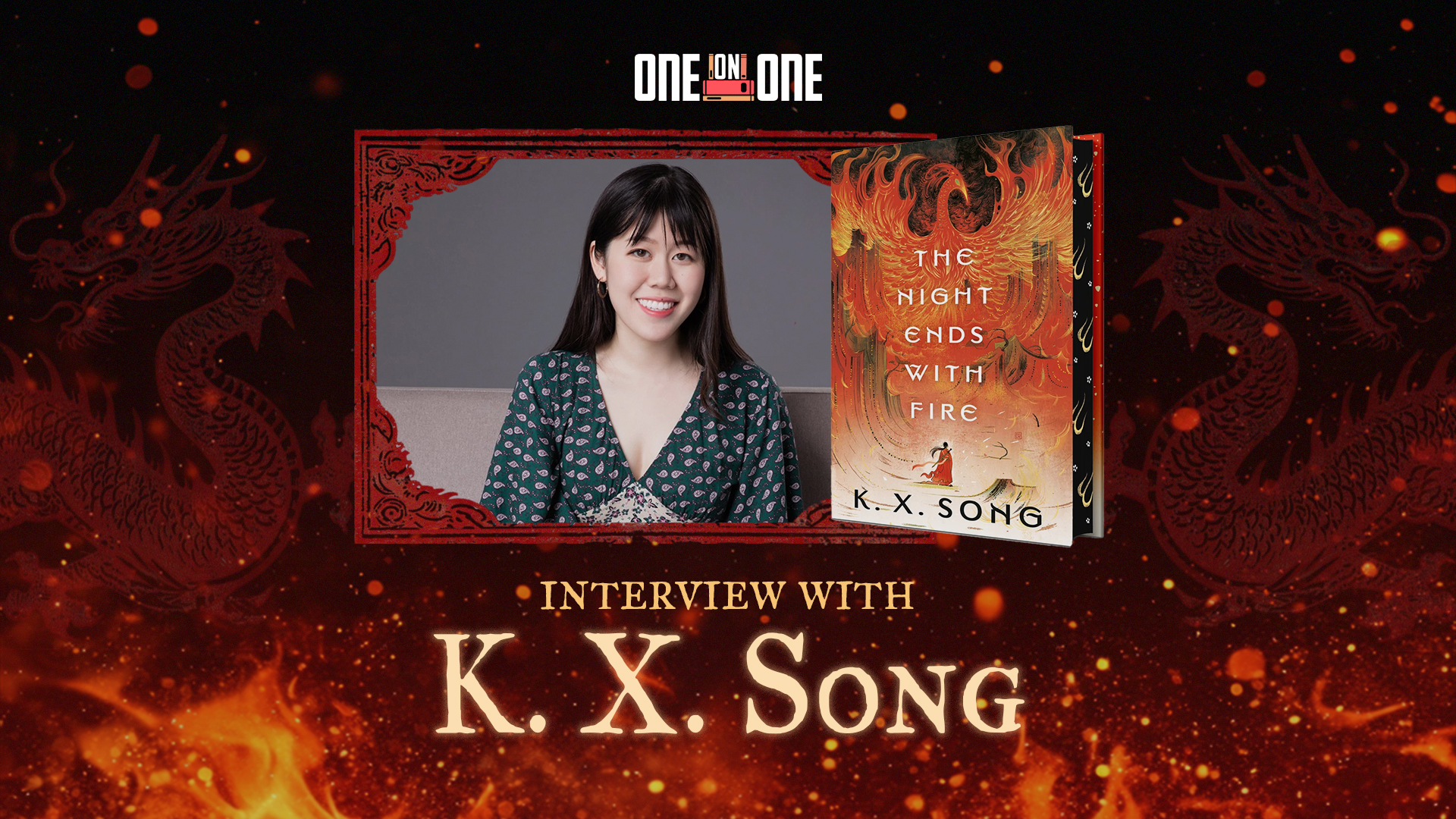
For many, the legend of Mulan conjures images of a brave young woman and a catchy Disney tune. But beneath the surface of familiar adaptations lies a rich tapestry of Chinese history, mythology, and folklore, often glossed over or Westernized in mainstream pop culture and entertainment. Enter K.X. Song, the visionary behind The Night Ends With Fire, a breathtaking romantic epic fantasy that dares to delve deeper. Inspired by the spirit of Mulan and drawing from the wellspring of classic Chinese stories, Song has crafted a world brimming with complex characters, dangerous magic, and morally gray choices.
In this exclusive interview, we explore the genesis of this captivating duology, the author’s journey from YA to adult fiction, and the intricate ways in which The Night Ends With Fire both honors and challenges the narratives we think we know. Prepare to have your understanding of legendary heroism and the allure of power ignited.
About K.X. Song
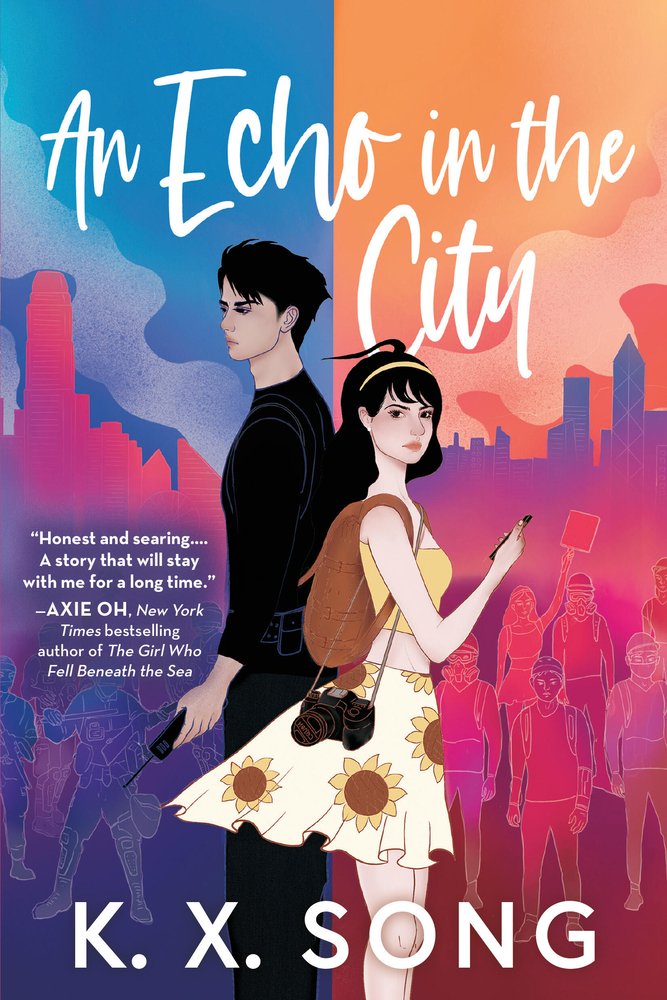
K. X. Song is a diaspora writer with roots in Hong Kong and Shanghai. Raised between cultures and languages, she enjoys telling stories that explore collective memory, translation, and the shifting nature of history. Her debut young adult novel, An Echo in the City, won the Freeman Book Award and was named a Best Book of 2023 by the Financial Times, Kirkus Reviews, and the Chinese American Librarians Association. Her debut fantasy novel, The Night Ends With Fire, was an Indie Next Pick and an instant New York Times, USA Today, and a #1 Sunday Times bestseller, and its sequel, The Dragon Wakes With Thunder, is forthcoming in August 2025. Learn more at kxsong.com.

Follow her on her socials: Instagram | TikTok
Thanks for talking with us, K.X. Let’s get started.
For readers unfamiliar with it, can you give us a brief summary of The Night Ends With Fire?
The Night Ends With Fire is a romantic, epic fantasy inspired by the legend of Mulan, following Meilin, a young woman desperate for freedom and power. To escape an arranged marriage, Meilin disguises herself as a man and enlists in the army in her father’s place. But what begins as an act of survival becomes a quest for power, as Meilin, at last, begins to acknowledge a hunger within herself — and a dragon spirit who feeds on that very greed. With star-crossed romance, dangerous alliances, and a magic system with real consequences, this is a story about ambition and the lengths one will go to for power.
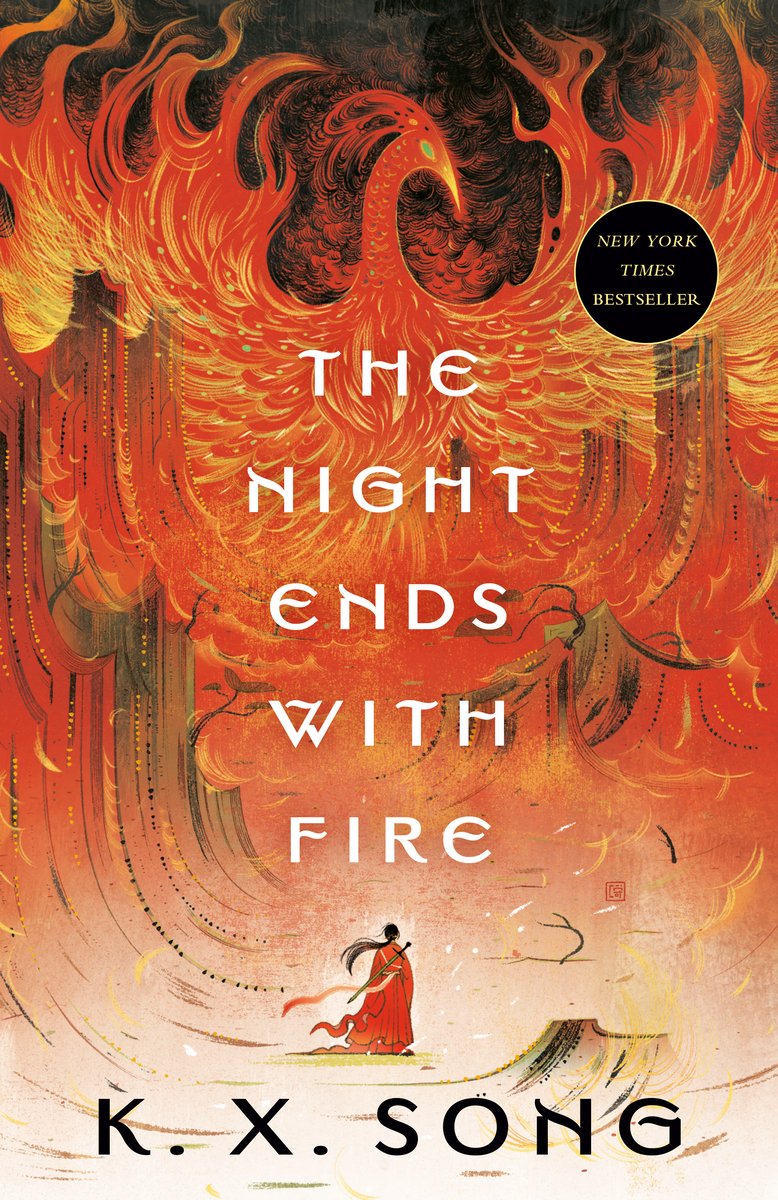
The next book in the duology, The Dragon Wakes With Thunder, will be released this August. What can you tell us about it?
If The Night Ends With Fire is about the pursuit of power, The Dragon Wakes With Thunder is about the cost of it. Meilin has won the war—but at a terrible price. Now imprisoned for the crime of wielding a sword as a woman, she becomes a symbol used by rebels, royals, and former enemies alike. Everyone wants something from her, and she is trying to figure out who she can trust. But perhaps the most dangerous voice is the one inside her own head: the sea dragon Qinglong, who gave her power—and now wants something in return. Expect betrayal, heartbreak, dragons, and plenty of female rage. This is a story about reckoning with what you’ve done to get what you wanted… and now who you’ve become in the process.

Your first publication, An Echo in the City, is a young adult novel. What was it like for you transitioning from writing YA to adult fiction?
Surprisingly, the writing process wasn’t all that different. Both novels began with a spark — a question or curiosity — and then unfolded through character. The biggest shift was in point of view: The Night Ends With Fire is told entirely from Meilin’s perspective, while An Echo in the City alternates between Phoenix and Kai. Writing in a single POV meant being more intentional about what scenes I could include, since everything had to be filtered through what Meilin could realistically see, know, or experience. One of the ways I worked around that limitation was through the chapter epigraphs, which offered glimpses into the broader world — politics, legends, propaganda — that Meilin herself wasn’t privy to.
Thematically, Night also gave me more room to explore morally gray characters and choices. As an adult novel, it allowed me to delve into messier territory, where the lines between right and wrong blur.
When reading The Night Ends With Fire, I was struck by the way you portrayed Meilin’s struggle with her powers and how it seemed to resemble the struggle of addiction. What did you draw from to portray Meilin’s inner battle?
In this world, magic is power — and power always demands a price. For Meilin, that price is tied to the sea dragon Qinglong, who feeds on her greed. The more she taps into her magic, the more that hunger grows, and the harder it becomes to separate her ambition and desire for power from Qinglong’s influence. I wanted Meilin’s relationship to the dragon to feel deliberately ambiguous, because ambition itself can be both beautiful and dangerous. Meilin’s story is about navigating that tension between safety and adventure, desire and obsession.
The publisher describes The Night Ends With Fire as being a combination of Mulan and Chinese classic stories. How much of this book was inspired directly by these stories, and how much came from your own imagination? Was it difficult finding a balance between the two?
Much of The Night Ends With Fire emerged from my love of Chinese historical dramas. I grew up watching Romance of the Three Kingdoms adaptations and was fascinated by characters like Liu Bei and Cao Cao. Meilin is not Mulan, but her story is my answer to a question that always bugged me about the Disney version: what if she didn’t want to go back to her old life? What if, after tasting power, she wanted more? Balancing history and fantasy came naturally once I realized I wasn’t trying to retell a story — I was trying to challenge it.
Without spoiling too much, The Night Ends With Fire duology concludes in a way that leaves the door open for spin-off novels. Do you plan on revisiting this world in the future, or have you reached the end of Meilin’s story?
Meilin’s individual arc is complete by the end of book two, but the world of the Dragon Spirit duology is vast, and there are definitely other characters whose stories I’d love to tell. That said, I think it’s important to give each narrative its proper conclusion. Right now, I’m focused on making sure Thunder ends Meilin’s story with the emotional resonance and catharsis it deserves. But who’s to say what the future holds!?
Your writing has such a unique poetic quality to it. Do you have any experience with writing poetry? How did you go about integrating beautiful language into the gritty fantasy world you created?
Thank you! I’ve dabbled in poetry, but my primary background is in fiction. That said, I’ve always been drawn to stories with lyrical, emotionally resonant prose. For me, language is a mirror of a character’s inner state. When Meilin is in the middle of a fast-paced action scene, I try to make the prose sharp, clipped, and punchy. But when she’s caught in introspection, thinking through the weight of her choices, I want to make the sentences expand — more fluid and meandering, following the natural rhythm of thought.
I always loved the movie Mulan growing up. Do you know of any other books inspired by the popular Disney movie for readers to consume once they finish your duology?
Absolutely! One of my favorite recent reads is She Who Became the Sun by Shelley Parker-Chan, a gender-bent reimagining of the rise of the Ming dynasty. I’d also recommend Daughter of the Moon Goddess by Sue Lynn Tan for its blend of Chinese mythology, romantic entanglements, and lush prose.
Thank you, K.X., for the excellent interview!
In a landscape often saturated with simplified or culturally diluted portrayals of ancient East Asian narratives, K.X. Song offers a refreshing and nuanced vision with The Night Ends With Fire and its forthcoming sequel. This isn’t merely a retelling; it’s a thoughtful exploration of ambition’s intoxicating grip, the brutal realities of power, and the intricate dance between destiny and desire, all woven with threads of inspiration drawn from authentic Chinese lore. By daring to ask “what if?” and imbuing her world with lyrical prose and morally complex characters, Song invites readers to look beyond familiar tropes and engage with a fantasy that resonates with both epic scope and profound emotional depth. As Meilin’s journey continues in The Dragon Wakes With Thunder, one can’t help but feel a sense of anticipation for the further unfolding of this richly imagined world — a testament to the power of embracing cultural inspiration with both reverence and a fearless creative spirit.
Pick up your copy of The Night Ends With Us today!
Looking for more author interviews? Click here.
Find Song’s books and many others on our Fantasy Lovers Paradise: Epics, Romances, and More Bookshop shelf.