
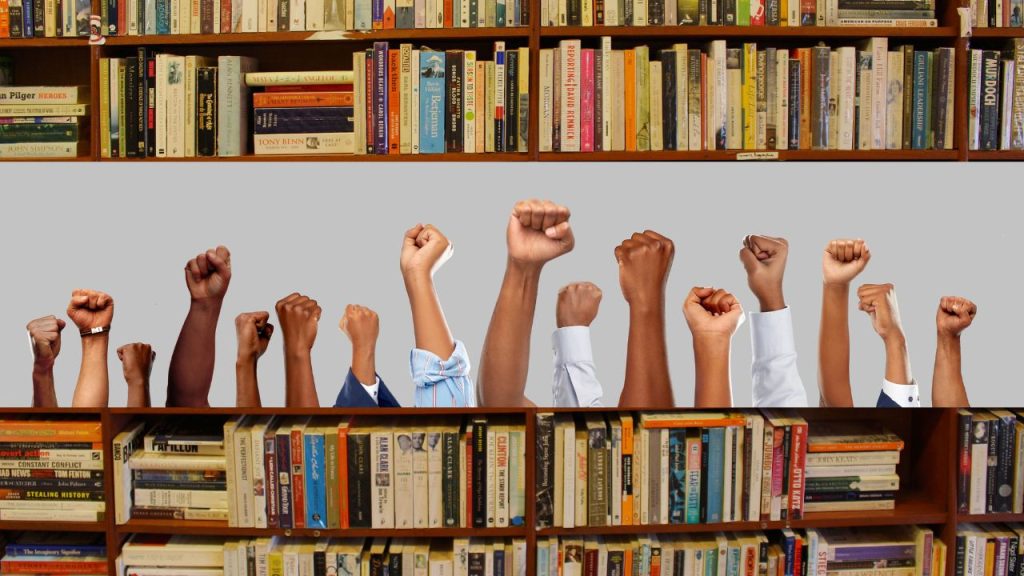




Often, feminism is mistakenly identified as being an ideology that solely pertains to the female population. While feminism is very much about the economic, political, and social empowerment of women, at its core, feminism is about creating equality in these areas for all genders, including male and nonbinary gender identities. Likewise, feminist children’s books like the ten on this list are all about affirming gender freedom and gender safety for young people, encouraging them to act with kindness towards those of all genders, and speaking up when they see gender-based discrimination occurring.
Feminist Baby by Loryn Brantz

Told in simple rhyming couplets, readers are introduced to Feminist Baby, a smart, fierce, and self-possessed infant. Feminist Baby likes pink and blue, likes to play with dolls and cars, and wears whatever she likes and feels comfortable in. She is unashamedly smart, joyfully cacophonous, and okay, yes, WILL occasionally throw up on you (she is a baby, after all). Most importantly, Feminist Baby can and will be whoever and whatever she wants to be and has the freedom and the right to chase all her dreams. Based on Brantz’s series of comics, this board book is a great way to show the littlest readers the passé foolishness of gender norms; after all, even a baby can see how silly they are. There’s even a sequel, Feminist Baby! He’s a Feminist Too!, geared towards reducing gender stereotypes for boys.
ABC What Can She Be? by Sugar Snap Studio

What can little girls grow up to be? Whatever they’re passionate about! Walking baby bookworms through an alphabet of potential vocations such as astronaut, firefighter, gymnast, and judge, this colorful title combines the early-reading skill of letter identification with a perfectly balanced and wide-ranging collection of future careers. The colorful artwork is a visual delight, and the message is timeless: girls can be anything they dare to dream. Bonus: don’t miss the equally feminist companion book, ABC What Can He Be?, which offers a similar range of options to little boys (including ballet dancers, fashion designers, nurses, etc.) that consciously defy gender stereotypes.
Grace for President by Kelly DiPucchio, Illustrated by LeUyen Pham
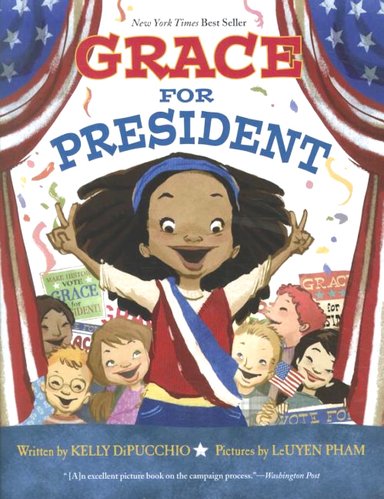
When young Grace finds out that there has never been a female president of the United States, she is incensed. She declares that she would like to run for President, inspiring her teacher to set up an election for class president using the electoral college as a basis. Grace’s opponent is Thomas, a popular boy, so she knows she’ll have to work hard for her win; she speaks with constituents about their concerns, creates platforms, and organizes events. Meanwhile, Thomas figures out that the boys hold slightly more electoral votes than the girls, which he assumes will ensure his victory … or will it? This story offers a sly indictment of the fact that women — particularly women of color — often have to work three times as hard for recognition, but more overtly, it is a powerful tale of political passion and supporting the better candidate, regardless of gender.
The Paper Bag Princess by Robert Munsch, Illustrated by Michael Martchenko
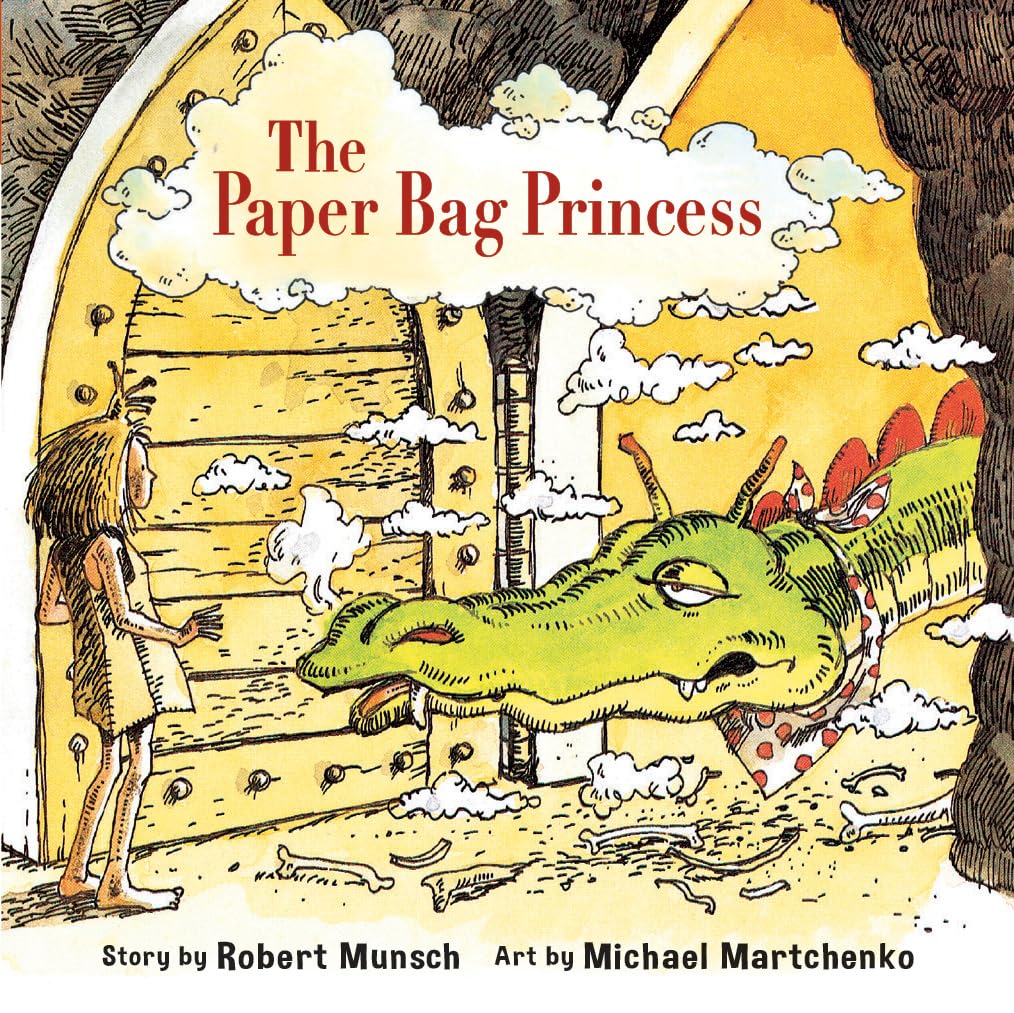
A timeless, forever classic. Elizabeth is a beautiful princess who lives in a stately palace, dresses in fine clothes, and is betrothed to a handsome prince named Ronald. One day, a terrible dragon attacks the palace, burning it to the ground and kidnapping Ronald. Elizabeth knows what she must do: she sets off to defeat the dragon and retrieve Ronald, clad in the only thing she can find that hasn’t been burnt up — a paper bag. Using her wits and courage, she defeats the dragon and sneaks inside his lair to rescue Ronald, who upon seeing her singed and ragged appearance, criticizes and insults her. Without missing a beat, Elizabeth dumps the shallow Prince and skips off to live happily ever after without him. This is a book that celebrates a girl’s worth well beyond her appearance and shows little ones that they should always know their value — and not waste their time on people who do not appreciate it.
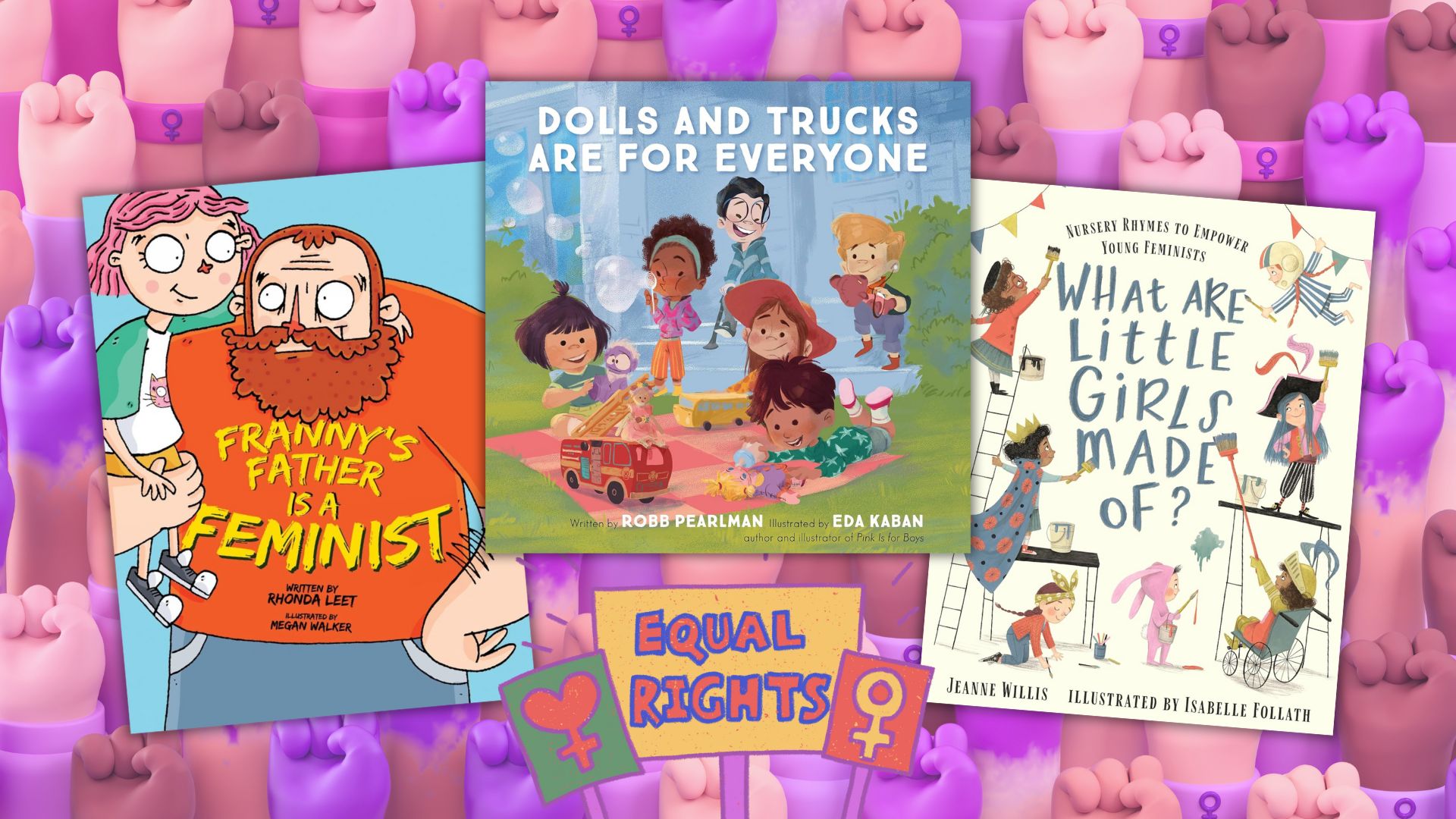
What Are Little Girls Made Of? by Jeanne Willis, Illustrated by Isabelle Follath
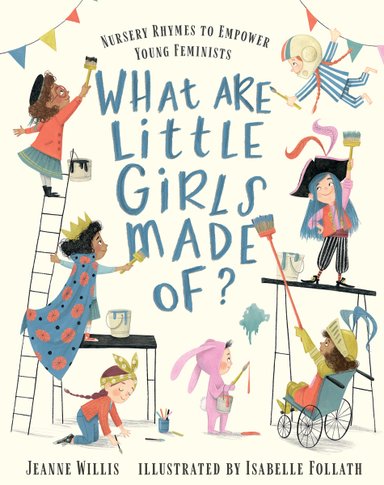
Let’s face it: there are plenty of “classic” nursery rhymes that haven’t exactly aged well, especially from the perspective of their female characters. Flipping these tired tropes on their head, Willis and Follath offer remixed versions of nursery rhymes like “Jack and Jill,” “Bye, Baby Bunting,” and “What Are Little Girls Made Of?” In these renditions, Georgie Porgie is called out for kissing girls without their permission, a boy has no problem respecting his female monarch, and children of all genders are free to express themselves in whatever way makes them feel comfortable and confident (as long as it is respectful of others). After all, as the titular nursery rhyme points out, little boys and girls are all pretty much made of the same things: “sun and rain and heart and brain.”
My First Book of Feminism (for Boys) by Julie Merberg, Illustrated by Michéle Brummer Everett

A fantastic primer for feminism from a masculine perspective, this rhyming board book offers simple lessons on how little ones can integrate gender equality into their everyday lives. The gentle text offers not only actionable suggestions but also the reasoning behind them: boys should clean up after themselves because there’s no such thing as “boy jobs” or “girl jobs,” and “it’s nobody’s job to clean up after you!” Similar topics such as consent, equal pay, and dispelling the notion that strength only lies in physical power are discussed in likewise accessible ways. It’s a great title for establishing equal rights as inalienable for young readers; don’t miss out on the companion title, My First Book of Feminism, which approaches early feminism from a feminine perspective.
Franny’s Father is a Feminist by Rhonda Leet, Illustrated by Megan Walker

What does it mean that Franny’s father is a feminist? Well, it means he believes that his daughter — and everyone else’s daughters too — can do anything that boys can, and that they deserve to have the same rights, freedoms, and opportunities. He takes care of Franny before and after school because her mother works long hours at a very important job (though both her parents agree that raising Franny is the most important job of all). He’s not afraid to let Franny know that boys and men are allowed to cry, and he inspires Franny with stories of female role models like Ruby Bridges and Malala Yousafzai. Franny’s father is a feminist because he believes that boys and girls deserve a world in which they are treated equally. Delightful illustrations perfectly complement the light tone of this title, which reminds caregivers that feminism is not a concept exclusive to adulthood.
Girls Can Do Anything by Caryl Hart, Illustrated by Ali Pye

By now, we can all agree that placing limits on what girls are “allowed” to do is just nonsense, and the diverse group of girls in this book is happy to prove that. Bouncy rhymes lead readers through a city full of girls and young women doing the things that bring them joy, from climbing trees to skateboarding to chatting with friends to playing trumpet to doing their hair, etc. The girls depicted are widely representative of various skin tones, hair textures, abilities, and personal styles, and are shown interacting with each other in supportive and encouraging ways, no matter their differences. The text even gives readers a sampler of some real-life female role models, such as Black neurosurgeon Dr. Alexa Canady and queer athlete Nicola Adams. A sparkling, exuberant ode to the infinite ways to express femininity, this book will leave little readers cheering along: “I’m a GIRL! I’m FANTASTIC! I’m strong, brave, and proud!”
Dolls and Trucks Are for Everyone by Robb Pearlman, Illustrated by Eda Kaban
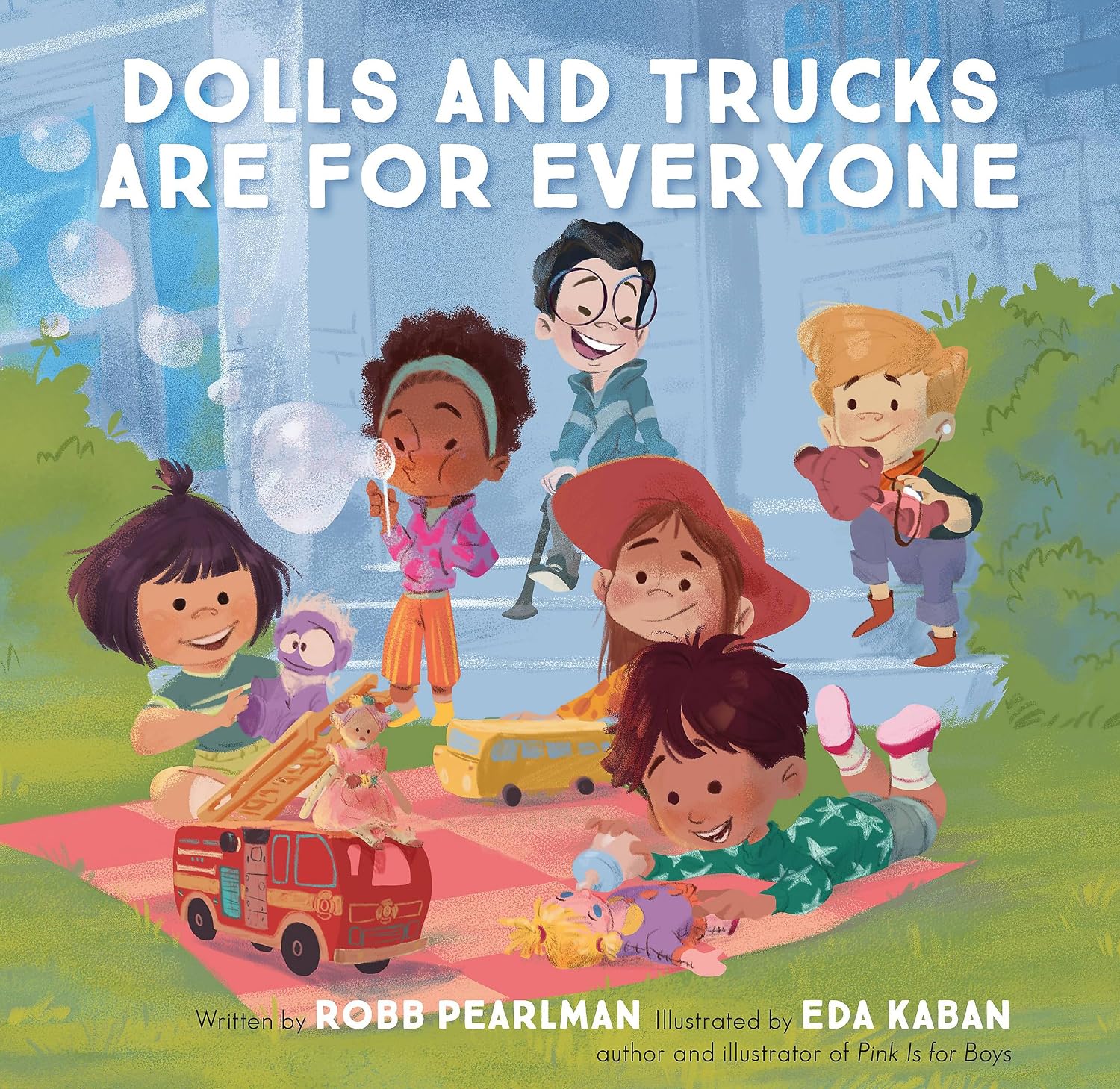
Toys are for everyone. Dolls and trucks, superhero capes and nurses’ scrubs, sewing machines and hockey sticks, mixing bowls and video games and unicorns (especially unicorns because, come on, UNICORNS). All toys, dress-up costumes, and ways of imagining and creating are for boys, girls, and anyone who wants to use their imagination and build their skills. So, don’t let anyone tell you that something is only for boys or girls, because kindness and understanding are for everyone too, and in play, just as in life, our possibilities are limitless. Pearlman and Kaban’s pseudo-prequel to this title, Pink Is for Boys, gets a lot of love, but our preference is for this version, which skillfully deconstructs many of the same gender norms — clothing, toys, hobbies, etc. — yet further includes genders that lie outside the binary.
Pink: A Women’s March Story by Virginia Zimmerman, Illustrated by Mary Newell DePalma
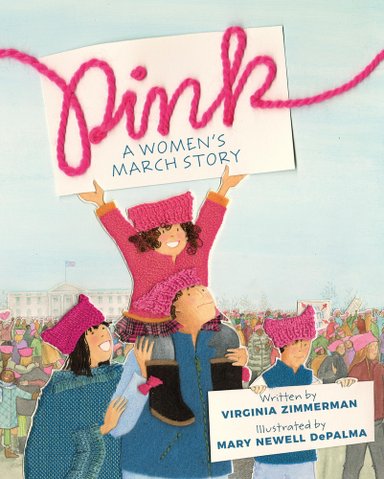
When Lina’s grandmother declares that she needs to go to the store for pink yarn, the little girl looks at the piles of baby pink yarn in the sewing basket and is puzzled. Grandma explains that she needs a “grown-up” pink, as she will be making hats for a protest that is coming up. As Grandma walks Lina through the process of knitting the hats, her dad explains their significance. Mom and Grandma talk about the history of feminist movements to Lina and her brother and invite the children to attend the march as well. Lina’s not sure that her small voice can matter in such a great crowd, but when she and Grandma link arms with strangers in the crowd, she understands: “We are knitting.” Gorgeous mixed-media illustrations and a heartwarming story make this a can’t-miss tale about the power of unity.
Feminism is not a political movement or a radical idea; it is the simple belief that all genders are entitled to equal freedoms, rights, and opportunities, and that’s a lesson that all children can benefit from. We hope that you and your young reader enjoy these books and that they encourage you both to stand up for equal gender rights. Happy reading!
For another fairytale that combines girl power and equality, check out our interview with author Kim Nguyen on her book, Princess and the Pea-tition.
To see all of our recommendations for mini bookworms, check out our Bookshop bookshelf.