






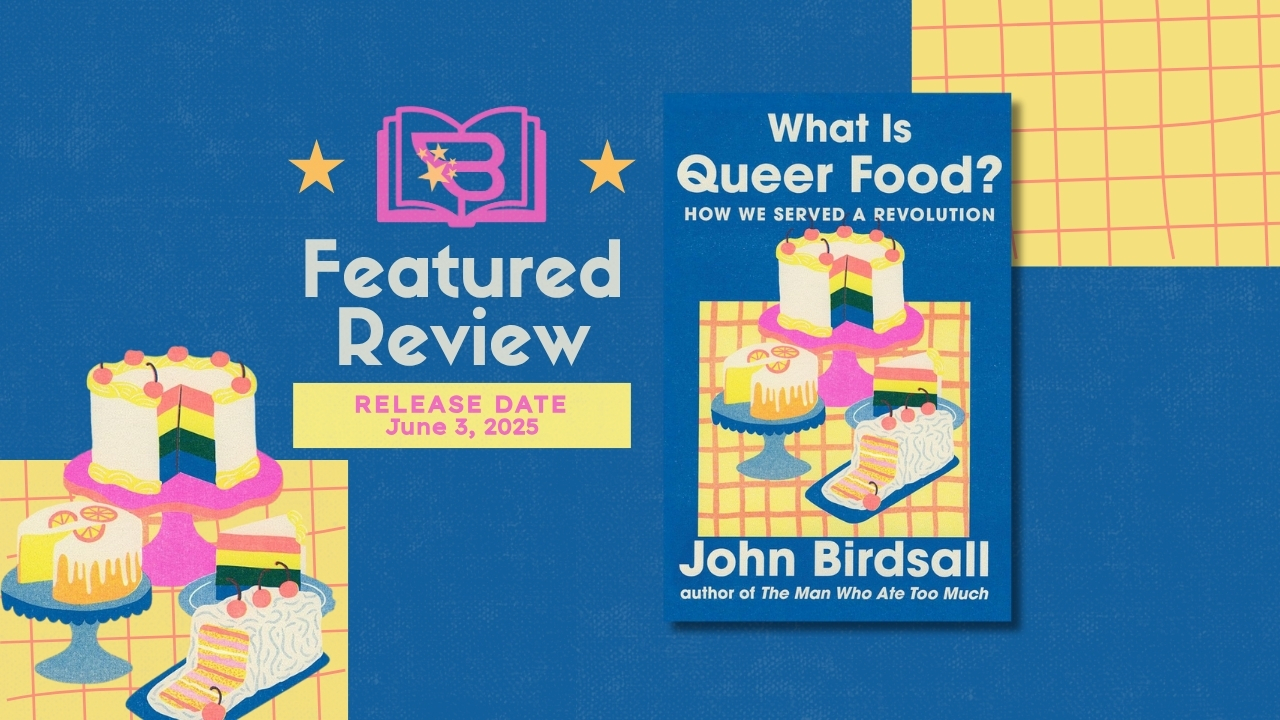
John Birdsall’s debut was a definitive biography of James Beard, the man who shaped the modern culinary landscape. His next book, What is Queer Food? follows a similar path but expands its historical scope to a larger cast of characters who populated queer food history, exploring what exactly “queer food” might mean.
From delving into the true origins of Betty Crocker’s chiffon cake to examining the survival of many marginalized communities across the US and tracing the lives of queer people throughout history, Birdsall provides an essential text in understanding the ways the queer community has survived and thrived, with food as a throughline.
What Is Queer Food? hit shelves on June 3. Here’s everything you should know before you dive into this culinary and cultural adventure!
Synopsis
Birdsall’s anthology of queer and marginal food has an unconventional structure — it’s semi-chronological but follows a cast of historical characters throughout time, offering small vignettes and glimpses at scenes and experiences the historical record can only guess at. From small pieces of evidence, Birdsall takes the reader on a journey through the ways queer people have hidden within the margins but nonetheless affected food, culture, and the world in indelible ways.
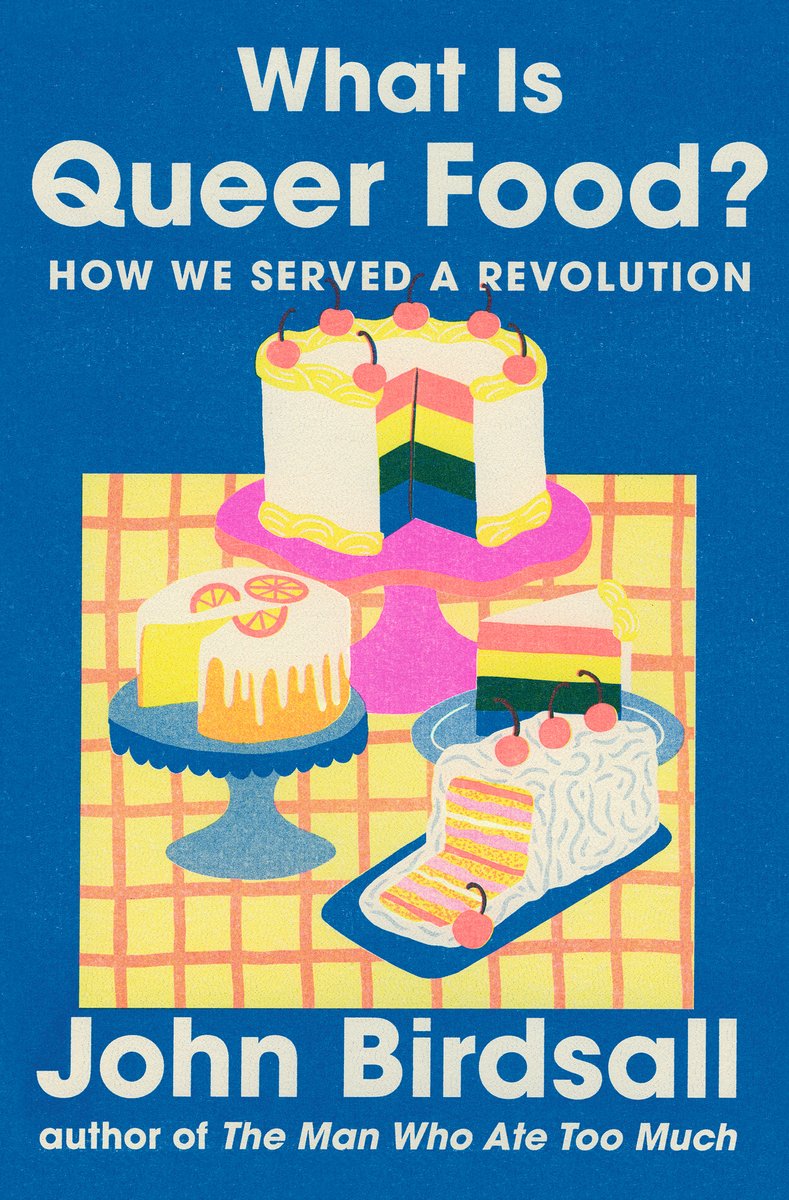
All too often, queer people and queer food were pushed to the edges of history, written over and concealed within a larger narrative. Birdsall takes us inside their lives, imagining what Gertrude Stein and Alice B. Toklas might have eaten during their time in Italy or the parties and food James Baldwin had in Paris.
In the end, What Is Queer Food? is a kaleidoscope of brilliant stories, telling the histories not only of food but of the queer people who sought to create community when that concept alone was dangerous; of people who took risks to become visible, if only for moments, to gather together and to provide for one another.
A Historical Journey Through Queerness
What drives this book is excavation, my almost fevered need to unearth stories of those who, from the start of the twentieth century into the middle of the 1980s, used food as self-expression.
— John Birdsall, What Is Queer Food?
Birdsall’s journey takes the reader from the late 19th century all the way up until the late 1980s, encompassing nearly a century of time, split into four parts. In small essays, Birdsall introduces us to a captivating cast of characters, including Esther Eng, Craig Claiborne, James Baldwin, and Harry Baker.
As time marches on, the reader is able to check in with characters in small bursts that skip across the years: In one essay, a young Esther marvells at Chinese opera performances; in another, she’s perhaps backstage with the performers, just another part of all the scenery. And in another, she’s crossed the ocean to become a filmmaker before returning to America and opening the first of her restaurants. Each time she steps into the spotlight, she has changed a little, but her queerness — and her core identity — remain the same.
With this structure, rather than a series of separated stories, there’s a sense of all of these characters and personalities orbiting each other, never more than a page or two away, liable to walk in and out of each other’s lives at any moment. Birdsall writes more than biographies: He creates the sense of a community of vibrant people and personalities, all united by time, all struggling toward a sense of expression, often through food, against forces that would seek to oppress them and their individuality.
An Index of Marginality
Food is part of a queer arc of survival, shared sustenance that we and others like us kept open so that others could get safely through.
— John Birdsall, What Is Queer Food?
What Is Queer Food? focuses on queer people and how their identity affected their lives in myriad ways. But it’s also about the concept of marginality itself and how the intersection of many identities can affect almost anything and everything, from the food you eat to the way you act to how you relate to your sexuality.
To be marginal means to literally be on the margins, and Birdsall’s exhaustively researched essays bear witness to the fact that even for historical queer icons, concrete details of their personal lives — from what they ate to who they spent their time with — are scarce. Birdsall excavates the historical record for hints at the carefully concealed intimacies and communities that queer people build between the lines and in the margins of written history.
He also explores how identity impacts queerness and food, from Edna Lewis’ meditations on being a Black woman chef and her proximity to queerness to characters’ relationships to their cultures and origins, including Ernest Matthew Mickler’s White Trash Cooking, Esther Eng’s formative years in Chinatown and time abroad, and Herman Smith’s Midwest childhood.
Throughout it all, Birdsall writes with extraordinarily compassionate prose, inviting the reader to examine what it means to live life in the marginalia, with the greatest passions of your life potentially living only as a footnote, and to contemplate what it was like to live that way. He also shows, with style and grace, the beautiful things that were nevertheless created in community with the marginal.
A Meditation on What Food Means to Us
Any food is queered when we taste it together; when it sounds a shared story on our tongues.
— John Birdsall, What Is Queer Food?
The crowning glory of this book is, of course, the descriptions and analysis of food. From the delicate flavor of roasted pigeon in Italy to the fantastical, impossible rise of a chiffon cake baked in Harry Baker’s kitchen, Birdsall’s pen brings queer food to life, even as it deconstructs what queer food really means.
Of course, Birdsall highlights specific instances of queer food: the way paper chicken, with its transformative packaging and wondrous presentation, mirrors the way queer people, such as Esther Eng (AKA, Brother Ha), had an identity that was fearless yet still concealed. He describes a dish of asparagus with sauce on it, rendering it a metaphor for queer existence, smothered by the sauce and forced to lose its original hue. Birdsall’s prose shines here, persuasively arguing for the way food can be a potent metaphor and method of expression, one that nourishes others while serving as a way to assert one’s existence.
Ultimately, Birdsall argues against the idea that certain foods are “queer” and thus encapsulate the entirety of one experience. Rather, any food is queer if you make it so: if you engage in rebellion, expression, love, or introspection at any point in its preparation or consumption. Queer food is the dish you bring along to a potluck; it’s the twist on an old recipe that brings history back to life; it’s whatever you can scrape together in the morning because the party’s gone on till dawn. And it is, in fact, revolutionary.
Final Thoughts
You should pick up What Is Queer Food? if you’re interested in learning more about hidden history or thinking more about the ingredients and origins of everything you eat. Or even if you want to read descriptions of food that will have you obsessively looking up recipes!
What Is Queer Food? is eye-opening. It will have you examining your own relationship to identity, community, care, and food, not necessarily in that order. Birdsall’s delicately traced web of people and the food that connects them isn’t just a historical chronicle: It’s a guidebook for how to hold space for the ways seemingly innocuous things can possess an immense amount of importance. In short, this book has something for everyone, and it’s sure to change your perspective on something along the way, even if it’s just a newfound appreciation for a good quiche.
If you loved these books, you’ll love What Is Queer Food?:
- The Man Who Ate Too Much by John Birdsall
- The Book of Difficult Fruit by Kate Lebo
- White Trash Cooking by Ernest Matthew Mickler
- The Flavor Equation by Nik Sharma
- What She Ate by Laura Shapiro
Bookstr’s What Is Queer Food? Dream Cast:
- Stephanie Hsu as Esther Eng
- Matt Rogers as Harry Baker
- Jonathan Bailey as Ernest Matthew Mickler
- Meryl Streep as Genevieve Callahan
- Andrew Scott as Herman Smith
Final Score: 4.5/5

If you want to add What Is Queer Food? to your TBR, you can order it on Bookshop, Barnes & Noble, Books-a-Million, and Amazon! Thank you to W. W. Norton & Company for providing an ARC in exchange for an honest review.
For another Bookstr starred review, click here!
To browse more books like this, check out Bookstr’s LGBTQ+ representation shelf on Bookshop!