














[Trigger Warning: Cartoon Suicide] This content includes media and/or descriptions of suicide gags in vintage cartoons, which may be distressing or harmful to some viewers. Please engage in self-care as you read this article.
[Trigger Warning: Cartoon Gun Violence] This content contains media and references to gun violence, comedic gun use, and slapstick firearm gags as portrayed in past animated programming. Please proceed with care if you may find such material distressing.
[Content Warning: Child Mortality] This article discusses real-world data on accidental firearm deaths involving young children. Reader discretion is strongly advised, especially for those sensitive to child loss or gun violence.
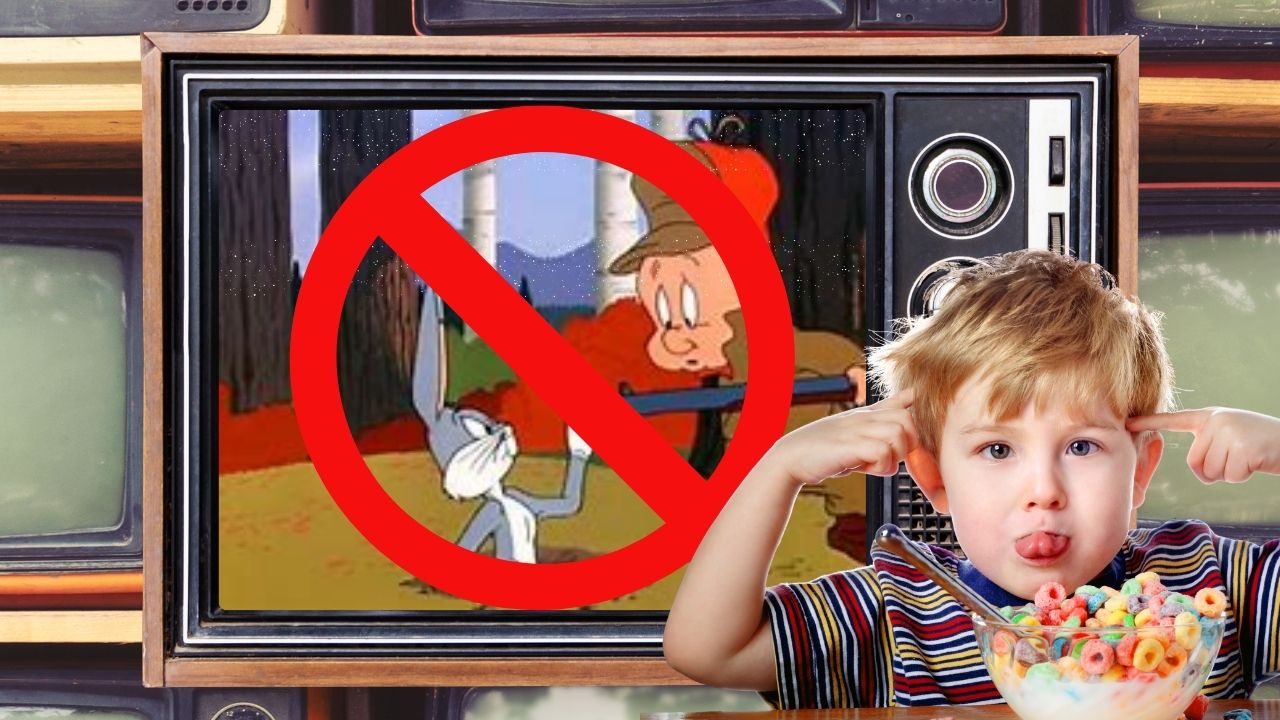
What’s most loony about gun gags for kids’ content today is how long they lasted. The early years of Saturday morning cartoons treated firearms like props in a slapstick symphony — characters looking down barrels, taking bullets to the face, and bouncing back with little more than a soot-smudged, comical expression — with such reckless abandon that they contributed to a huge public safety problem. Accidental shootings involving children had become all too real and way too common. This eventually triggered a cultural shift in network television, one that drew a new line between cartoons for young children and adult audiences.
Originally, when it came to kids’ TV, no one thought twice about a housecat packing heat or a duck getting blasted into next week. But as the real-world consequences of gunplay came into focus, networks and groups of concerned parents and watchdogs began to question certain types of cartoon carnage. What followed were behind-the-scenes safety edits that changed the face of children’s programming in an effort to make households more secure (but still tuned in, of course!). And while the censors may have holstered the slapstick firearm jokes, the story behind them…? Now that’s a blast from the past.
Gun safety around children may be taken seriously now, but its cartoon history is fully loaded with dangerously animated shenanigans. So pour yourself a big bowl of sugar and nostalgia because we’re diving into the Saturday morning saga you never knew had a slow, spoon-fed cultural course correction. Let’s dig in!
1930s–1950s: The Wild and Unregulated (Animated) West
Before Saturday mornings were for sugar-fueled safety PSAs, they were gauntlets of animated anarchy, guns-a-blazin’. In the first age of American animation, slapstick violence reigned supreme, and a six-shooter or double-barreled shotgun was just another punchline in the cartoonists’ toolkits. Usually set in saloons, space, farms, smoke-stacked cities, or the suburban backyard, the earliest toons treated firearms like props for a punchy pratfall instead of like the deadly weapons they are. Pew Pew! Safeties off, folks!
Audiences would laugh as beloved characters like Bugs Bunny, Daffy Duck, Yosemite Sam, and Elmer Fudd took blasts to the face in Looney Tunes, only to reappear in the next frame no worse for wear. A little rearranged, maybe, but alive and well. During this early era of children’s television, there were no restrictions on gun gags.
It was all fun and gunpowder games until… Well, you know how the saying goes. It took a couple of decades, but people started looking at the long-term impact and began asking questions about gun safety. One of the first criticisms came in a 1956 LIFE magazine feature titled “Drawing a Bead on Safety,” which reported that in 1954, over 550 children under age 15 in the U.S. died in accidents caused by careless handling of firearms — five of them from the same county in Indiana.
That LIFE article spotlighted determined Indiana Conservation Officer Rod Rankin, who launched his state’s first gun-safety course for local children after hearing that statistic himself. Every participant learned two key lessons: never point a gun at anyone, even in play, and always assume a firearm is loaded.
It was a start in the right direction, at least…
1960s: The First Hints of Concerned Committees
By the time the ‘60s rolled around, TV shows were flickering in living rooms from coast to coast, with an estimated 87% of U.S. households owning at least one television set — a number that rose to over 95% before decade’s end — and with it came a line-up of gun-totin’ toons firing off more gun gags than ever. This is when the Saturday morning cartoon culture truly started, fully stocked with reruns of earlier slapstick-heavy shorts from the 1930s, ‘40s, and ’50s, where firearms were flung, fired, and foolishly fumbled with reckless abandon. Tom and Jerry (among a myriad of others) waged ballistic warfare over birds and cheese; Bugs Bunny outwitted armed adversaries with a wink; duck season was always a disaster; Speedy Gonzales’s friends got wise to the streets; and Yosemite Sam used his pistols for punctuation.
More comic strip franchises were getting spinoff shows during this era. Take, for example, The Dick Tracy Show, which may feature the trench coat from the original comic, but any noir nuance got swapped for city-slick slapstick shootouts and inappropriately stereotype-laced sidekicks. Despite its trademark detective premise, the show mostly benched Tracy himself in favor of his zany team of international caricatures.
The real mystery, though, was how Mattel managed to turn this cartoon chaos into a line of hyper-realistic cap guns, including a snub-nose revolver and a battery-powered “Tommy Burst” machine gun that made rapid-fire sounds and flashed sparks. The commercials were marketed directly to kids, promoted during the very cartoons they mimicked — because nothing says “child-friendly programming” quite like arming your little squad with plastic retail artillery, right?
No formal censorship of gun gags as of yet in the ‘60s, but the pressure was surely mounting. The cultural climate was shifting, and not everyone was laughing. As TV sets became household staples, so, too, did concern about what, exactly, children were absorbing with their cereal. In 1968, Peggy Charren formed Action for Children’s Television (ACT), an advocacy group that petitioned networks and the FCC to reevaluate just how educational it really was to have animated animals and people shooting each other point-blank in the face, only to bounce back good as new without any consequence.
1970s: From Bad Taste to Bad Policy
Murmurs in the ‘70s congressional hallways suggested that all this televised violence, however silly, might not be so harmless after all. Under the influence of the FCC’s 1974 Children’s Television Report and Policy Statement, broadcasters found themselves under the magnifying glass. While it didn’t outlaw gun-toting toons outright, it did “strongly encourage” networks to consider the impact of violent content on impressionable young viewers. Then, for the first time, networks began instituting Standards & Practices departments tasked with cleaning up animated mayhem. The classic gun gags still aired, but non-lethal alternatives (nets, traps, etc.) in the new cartoons rapidly grew in popularity, and edits began in syndication of older shorts — especially Looney Tunes and Tom and Jerry — where certain scenes were cut for reruns.
The first real pushback had begun: children’s programming with gun violence was getting swapped out for safer, comical amusement. This was the beginning of the end for bullet-fueled punchlines in kids’ cartoons.
1980s: Boom! Bang! and the Merchandise
Just when the smoke from the last few decades started to clear — Boom! The 1980s came in hot with even more guns (now with cool lasers and sound effects). Under the Reagan administration’s big ol’ banner of deregulation, children’s television got a free-market makeover. So, then in marched headliners like G.I. Joe: A Real American Hero, Robocop: Alpha Commando, and Transformers, armed to the action figure teeth with stylized weaponry. The ‘80s were an explosively fun time for kids’ television; there’s no denying that. Pop culture popularities were leaning hard into superheroes, action scenes, and limitless imagination for the future. And for every example, there were at least three toys for sale.
Unfortunately, when it came to gun safety in the real world, things weren’t going so well. As if the statistics from the ‘50s weren’t bad enough, this decade produced staggering results. In 1988, it was reported that gunshot wound was the third leading cause of unintentional injury deaths for children and teens aged 10-19 in the U.S. You’d think that while knowing is half the battle, keeping real guns out of kids’ hands is the other half.
Cartoon syndication responded with what can only be called laser-guided compromise. Guns didn’t vanish; they just got rebranded so that no one was actually shown on-screen getting shot. The action now depended on suspiciously toy-ready gadgets that looked more Nerf than NRA-branded to render characters stunned, trapped, or zapped. Shows still sold violence with jussssst enough plausible deniability to keep the censors at bay and the merch flying off the shelves.
In short, toy guns were selling faster than a laser blast from Cobra Commander while real-world gun safety practices were still lagging behind. A firefight was coming, and somehow, children’s cartoons were stuck in the middle. The country may have gone pew-pew happy again, but even so, the old-school toons weren’t safe from a rewrite revolution. Between 1983 and 1985, syndicated reruns of beloved classics went through another Looney Tunes lobotomy. Scenes of point-blank shots to the face? Cut! Suicidal acts (à la characters using guns to shoot themselves in the head)? Another one bites the dust!
1990s: Ratings, PSAs, and Government Endowments
With network standards loosening and no formal laws in place for them, stylized gun violence leaned into glowing lasers with military precision and sci-fi artillery. Sure, nobody was taking a hunting rifle to the schnozz anymore, but the underlying message — that firepower was fun, flashy, and oh-so-merchandisable — remained locked and loaded.
This didn’t stop critics and pediatricians from butting heads with the “but it’s a space gun!” argument for children’s programming. That 1988 statistic on gun-related injuries was impossible to ignore, and advocacy groups and lawmakers began demanding more than just a simple silencer on the slapstick stuff, calling for educational priorities and standards in kids’ TV. They also argued that young minds deserved more than just 30-minute toy commercials with a catchy theme song and a moral one-liner lesson tacked on at the end.
Enter the Children’s Television Act of 1990 and the National Endowment for Children’s Educational Television Act of 1990: Congress’s way of saying “That’s all, folks!” to excessive advertisements and glamorized gunplay without consequence in children’s cartoons. It didn’t pull the plug on blasters entirely — ‘cuz, I mean, who wants to be the guy to kill all the fun, right? — but networks stopped letting Daffy Duck get his beak blown off for a laugh, for one thing. No more depictions of suicidal acts, for another. In general, the fear of losing FCC license renewals and the idea of failing to procure that oh-so-juicy-sweet endowment check from the government if they didn’t “serve the educational needs of children” as outlined by the CTA motivated networks to play it safe(er).
“Amends the Communications Act of 1934 to establish, under the direction of the Secretary of Education, a National Endowment for Children’s Educational Television to create and produce television programming specifically directed toward the development in children of fundamental intellectual skills.”
– National Endowment for Children’s Educational Television Act of 1990
Thus, after 60-plus years of playing it fast and trigger-happy, animation for young viewers finally had to aim a little higher.
2000–2010: From Bang-Bang Bonanza to Pew-Pew Protocols
At the turn of the century, the V-chip invention made it possible for parents to block shows based on violence ratings established by the TV Parental Guidelines in 1997. Not ones to take risks with viewership numbers, networks were prompted to change if they wanted to maintain a family-friendly image in order to stay on the air in as many households as possible. This was, you have to remember, during a time before the internet was streaming content into every home and onto handheld electronic devices, and so television and theaters were the only medium that video broadcasters had to reach audiences and keep them tuned in.
New shows aimed at young audiences — Ben 10, Teenage Mutant Ninja Turtles (2003), Buzz Lightyear of Star Command, and Teen Titans, just to name a few — replaced bullets with glowing super tech, Nerf balls, and magic. But losing gun gags didn’t mean losing the bang, and the action-packed fun didn’t vanish in a puff of final gun smoke. Heroes still somersaulted into danger, villains still got hilariously walloped, and explosions still lit up the screen.
Without a trigger to pull off a punchline, the slapstick spirit of ACME battles managed to survive. The zany chaos of “Saturday morning cartoons” lived on through special gadgets, acrobatic melees, and baddies launched sky-high by improbable billionaire tech. And more lasers.
Ben, the shape-shifting tween, didn’t need a Glock because he had the Omnitrix, a space watch that let him morph into a dozen different alien lifeforms with defense and weapons. Sure, he fought intergalactic villains, but not once did he reach for a revolver. Instead, his arsenal was made of goop blasts, crystal punches, and PG-rated plasma, proving you don’t need to pull a trigger when you can punch a meteor.
Not wanting to accidentally inspire Timmy to point and shoot his dad’s gun while pretending to blast Emperor Zurg, Buzz Lightyear (and his enemies) carried futuristic zappers, unrealistic arm cannons, and gadgets. It was action-packed, sure, but it was also part of the growing wave of sanitized gun violence. Ninja turtles and crime lords continued to clash, but the weapons wielded by the Foot Clan were usually swords or stylized energy blasters, and no one ever actually got shot. Real bullets were off the pizza menu.
2010 to Present: No Guns, Just Vibes For Kids Under 10
By the time the 2010s hit, there weren’t many guns left in cartoons rated for kids under ten. In this new era, networks and streaming services focused on “gentle chaos”: shows like Paw Patrol, Tumble Leaf, and Jim Henson’s Word Party bring big feelings, big imaginations, and zero firearms.
The action-heavy crowd got the memo. Series like Steven Universe, Miraculous: Tales of Ladybug and Cat Noir, Batman vs. Teenage Mutant Ninja Turtles, and a thousand other adventures show you can still save the world without a single gun in sight. Villains are less “armed and dangerous” and usually more “mischievous masterminds in need of therapy.”
The rise of Netflix, Hulu, Amazon, YouTube Kids, and other streaming platforms exposed U.S. content to global regulations. Newer shows tend to focus on empathy, problem-solving, emotional intelligence, and magical imagination — a far cry from the early days of Yosemite Sam’s bullet-barrage-tantrums.
Cartoons After Dark: The Split Between Adult Animation and Children’s Programming
TV execs never did lose touch with another truth: grown-ups like to watch cartoons too. They just don’t always want them so tame. But airing adult-themed animation between episodes of Tiny Toons and Bluey just wouldn’t do. Thus, by the ‘90s, a cultural sectioning had begun.
MTV was the first to pass the vibe check. With Aeon Flux and Beavis and Butt-Head, they gave late-night viewers edgy, animated absurdity that was absolutely not rated for naptime. Around the same time, USA Network threw a trench coat on a duck (Duckman), shoved him into a noir nightmare, and aired it proudly after dark. Meanwhile, Comedy Central leaned in with Drawn Together and went full scorched-earth with South Park, airing jokes so profound they required their own First Amendment defense. Even Cartoon Network, the house that Hanna-Barbera built, launched Adult Swim in 2001.
These late-night experiments were like the drunk uncles of animation, shuffled back into the room after the kids were tucked in bed (or supposed to be, anyway). Nowadays, that line between sippy cups and snarky scripts is far more defined and equally marketable. Adult cartoons have their own after-hours arenas, tucked away in streaming queues and cable blocks clearly marked with warning labels. While much of programming for children under ten leans into empathy, education, and plushy sidekicks, the grown-up toons get their catharsis on with existential dread, bleeped-out tirades, bloody encounters, and dark satire sharp enough to slice a juice box in half.
A Decline in Small Children Experiencing Accidental Pew-Pews
The National Violent Death Reporting System identified unintentional firearm injury deaths among children aged 0–17 years from the years 2003–2021. Accidental firearm deaths among kids under 11 have nosedived from over 450 a year in the 1950s to just around 30 since 2003, marking a cartoonishly big cliff drop. The tiniest tots — those aged five and under — were once the most likely to pull the wrong trigger at the wrong time, but thanks to better storage, smarter state laws, and fewer animated gun gags, they’re safer now than they’ve ever been in over 70 years.
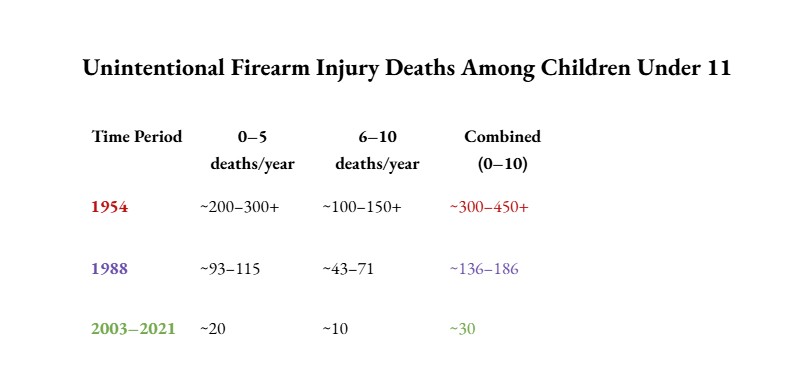
While accidental gun deaths in teens have sadly reached record highs, there’s at least one silver lining in the ammo box: accidental firearm deaths among children under the age of ten have plummeted since the Wild West days of kids’ cartoons. Back then, they were accidentally shooting themselves (and sometimes others) at staggering rates — often in homes where loaded guns were recklessly stored somewhere unlocked.
Today’s tragic numbers are a fraction of what they once were — thanks to a combination of Child Access Prevention (CAP) laws (adopted in some states, mind you), improved gun storage habits, and children’s daytime television reform. Turns out, securely locking up the firearms and editing the gun violence in Looney Tunes helped. A toddler may still bonk their sibling with a foam sword, but at least it doesn’t risk a muzzle flash and a funeral.
Suggested Reading
Before you tune out with the credits, it’s time to flip the channel to your bookshelf. Here are some suggested readings that delve deeper into the topics discussed in this article.
America Toons In: A History of Television Animation by David Perlmutter

America Toons In: A History of Television Animation by David Perlmutter is a gloriously geeky guided tour through the ever-evolving landscape of American TV cartoons — from the jittery days in the early 1900s to the sharp-tongued sarcasm of Adult Swim. Packed with chronological charm, encyclopedic entries, and just enough snark to keep things animated, this book celebrates all the big names (Looney Tunes, Scooby-Doo, The Simpsons), and it rescues the forgotten misfits and syndicated oddities. With one eye on pop culture and the other on programming trends, Perlmutter delivers a love letter to the tube’s tooniverse while tracing how our definition of “kid-friendly” content has been redrawn frame by frame. It’s a must-read for anyone curious about how once-lawless Saturday mornings got housebroken by public pressure.
Under the Gun: A Children’s Hospital on the Front Line of an American Crisis by Stu Durando

Under the Gun: A Children’s Hospital on the Front Line of an American Crisis by Stu Durando offers an unflinching portrait of how one hospital quietly became an emergency epicenter of the gun violence epidemic. Set at St. Louis Children’s Hospital, where more pediatric gunshot wounds arrive than at any other U.S. facility, the book follows trauma teams scrambling to save lives amid a flood of preventable injuries — like the six‑year‑old girl critically wounded by her brother’s shotgun, or the 12‑year‑old shot by a friend playing with a firearm left unattended on a bed. Durando blends medical detail with human stories, charting not only the chaos in emergency rooms but also the systemic changes driven by professionals fighting to stem repeat harm. Part medical drama, part social commentary, 100% nonfiction, it’s essential reading for anyone exploring how gun safety — or the absence thereof — shapes the deepest wounds inflicted on children today.
Gun Safety in the Home by Massad Ayoob

Gun Safety in the Home is a lean, expert-driven primer on safe firearm practices — especially vital for households with young children. Ayoob, a respected instructor and author, frames firearms as powerful adult tools that require more respect. The book has clear, action-oriented guidance on safe handling, locked and unloaded storage, childproofing strategies, and age-appropriate conversations, turning abstract policies into everyday habits. With real-life anecdotes and straightforward rules (“gun‑proof your children,” as he calls it), Ayoob blends hard-earned wisdom with practical instruction — that means no conspiracies, no politics — just how to replace curiosity and ignorance with respect and responsibility. For parents seeking a grounded approach to reducing pediatric gun risk at home, this is an essential reference in the toolkit.
“Th-Th-That’s All, Folks!”
Gone are the days when a small child was encouraged to watch toons take bullets to the face and bounce back with a snappy comeback — and good riddance. After a long run of slapstick shootouts and point-blank punchlines, kids’ cartoons for the ten-and-under crowd have come a long way — swapping out pistols for portals and revolvers for responsibility. The ACME gun gags have been retired to minimize glamorizing real-world danger. Thankfully, you don’t need a live ammo demonstration for lively animation — just ample imagination.
To feel safe at all times is a basic human right; let’s work to make this world physically and mentally safe for everyone. If you or someone you know is battling with mental health-related distress, we urge you to be kind and hold space for them, and contact the 988 Suicide and Crisis Lifeline (confidential connection with a trained crisis counselor, free, available 24/7/365):
→ Call or text 988
→ Chat at 988lifeline.org
For the European RNCE call: +44 (0)141 331 4180
Click here for a list of Hotlines in 46 Countries.
The Trevor Project (for LGBTQ youth): 1-866-488-7386
Click here to discover seven children’s books that confront the truth about gun violence.
Browse our bookshelf for more recommendations from the Bookstr team!