


While authentic autism representation in children’s books has, thankfully, been on the rise for the past few years, it has been far less prevalent in video media like television and film, especially in the United States. Autistic and otherwise neurodivergent characters in children’s television shows tend to be supporting or guest characters whose stories revolve around their neurodivergence and are often told from a neurotypical character’s point of view. Author-illustrator Zachariah OHora’s breakout PBS KIDS’ show, Carl the Collector, however, has created a far more inclusive look at the daily life of an autistic child. We recently sat down with OHora to talk all things Carl, collecting, and the importance of providing nuerodiverse perspectives for young audiences.
(Editor’s Note: This interview was recorded live via Google Meets and then transcribed into text.)
About Zachariah OHora
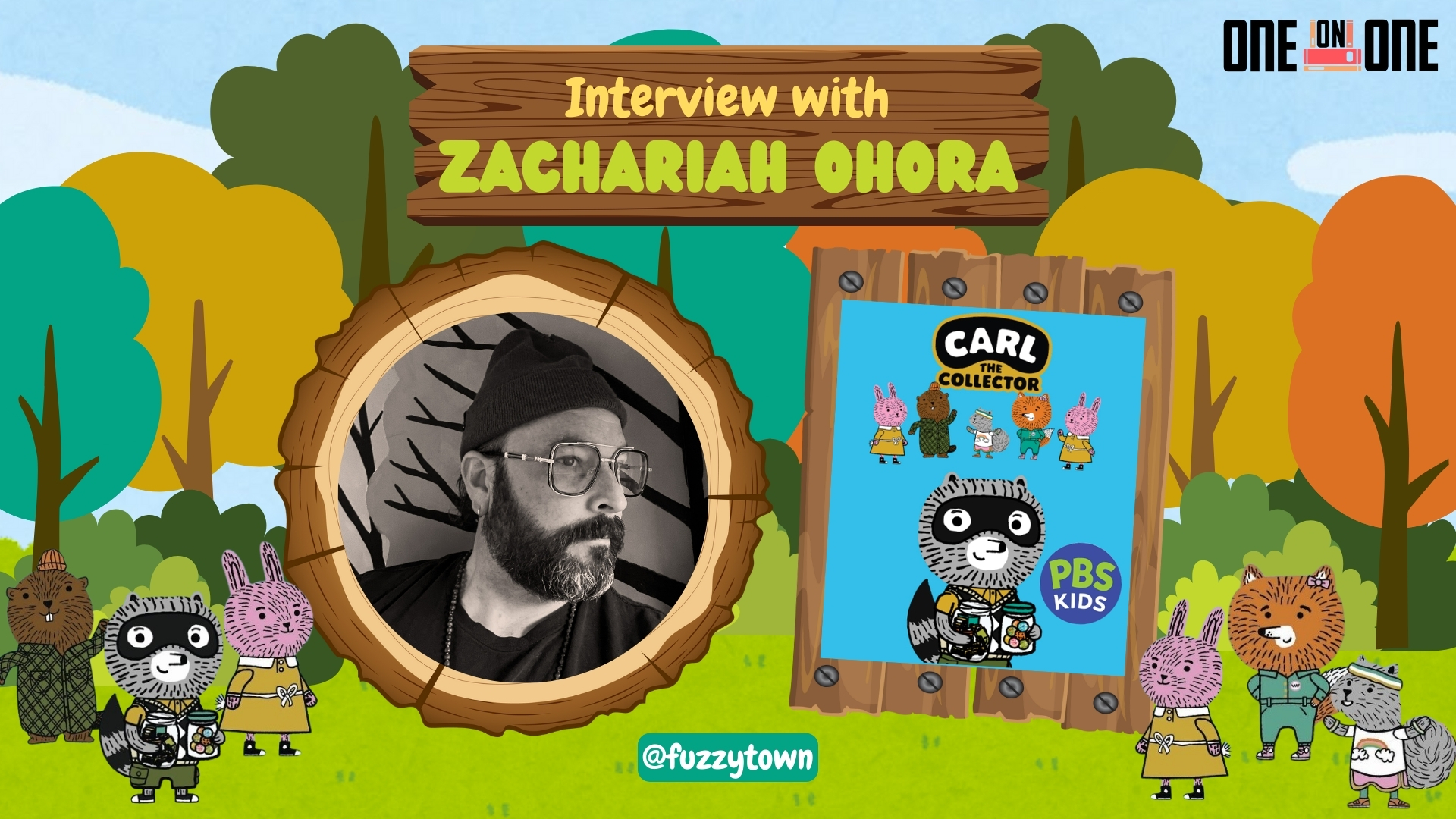
New York Times best-selling illustrator and author Zachariah OHora is creator and executive producer of Carl the Collector, which is produced by his Fuzzytown Productions along with Spiffy Pictures. The series, PBS KIDS’ first to center on a neurodiverse character, follows the everyday adventures of Carl, a warm-hearted autistic raccoon who loves collecting things. The series celebrates the diverse ways kids think and express themselves while helping them develop a strong sense of self and community.
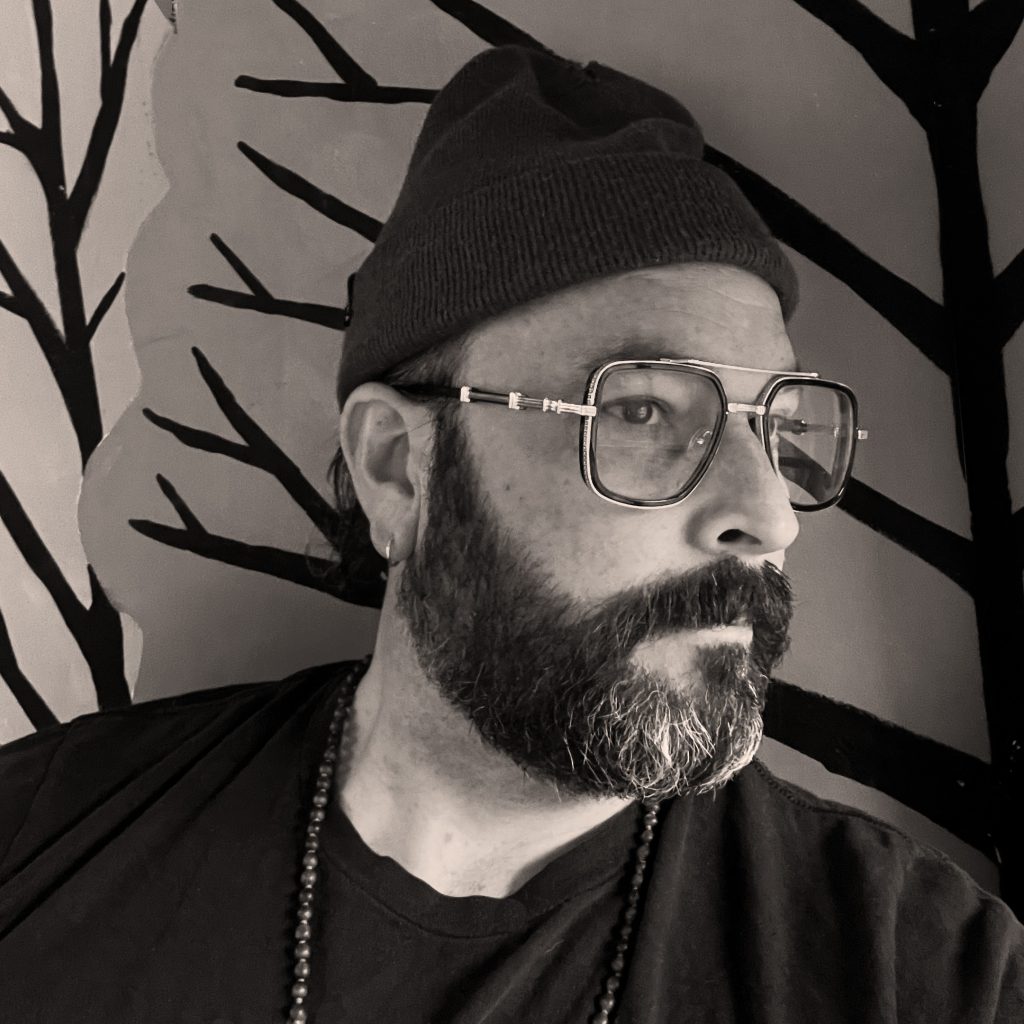
OHora’s award-winning books include My Cousin Momo!, Niblet & Ralph, The Not So Quiet Library, and Fuzzy (Inside & Out). OHora also created the Rivian Gear Guard avatar featured in all the cutting-edge electric vehicle company’s security systems. OHora resides in Narberth, Pennsylvania, with his wife and two kids.
Zach, thank you so much for taking the time to speak with us! Let’s jump in.
Can you please briefly introduce our readers to Carl and his group of friends?
Carl the Collector is a collector, obviously, and he’s a raccoon who is autistic. He has very specific likes and dislikes, and he’ll let you know what they are. He has a best friend, Sheldon, who is a beaver and is kind of the best wingman or friend that you would hope to have because he’s so supportive and nice. He’s also a translator for Carl’s way of thinking to the outside world and helps Carl understand the outside world in a lot of ways. There’s the Bunny twins, Nico and Arugula, who are identical bunnies, and they get along great, but they’re always struggling with people mixing them up; it’s a show about self-identity, so that comes into play.
Of course, we have Lotta, who is another autistic character. She’s an artist and musician, and she has synesthesia, so she can see music and shapes and sounds. She was originally a slightly different character — a bear — and when we did testing with kids, they weren’t sure what animal she was. They thought she was a fox, and I said, “You know what, let’s make her a fox,” cause foxes are cute and fun. And throughout testing, too, and talking to more and more people with our production crew who are autistic and neurodiverse, we realized that it was a lot to put it all on one character to show the entire spectrum.
Autism presents in so many different ways for so many different people, and it presents differently in boys and girls. A lot of times, girls aren’t diagnosed or are misdiagnosed because they have different ways of coping in awkward social situations where they can follow scripts and imitate someone else’s behavior, which makes it harder to see that they’re autistic, and of course, that just continues on through life. Things that are going on with females medically or any other way are sort of shuffled under the rug, so she was an important character to have in the main set of friends.

And then the other main character that we have is Forrest, who is a squirrel with ADHD, and is a really exciting, fun character who zips around and has lots of energy and is very competitive. He also has a nut allergy, which is pretty common these days, and really tough if you’re a squirrel and all your family eats is nuts and you can’t, you have to find your own way through that. Thankfully, there’s pizza.
While Carl is autistic and his group of friends are neurodiverse, the stories in Carl the Collector don’t revolve solely around their neurologies. Why do you think that telling universal stories through diverse ways of thinking was such an important element in Carl’s storytelling?
Storytelling is the first way that we figure out what it means to be human and to interact with other humans, right? So, that’s just universal already, that if you hear a story, you’re going to automatically put yourself in the protagonist’s shoes. It’s also a show about self-identity, like, kind of figuring yourself out for kids who are just starting school, and their world is enlarging beyond just their immediate family or cousins or whatever, and they’re interacting with other kids that are different from them and have different backgrounds.
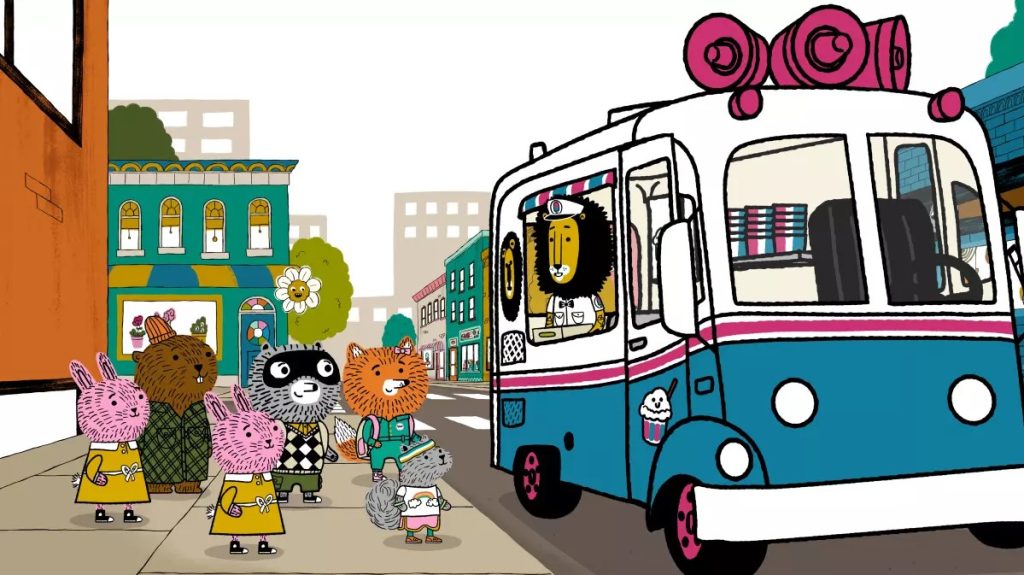
So it’s that important age where you’re trying to figure out all the kindergarten stuff like empathy and sharing and also having experiences in life that your parents can’t always control the outcome of, which is getting you ready for the rest of life, basically; disappointment and things don’t go your way, how do you manage that and how do you overcome obstacles, things like that. And also, it’s about a group of friends and being empathetic to everyone’s point of view.
You’ve mentioned in past interviews that to you and director Lisa Whittick, one of the most important components of developing Carl the Collector was creating a staff and cast of neurodivergent individuals. Why was that so critical to you?
Yeah, that was a directive right from the beginning, where we didn’t want to be telling other people’s stories and kind of assume that we knew what their deal was. It was really important to get the stories firsthand from people who had lived experiences because those are always better stories. You can tell when someone’s telling a truth or a story that comes from their heart, so it was really important to have autistic writers.
Even our autism advisors — one of them is autistic — and [the voice actor of] any character on screen that we talk about their neurodiversity are neurodiverse and autistic in real life, and they’re just being themselves, too. They were nonactors that Lisa found who have done an amazing job. So that’s how we kind of set up the entire production team, and pretty much everybody else from animators onward either are autistic or neurodiverse or have immediate family members, and this is a very personal story, all the stories of Carl, to the entire production crew.
There have been a lot of prominent movements recently that aim to limit or remove diverse representation — including neurodivergent representation — from children’s media. What are your feelings on this?
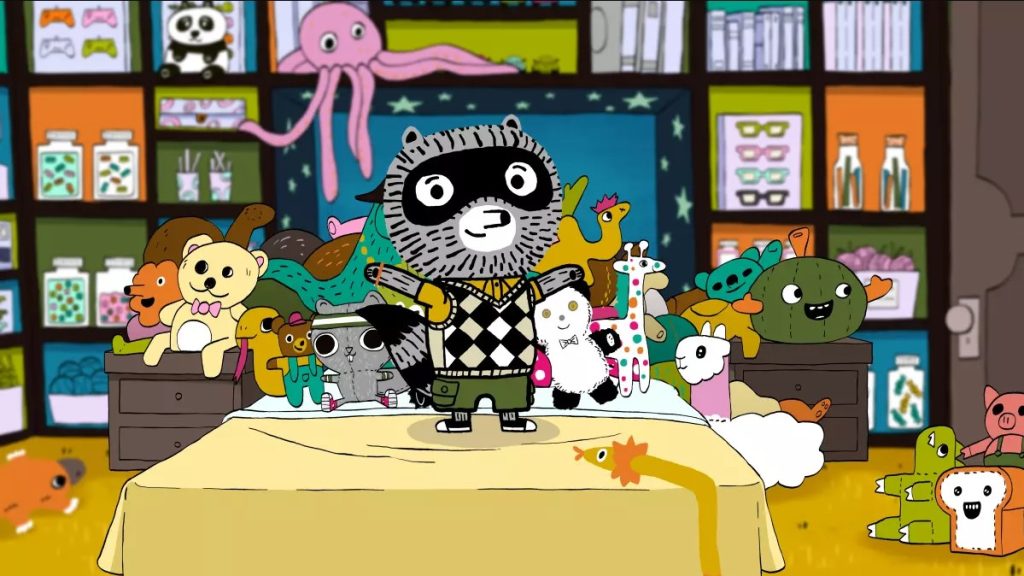
My feeling is that life is not black and white, and what’s interesting about being a human on this planet is all of the different experiences and all of the different ways that humanity has evolved to be what it is. I don’t think the world would be a fun place if we were all exactly the same thing. I mean, the idea is realizing all the differences but also seeing where we’re all the same, and you can celebrate both. I think that’s really important.
In addition to Carl, you’ve also had a successful career as a children’s author and illustrator. What have been some of the challenges — or pleasant surprises — of shifting to a television show creator?
For one thing, the timeline. You know, books take a lot of time, they’re like a two-year project, and I thought that was a glacial pace, but writing an animated show from scratch and all the things that that entails, especially with PBS because they don’t have unlimited funds like a streaming service or someone else would, take time. And so that’s been a ten-year process, basically, from when it started until when it actually came out. That was challenging; I had no idea it would take that long. Throughout the entire process, I didn’t know if it was ever going to happen, so I didn’t really talk about it for about eight years. It was just like this side-job fake-project to my real job of making books.
But one thing that’s been really cool is the collaboration with all the different people that are part of the show really made it so much better than if I could have made something on my own. Obviously, I couldn’t animate and make an entire show myself — I’m one person, it takes hundreds of people — but even in thinking about when I make books, I work with very few people: it’ll be me, my agent, an art director, an editor, and that’s about it. Or the author, if I’m illustrating someone else’s work and we happen to be friends, we might be talking on the side when we’re in development of the book.
But on a grander scale, when you can’t do everything, and people have far more knowledge than you do about whatever it is that you’re doing, it’s really cool to get their input and their feedback. And everybody was excited about it in a way that, like, we all had this common goal that made it what it was; that was a fun process that I’d like to repeat.
Your production company is named Fuzzytown, as is your illustration brand. Can you explain the concept of Fuzzytown as a place and an idea?
Sure, so Fuzzytown is a number of things. You know, when you think about life, things are kind of black and white when you’re younger, and then, the older you get, there’s a lot of gray areas; a lot of fuzzy, in-between areas, so it’s a little bit about that. But it’s also about a world populated by fuzzy animals, so it’s a description of my art style because I kind of spend a lot of time in my day drawing all those little fur lines over and over, and it’s also like a state of mind. Like getting the warm fuzzies. If someone gives you a nice smile during the day, even a stranger who doesn’t want anything from you, and gives you that buoyant, fuzzy feeling for the rest of the day, it’s about that.
We know that, like Carl, you’re a bit of a collector yourself. Have you added any exciting finds to your vinyl record collection recently?
Yeah, always. I just came back from a bunch of traveling, and wherever I travel, I plot out all of my free time around record stores and bookstores (but mainly record stores). Like, that will affect where my hotel is and everything. Yeah, it’s a bit of an obsession. I just got a huge, nice pile of records; one of them that I’m really excited about is this one right here: it’s this guy Jiro Inagaki, and he’s like this 70s Japanese jazz-funk guy, and this is all just covers, like Kool and the Gang, Stevie Wonder, Ohio Players, BT Express, so it’s all super-funky records that you know from the 70s, but sung by a Japanese guy and played by his band, pretty fun.
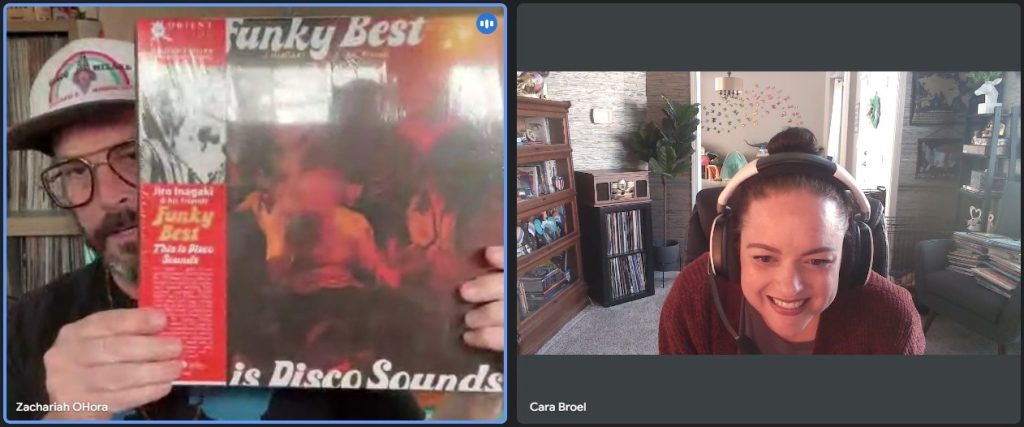
(Editor’s Note: at this point, the interviewer — also a record collector — geeks out about the 5.6.7.8’s.) I love international covers of songs that you’ve heard a thousand times that you don’t necessarily even need to hear the original ever again, but when you see that culture reflected back, but with the taste of another culture, that to me is the most exciting thing. Like, I don’t need to listen to the Beatles ever again, but I love getting, like, cool Beatles covers from Thailand or wherever.
Lastly, in honor of Carl the Collector, what is your favorite way to spend a day with friends and family?
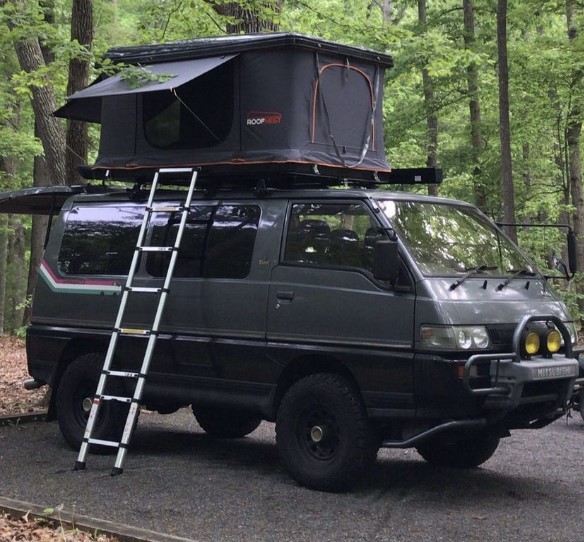
My favorite way to spend a day with friends and family, in an ideal world, would be camping. I have this really fun early 90s Japanese camper van that’s right-hand drive, and you can kinda sleep four people in it and also have all your equipment. So an ideal day would be hiking or kayaking, and sleeping in that van at night, and cooking out under the stars with my family; pretty much, that’s the best day ever.
A massive thank you to Zach for taking the time to share his thoughts with us! Be sure to find him online at Fuzzy.Town and follow his work on Instagram. And, of course, don’t forget to check out Carl the Collector on PBS KIDS!
Looking for more author-illustrators creating neuro-inclusive art for kids? Check out our exclusive One-on-One interview with author-illustrator Kaz Windness!
For all of our reading recommendations for mini bookworms, check out our Bookshop bookshelf.