











Your bookshelf is where you proudly display your literary conquests (and conquests in waiting), and I recently found that I needed help organizing it — my bookcase was getting out of hand. I filed the books away, added in some personal memories and knick-knacks, and voilà: I had myself a bookcase. As I was standing back, admiring my genius, something dawned on me. There were an awful lot of books that evoked a very “blah” response from me. I didn’t know what to do about the space, so I started researching, and the answer I came up with was the systematic genius of Marie Kondo. Are you at a loss, trying to figure out what to do with your disheveled bookshelves? Marie Kondo has the answer.
If you haven’t heard, Marie Kondo is a Japanese organizational guru and founder of the Konmari method. She literally wrote the book on proper organization — and then about four more, including a kid-friendly read to get them started early. Her writings include The Life Changing Magic of Tidying Up, Spark Joy, Life Changing Magic: A Journal, Joy at Work and Kiki & Jax: the life-changing magic of friendship. First, let’s dispense with the unfounded rumor that she advocates for everyone to have only 30 books. She actually said that she only has 30 books, so fear not.
The Konmari Method for Books
The premise that carries through every category in your house, from clothes to spices and everything in between, is, “Does this spark joy?” That’s kind of Ms. Kondo’s life motto. The idea is that you should never keep something that brings out negative or blasé emotions, even if it were a gift.
The real problem is that books tend to charm their way into our hearts in a way we never expected. I don’t know about you, but just about every book I own is attached to a fond memory of its story, the twists and turns, and sometimes even what was happening in my life while reading it. It’s hard to part with those feelings. The thing you have to remember is that you don’t have to get rid of everything, just the things that no longer serve a purpose in the life you’re aiming for.
How to Get Started
Step 1
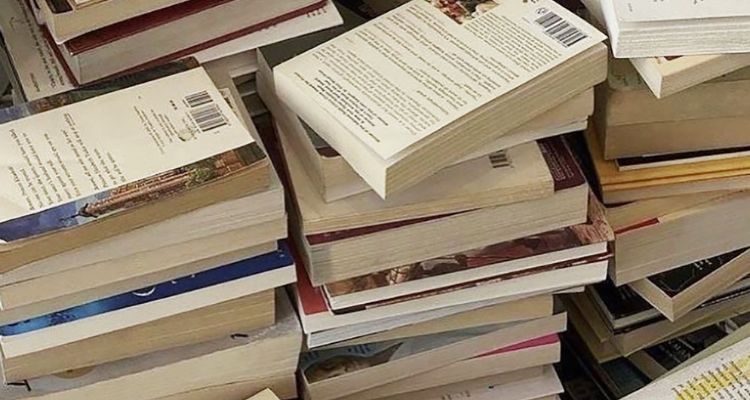
She recommends that the first thing you do is to gather everything in one place. That means you must ferret out all the books from your attic, bedroom, kitchen, basement, the ones in boxes, the ones in bags (tsk tsk), and those on your bookshelves. Carry them into the same area, wherever that may be, and stack them into categorized piles (e.g., cookbooks, mysteries, textbooks, etc.).
During this process, pay attention to the variety of books you keep. Ms. Kondo points out that if you’re looking forward to getting married but you have a lot of books on the single life, you may want to reconsider your choices. I can’t emphasize this enough: you’re working toward building the life you want, not the one you had.
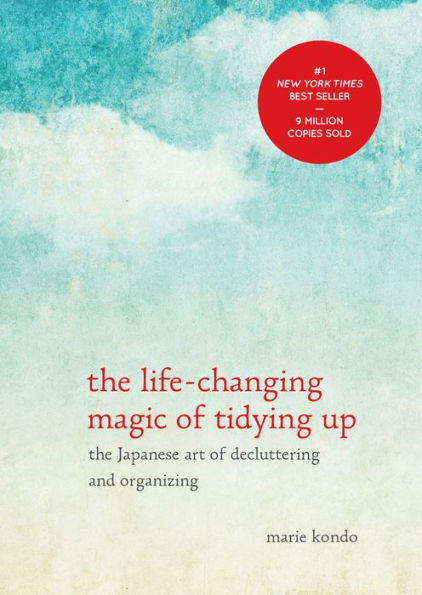
In her 2011 book, The Life-Changing Magic of Tidying Up, Ms. Kondo wrote, “Imagine what it would be like to have a bookshelf filled only with books that you really love. Isn’t that image spellbinding? For someone who loves books, what greater happiness could there be?”
Step 2
This is where things might get difficult. You’re going to hold every book you own in your hands, one at a time, and decide each one’s value in your life and home. Do you still use it? It goes in the keep box. Have you had it for more than six months with plans to read it someday? I have bad news for you. In the same book, Ms. Kondo cautioned, “I can tell you now that ‘someday’ never comes.”
The one caveat is that if you have a book series, it’s not necessary to hold each book individually. Instead, pile the books together and hug them to see if they still spark joy; yes, hug them.

In The Life-Changing Magic of Tidying Up, she also explained, “When we really delve into the reasons for why we can’t let something go, there are only two: an attachment to the past or a fear for the future.” Her theory is that we should be organizing for the person we want to be today, not clinging to who we were in the past like a flotation device.
If you have books you’ve only read part of the way through, good news: you are not obligated to hold onto them just in case you get the indescribable urge to finish them. The fact is, there is a reason you never finished reading them, so don’t be so indecisive. Discarding these unread rejects into a donate, recycle, or trash bag or box will lift years of weight off your shoulders; besides, throwing things away can be cathartic, helping you develop life skills. “Discarding hones one’s decision-making skills,” as Ms. Kondo put it.
One of the common pitfalls, something you must never do, is start paging through and reminiscing about the book in question. Perhaps you read it, and it was fantastic. Maybe it was your daughter’s favorite when she was little, but now she’s eight.
Those represent things from your past, and with the Konmarie method, we never live there. It’s okay to look at the past with a certain fondness, but, of course, don’t forget about who you are trying to be today.
Also, you don’t want to get caught in the “maybe someday I’ll re-read the book” frame of mind because the cold, hard truth is, you won’t.
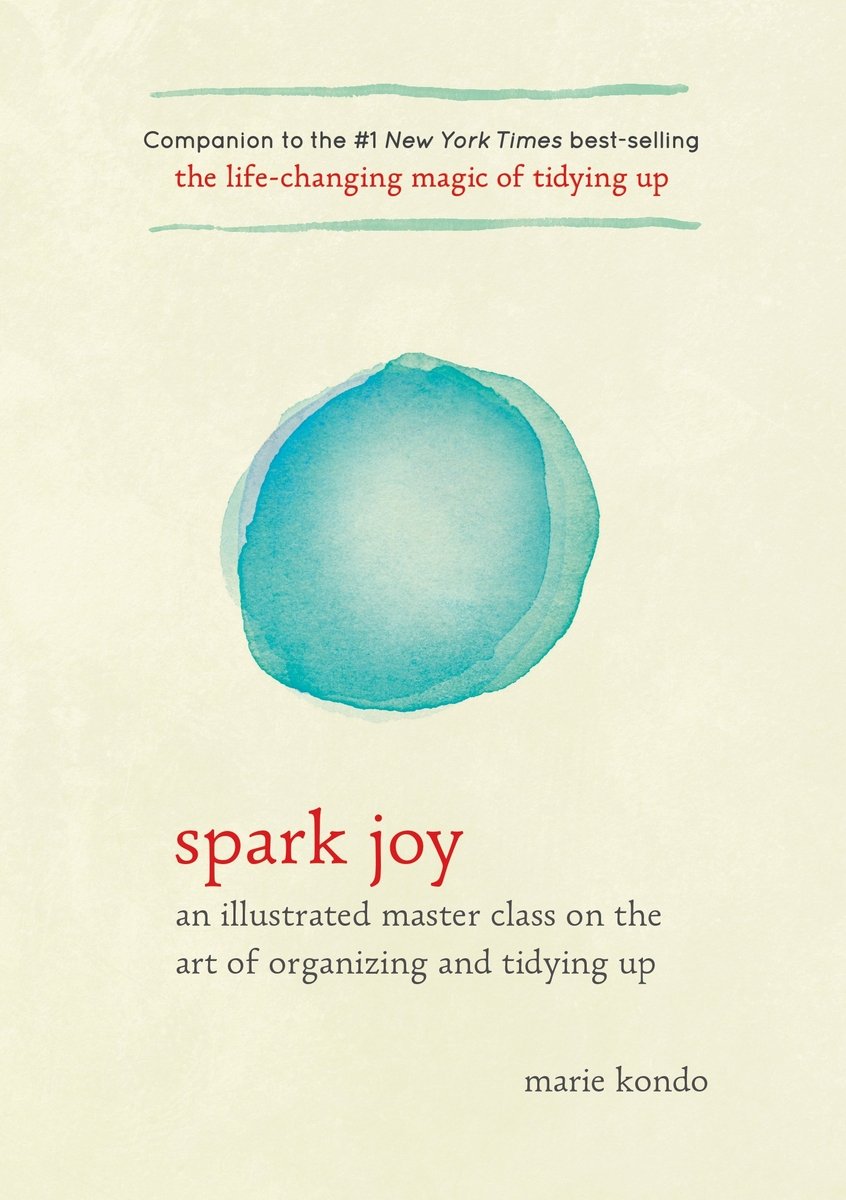
“If a book doesn’t spark joy for you now, it’s almost guaranteed that you’ll never read it again,”
Ms. Kondo’s insight in her 2016 book, Spark Joy.
It can be tempting to start imagining where you’ll put everything as you go along, but try to avoid this. In Spark Joy, Ms. Kondo asserted we should, “Finish discarding first…this is a cardinal rule of the Konmarie method.”
When organizing your kids’ books, get them involved in the process, but don’t be held down in a quagmire of emotions attached to having read those books to your scamps. Hold on to their favorites, discard those too worn to donate or resell, look at your donate and resell stacks to ensure the books are in working order, and now you’re left with the 30 to 300 books you’re keeping. Hopefully it’s not 300, but if you started with 1,000, you’re doing well.
Step 3
Step three is time-consuming but rewarding. It’s time to figure out where to store all the remaining books in the keep stack. You’ll fill up your bookshelves, pantry, and bedroom in no time, but what’s the best way to accomplish this? That’s up to you and your creativity. In Spark Joy, Ms. Kondo gives us a little ray of sunshine to keep us going: “Decorating inspirations seem to pour forth once the tidying marathon is over,” so don’t fret.
Now, for the Organizational Part
Option 1: Genre
One of the best ways to arrange your prized possessions is by genre. Clump all your mystery books, sci-fi books, cookbooks, historical fiction, and classic literature into their own stacks. You could even take it a step further and alphabetize by title or author within each genre, making it child’s play to find precisely what you’re looking for.
Option 2 & 3: Color and Height
Something a little more controversial, albeit visually pleasing, is to order them by color or height. If you place your books from tallest to shortest, starting from the right on one shelf, you can do the opposite on the shelf below and start on the left. If you group all your books by color (think of a ROYGBIV pattern), you’ll have a veritable rainbow. Either option leaves you with an optical delight you’ll want to stare at for days. The issue is, you then have to remember the color or height of the book you’re looking for.
Whatever process you decide on, all you have to do from there is figure out what objects other than books evoke joy and strategically place them amongst your books. If you choose to add in trinkets, don’t overwhelm your shelves — your books are the true stars of the show. Also, always group the selected objects in odd numbers; that’s pure aesthetics. More importantly, don’t be afraid to put your books at the front of the shelf. They are there to be seen. There’s no need to relegate them to the back.
If you follow these few tips, you’ll be well on your way to an organized bookshelf. In The Life Changing Magic of Tidying Up, Ms. Kondo explained, “A dramatic reorganization of the home causes correspondingly dramatic changes in lifestyle and perspective. It is life-transforming.” I definitely needed that small yet powerful transformation, and it’s amazing how much impact it had on me. I think we could all use a little transformation every now and then. It promotes growth and happiness, and in the end, isn’t that what it’s all about?
Want to know more about organizing your books? Click here.
Check out our Non-Fiction Titles for the Enlightened Mind shelf on Bookstr’s Bookshop page!