


















Classics, like Homer’s The Odyssey, have been told again and again throughout human history. In English-speaking tradition, these translations have historically come from men. Women’s translations have been significantly overshadowed by their male counterparts.
In 2017, Emily Wilson, classicist translator and professor of Classical Studies at the University of Pennsylvania, published her translation of The Odyssey, becoming the first female to translate The Odyssey into English. Wilson’s translation of The Odyssey gained media attention upon its release, and since then, again and again, she has tried to make it clear that just because she is a woman, that does not make her version a feminist translation.
It is undeniable that she did something to the story that past translations have failed to do. There is no shortage of contemporary translations, yet hers has become one of the most popular. It broaches the question of how classic tales like The Odyssey seem to shift under the truthful eye of a female translator. Here we will dive deep into the nuances of Wilson’s translation as well as the translations of other female classicist translators and gain insight into this question.
The Art of Translation Is Not Gendered
By definition, feminist translations aim to apply feminist theories to the works they are translating. This means ensuring that women and men are viewed as equals, challenging societal gender norms, and in some cases, inherently changing the narrative to include the female voice or perspective. This is not what Wilson aims to do.
“Women are different from one another; there’s no such thing as ‘the female perspective,’ any more than ‘the male perspective.’”
Emily Wilson, Emily Wilson on Porous Boundaries and the World of Homer
The concepts of traditional translation, above all else, aim to stay true to the original text. Still, there seems to be this idea that all female translators must empathize or shift the narrative to be more attractive to a female audience. This is an argument that Wilson refuses. Wilson makes it clear that she aims to stay true to Homer’s The Odyssey, saying,
“The stylistic and hermeneutic choices I make as a translator aren’t predetermined by my gender identity. Other female translators of Homer — such as Caroline Alexander in English, Rosa Onesti in Italian, and Anne Dacier in French — have made extremely different choices from mine.”
Emily Wilson, Emily Wilson on Porous Boundaries and the World of Homer
Heroes at a Critical Distance
In fact, as opposed to shifting the narrative towards the female perspective, Wilson feels that her perspective as a female allowed her to translate Homer’s The Odyssey in a more authentic way than many of her male counterparts. She applied this to all female classicalist translators, saying,
“Female translators often stand at a critical distance when approaching authors who are not only male, but also deeply embedded in a canon that has for many centuries been imagined as belonging to men.”
Emily Wilson, Historically, men translated the Odyssey. Here’s what happened when a woman took the job.
Wilson argues that as a female, it was her distance from the story that made her deeply consider each word she chose to translate. She found that many of the older translations seemed to imbue more Westernized or Christian stereotypes into both the roles of the male and the female characters that she did not see in the original text. In a male-dominated world like that of Homer’s ancient Greece, she says that there is something uncomfortable about their world that inspires her, and she wants to portray this sense of discomfort to modern readers. She believes that contemporary society should be uncomfortable with Odysseus’ world, that this discomfort is what makes it an interesting story that we study centuries later.
Less Heroism and More Morals
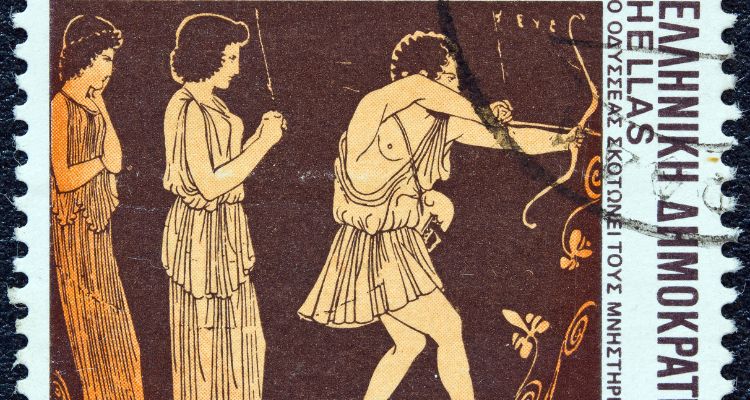
In Wilson’s Tweets, she would often explain her translation choices, bringing the old art of translation to the masses, making it interesting and accessible to everyone. She admitted her fascination with the scene of the execution of the maids who slept with the suitors upon Odysseus’ return, saying it is a scene she often came back to. She found that in this scene and others, translators often used words such as “maid,” “house servant,” or, more provocatively, “slut,” or “whore,” to describe these women. Wilson found the word that Homer used translates more literally to “female-slave.”
Wilson chose to simplify the text, using the word “slave” to describe these women. She felt that words like “slut” and “whore” were bringing in misogynistic language that she did not find in the original text. Words like “maid” or “servant” to her implied wrongly that these women were free and that they had a choice in what the suitors had done to them, which to her seemed unlikely given the cultural context of the society during that time.
“It sort of stuns me when I look at other translations how much work seems to go into making slavery invisible.”
Emily Wilson, Historically, men translated the Odyssey. Here’s what happened when a woman took the job.
Her translation does not shy away from the reality that during that time, the great hero Odysseus would have owned slaves. Not only that, but he had them brutally killed due to the acts of the suitors while he was away. Through her translation, Wilson does not aim to highlight to grandeur of the hero Odysseus, as so many other translations do; instead, she seeks out the truths of Odysseus’ world, the good and the bad. She shows how the morals that come from such a complicated world are not so different from our own.
The Nuances of a Female Perspective
This distance from the classic masculine stories of heroism is exactly what allows female translators to bring something more to these stories. Wilson argues,
“The inability to take classical texts for granted is a great gift that some female translators are able to use as a point of leverage, to shift the canon to a different and unexpected place.”
Emily Wilson, Found in translation: how women are making the classics their own
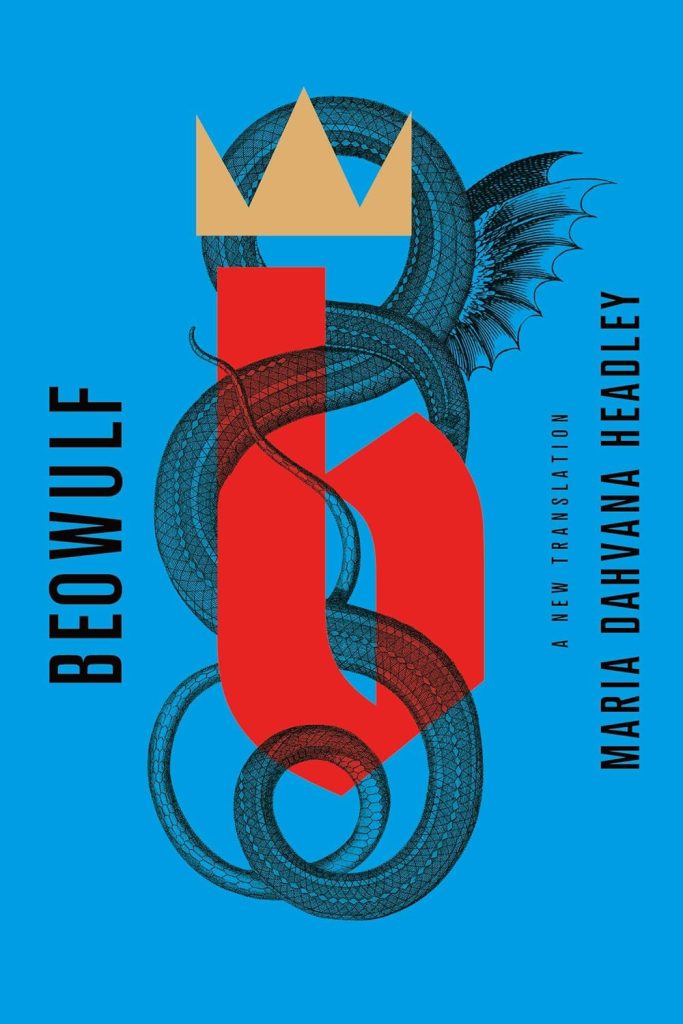
Wilson is not the only one breaking the rules when it comes to classics translated by females. In the opening line of Maria Dahvana Headley’s translation of Beowulf, published in 2020, she made the bold choice of translating the Old English opening line to the word “Bro!” She argued that in today’s society, “bro” can be used in almost the exact same context as the colloquial Old English term, which was used to grab someone’s attention. “Lo” or “Hark,” terms that were more traditionally used in translations, are still archaic terms; people do not know what they mean. By starting with “Bro!” in 2020, those reading will likely know the exact sentiment that the text is meant to convey.
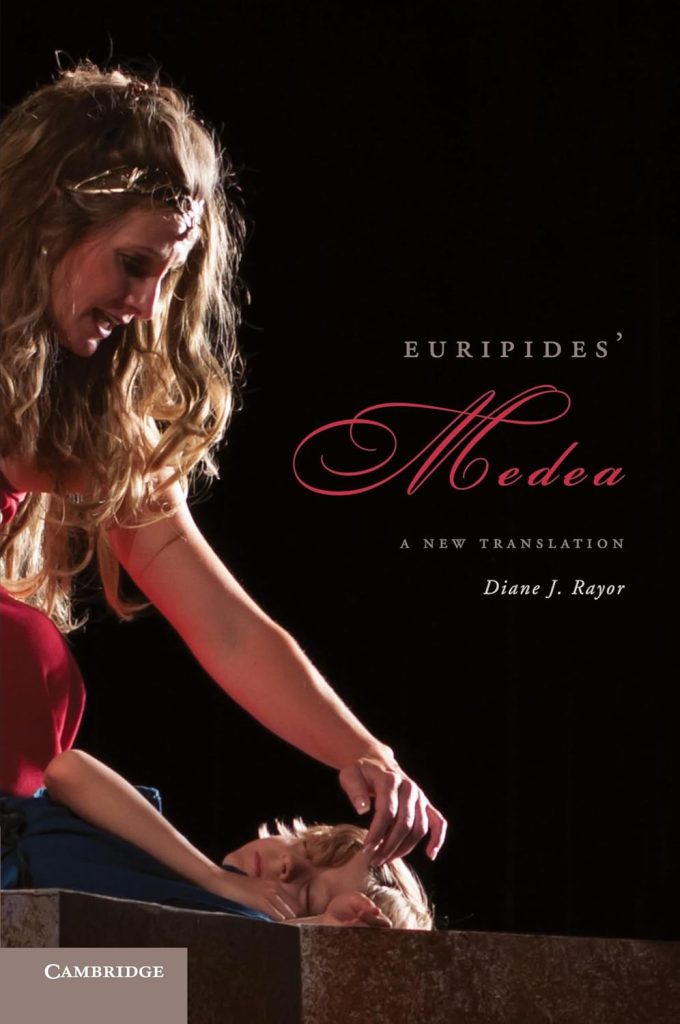
Similarly, classicist translator Diane J. Rayor used contemporary language in her translation of Euripides’ Medea, saying that she hoped “the characters’ language should be contemporary without breaking into short-lived slang.” She, too, believed that this shift away from the old would bring a new audience to classic literature.
The “First Woman”: A Hindrance or a Help
So much of Wilson’s time in the spotlight seems to be used redirecting the media away from her given title of the “First Woman” and away from the conversation of gender entirely, towards more of her stylistic choices that make her translation unique.
“Many women are not feminists, and many women are not interested in gender; many women also don’t write in iambic pentameter.”
Emily Wilson, Emily Wilson on Porous Boundaries and the World of Homer
There is often the notion that if you are the first female to do anything, that is all you can be. You cannot, for example, be the first female to translate The Odyssey while also translating it with societal nuance or making interesting lyrical and poetic choices like writing in iambic pentameter rather than free verse, as many contemporary translations choose. Wilson is excited about the attention her translation is getting, even though that comes with the title of “First Woman,” which she often rejects.
“I put ‘NOT the first woman to publish a translation of the Odyssey’ on my Twitter bio, after seeing it asserted for the gazillionth time. Here is why. It’s factually not true.”
Emily Wilson
She doesn’t want people to read her book just because of the “First Women” headline; that is not why she translated it, but if people do read it because of that, she hopes that they stay and gain something more. And she finds that many people do.
“The humor, the timing, and the prose kept me hooked the entire time I was reading. … I wouldn’t necessarily call hers a feminist reading of the story, but I do believe that the way she wrote it was more aware of different societal constructs and customs, both modern and ancient.”
Max Paster, Translator Emily Wilson does not shield the sexism in Greek mythology
Female translators like Wilson have proven that they not only have the ability to tell the story of the broad cultural context of these ancient societies with their careful and critical eye, but they also use more contextual accuracy. They bring in a contemporary voice while leaving contemporary stereotypes at the door. With works like this, these classic stories become stories for all of us.
If you want book recommendations featuring a modern take on Greek mythology, click here.
Check out our Translated Works for Your International Tastes bookshelf on Bookshop.org.
