














Trigger Warning: This article contains mention of mental health issues, including trauma, grief, and dissociative identity disorder. Please exercise personal care when reading.
Shirley Jackson (1916-1965) was a prolific American writer best known for her works of mystery and horror. Her writing career spanned more than two decades, during which she wrote six novels, two memoirs, and over 200 spine-chilling short stories. Her unique style of blending the mundane with the eerily unsettling contributed to her skill in weaving psychologically thrilling works that have stood the test of time and continue to persist in their modern-day relevance.
Many of her stories sought to expose the darker aspects of human nature, placing this idea in constant contemplation alongside themes of domestic unease and social exclusion. Her prose is pointedly distinctive, characterised by her understated irony and the stark atmospheres she nurtures, and it is this which has in part secured her legacy as a deeply celebrated and widely renowned writer of American Gothic. This article showcases just a handful of works from Jackson’s outstanding literary oeuvre, so that you can immerse yourself in her wonderfully dark writings and fall in love with her yourself — just as we have done at Bookstr.
We Have Always Lived in the Castle
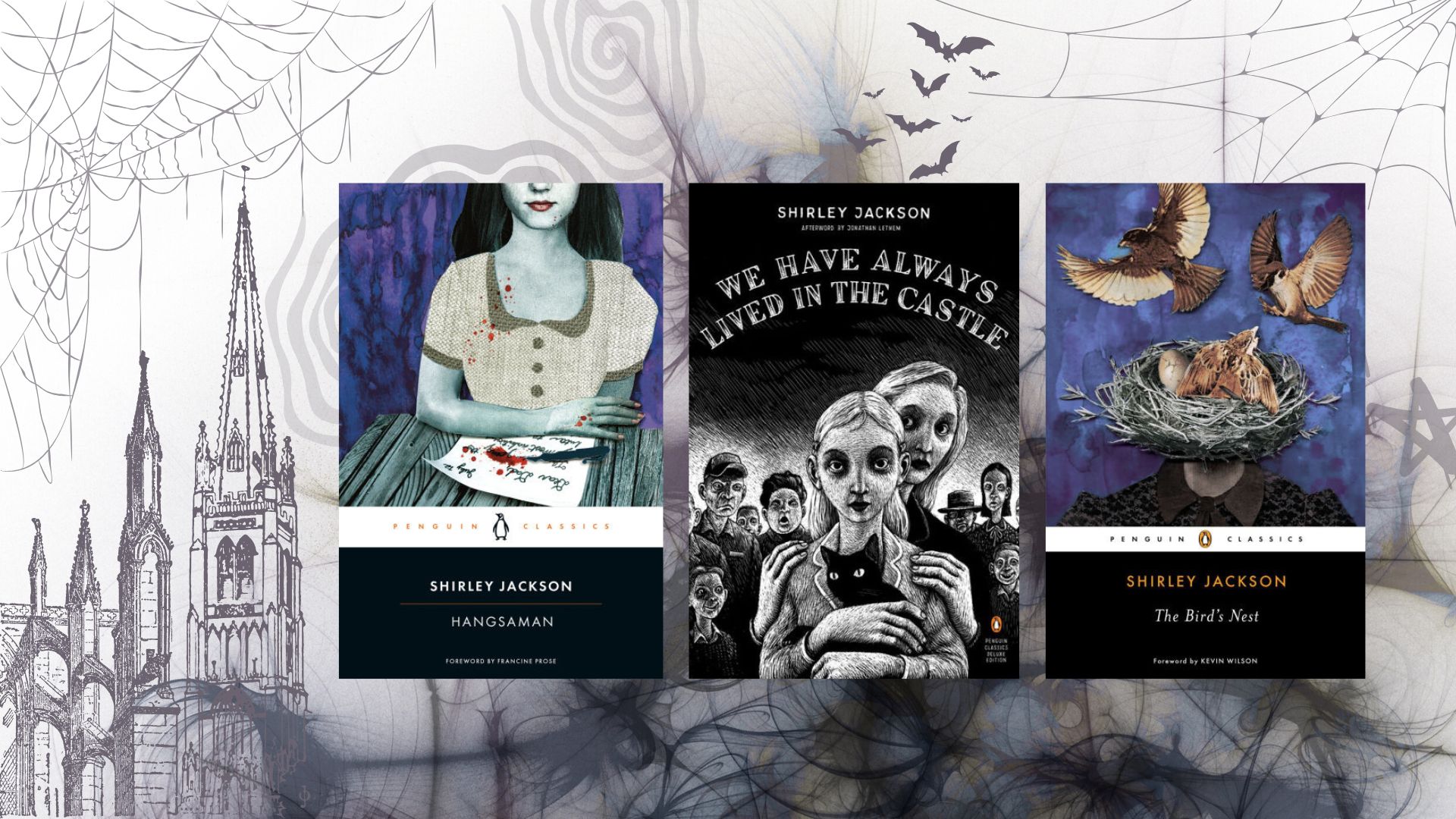
We Have Always Lived in the Castle is set in a secluded town and chronicles the mysterious lives of the Blackwood sisters, Merricat and Constance. When the rest of their family is poisoned in suspicious circumstances, the two girls are left outcasts and antagonised by their community — living out their youth in complete exile, hidden away inside their isolated ancestral home. Often considered to be Shirley Jackson’s masterwork (and for good reason!), this is a story haunted by the growing sense of anxiety, dread, and unease.
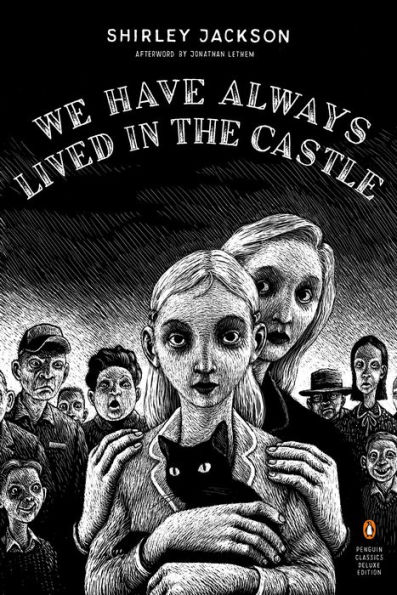
Jackson here explores how the persecution of people who exhibit ‘otherness’, or who become outsiders due to society’s tendency towards small-mindedness, can in fact cause these kinds of individuals to commit terrible acts of violence. Shirley Jackson also examines themes of domestic comfort, female power, guilt and punishment, and family secrets, as well as the relativity of ‘truth’. This novel is perfect for those who may not have read any Shirley Jackson before and are looking for an unintimidating place to start. This book will certainly make you obsessed and have you rushing off to read everything else she’s ever written!
“I remember that I stood on the library steps holding my books and looking for a minute at the soft hinted green in the branches against the sky and wishing, as I always did, that I could walk home across the sky instead of through the village.”
Shirley Jackson, We Have Always Lived in the Castle
The Haunting of Hill House
Shirley Jackson’s The Haunting of Hill House takes place in an unspecified rural location, in a dark mansion surrounded by dense forest and impenetrable hills. Dr. John Montague, a keen investigator of supernatural occurrences, makes the decision to rent Hill House for the summer after hearing of the unexplained, ghoulish goings-on. He invites several people who have experienced paranormal events first-hand as his guests, of which our main character and narrator, Eleanor Vance, is one.
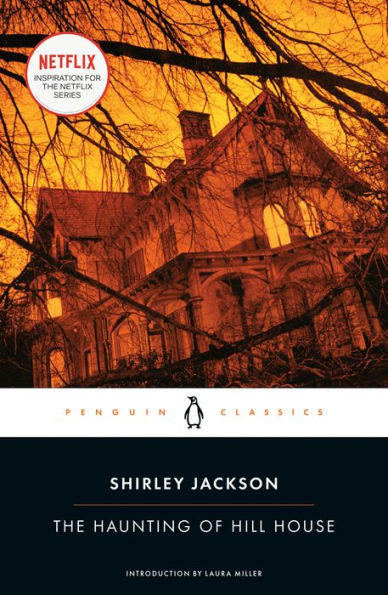
The novel deftly interplays between psychological and supernatural horror, where the sinister house is hellbent on isolation and consequently becomes a mirror unto a human conscience warped by grief and trauma, haunted by its own ghosts. Jackson explores themes of dissociation, fear, the search for belonging, the meaning of ‘home’, and the fragility of the human mind when dealing with inexplicable events and paranoia. This is a truly remarkable and unsettling read that promises to stay with you long after finishing.
“Within, walls continued upright, bricks met neatly, floors were firm, and doors were sensibly shut; silence lay steadily against the wood and stone of Hill House, and whatever walked there, walked alone.”
Shirley Jackson, The Haunting of Hill House
The Sundial
The Sundial by Shirley Jackson follows the puzzling story of the Hallorans, a family who believe that the world will soon be ending and that only those who are inside their ancestral home at the time of the impending disaster will be spared. This is seemingly provoked by the death of the family patriarch (master and architect of the house), who sends a vision via ghostly apparition of worldly destruction to one of the younger female family members.
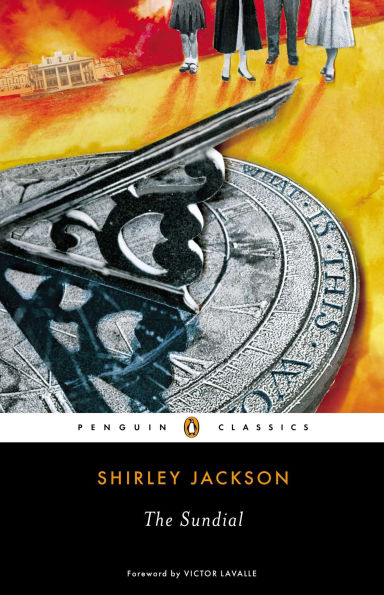
This ensnares the dysfunctional and eccentric family into all manner of bizarre apocalypse-preparation pursuits, rapidly fuelling their delusions that they shall soon be the only humans left alive on Earth, hand-selected by God to repopulate the world anew. The novel deals directly with themes of paranoia and the fine line between sanity and madness, as well as the human habit of seeking refuge and meaning even in the face of existential annihilation. This is a baffling and perplexing read, renowned for the Gothic characteristics the house itself comes to embody, along with the advancing mental and behavioural deterioration of its inhabitants.
“The sight of one’s own heart is degrading; people are not meant to look inward — that’s why they’ve been given bodies, to hide their souls.”
Shirley Jackson, The Sundial
Hangsaman
An especially great Shirley Jackson novel is Hangsaman, a Gothic work focusing on a lonely college freshman named Natalie Waite. In this partial coming-of-age story, we witness Natalie continually grapple with her own sense of identity, mustering the courage needed to navigate the murky (and isolating) waters of womanhood. As she begins to struggle to distinguish her dark fantasies from her real life, the backdrop of a liberal arts college is transformed into a nightmarish, unfamiliar landscape entirely devoid of happiness or comfort.

Loosely based on the real-life disappearance of a Bennington College sophomore, this is a novel that will send chills up your spine and will leave you feeling as though you yourself are trapped in a nightmare from which there is no way out. True to form, Jackson seeks to once again explore themes of identity, femininity, social pressure, and the ever-blurring lines between reality and imagination. This is a novel we highly recommend to anyone interested in books about the female psyche and how trauma impacts it — you will not be able to put it down.
“She brought herself away from the disagreeably clinging thought by her usual method — imagining the sweet sharp sensation of being burned alive.”
Shirley Jackson, Hangsaman
The Bird’s Nest
The Bird’s Nest by Shirley Jackson follows the story of Elizabeth Richmond, a young woman who begins to experience severe headaches and bodily pains, leading her to seek out psychiatric help. Whilst undergoing therapy, a doctor reveals to Elizabeth that she is not simply one person, but rather a system of multiple distinctive personalities who are fighting for full control. These personalities — Elizabeth, Beth, Betsy, and Bess — all have unique desires, motivations, and characteristics, resulting in an unsettling and chaotic internal conflict.
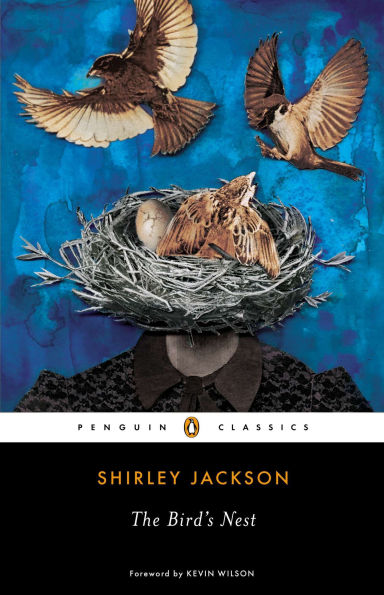
Here, Shirley Jackson does what she does best: subverting the space of the female body and transforming it into a battlefield of struggle, darkness, and mysticism. The novel deeply probes themes of mental health, the complexity of familial relationships, the struggle for identity in a social world fuelled by strict expectations, and the impact of trauma on our sense of selves and belonging. This book is worth reading for its unnerving atmosphere alone, offering poignant insight into dissociative identity disorder and engaging readers in a manner that is truly astonishing. It’s one you’ll wish you had read sooner.
“Now I will be heard, and when I choose to be heard, the lowest legions of hell may turn in vain to silence me and when I choose to speak not all the winds of earth can drown my voice.”
Shirley Jackson, The Bird’s Nest
Shirley Jackson’s literary legacy is one that continually demands to be celebrated. Her gothic classics have gone on to inspire present generations of horror writers — Stephen King and Sarah Waters being focal among them. The haunted dwellings she constructs, be it the dated domestic home, the college dormitory, or the female body itself, distinctly set her apart from her contemporaries and have contributed to her persistent relevance and readability in the modern day. Shirley Jackson is a writer who is most definitely worthy of your TBR, and it is therefore with great pleasure (and excitement on your behalf) that we get to recommend her here so highly for you.
Love this? Read our other article: 15 Quotes Written by the Infamous Shirley Jackson.
Head over to our Bookshop to discover more Classic Book Recommendations.