

















Trigger Warning: The mention of certain content and topics in this article may be triggering to some readers. Some of the book descriptions includes sexual assault, domestic violence, gun violence, and racism.
With ups and downs, feminist rights is a fight that has been in motion for years. On the top of the feminist agenda is the right to choose what one does with their own body. Unfortunately, the scales have been tipped to retract decades of work toward the equality of the sexes in favor of removing certain women’s rights. And with the incoming presidential administration, the future looks a bit bleak; nevertheless, this is the most important time to elevate those voices trumpeting gender equality and bodily autonomy.
The Birth and Death of Roe vs. Wade
One of the most recent issues to trigger a regression in feminist interests has been the overthrow of Roe v. Wade. This particular court decision was in effect from January 1973 until its demise in 2022 by a conservative Supreme Court. The purpose of this decision was to guarantee the right to abortion for the women of the United States of America, an important component of the fight for bodily liberation from a patriarchal society.

Since the revocation, the volume of specific bigoted platforms has increased, with an example of a certain far-right political streamer, who should be known as he-who-shall-not-be-named, has proclaimed, “her body, my choice”. With despicable statements such as this one, elevating the voices of strong and independent women is crucial during this historical period.

Read along to discover a mix of fiction and nonfiction from women authors as they use their literary medium to transmit the female narrative to their readers. These women are considered badass and continue to defy the oppressive gender confinements inflicted by our patriarchal customs.
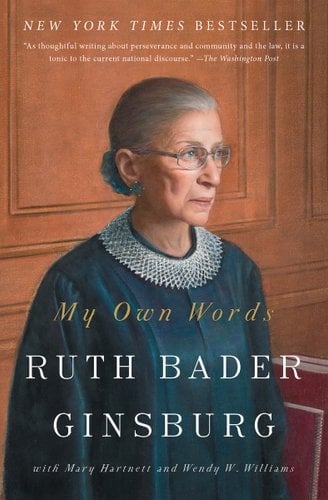
My Own Words by Ruth Bader Ginsburg
The discussion of women’s rights in America is not complete without discussing Ruth Bader Ginsburg. She was a pioneer of her time in the fight for gender equality and gender discrimination. Taking the Supreme Court in 1993, she was a force to be reckoned with, and she continued to fight for women until her demise in 2020. Her biography, My Own Words, is the first book she wrote since taking her seat on the Supreme Court. It discusses a wide range of topics, including her experiences on the Supreme Court, her Jewish Heritage, and the importance of looking beyond the US when interpreting the Constitution.
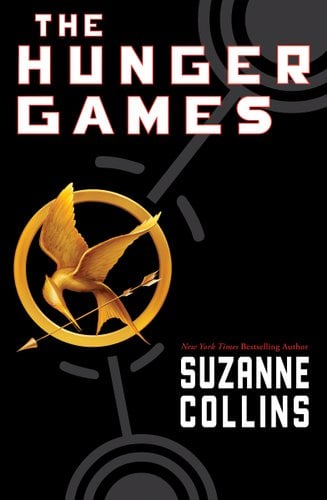
The Hunger Games by Suzanne Collins
First published in 2008, The Hunger Games series has become a worldwide phenomenon, spawning a successful movie franchise that continues to be relevant sixteen years later. The setting of the novel is a dystopian landscape in America, a new nation called Panem. At the center of this oppressive control is the Capitol, while twelve impoverished districts lay beyond the shiny city. To keep the citizens from revolting, an annual Hunger Games is held, where one boy and one girl are chosen in each district to participate in a televised fight to the death. Taking her sister’s place as tribute, sixteen-year-old Katniss Everdeen is included in the battle but ends up becoming a symbol of resistance against the authoritarian Capitol and President Coriolanus Snow.
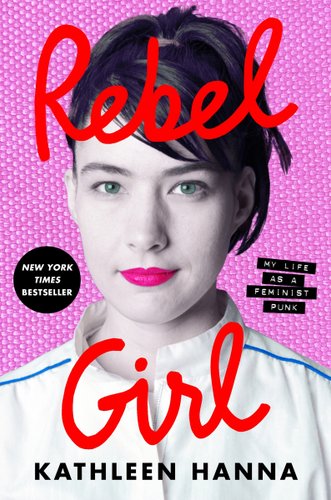
Rebel Girl: My Life as a Feminist Punk by Kathleen Hanna
Surviving the punk scene in the 1990s is an accomplishment, especially since it was a time and atmosphere where women were targets for male aggression and violence. As the frontwoman for both Bikini Kill and Le Tigre, Kathleen Hanna helped found a movement called Riot Grrrl, which was a grassroots feminist punk movement that sparked up in the Pacific Northwest in the 90s. Her musical projects included feminist anthems such as Rebel Girl and Double Dare Ya. In this biography, Kathleen details her motivations for her punk feminist ideas that stemmed from her childhood into her college years. She also includes inside looks into her inclusion in the music industry and finding her identity within the scene.
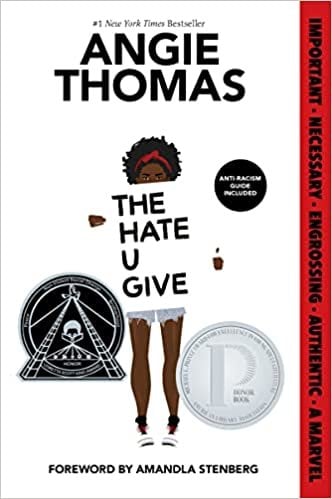
The Hate U Give by Angie Thomas
Serving as an important detailing of the epidemic of police shootings of Black people, which sparked the Black Lives Matter movement, Angie’s novel articulates the experience of sixteen-year-old Starr Carter. Being a teenager is tough, but even tougher when one is trying to navigate blurred lines between identity, as Starr is torn between her life at her posh school and her home in her impoverished neighborhood. Life becomes way more complicated when Starr becomes the main witness in a police shooting of her childhood best friend, Khalil. While rumors run rampant and racist assumptions are made about Khalil concerning his character, Starr is caught in the crossfire, as she becomes the main target of questioning from her preppy schoolmates, drug lords, and the media press.
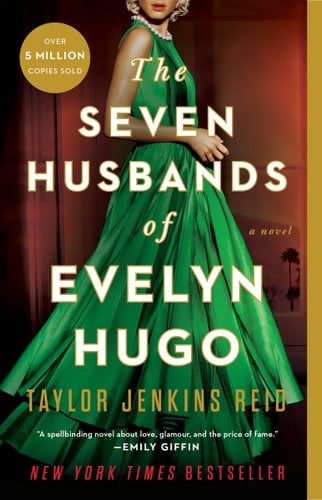
The Seven Husbands of Evelyn Hugo by Taylor Jenkins Reid
This is a tale of two women caught in the complexities of their gender in a patriarchal society. On the one hand, we have Monique Grant. While going through a difficult separation from her husband, Monique is also struggling to jumpstart her career as a journalist. Evelyn Hugo, a famous, or infamous, golden-age actress from Hollywood, surprisingly reaches out to Monique to tell her story, an opportunity that would make Monique’s career. Now an aging woman living in her New York City townhouse, Evelyn has led a life of scandal due to her string of husbands, which has kept her front page gossip for years. But hidden within Evelyn’s memories is a great and forbidden love.
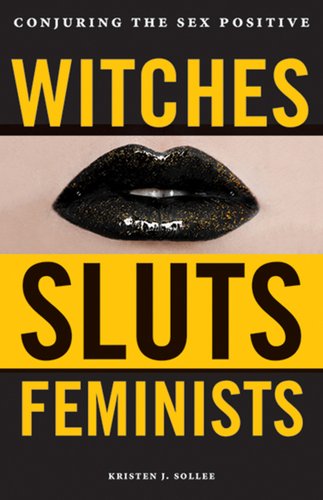
Witches, Sluts, Feminists: Conjuring the Sex Positive by Kristen J. Sollee
In Kristen’s essay, she unpacks the meanings of words like “witch” and “slut” in connection with the negative annotations attached to women. In the fight for gender equality and bodily rights, the history of these words is reviewed and analyzed to determine how they have confined women in dictated roles. The call for action is presented to reclaim these words as positive affirmations and as signs of power for women.
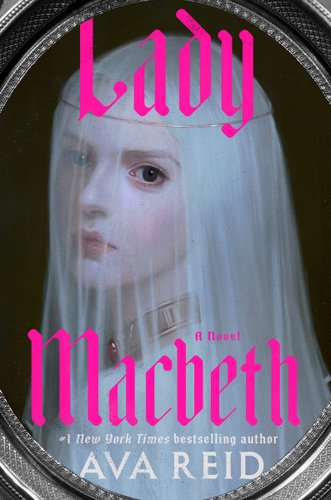
Lady Macbeth by Ava Reid
Ava Reid gives a different perspective on one of the most famous villainess from Shakespeare’s tales. Known as a conniving witch in the original retelling, Ava’s version gives a different view, uncovering how Lady Macbeth was forced to marry the Scottish King and dragged to her wedding bed. However, despite her grim position, she discovers that her magical abilities are stronger than her husband’s, while her beauty is feared among the men of the court. Her witchcraft is turned into a survival method to deal with male oppression.
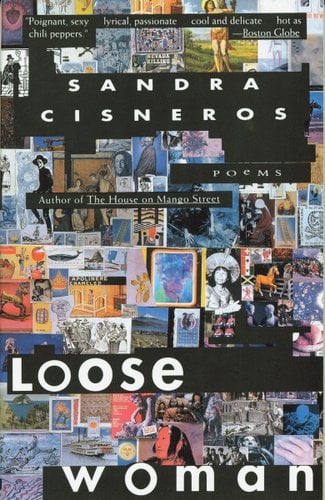
Loose Woman by Sandra Cisneros
Widely known for her work The House on Mango Street, a beloved story that details the experience of girlhood from a Chicana assessment, Loose Woman is a collection of poetry by Cisneros. The poems are sexy, while some are downright erotic. The works can be interpreted as a celebration of women’s sexuality. In a world where women have been told to be meek and reserved, Cisneros expresses:
They say I’m a beast
And feast on it. When all along
I thought that’s what a woman was.
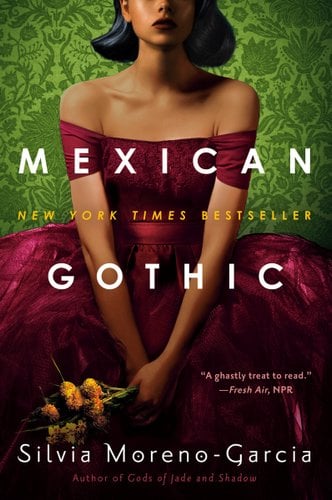
Mexican Gothic by Silvia Moreno-Garcia
In what became a New York Times bestseller, Mexican Gothic seems to encompass all of the classic gothic tropes but actually retells the story through an anti-colonial feminist lens. Set in 1950s Mexico City, popular socialist Noemí Taboada rushes to her cousin Catalina’s rescue, as Catalina claims that her husband, British immigrant Virgil Doye, is attempting to murder her. Moreno-Garcia flips the script by portraying Noemi as the heroine who does not require a knight in shining armor and speaks up against male authority.
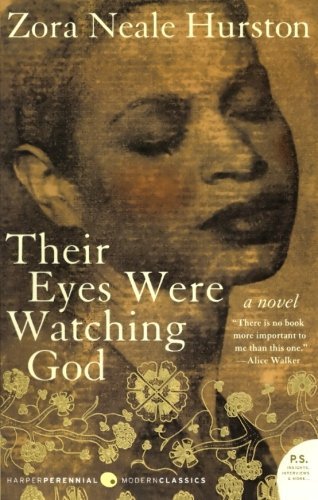
Their Eyes Were Watching God by Zora Neale Hurston
Set in early 1900s central Florida, the readers are first introduced to the main character, Janie Crawford, when she returns from a journey to her hometown of Eatonville. Among the chatter of the townspeople, Janie ignores the gossip and embraces her own identity. Her previous journey takes her through three different marriages, all of which attempt to entrap Janie in gender boundaries.
The experiences of women are stories that need to be amplified. This list above includes only a few of the important narratives lived by women. But there are so many more voices that need to be heard in order to achieve gender equality and establish women’s rights. Make sure to take these voices into account!
To read more about strong female literary characters, check out our article Stimulating Classics That Feature Tenacious and Strong Female Heroines!
To prepare for the upcoming year, make sure to add some of these books from our bookshelf, Banned Books: Because We Stand With the Well Informed!
