

















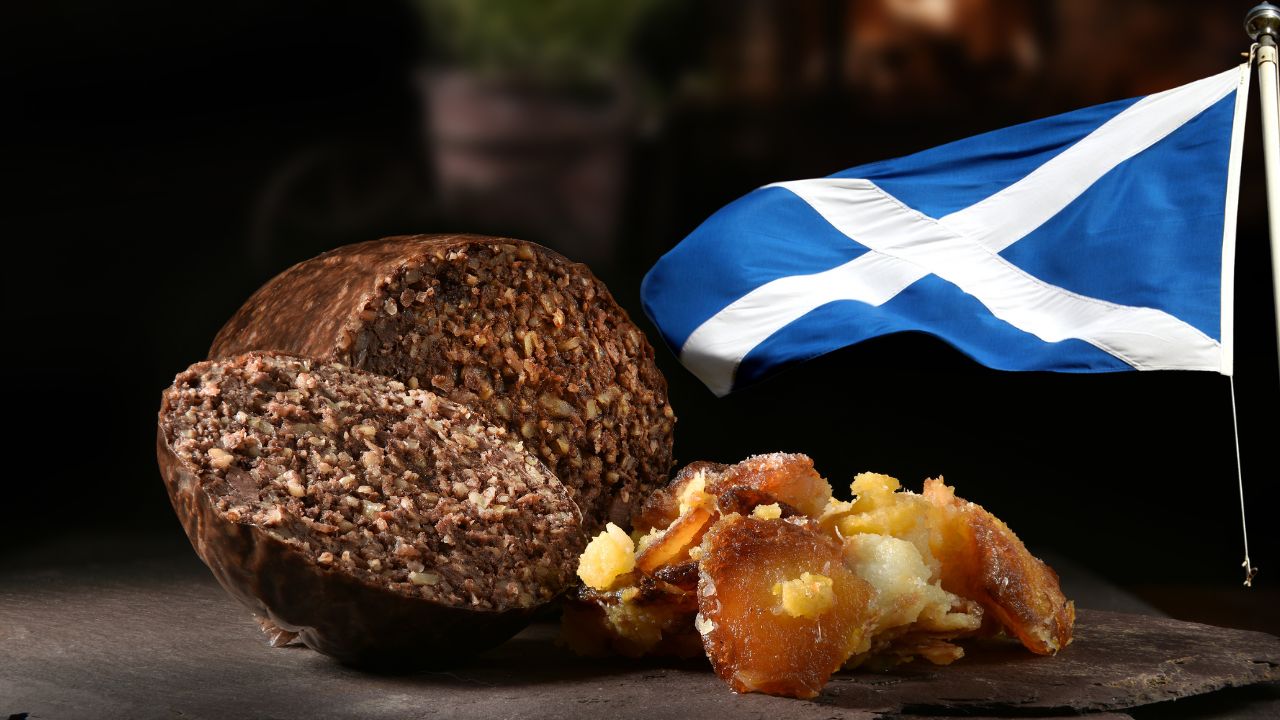
Scotland is known for a wide variety of culturally rich traditions and far-reaching influences. Wild Scottish salmon remains one of the most widely sought-after varieties of high-end fish, and Highland cows have captured the hearts of many worldwide. When most people think of Scottish culture and heritage, they think of tartan patterns, bagpipes as the soundtrack to the jaw-dropping Scottish Highlands, and certainly, Scottish whiskey and gin. However, if you are Scottish yourself or at least more acquainted than the average person with this rich culture, one dish sticks out among the rest: Haggis. Rich, meaty, and controversial.

Robert Burns
Haggis is one of the most quintessential Scottish dishes and is at the center of the Burns Night celebrations.

Robert Burns, the ‘national’ Scottish poet born in 1759, known most for his writing of Auld Lang Syne, has a night of fame each year in his homeland. Burns Night comes around every year on January 25th, the birthday of the famous poet. This night is a time to honor and celebrate his life. Central to this celebration is his poem Address to a Haggis.
Fair fa’ your honest, sonsie face,
Robert Burns, Address to a Haggis
Great Chieftain o’ the Puddin-race!
Aboon them a’ ye tak your place,
Painch, tripe, or thairm:
Weel are ye wordy of a grace
As lang ‘s my arm.
The poem is read aloud during Burns Night Supper. When the speaker gets to the first line of the third stanza, traditionally the haggis is cut open to be enjoyed!
Haggis Controversy
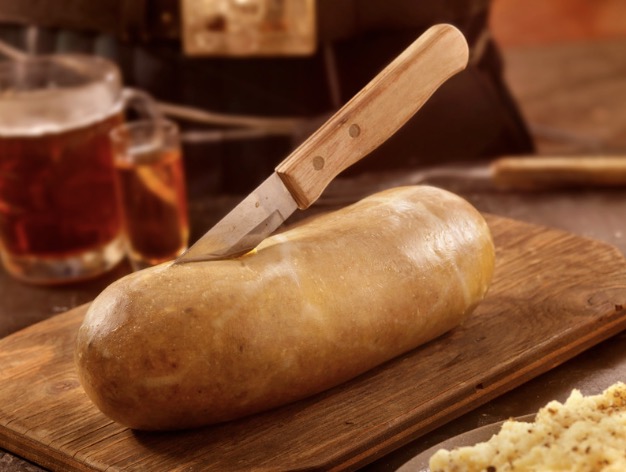
Now, for the audience unfamiliar with this dish, comes the question of why is there so much praise? What is it, really? Haggis as a dish can be traced all the way back to the 14th century. It is a delicacy made of sheep’s offal, oatmeal, suet, onions, and a handful of different seasonings. It is served with “neeps and tatties,” or mashed rutabaga and potatoes.
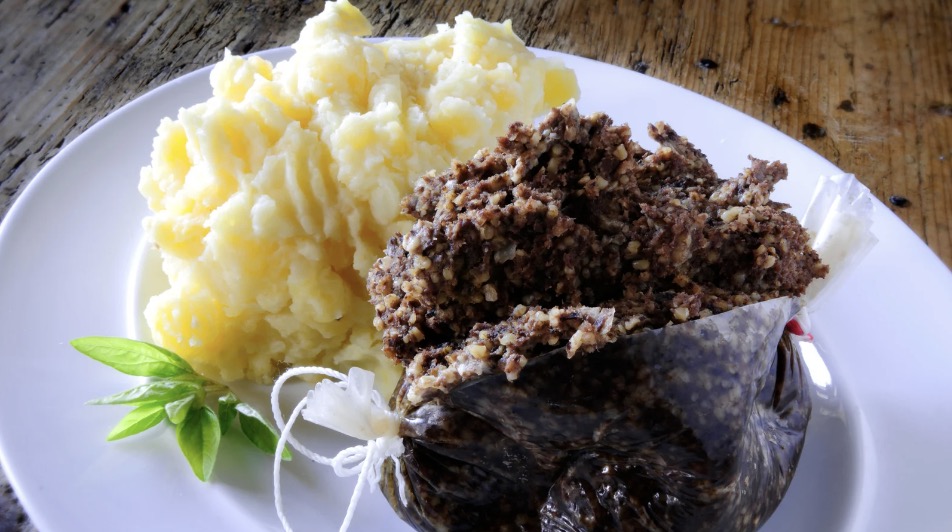
Among the sheep’s offal are the stomach, heart, lungs, windpipe, and liver. However, because of the traditional use of the stomach and lungs, Haggis has gathered controversy over the years. Most notable is the 1971 USDA’s ban of Haggis that uses sheep lung, under the claim that it is an inedible animal part.
The removal of one of the key ingredients to the dish is an affront to Scottish people living in the US.
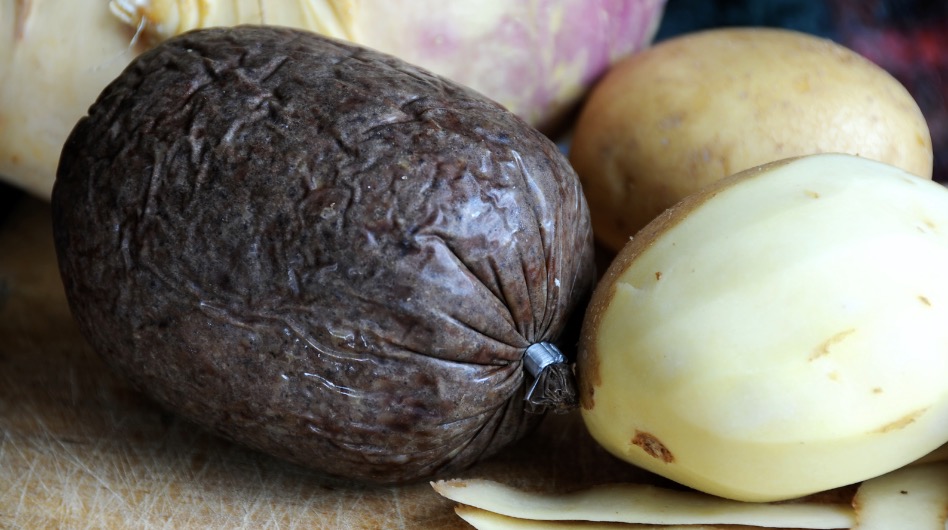
Some don’t mind a more non-traditional version of the dish as long as it resembles the original, and others argue it simply isn’t the same taste without it. Having tried both Scottish and Scottish-American haggis, I’d have to agree that the traditional Scots have it better, but at least it can still be mostly enjoyed globally.
The Endangered Pygmy Hippo
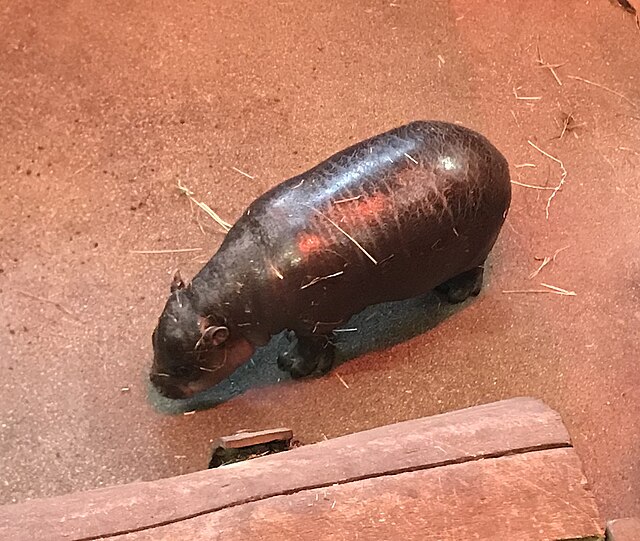
A further show of loyalty to Haggis can be seen in Edinburgh. In October of 2024, the Edinburgh Zoo welcomed a new baby pygmy hippo, and her name is none other than Haggis!
Of course, there are loads of Scottish traditions that can be felt worldwide, but haggis is one of the most acclaimed in terms of a well-honored and kept tradition. With a taste akin to stuffing, but far heartier and decadent, it deserves the praise it gets. If it’s not for you, that’s okay — more Haggis for the rest of us!
Looking for other culturally significant food? Check out other articles from us here!
You can also satisfy your taste buds with cookbooks from our bookshelf here.