









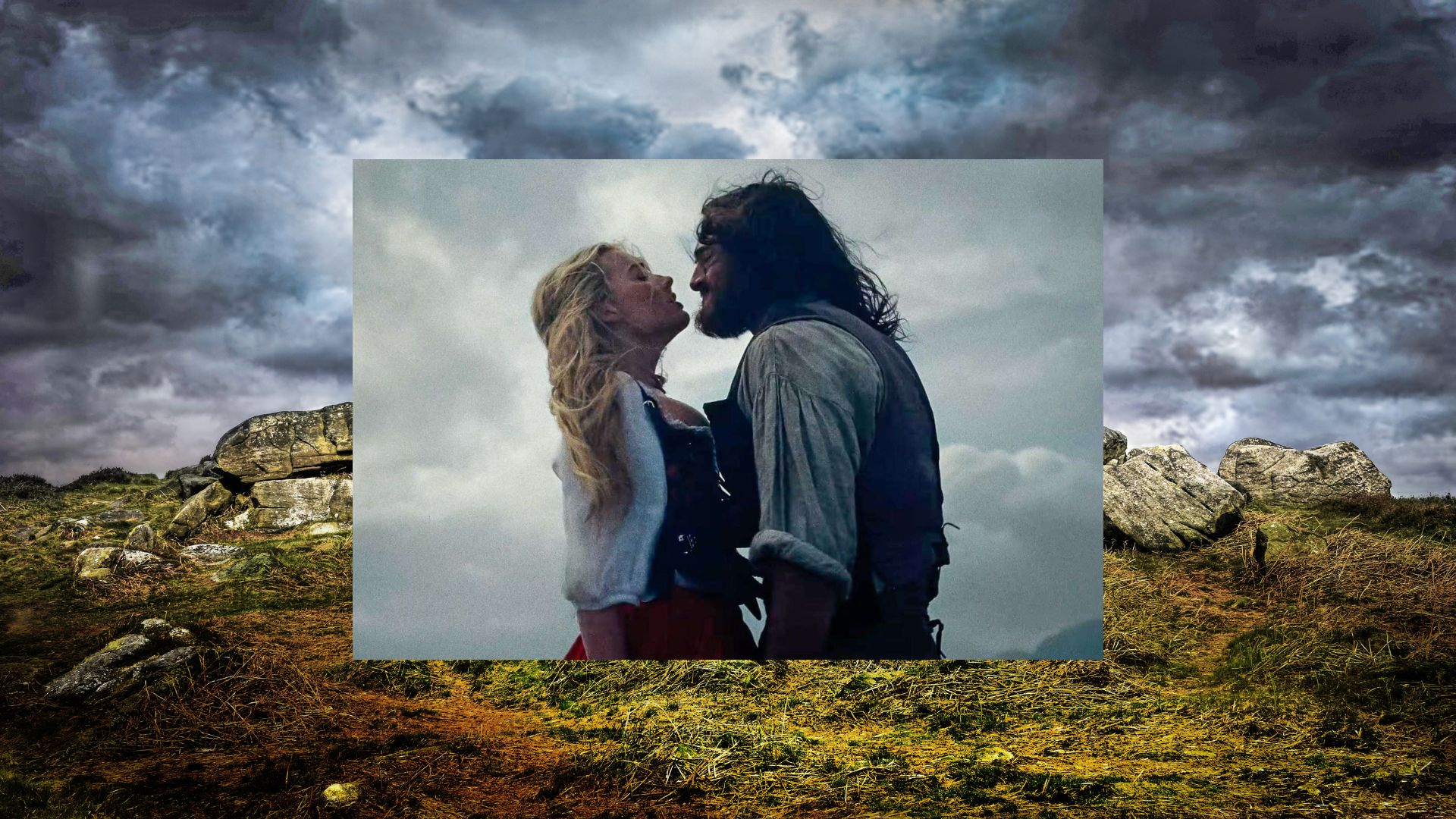
Last week, the first trailer for the upcoming film adaptation of Emily Brontë’s 1847 classic Wuthering Heights was released along with the film’s premiere date: February 14th, 2026. Marking Emerald Fennell’s third feature-length film, following the critical acclaim of Promising Young Woman and the viral Saltburn, her interpretation is set to star Margot Robbie as Catherine Earnshaw and Jacob Elordi as Heathcliff — a casting decision that sparked outrage amongst Brontë fans before the first glimpses of the film were ever released.
The backlash has nothing to do with the actors themselves; Robbie is phenomenal, with three Oscar nominations under her belt, and Elordi is a fine actor with praiseworthy performances in Euphoria, Priscilla, and Fennell’s Saltburn. However, for die-hard fans of the novel and film enthusiasts, Fennell’s casting not only fails Brontë’s classic but turns away an opportunity to give a modern, fresh take on a novel without relying on sensationalism as a crutch (of which, judging from the trailer, Fennell’s adaptation is overwhelmingly guilty).
The Casting
First up, Margot Robbie, this is intended without the least bit of ageism and purely realism: Catherine Earnshaw’s oldest appearance in the novel is as an 18-year-old. Margot Robbie pushes 20 years Catherine’s senior and, for those familiar with the story, it stands out. Granted, this is a bit nitpicky; adaptation in its essence means to change and Robbie will surely do her best with the role. That being said, the novel is, at its core, a story of the all-consuming, once-in-a-lifetime passion you experience in the thralls of youth.
The casting of Jacob Elordi has been met with much more backlash and for much more pressing reasons. For many decades now, academic circles have posited that Heathcliff was most likely a person of color, being described with dark skin throughout the novel. There is also a common angle that this “dark skin” can be attributed to Heathcliff’s belonging to the lower class, who often were described as tanned to signal their work in the fields, most specifically to Romani groups or Irish Travellers. With this incredibly interesting, modern take on a work of classic literature, why not explore it further in a 2026 adaptation?
There are also deeper plot points mixed up in Heathcliff’s ambiguous race that have Brontë fans fearing that depicting the moral and social complexities of the story will be foregone in the adaptation for the more obvious sexual aspects. In response to the backlash, the casting director, Kharmel Cochrane, spoke out: “There are definitely going to be some English lit fans that are not going to be happy. […] But, you really don’t need to be accurate. It’s just a book. That is not based on real life. It’s all art.”
What I think a lot of novel and film fans would have been excited for is two unknown or up-and-coming actors to play these roles. Not only does it contribute to the air of mystery the novel is known for and fall in line with the remote setting of the Yorkshire Moors, but this is the perfect type of film to get new actors involved in. There’s a guaranteed fanbase that will line up in theatres for the adaptation, no matter who’s in it, so it feels like a missed opportunity to shine light on promising young talent.
Whilst Robbie and Elordi’s casting seems to squander this opportunity, “Wuthering Heights” redeems itself slightly with young Heathcliff (Adolescence’s breakout star Owen Cooper), young Catherine (Charlotte Mellington, who wowed in Matilda the Musical as Lavender), and young Nelly Dean (newcomer Vy Nguyen). With film debuts for Cooper, Mellington, and Nguyen, the young cast of Fennell’s next project is so far the most intriguing aspect of the impending adaptation.
The Trailer
The initial disappointment over the casting was nothing compared to the disappointment of the trailer. Complete with relentless gasping, aggressive bread kneading, egg yolk fingering, sliding fingers into frozen fishes’ mouths (giving the same visceral cringe as thirst trap chefs on Instagram and TikTok), and an aesthetic that completely clashes with the early 18th-century setting, “Wuthering Heights” (infuriatingly placed in quotation marks) currently resembles a soft porn novel from the ‘80s. The oppressive sensationalism that weaves together the trailer overshadows the heart of Brontë’s legendary tale, giving no indication that audiences will experience the emotional depth of her characters and social commentary. The backlash online has been immense.
Fennell used sensationalism in Saltburn with great success depending on your definition; while the infamous bathtub and graveyard scenes remain a pop culture phenomenon, they also consumed the whole story. Introspection over the twisted lives of the elitists Fennell focused on was overpowered by the shock value of her sexual scenes; I fear “Wuthering Heights” will meet the same fate. I truly hope I’m wrong; I hope I’m being blinded by my love of Brontë’s work and being caught in the weeds of the shocking time period inconsistency (seriously, Catherine’s wedding dress is enough to make every historian clutch their chest). But, seriously, the first look at “Wuthering Heights” is set to Charli XCX’s Everything is romantic? Not only is her music in the trailer, she’s set to release original songs for the film’s soundtrack. I love Charli, but really?
Hopefully, these are the hooks Fennell has sunk into her audience to garner initial buzz about the screenplay, good or bad. With luck, the adaptation will deliver not only the yearning, but the quiet devastation, the social culpability, the deeply human aspects of Emily Brontë’s beloved work. There’s a lot of net negative to make up for and not a whole lot of signs of impending positives, but Fennell did one thing right: Make an adaptation of an adored classic and the readers will come, even if they shake their heads throughout the screening.
Check out another impending novel adaptation, The Running Man, here.
Looking for your next read? Browse our Bookstr Team Recommendations on Bookshop!