
















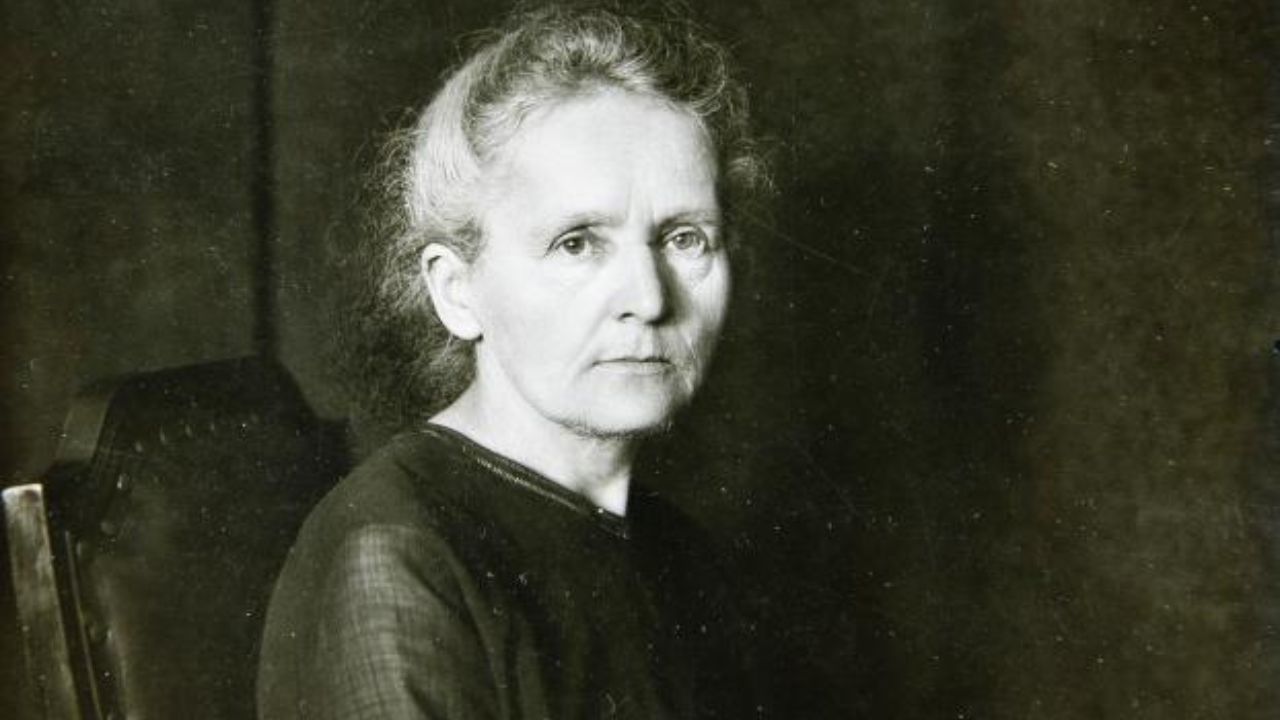
Marie Curie, born November 7, 1867, was one of the most famous female scientists in the world. She discovered the elements polonium and radium, introduced radiation as a medical technique, and deepened our understanding of radioactivity. She worked with her husband, Pierre, researching alongside each other, and they discovered what we now use as cancer treatments, which also greatly advanced science. Read on to learn more and discover great books that talk more about Curie’s life and contributions.
Early Research
Curie first got her license in physical science in 1893, and she started working in a research laboratory in France. She then got her mathematical license in 1894. Her first significant discovery didn’t happen until after she and her husband — married in 1895 — started researching together. They discovered polonium, named after her homeland of Poland, and radium in 1898.
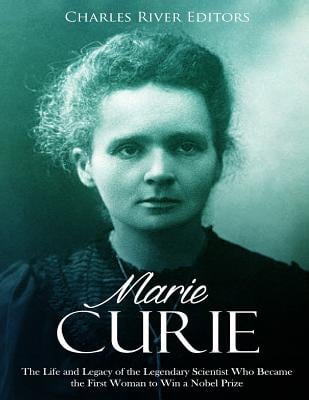
To learn more about Marie’s career and the obstacles she faced as a woman in science, read Marie Curie: The Life and Legacy of the Legendary Scientist Who Became the First Woman to Win a Nobel Prize. It shows how she persevered and cemented her position as one of science’s most famous and important people.
Discovery of Radium
As mentioned, the couple discovered radium in 1898. Marie wanted to go more in-depth with it, and she wrote a thesis expanding on Henri Becquerel’s discovery that uranium emits invisible waves similar to X-rays. She is the one who coined the term radioactivity, and it wasn’t long after this that she and her husband started putting more time and effort into exploring it and finding out the effects it could have.
While they made great success with their discoveries, scientific uses for radioactivity were scant. Elements that were radioactive, like radium, were only available in extremely small amounts, and they were expensive. These elements were also dangerous: the Curies and Becquerel had all received deep flesh burns and lesions due to handling the elements. This led to its involvement in cancer treatments.
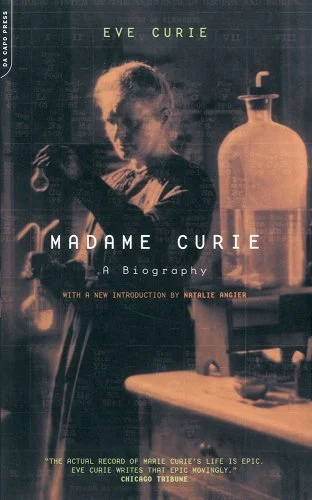
To learn more about her, read Madame Curie: A Biography. Written by her second daughter, Ève Curie, it shows Marie Curie from her research and public persona to what she was like with those she loved.
Radiation as a Medical Practice
Pierre suggested in 1903 that the burns caused by radium might aid in cancer treatments. Other experiments had been conducted before on illnesses like tuberculosis, so there was some positive reception to expanding the usage of radium. One of the first cancers treated with radium was basal cell carcinomas, a common type of skin cancer.
Not long after, a method of cancer treatment called Curietherapy developed. This involved putting radioactive sources inside the body to put them right on the tumor. This allowed treatments to be more precise and effective since X-rays couldn’t go that deep in the body. Many other scientists were involved in the process, including expanding on theories and previous discoveries, but it was truly thanks to the Curies and to Becquerel that this happened.
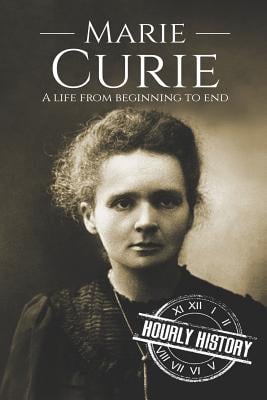
To learn more about her trailblazing career and views, read Marie Curie: A Life From Beginning to End. It details her education, including attending a “Flying University,” scandals, her involvement in WWI, and more.
Nobel Prize Winner
Marie won two Nobel Prizes in her life. The first was the Nobel Prize in Physics in 1903 by the French Academy of Sciences, which she shared with her husband and Becquerel for the discovery of radiation. She wasn’t nominated initially, as she was a woman, but Pierre insisted that she should be included for her invaluable research and contributions. A Swedish mathematician, Magnus Goesta Mittag-Leffler, who was on the nominating committee and was an advocate of women scientists, was the one who told Pierre of the committee’s initial decision. Thanks to these two, Marie was properly recognized for her work.
Her second Nobel Prize was the 1911 Novel Prize for Chemistry for her discovery of polonium and radium. Four other people have won two Nobel Prizes, and she was the only woman. She received the second award because her discoveries not only transformed scientific understanding of how atoms work but also opened new medical areas and expanded knowledge. These discoveries even provided information on how old the earth is.
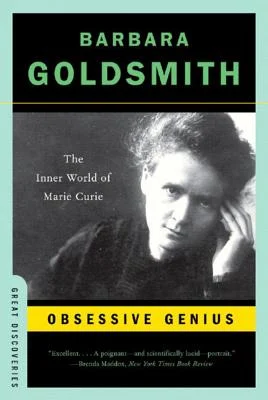
To learn more about Marie Curie as a person, read Obsessive Genius: The Inner World of Marie Curie. The author utilizes diaries, letters, family interviews, and more to paint a picture of who Marie was: a human struggling to balance an incredible career, societal prejudice, demanding family, and her passions.
Ironic and Tragic Death
Marie died on July 4, 1934, at age 66, due to aplastic pernicious anemia. She developed it slowly after being exposed to extreme radiation and poorly ventilated laboratories and work areas. Her husband died in an accident in 1906, but he would likely have died from radiation exposure as well. They were both constantly sick from radiation sickness.
Marie left behind a great legacy — one that literally cannot be touched. Her papers, research notes, and even cookbooks are incredibly radioactive. They are stored in lead boxes to protect others from radiation, and people must wear protective clothing to touch them.
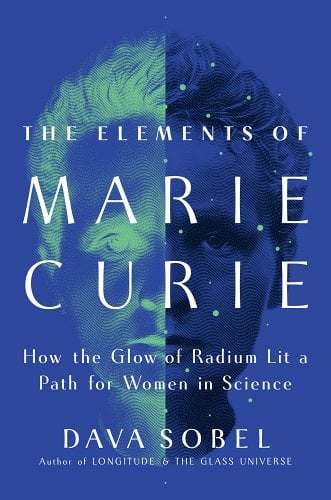
To learn more about Marie Curie outside her research and her contributions after her husband’s death, read The Elements of Marie Curie. It includes raising her young daughters, befriending Albert Einstein, taking over her deceased husband’s position as a professor, the women who became her legacy, and so much more.
These are not the only contributions Marie Curie made to science. If this piques your interest, I suggest researching more.
Click here for an article on Marie Curie and other biographies of famous scientists.
Check out our Nonfiction shelf on Bookstr’s Bookshop page.