




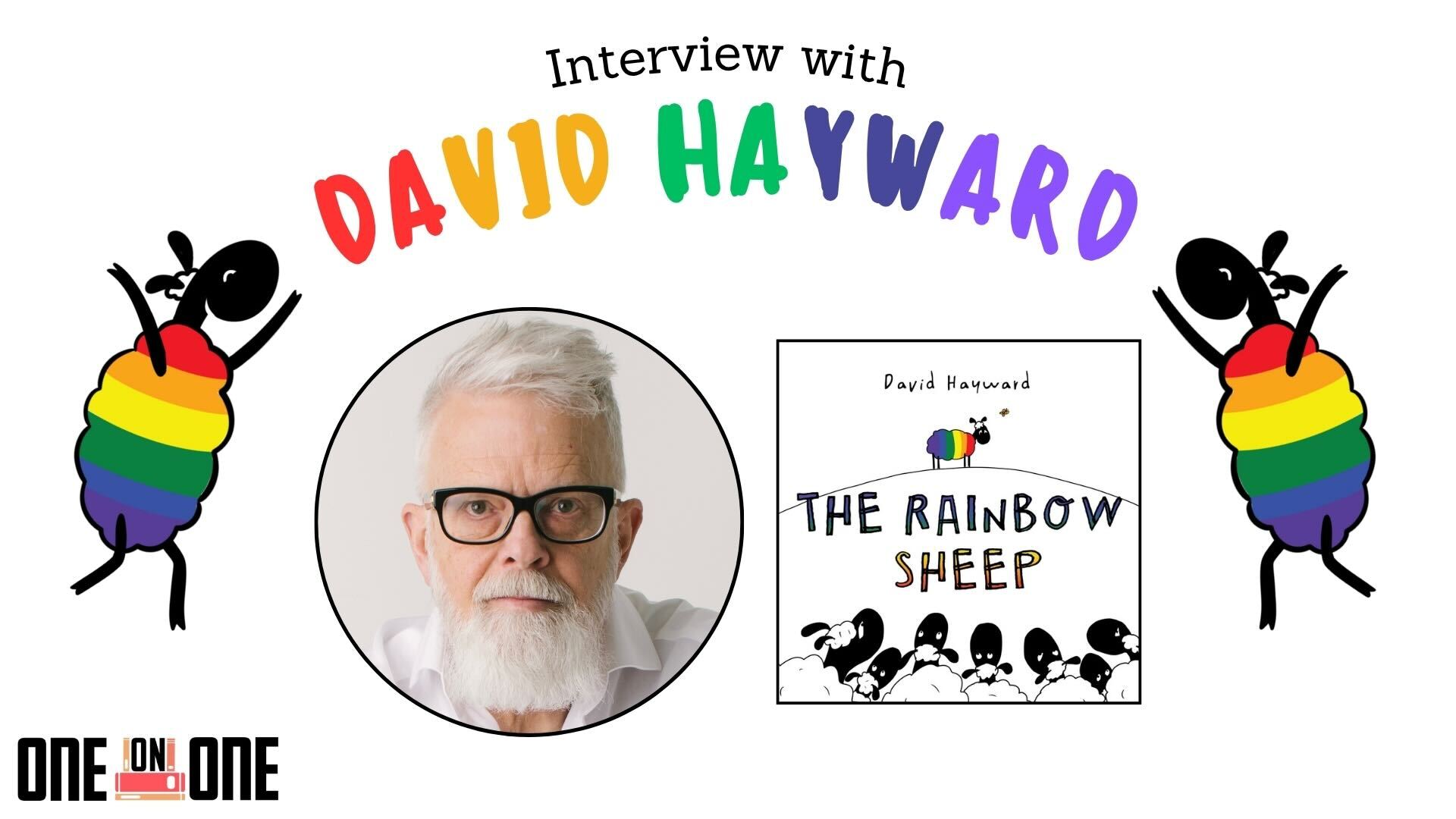
In many ways, current social values encourage children to conform to what is expected of them. While this can be beneficial when teaching children values such as good manners, empathy, or the importance of sharing, conformity can be immensely detrimental to the development of children when it comes in the form of heteronormativity or restrictive gender roles. David Hayward’s debut children’s book, The Rainbow Sheep, explores the monotony of homogeneity — and the joy that can be found when breaking out of it — with a young audience. We recently had the chance to talk with David about his book, religious deconstruction, and the beauty to be found in embracing our true selves.
About David Hayward
David lives near Saint John, NB, Canada, with his wife, Lisa. They have three grown children. With a background in theology and years of experience in ministry, David now focuses on writing, art, and storytelling. Through his books and illustrations, he inspires curiosity, kindness, and community. He believes in the power of stories to encourage young readers to think for themselves, embrace their uniqueness, and treat others with love and respect. His work is filled with warmth, humour, and a deep appreciation for the wonder of life.
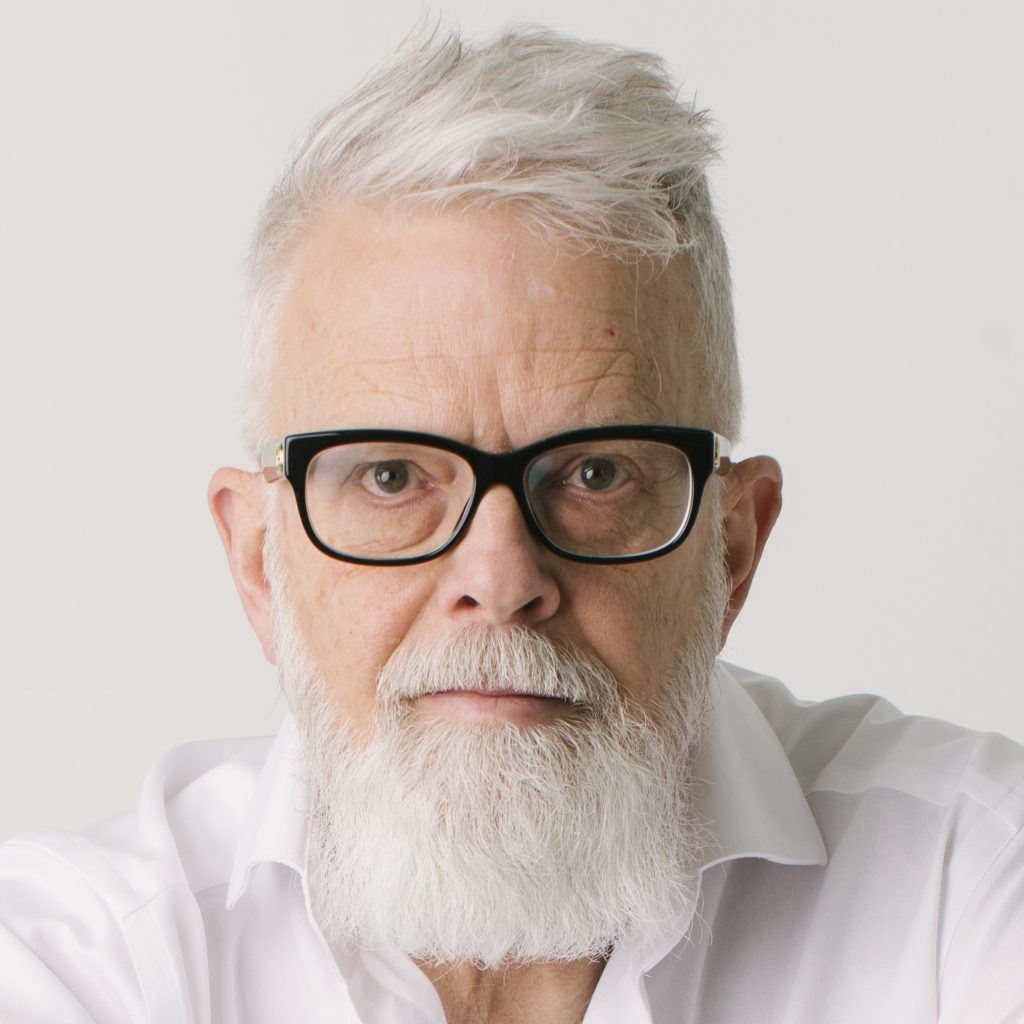
Thank you so much for joining us, David! Let’s get started.
Can you give our readers a little introduction to Ricky and Rainbow the sheep? What’s going on with them at the start of your book?
I have been drawing rainbow sheep for years now with the traditional rainbow colours. I’ve also added more colours of other sexualities and genders, too, so as to include as many of us as possible. They’ve become very popular. Then, one day, Beaming Books reached out and asked me if I would write and illustrate a children’s story book based on the rainbow sheep theme. Although it took me a while to write the story and draw the illustrations, the idea of Ricky, a regular part of an all-white flock of sheep, becoming friends with a new colourful member of the flock, Rainbow, just popped into my head. This is usually how my cartoons start… just an idea popping into my head.
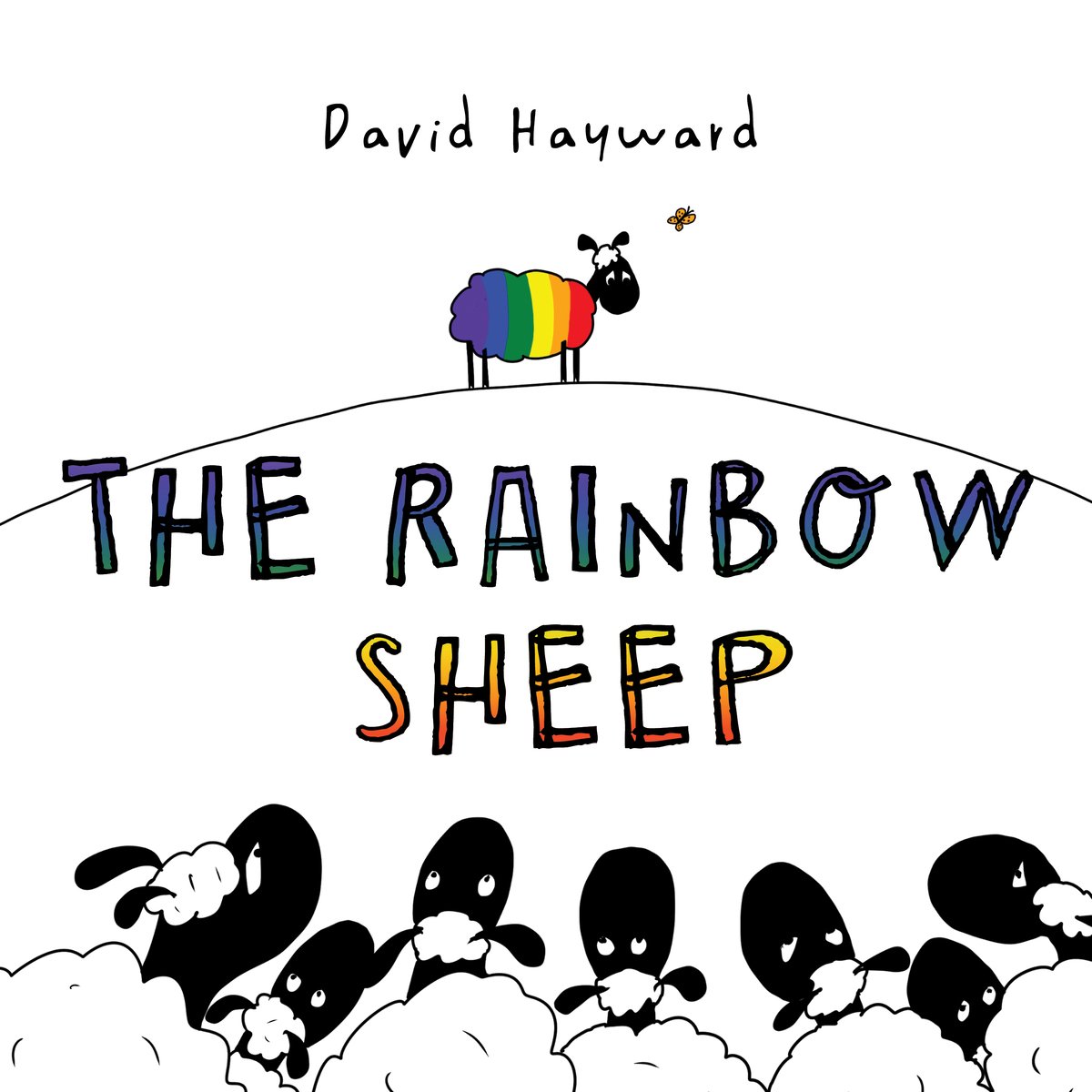
We all know how much pressure we felt as kids to not stand out too much, but blend in with everyone else. One of our greatest fears was other people pointing at us and laughing. But Rainbow is determined to be themselves and also figure out a way to be a happy member of the flock of sheep. Ricky helps this happen.
Rainbow and Ricky’s story acts as an allegory about how stifling conformity can be, especially when it feels compulsory. Why do you think that this is such an important lesson for young readers?
I remember dreading being thought of differently as a kid. Even though I really wanted to be myself, I also wanted to belong to the group. If I could stand out in good ways — like in art or music or sports or grades or friends — that was great. But to be embarrassed in front of others was a terrible thing to avoid at all costs. I knew what it was like to be bullied, like when I decided I wanted to wear this or that, or draw this or that, or say this or that, when apparently, I was to learn that wasn’t cool. It seemed like my whole childhood was figuring out how to navigate between authenticity and acceptance. And it was terrifying.
My own children experienced this, and I’m sure pretty much every child does. So I drew Rainbow and Ricky and told their story of how daring to be yourself should be a good and rewarding experience. It’s an encouragement to each of us to be authentic, and for all groups to encourage and accept and embrace this authenticity.
Rainbow has been a frequent and popular character in your cartoons for adults. What made you decide to bring her and what she represents to a younger audience, and how did you navigate that transition creatively?
I was happy when Beaming Books invited me to write and illustrate the story. I’d never thought of doing such a thing. Even though I’ve been drawing rainbow sheep for years, the thought of developing a story for children never crossed my mind. It’s a positive thing to encourage children to discover and express their most authentic selves. It’s a lifelong project, but starting early in a positive and supportive environment is a plus many of us never had. My hope is that this story will encourage us all to love people as they are, as they discover and express themselves to be.
You have been open about your personal transition from pastor to religious deconstructionist. Can you explain a little what deconstruction means and how it relates to spiritual freedom?
“Religious deconstruction” is something that, as a label, has developed in recent years. In 2008 or so, when I was a pastor of a local congregation, I was reading books on deconstruction, the philosophy developed by Derrida, the French philosopher. These books were assigned to me by my church leadership and were intended to warn me against this hermeneutic. Instead, they had the opposite effect, and I became a kind of convert to the idea that questioning things, including texts, right to the very root, was an important and necessary process. This includes not only the Bible and theology, but our own beliefs and faith.
I started using the word “deconstruction” to describe this process. I even launched an online community called TheLastingSupper.com for people deconstructing their beliefs. After a few years, the word caught on to the point now where deconstruction has become a thing… for good or ill, depending on your perspective.
For me, deconstructing your beliefs is something everyone has always done from the beginning of time. It’s nothing new. But the phenomenon of questioning it to the point of leaving your beliefs, even your faith, and possibly even the Church, is a new development. Which is why deconstruction is considered so dangerous by so many.
In the last few years, there has been a noticeable push by conservative groups and politicians to ban books that embrace diversity, such as yours, from public schools and library shelves. Why do you think it is so crucial for children to have access to books that promote inclusive thinking and values?
I’m a Canadian in Canada. But I’ve received a lot of my education in the USA. It feels strange to say, “I remember when we used to be able to think radical thoughts and express radical ideas.” But, alas, here we are. Doing a lot of research on sexuality, gender, feminism, racism, and the patriarchy will lead one to conclude that the battle is over our minds.
It’s like the philosopher Judith Butler asserts: “… dogma rules out discussion”, and “So it [the Church] assumes that some authority will be getting into those minds, filling them with beliefs, and it wants to be the only one authorized to do so” (Who’s Afraid of Gender?). We prefer discussion and self-discovery, and providing safe spaces for this to occur. That’s what The Rainbow Sheep is all about.
Do you think that there are any more children’s literature titles for you on the horizon? If so, can you give us an idea of the books you’d like to write?
I had a very profound a-ha moment when I accepted the challenge to write and illustrate this book. Forgive me, but in my naïveté, I assumed it wouldn’t be a huge challenge. Wow, was I wrong! All those involved in the project encouraged me to read some classic best-selling children’s books and to research all about writing and illustrating children’s books. Sure, no problem! Then, I went down this deep, never-ending hole about children’s books. I had no idea! It’s a serious business, and not one to be taken lightly. So, to answer this question, I’m still sort of recovering from completing The Rainbow Sheep. LOL.
However, yes, I’ve been thinking about it. Like, should there be a part two? Or shall I create another adorable character? Or shall we explore other themes? I’m curious to see what will come of this. I mean, The Rainbow Sheep is being born into a hostile environment, generally. And I hope that it reaches more people than some would wish. I’m really wondering how this is going to turn out.
We always love to ask creators about the books that inspired them when they were children. Are there any books or series from your childhood that have stuck with you to this day?

What is so strange about this question for me is that I don’t remember ever being read to as a child by my parents. I do remember reading in public school. I do remember my fascination with certain books and stories. I also remember a certain comic book about The Scarecrow (Dell Comics) that captured my imagination. It wasn’t until we were reading to our own children that my appreciation for children’s books emerged. I remember ones such as Goodnight Moon, Blueberries for Sal, and also the very beautiful artistic ones like Owl Moon (one of my all-time favorites that reminds people of my own watercolor paintings), and C.S. Lewis’ The Chronicles of Narnia. And so much more!
Lastly, in honor of The Rainbow Sheep, if you were a sheep from your cartoon world, what color would your fleece be, and what would it represent about you?
Well, I’m a white cis-gendered straight man. However, over my years of studying Carl Jung and learning about the vast landscape of our inner self, and the importance of assimilating and integrating all the various parts of ourselves, including the light and shadow, the beautiful and the ugly, the male and the female, the angelic and the demonic — all the parts — I think my fleece would look like an artist’s paint palett: all the possible colours and all the blending, somehow messy and beautiful at the same time.
An enormous thank you to David for taking the time to share his thoughts with us! Be sure to find him online at NakedPastor.com, and follow his work on Instagram, Facebook, TikTok, Pinterest, Twitter/X, and Bluesky. And, of course, don’t forget to add The Rainbow Sheep to your family’s reading list!
For more kids’ books that celebrate the beauty of diversity, check out our article on Picture Books on Diversity to Build a Better, More Inclusive World.
For all of our recommendations for mini bookworms, check out our Bookshop bookshelf.