


















Chloe Gong has vastly and rapidly become one of the most dynamic voices in YA literature, known for her strong storytelling, diverse casts, and genre-blending plots. She’s now stepping into new territory with Coldwire, the first book in a cyberpunk dystopian trilogy set in a world shaped by climate change and corporate power. We sat down with Chloe to talk about her inspirations, writing process, and what readers can expect from this bold new chapter in her career.
About Chloe Gong
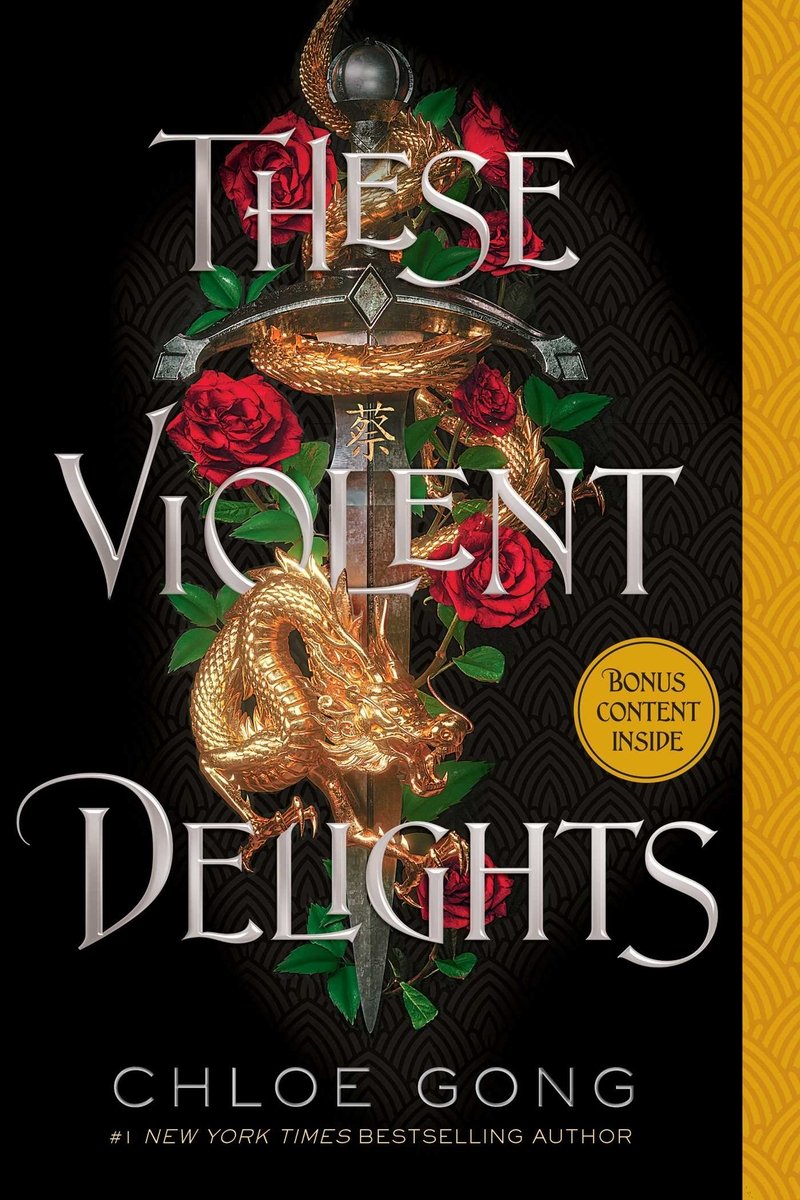
Chloe Gong is the #1 New York Times bestselling author of the Secret Shanghai novels — These Violent Delights, Our Violent Ends, and Last Violent Call, and the Foul Lady Fortune duology — Foul Lady Fortune and Foul Heart Huntsman. She also pens the Flesh & False Gods series — Immortal Longings and Vilest Things — and is set to launch her highly anticipated cyberpunk dystopian trilogy with Coldwire.
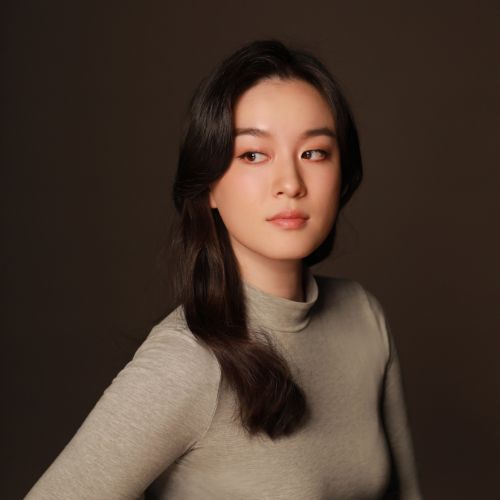
Born in Shanghai and raised in Auckland, New Zealand, Chloe now lives in New York City. A graduate of the University of Pennsylvania with degrees in English and International Relations, she has quickly become one of the most influential voices in YA literature. Her novels have been published in more than 20 countries, featured in outlets such as The New York Times, PEOPLE, and Cosmopolitan, and in 2024, she was named to Forbes’ 30 Under 30. Known for her Shakespearean retellings, complex multi-POV storytelling, and diverse casts of characters, Chloe’s work has been praised for blending lyrical prose with thrilling plots. Beyond the page, she often discusses her writing process, her experience as a young author, and her passion for reinventing classic narratives in fresh, inclusive ways. She has been interviewed widely, with features such as An Interview With Chloe Gong, To Fill the Void: A Conversation With Chloe Gong, and These Violent Delights: An Interview With Chloe Gong, where she often discusses her writing process, her inspirations, and her perspective as a YA author.
It’s a delight to have you, Chloe! Thank you for talking with us. Let’s get started!
To begin with, could you give those who may be unfamiliar a brief introduction to your upcoming release, Coldwire?
Absolutely! Coldwire is the first book in my upcoming cyberpunk dystopian trilogy, set in a near-future where climate change and frequent epidemics have prompted the invention of “upcountry”, aka a virtual reality entirely indistinguishable from the real world. It is controlled by a megacorporation called NileCorp, and we follow two protagonists: Eirale, who is a corporate soldier on the run from NileCorp’s private military, and Lia, who is a cadet in her last year at Nile Military Academy.
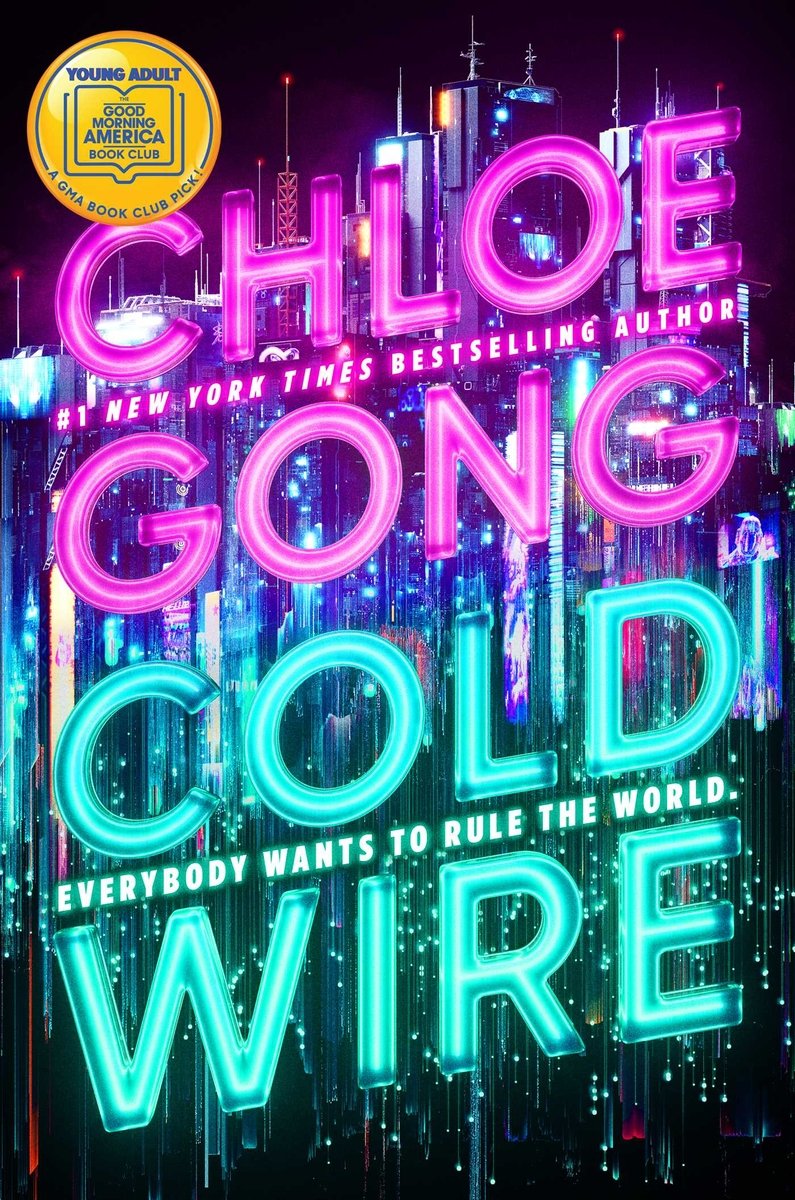
The society in Coldwire is divided into two parts: the glittering “upcountry” and the poor “downcountry”. We’re curious to know more about your inspiration for this and what exactly it means to live in each region.
I have been thinking about the concept of virtual reality for a very long time, and what would drive a society to truly accept it as a real-life experience. In my tween and teen years, I was frequently playing MMORPGs (massively multiplayer online role-playing games), from Club Penguin to OurWorld. So I’ve been pondering this idea for almost a decade — wondering about the psychology of having a “second life” as an avatar, about the crossover to that online life becoming reality — but it was during COVID and our extensive time on Zoom that I really sat down to plot Coldwire. I thought: what if there was a way to avoid the dangers of interacting in person? What if a megacorporation monetized that virtual world on a subscription model? How does our society start stratifying even further, and what sort of power does that afford the corporation versus the masses?
Coldwire is your first published cyberpunk dystopian novel. How did you decide to write in this niche genre, and what inspired the world you created?
I love the cyberpunk subgenre, but it is not without its flaws. In English Language and Literature, the conventions of cyberpunk really started to take shape in the 1980s as a response to the rise of Japan. It’s why when you think of any major cyberpunk media, you probably think of Asian-influenced cities and aesthetics, but Asian characters are either the bad guys or they’re absent entirely. For most cyberpunk media, the Asian future is the fallen future, and the Asian body is unfeeling or robotic. I really wanted to explore these themes and bring a new angle into the space. The world of Coldwire grapples with the origins of cyberpunk directly without losing the heart of it: the criticism of corporations, the exploration of technology in society, and the energy of a city that is pulsing alive in neon.
Every one of your published works is told in multi-POV. How do you go about writing multiple characters that all sound distinct from each other but are all equally relatable?
It tends to differ for every book! I admit I had an easier time doing multi-POV in third-person for These Violent Delights and Immortal Longings than in first-person for Coldwire. When it’s in third person, I focus on understanding the character and getting that on page through interaction, plot, and dialogue. There is less emphasis on “voice” because there is a space on the page between the reader and the character — I can adopt a narrator, overall authorial voice to connect them. Meanwhile, in first-person, I almost had to re-learn how to have distinctive “voices” again. Coldwire took multiple drafts to get its tone right and ensure they do sound distinct when it’s directly character to reader! It’s important to write from their eyes, which can affect the prose, the rhythm, and even the punctuation. The trick that I found helpful was to think about what mattered most to each character, and how that would shape their worldview, which subsequently shapes their voice.
You were only 21 when your first published book, These Violent Delights, was released, and it garnered immediate attention. What was it like for you to become so accomplished in your field at such a young age?
I feel really lucky, because I think my breakout at that age also came down to all the stars aligning at the same time. I’ve been writing since I was 13, so I had been putting in the work, but anyone in publishing will also know that hard work isn’t enough: the work needs to meet the right market conditions! I’m grateful for the head start because it meant I had the means to take a risk right out of college on the success of These Violent Delights and become a full-time writer. In the following year, I had contracts for Foul Lady Fortune, Immortal Longings, and several anthologies because I had to make sure I took advantage of the start and establish myself (and pay rent). Now I hope that I can continue creating and growing from where I started.
When it comes to sitting down and writing, a lot of people find they struggle the most with self-discipline and motivation to actually see their projects through. Do you have any tips on how to keep writing even when you might not feel like it?
My best advice would be to find the middle ground between not forcing the work, but also being diligent about it. It’s hard to balance this because you never want to be creating something you’re unhappy about, as that will often reflect in your work, yet you also need to be hard enough on yourself that you sit down and get the writing done. Since I do this full-time now, I am more often writing than not, and I’ve worked out a system over the years, but when I first got started and needed to balance schoolwork with writing, I found it was very helpful to outline so that I wasn’t twiddling my thumbs when I did have limited hours to sit down and write. If I pre-decided exactly what I wanted to get down, my excitement was building over the day, and then there was a set time when I could just write. Even if I didn’t feel like it that day, once I got started, it was easier, because it was one step closer to having a finished manuscript.
And finally, dystopian is a genre that has been around for decades but has recently been getting more and more popular amongst younger readers. Other than your book, what are some dystopian recommendations you have for those who are interested in the genre?
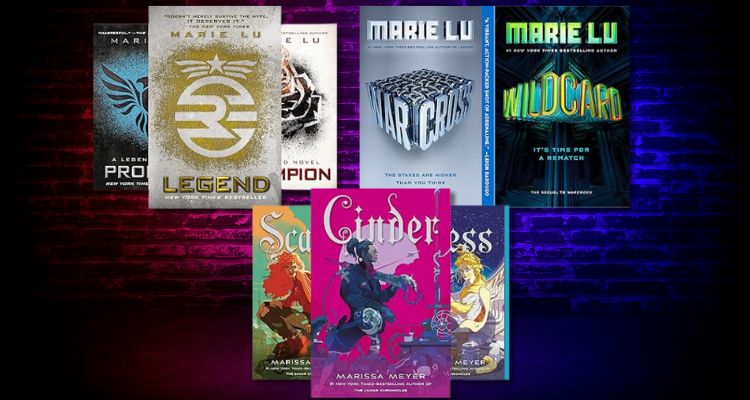
I was raised on YA dystopian in the 2010s, while it was having its commercial boom, so it is very near and dear to me! Marie Lu’s Legend series is one of my favorites, and though her other series, Warcross, is a bit more on the sci-fi end, I would strongly recommend it too to readers who enjoy dystopian. I also loved Cinder and the rest of the Lunar Chronicles by Marissa Meyer for dystopian that has an urban fantasy feeling!
Our warmest thanks to Chloe Gong for taking the time to enlighten us on her insight and imagination. Her career is proof of how powerful fresh perspectives can be in shaping the future of storytelling. From crafting bold, high-stakes fantasy worlds to now venturing into cyberpunk dystopia, Chloe’s work never fails to captivate and inspire. With Coldwire, she’s opening doors for stories and voices that feel unique and distinctive. Wherever Chloe’s storytelling takes us next, readers will eagerly anticipate stepping inside. Find Chloe on her Instagram, Twitter, Facebook, and on her website!
Love exploring freshly exciting voices in YA? Click here for more author interviews and deep dives into the stories behind the books.
Want more sweeping fantasy, dystopia, and thrillers? Explore our Dystopian Worlds, Technology, and the Universe in Science Fiction bookshelf on our Bookshop page.
