














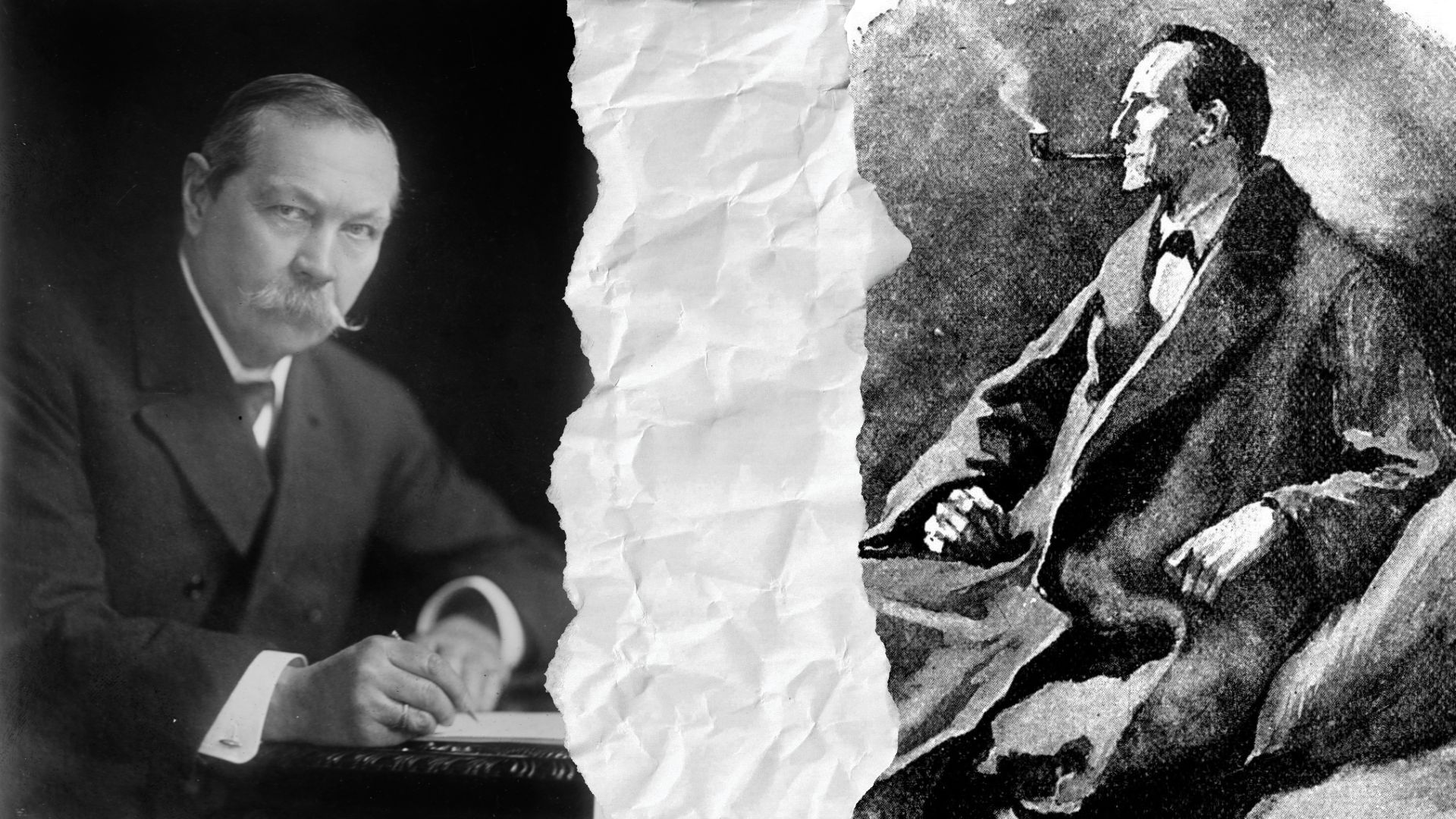
It’s the goal of every writer to achieve success; for most, that means book deals, fame, and at least a few reprints of their bestselling books. By these measures, Sir Arthur Conan Doyle is one of the most successful writers in history, and one might assume that he was content with his success. But the Sherlock Holmes author’s relationship with his most famous books and short stories is much more complex than meets the eye.
The Rise of Holmes
Sherlock Holmes’s now-famous detective adventures began in 1887 with the publication of the novella A Study in Scarlet. After the success of this book and its sequel, The Sign of the Four, Doyle set out to publish a series of short stories about Sherlock Holmes. Rejection after rejection followed from the more highbrow magazines that Doyle sought out until, eventually, the Strand picked it up. However, this deal came with a blow to Doyle’s ego, as the Strand described his Holmes stories as “cheap fiction.”
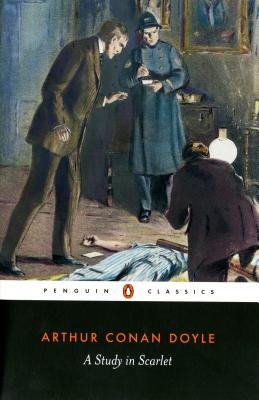
Writers of “popular” fiction often struggle to be taken seriously, but what happens when your characters are taken more seriously than you? That was the situation Doyle faced among other great writers of his time. It may seem like a bit of a paradox, but Holmes, as an intellectual, was often praised by the likes of T.S. Eliot and George Bernard Shaw, while the man who invented him and wrote his every line was cast aside. These other authors tended to talk of Sherlock Holmes as if he were a real detective rather than a fictional character, which made it easy for them to separate him — and his intellect — from Doyle.
The Not-So-Final Problem
With time, Doyle grew to resent his most famous character. At the end of his run with the Strand, he decided it was time for Sherlock Holmes to come to an end, and thus, the infamous showdown at Reichenbach Falls in The Final Problem was written into existence. Holmes’s death marked the end of an era, for both Doyle and his faithful audience. Or so Doyle had intended.
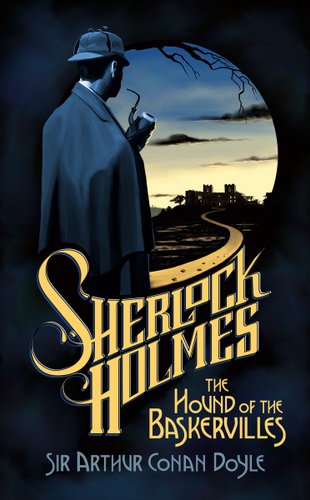
The public backlash, however, was brutal. Fans wore black bands on their arms, picketed in front of Doyle’s home, and even attacked him on the street. Twenty thousand Strand readers canceled their subscriptions. Doyle held out against his erstwhile fans for nearly a decade before publishing The Hound of the Baskervilles, which was set in the fictional universe before Holmes’ demise. Once again, Doyle’s novel soared in popularity, and in the year following, he signed a deal worth the modern equivalent of $1.6 million to resurrect Holmes. By the time Doyle retired Sherlock Holmes for good, he’d written four novels and 56 short stories about the detective, resenting him all the while.
The Perils of Celebrity
Doyle’s true literary passion never lay with Sherlock Holmes or with the detective genre, but instead with the genre of historical fiction. He spent much of his career hoping to be recognized for what he considered to be his more serious work. Fate and fame, however, had other plans for him. In the nearly 150 years since Sherlock’s conception, countless literary, theatre, television, film, and radio adaptations of his adventures have come into being. Holmes is still the most famous detective in history—fictional or real—and Doyle’s other works have largely remained in relative obscurity.
Any author can agree that characters often take on lives of their own. This is especially true once those characters and their stories are published and sent out into the world. Like children, they grow and change and impact the people who meet them in ways that their creators never imagined. That’s what makes literature so magical—but that magic can be a double-edged sword!
To learn about Doyle’s other books, click here.
Check out other great classic literature recommendations here.