








When Emily Elizabeth Bridwell moved to college, her father gave her a reading rug from his office to add some decoration to her dorm room. The rug had a familiar face from Emily’s childhood: a large red dog named Clifford, whom her father had designed. Emily had no notion of the dog’s popularity beyond her family at the time, her father Norman Bridwell later told the School Library Journal, and she was shocked when her dormmates recognized the friendly red face:
“The other girls saw it and said, ‘Oh! Clifford!’ When my daughter asked, ‘How do you know about him?’ they said, ‘Everybody reads Clifford!’”
– Norman Bridwell, School Library Journal
Emily Elizabeth — who, yes, had been the namesake for Clifford’s beloved owner — may have been surprised that Clifford was a household name, but anyone who grew up reading after the 1963 publication of Clifford the Big Red Dog by Scholastic was likely to be well-familiar with the colossal canine and his wholesome antics. A loyal and gentle bloodhound mutt the size of a house, Clifford has been a staple for generations of young readers, and it’s relatively easy to understand why.
Clifford the Big Red Dog: An Accidental Icon
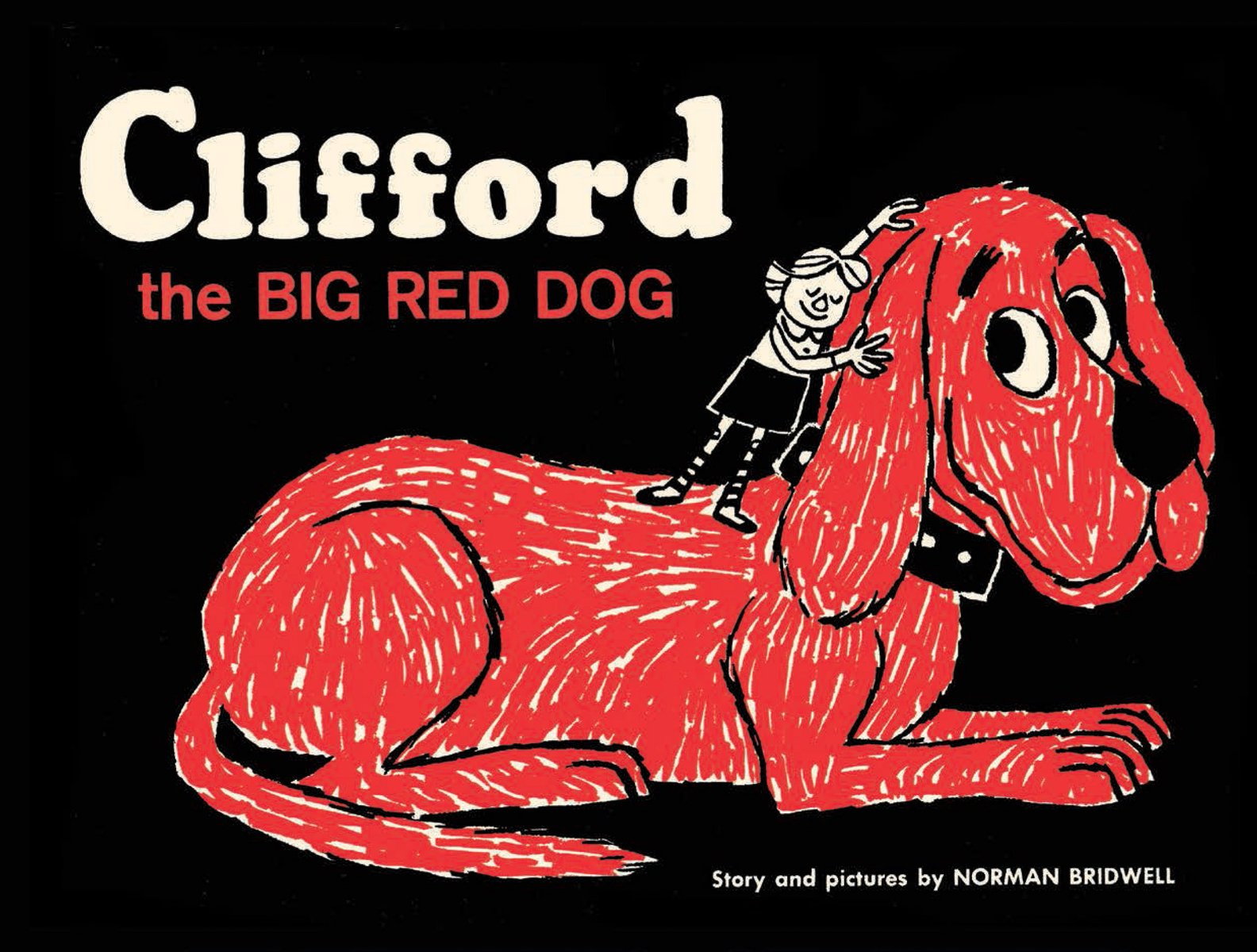
Prior to the runaway success of Clifford, Norman Bridwell had been working as a commercial artist in New York City while simultaneously trying to break into the illustration industry. However, time and time again, he hit a rather difficult stumbling block: no one in the publishing industry liked his drawings. During one rejection, editor Susan Hirschman told Bridwell that his artwork was too plain, and suggested he develop a story to go with the drawings to increase their appeal.
Hirschman pointed to one of the ten paintings in Bridwell’s portfolio, a scene of a little girl sheltering from the rain under her large red dog’s muzzle, reaching out to see if the weather had improved. “Maybe that’s a story,” she said.
Bridwell spent the next three days trying to develop a narrative for the artwork, which had been based on his childhood dream of having a dog large enough to ride like a pony. He enhanced the fantastic element by increasing the size of the pup and dreamed of the benefits and drawbacks of having such a massive pet. He initially named the dog “Tiny,” a name that his wife Norma quickly shot down: “[That’s] a stupid idea,” she said, and suggested the name of her childhood imaginary friend as a replacement: Clifford.
Even Clifford’s distinctive color was a matter of happenstance. Bridwell reminisced to Highlights for Children magazine that when he sat down to do the first drawing, a bottle of red paint was simply “there”:
“I dunked my brush in it, and decided that it would be red.”
– Norman Bridwell, Highlights for Children
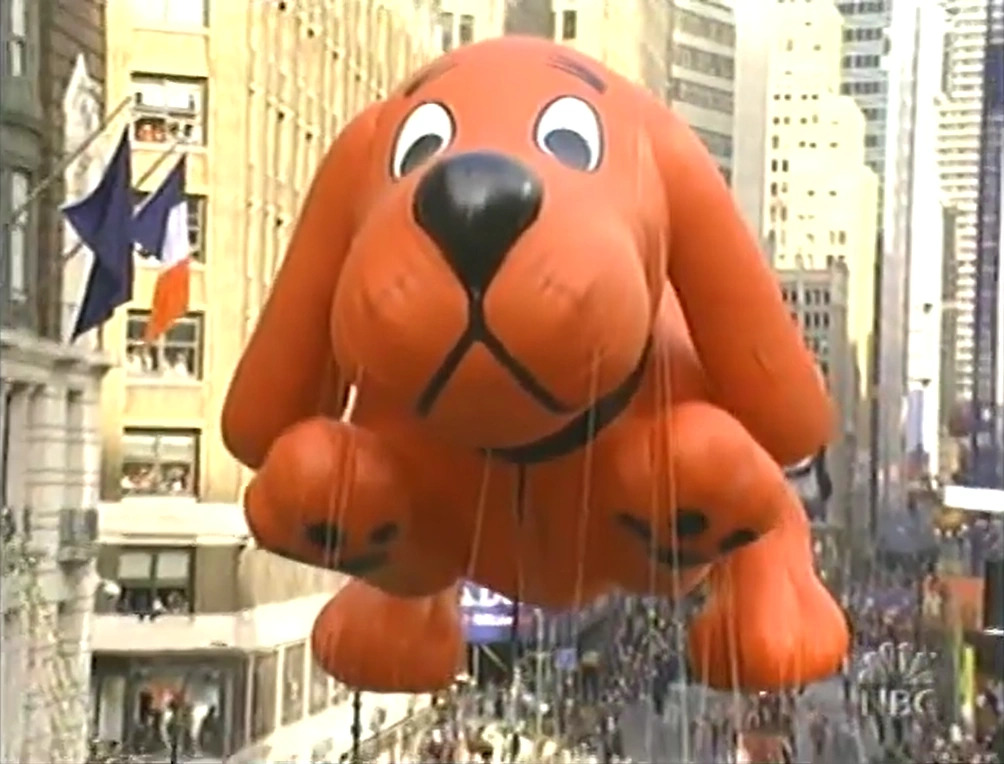
The first Clifford the Big Red Dog book was a success, but Bridwell assumed it would be a one-off fluke, advising his family not to get too excited. Yet Bridwell was mistaken: over the next 50 years, he would go on to write and illustrate sixty unique Clifford titles for Scholastic. The lovable red dog would be spun off into two television series, three films, seven video games, countless lines of merchandise, and a Macy’s Thanksgiving Day Parade balloon. Over ninety Clifford artifacts are in the Smithsonian National Museum of American History’s permanent collection.
A Loyal Dog Is a Reader’s Best Friend
Just as the real Emily Elizabeth’s dormmates insisted, everybody read Clifford, and generation after generation of children were drawn to the well-meaning mutt’s stories. Various explanations for the pup’s appeal have been offered over the years: for instance, child psychotherapist Myra Mendez, PhD, LMFT pointed out to Scholastic Parents the visual appeal of Clifford’s bright red coat, as it is one of the first colors that developing eyes and brains can identify. She also drew attention to Clifford’s classic dog-like behavior — a quality that Bridwell insisted be maintained in the books, rather than giving Clifford more human characteristics.
Bridwell himself had a theory:
“He tries to do the right thing. He has good intentions, but his size makes him clumsy, so he causes damage. And then he’s forgiven. All children would like that — to be forgiven for the mistakes they make.”
– Norman Bridwell, School Library Journal
To ask Norma Bridwell, however, Clifford’s appeal was rooted in his similarities to his creator, Norman. After his passing in 2014, she characterized her husband as “the most lovable grown-up,” who, like Clifford, was a gentle soul who always tried to do the right thing, yet often made mistakes. The President and CEO of Scholastic at the time, Dick Robinson, released a similar statement: “Norman personified the values that we as parents and educators hope to communicate to our children — kindness, compassion, helpfulness, gratitude.”
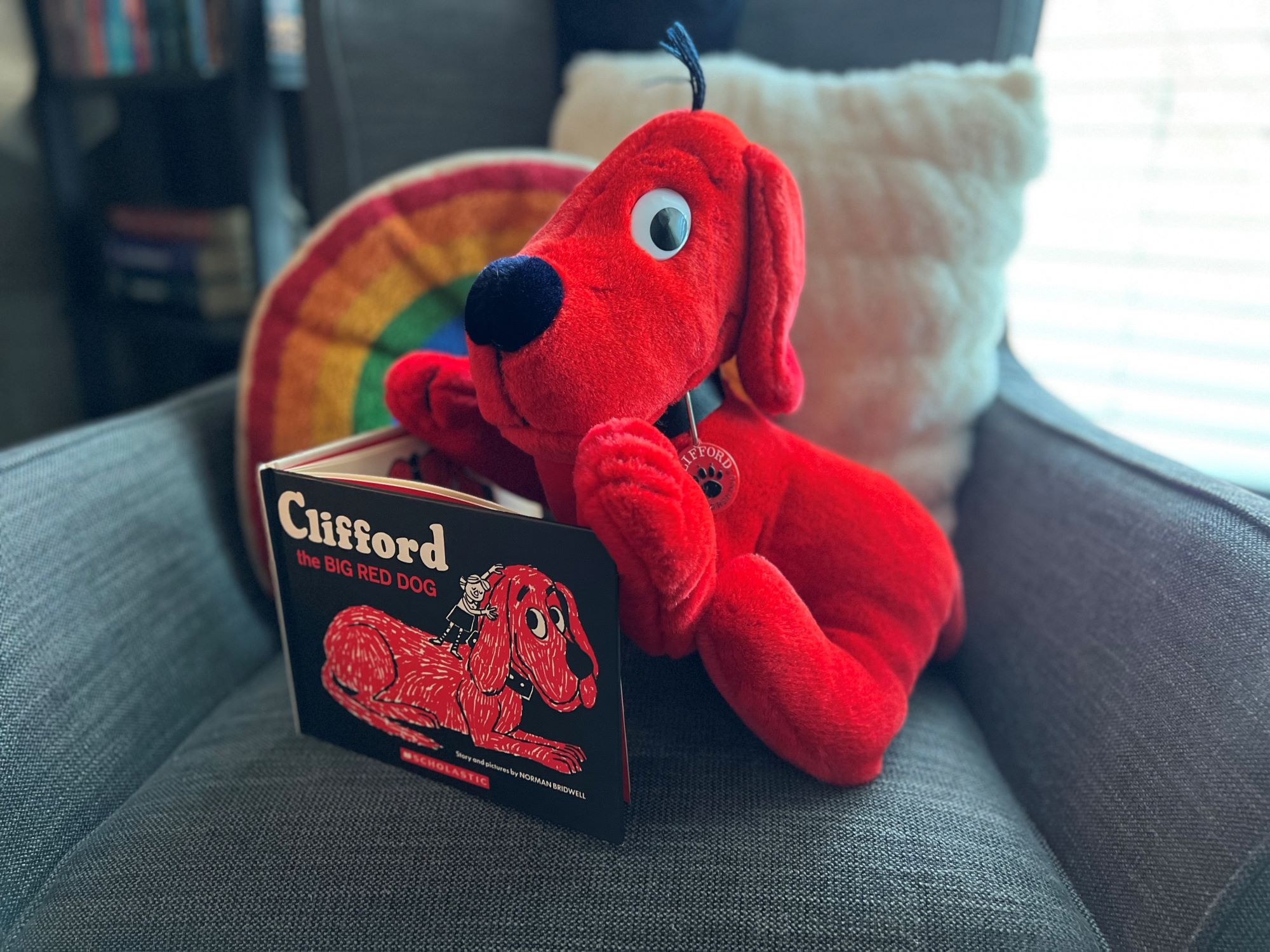
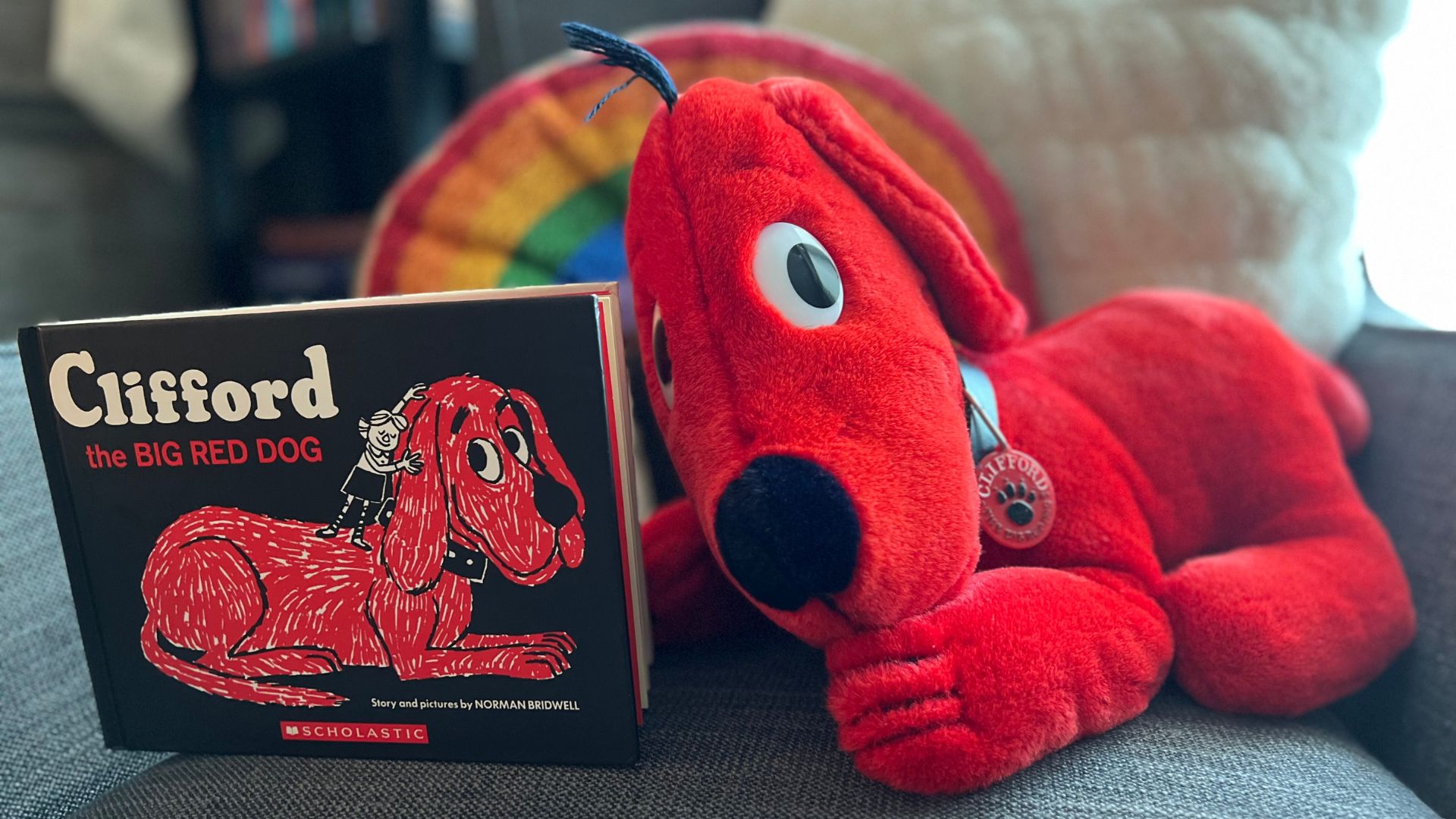
We have a plushie of Clifford in our home library. It was a gift from my mother-in-law, Jo, who had worked in sales at Scholastic for thirty years before retiring. When I asked her what she thought the appeal of Clifford the Big Red Dog — who has been the official mascot of Scholastic for the past fifty years — was, she said:
“Clifford is a trusted friend to help you go on adventures and that will lead you into that next book that broadens your imagination, to keep seeking that next character that will give you as much joy as he did, leading you to become a lifelong reader. That’s something we book lovers can only hope for our children, grandchildren, and all children everywhere.”
– Jo Broel, Retired Senior Sales Consultant, Scholastic
On February 14th, Clifford the Big Red Dog celebrates his birthday, and the fact that the beloved hound shares his special day with Valentine’s Day couldn’t be more fitting. After all, while Clifford may be famous for his size, many don’t know — or don’t remember — why the dog, who was the runt of his litter, grew to such a fantastic size.
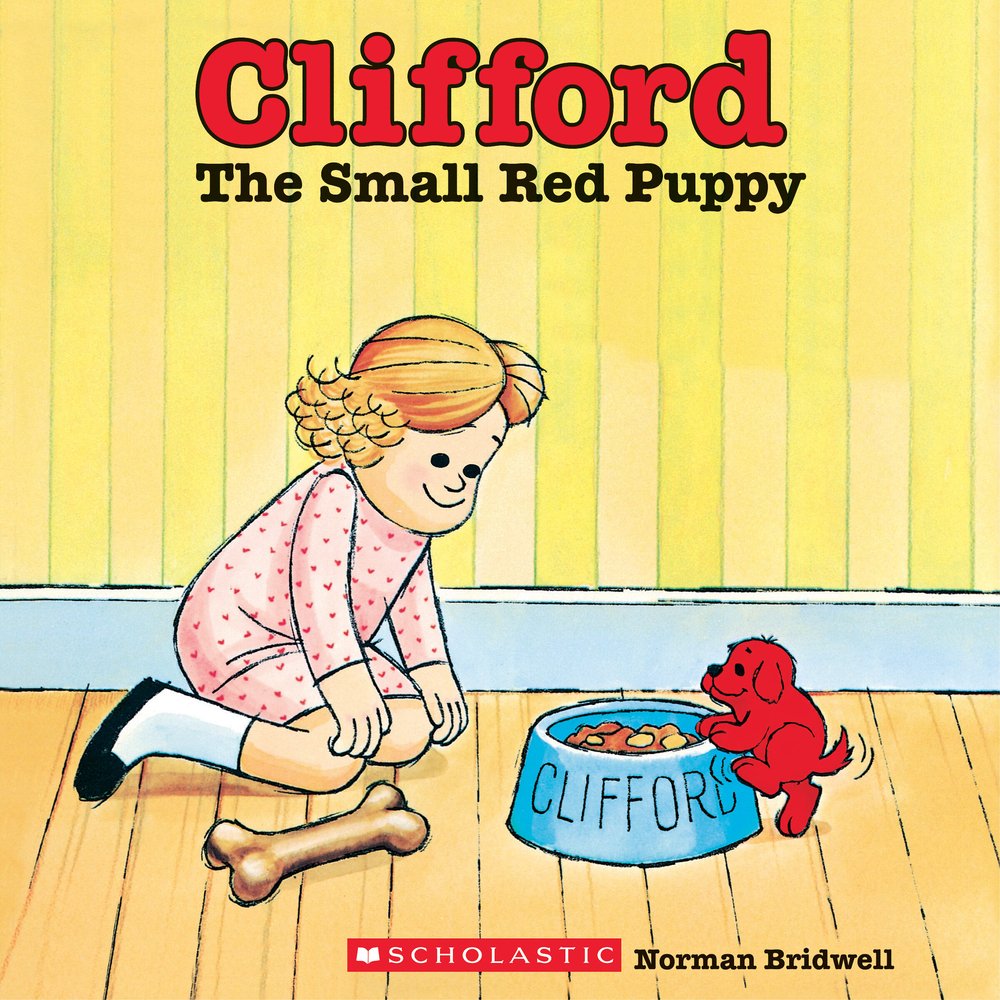
According to Bridwell’s Clifford the Small Red Puppy, it was love that accounted for his towering height, having become the physical embodiment of the love and devotion given to him by his young owner. And now, with over sixty years of being fondly remembered by older readers and eagerly discovered by new ones, it’s easy to see why Clifford continues to loom so large in the hearts of the literary community: our love, like Emily Elizabeth’s, has kept him growing.
To see some of our own favorite kids’ books that inspire a love of reading, check out our article on Picture Books that Will Transform Kids Into Little Bookworms.
To see all of our recommendations for mini bookworms, check out our Bookshop bookshelf.