


















No matter where you are from, we all grew up with stories and traditions attached to the place we were born and live in. These tales are passed down from generation to generation and make up the cultural structure of regions worldwide. According to the American Folklore Society, folklore represents our cultural DNA.
Born in Tampa, Florida, an example of folklore from my hometown is the yearly pirate invasion called Gasparilla. Similar to Mardi Gras, Gasparilla is a massive party and parade that takes over the downtown area — however, what makes this event super unique is the folkloric background of the mythical pirate José Gaspar, who entered Tampa Bay years ago to call for the townspeople to party. Moving from Florida to Stockholm, Sweden in 2018, it has been fascinating to explore different traditions and stories relating to location-specific folklore.
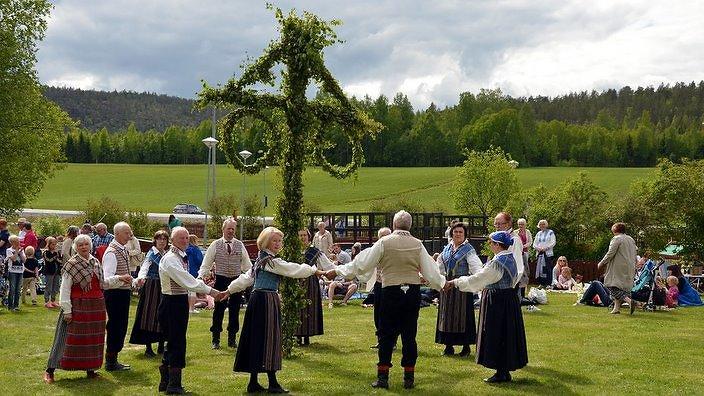
With a rich historical background in Norse mythology, Sweden and its surrounding Scandinavian locations offer captivating stories and traditions that have evolved throughout the centuries in Swedish culture. Today, we are sitting down with three scholars based in Sweden, who specialize in areas relating to folklore, and discussing the importance of folklore in Sweden.
The Authors
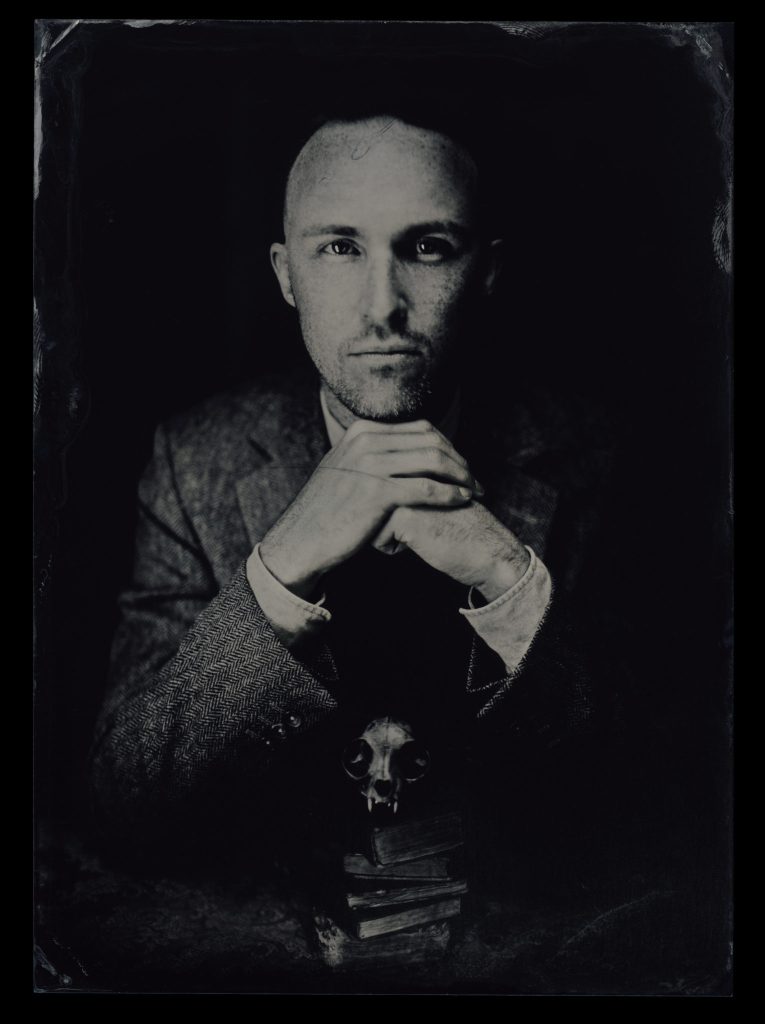
Per Faxneld
Per Faxneld is an associate professor in the History of Religions at Södertörn University. Additionally, he is the author of monographs like the award-winning Satanic Feminism: Lucifer as the Liberator of Woman in Nineteenth-Century Culture, published by Oxford University Press in 2017. Faxneld has also composed numerous articles on topics such as esotericism, new age, spiritism, fairy lore, and martial arts spirituality. He co-edited a critical edition of Ella Odstedt’s definitive 1943 study The Werewolf in Swedish Folklore (Varulven i Svensk Folktradition). Along with his academic endeavors, he pursues a literary career drawing on the folk beliefs of northern Sweden.
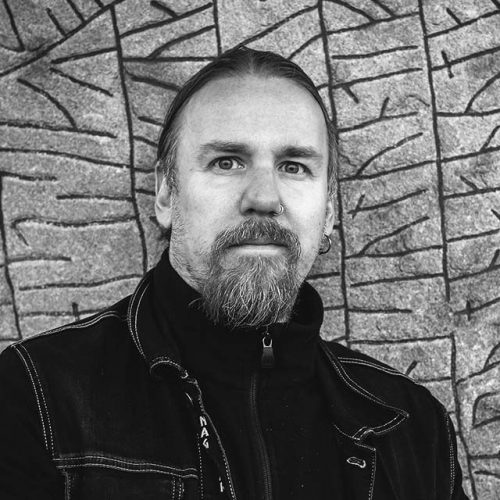
Tommy Kuusela
Obtaining his PhD in History of Religions at Stockholm University in 2017, Tommy now holds a spot as a research archivist at the Institute for Language and Folklore in Uppsala, Sweden. He has written a vast amount of articles focusing on Scandinavian folk beliefs, Old Norse religions, and witchcraft. Tommy is also one of the hosts of the extremely popular podcast on folklore entitled När Man Talar om Trollen — which is a Swedish saying for “Speaking of the Devil.” He also helped contribute to Folktro: En Besjälad Värld — a compilation edited by Kurt Almqvist and Lotta Gröning which earned multiple nominations for its expertise in folklore. In addition, Tommy was one of the editors for Folk Belief and Traditions of the Supernatural, along with editor Giuseppe Maiello.
Tora Wall
With a master’s degree in Philosophy from the University of Gothenburg, Tora is currently working on her PhD in folklore studies at Åbo Akademi University in Finland. She is also employed at the Nordic Museum in Stockholm — where she is responsible for intangible cultural heritage including beliefs, traditions, and story-telling. Tora has also worked on the Swedish documentary series Väsen, where the production explored beliefs of folklore in Swedish society. Her critically acclaimed book Swedish Traditions is a crucial collection of the traditions attached to the calendar of Swedish holidays. Fun fact: Swedish Traditions’ design was inspired by the 19th-century Swedish household Bibles.

The Questions
1. In your studies and publications, what folkloric traditions are you most drawn to? Additionally, what has sparked your interest in pursuing these traditions as an academic career?
Per Faxneld: Basically, anything that has to do with magic or creatures like werewolves, trolls,
fairies, and ghosts. Such things have fascinated me since childhood, probably both because I had a grandfather in northern Sweden who was keen on telling such tales and because I was exposed to them through role-playing games and fantasy literature.
Tommy Kuusela: I tend to be interested in all sorts of folkloric traditions, but my main interest is probably supernatural traditions — magic, rituals, and notions and beliefs in supernatural beings. My interest can be traced back to when I was a teenager and read all kinds of books about folklore and mythology from around the world. That, and my parallel obsession with fantasy literature and tabletop role-playing games, is something that tends to go hand-in-hand with a thirst for learning more about supernatural beliefs and mythologies.
Tora Wall: If I have to choose only one, it would be folklore about supernatural beings. And I love Christmas traditions. I have always been fascinated by stories and fairy tales; I think I became a folklorist so I could spend as much time reading and thinking about the fantastic as possible.

2. How important is folklore in Swedish culture today? Which traditions have survived over time? And are there any more recent practices?
Per Faxneld: The answer to the first question depends on how you define folklore. Some scholars have argued that, for example, “new age” ideas and practices can be considered a form of modern folklore. In that sense, it is quite omnipresent. While traditions surrounding Christmas, Midsummer, and other holidays have some continuity, they also undergo constant evolution. And many are not as ancient as people tend to think. For example, the St. Lucy celebrations held on Dec. 13 are, in their present form and as a national practice, only around 120 years old. More recent observances include those adopted from the US, such as Valentine’s Day and Halloween.
Tommy Kuusela: That depends on how folklore is defined. Folklore is not only something that applies to a bygone age; it is still very much alive in our stories, traditional art, knowledge, and practices of a people. Some have called it “our cultural DNA.” One example of folklore transmission today is contemporary legends, stories usually attributed to “a friend of a friend,” that tend to pop up in everyday conversations, on internet forums, or even reported as facts in the news. Another good example is conspiracy theories. We talk about things that scare us, make us happy, or fascinate us, all part of folklore.
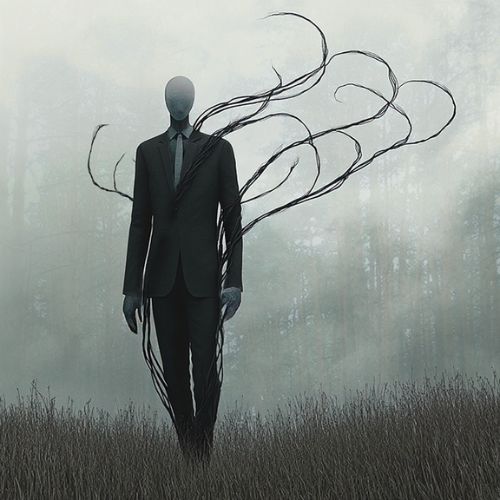
Tora Wall: Folklore is a very important part of culture, in Sweden and the rest of the world. Beliefs in ghosts are an example of a tradition that’s still as strong today as it was 200 — or 2000—years ago. Slenderman — a scary figure created as a form of internet lore — is an example of a more recent tradition.

3. With a civilization that is rapidly advancing in science and technology, how has the spectrum of folklore in Sweden adapted to these changes?
Per Faxneld: To some degree, urbanization probably had a greater impact on folklore than technological modernization. That said, folklore tends to mutate rather than disappear, much like those ambiguous categories of religion and spirituality, meaning there exists a wealth of urban folklore and, speaking of technology, internet-based varieties and forms of dissemination.
Tommy Kuusela: Folklore is always changing, always adapting to the time and age that it is a part of. For some stories to be believable, for example, supernatural traditions, they need to be adjusted so that they make sense to the one transmitting a story and to its listeners. Let me give an example. Back in the old days, people used to fear what was unknown and dangerous, for example, the oceans, forests, or mountains. The further from one’s home and civilization, the more danger. Today, we know more about nature and how it works, but many still think darkness and nighttime are bad. More dangers lurk around the corner at night. We might not fear nature in itself in the same sense, it is no longer life-threatening; even though most people rarely venture far out in nature by themselves, instead there is a growing fear of the internet and what lurks in the deep web, some even talk about evil entities haunting that space.
Tora Wall: Internet lore, like Slenderman mentioned above, has become a new stage for folklore.
4. There seems to be some overlap among other Scandinavian countries, such as Norway and Denmark. What traditions are unique to Sweden? Alternatively, which traditions are found throughout the Scandinavian region?
Per Faxneld: Given how national borders have shifted between the Scandinavian countries over time, this question is difficult to answer! What was Norwegian folklore once, for example in the northern region of Jämtland where my family is from, may now be perceived as Swedish, and the same applies to Skåne in the South that was historically Danish.
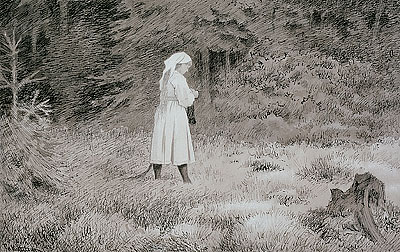
Tommy Kuusela: Traditions in Scandinavia tend to be similar, but there are regional differences, and some can even be seen in one country depending on where it is told or practiced. Geographical differences, and living and working conditions all matter. Remember that Sweden, for example, is one of Europe’s biggest countries (the area of Sweden is about 11% bigger than the state of California). With the process of nation-building in the 19th and early 20th centuries, there were different attempts to create or unify national traditions; some like the Lucia celebration in Sweden were created during this time. But if we look at what the common folk said, there are, of course, many different ideas and earlier practices. One thing that many might find interesting is the belief in supernatural beings. Many of them are the same or very similar in all of Scandinavia. Beliefs in trolls (the most famous example) and farmstead spirits (tomtar/nissar) are the same in all of Scandinavia, but with regional differences. If I were to pick just one unique tradition from Sweden, I would choose the year walk tradition. A divination ritual is known from the late 1600s for determining what would happen in the village the next year. This is only recorded from mid- and southern Sweden, not in the northern part of Sweden, Norway, or Denmark.
Tora Wall: The female skogsrå is kind of unique to Sweden, but Huldra in Norway is very similar.
5. Can you give us an inside look at some of your future projects tied to folklore publications?
Per Faxneld: I’m working on a project analyzing the complete corpus of Swedish folk grimoires (books of magic) together with the historian Fredrik Skott, where we try to integrate insights from my main field of expertise, esotericism studies, with folkloristics. Parallel to that I have a folklore-themed novel coming out from Albert Bonniers förlag here in Sweden (and hopefully my agent will sell it to heaps of other countries as well). It takes place in 1929 and has a similar setting to my 2020 collection of “folk gothic” short stories, The Tree of Sacrifice, which was recently published in 2024 in English by Egaeus Press.
Tommy Kuusela: I work on many different projects. One is my chapter for a volume on changelings that will be published by Exeter University Press, hopefully late this year. I write about an older belief in Changelings in Scandinavia and use court cases as my main source material. I have also written an article for an upcoming book about the Old Norse god Freyr. There, I write about the martyr Staffan (Saint Stephen) and how early folklore scholars believed that he incorporated traces of an older cult of Freyr. I am also working on an article for a book about a folklore collector who documented folk beliefs among the Swedish-speaking population in Estonia, a collector who was arrested and executed in 1942 by the Soviet Union who occupied Estonia during that time. I am also editing a volume for Brepols about goddesses in Old Norse mythology. In it, I have written a chapter on how the ladybird beetle might be linked to the Old Norse goddess Freyja. Lastly, I am editing a volume on the cunning folk in Sweden that will hopefully be out later this year or early 2026.
Tora Wall: I’m currently writing a book about the folklore of the ocean.

6. For our readers worldwide who want to dive more into Swedish folklore, what are some good introductions to check out, both in literature and film?
Per Faxneld: Start with getting a book on Swedish artist John Bauer (1882–1918). His depictions of trolls, gnomes, and other folklore creatures are some of the most atmospheric around. Then you could try something like John Lindow’s classic Swedish Legends and Folktales, Bengt af Klintberg’s massive and magisterial The Types of the Swedish Folk Legend, or the recent highly accessible and fun Swedish Traditions by Tora Wall. If you can find a subtitled version, Trollsommar is a fun film for kids from 1980 featuring John Bauer-style trolls and a groovy soundtrack by progressive/folk rock band Kebnekajse.
Tommy Kuusela: Where to start? There are not that many good books on Swedish folklore available in English. One good book about the history of trolls in Scandinavia and the Nordic countries is Trolls: An Unnatural History by John Lindow (2014). Two scholarly books are Bengt af Klintberg, The Types of the Swedish Folk Legend (2010) and Scandinavian Folk Belief and Legend, edited by Reimund Kvideland and Henning K. Sehmsdorf (1988). For the casual reader who is only looking for some folk legends, there is a new book by Anna Maria V. H. Moberg, Swedish Folk Tales (2024). If someone just wants to experience some video games that are loosely based on Swedish folklore, I would recommend Year Walk by Simogo or Bramble: The Mountain King by Dimfrost Studio. Also, a novel that captures the feeling of Scandinavian folklore, but where everything is completely made up, is Astrid Lindgren’s Ronja, the Robber’s Daughter (1981). Swedes are really bad at movies and so far the best choice would be YouTube and the short films by Sägen Film. For the folklore enthusiast who needs their cinematic fix, I would recommend Norwegian movies, especially The Troll Hunter (2011), Thale (2012), and The Ash Lad: In the Hall of the Mountain King (2017).
Tora Wall: You could start with my book Swedish Traditions. If you have children you could read Astrid Lindgren’s books about Emil from Lönneberga with them.

What folklore tales are found where you live? Also, we send all our gratitude to our Swedish folklore scholars, Per Faxneld, Tommy Kuusela, and Tora Wall, for participating in this fascinating interview.
For more on Per Faxneld, click here.
For more on Tommy Kuusela, click here.
For more on Tora Wall, click here.
To explore more on folklore, read our article 7 Stunning Fantasy Novels That Draw From Global Folklore.
For some epic fantasy recommendations, check out this bookshelf!
