











Robert Gould Shaw, whose name echoes through the annals of history, is not the Civil War hero who will appear on your page one Google search results. While he shares a name with a legendary figure, this modern-day Shaw is a historical satirist, a comedic wordsmith who mines the past for hilarity. So, join us as we delve into the mind of this historical humorist.
Shaw: The Eclectic Humorist
Robert Gould Shaw was named after Robert Gould Shaw, the leader of the first Black regiment of the Civil War and is the descendant of Abolitionists, as well as German, Irish, and Eastern European Jewish immigrants. He grew up in Hermosa Beach, a small town in Los Angeles. Hermosa Beach is known for surfers, punk rock, jazz, and fog. He strives to live up to the responsibility of his name, minus the martyrdom. Surrounded by software and aerospace engineers, Robert Gould Shaw’s math skills did not allow him to follow that path, which he wouldn’t have liked anyway. He chose a different path, from acting and dancing to playing Renaissance music professionally to working at a supermarket in a small town in Switzerland.
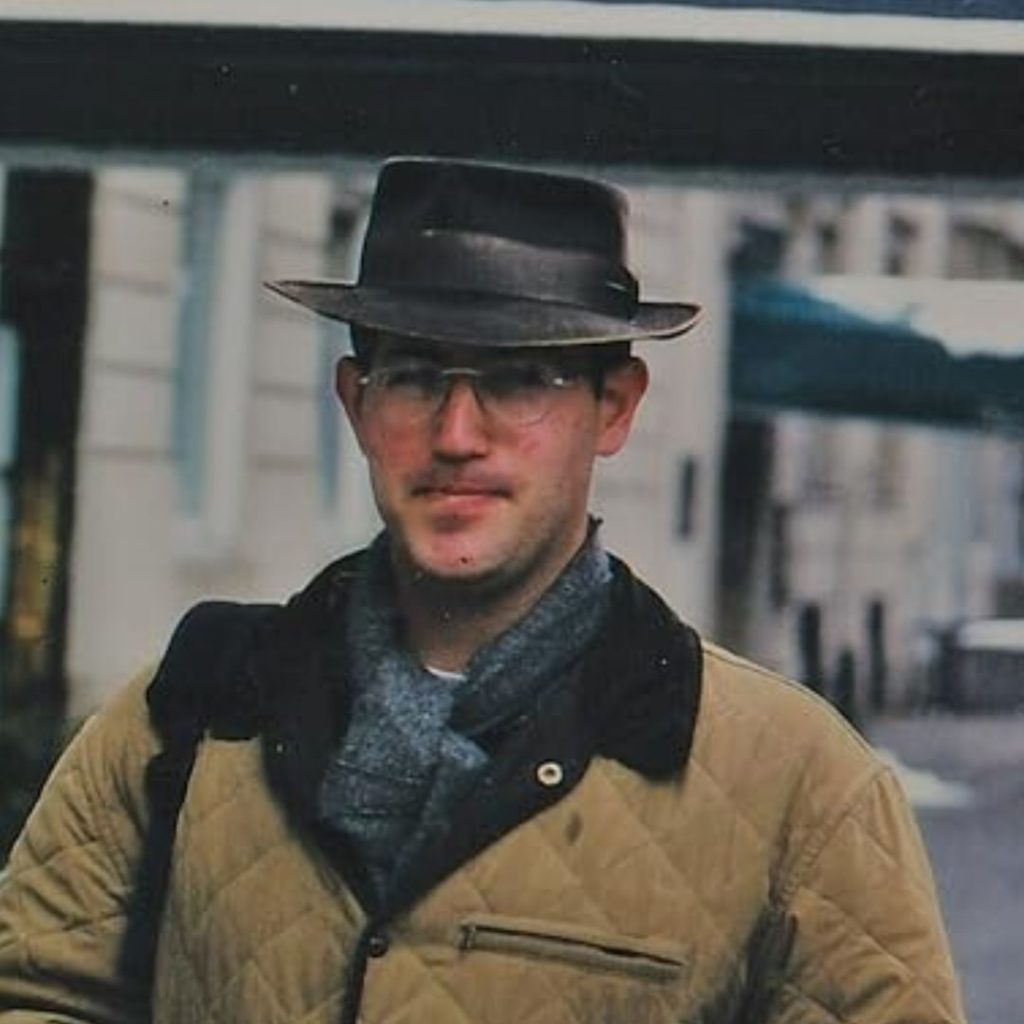
Inspired to write by reading a short story by his grandfather in his fourth-grade reading book, Robert Gould Shaw started writing. He earned a bachelor’s degree in American history from UCLA and learned to speak German. After college, he worked as a pension administrator and looked for something more interesting. He moved to Washington, DC, and got a master’s degree in Soviet and East European Studies as Communism was falling apart. With a degree in a subject that no longer exists and in need of work, he began working in Social Science Consulting, first on substance abuse prevention programs and later on mental health policy as a senior research associate. He currently teleworks from Philadelphia.
Robert Gould Shaw has written and co-written articles about financing mental health crisis services, behavioral health workforce development, and state psychiatric hospitals, none of which the reader of this bio will likely be interested in. As a writer of fiction, Robert Gould Shaw adapts his writing style to the subject of his fiction. A novel pretending to be a bestselling German childrearing guide is written as if it were translated. A mystery set in the early 1960s is written as if it were an episode of Dragnet. One might think that with a novel by Robert Gould Shaw, you never know what you will get, but that isn’t true. He tries to entertain and be amusing. The story should rush along or at least be diverting. Sorry, no money-back guarantee.
Thank you, Robert, for sitting down and chatting with us; let’s get started.
For those who might not have read your work, can you give us an elevator pitch for your recent release, The Bridge?
The Bridge is a classic post-Cold-War boy meets girl; boy loses girl; grandson meets granddaughter story that asks the question: “Can guilt or innocence be inherited from grandparents to grandchildren?” This is the first novel that I finished, and I wrote it in the early 1990s after falling in love with a German woman (and then another German woman whose grandfather was an unrepentant Nazi after the first one returned to Germany) and spending two crazy days traversing Czechoslovakia from West to East to West six months after the Velvet Revolution.

Your background is quite diverse, from Renaissance music to software engineering. How have these varied experiences shaped your approach to storytelling?
Experiences give you material. Although I create fiction, all of my fiction is grounded as much as possible in reality. I was never a software engineer. I am a social science researcher who has programmed databases and reports. Why set a book in a place you’ve never been when you can describe something you know? Where there are people, there is drama. Fiction should feel real, even if it is a fantasy.
You’ve worked in fields like mental health policy and social science consulting. How do you transition from real-world issues to the imaginative world of fiction?
I know how to research things. I have written a book, Scout’s Honor, that takes place on a particular day in the 1930s. When a radio program is mentioned, that program was on the air at that time on that day. I have a new book that I am writing that takes place in Eastern Europe in 1989. I found the train schedules for each of the journeys my character takes.

Given the historical nature of your work, how do you balance rigorous research with creative freedom?
Creative freedom may be a fiction. There are rules. Don’t be boring. Have a point at the end. A canvas has boundaries. Music should be in tune or dissonant if that is the point of the piece. Dancers deal with gravity. But where is the edge of the canvas? A novel can pretend to be something it isn’t, like a child-rearing guide or an oral history. The author can even write under a pseudonym, even if the pseudonym is the same as the author’s. Book covers can be fictional, pretending to be a bestseller in a different country or the 30th-anniversary edition of a history book that’s neither old nor non-fiction.
How do you approach the writing process? Do you outline extensively or prefer to let the story unfold naturally?
I ponder the story for a long time before I get started. I want to know the basics of the story before I start typing. I follow the logic of the story, which often leads me to places I didn’t expect.
Your work often blends historical facts with satirical humor. How do you balance these elements to create a compelling and entertaining narrative?
It has to be funny, although I strive for amusement and maybe witty. Historical facts are often fascinating. Most things can be comical if you realize the strangeness.

How do you decide when to employ satire and when to be more straightforward in your writing?
I don’t decide. My muse decides. That’s how it comes out. I am writing to entertain myself, sometimes secretly, at my own expense.
Is there anyone who has had a significant impact on your writing style and approach?
Among my favorite authors are Anthony Burgess and William Boyd. Each of their books is its own world.
To close, can you hint at what you’re working on next? Will it continue to explore historical themes or venture into new genres?
I have two ideas. One is a coming-of-age story about trying and failing to lose their virginity at a Renaissance Faire over seven years. The other would be set in the early 1500s and would be about a group of Italian scammers trying to sell what they claim to be Jesus’ swaddling clothes, complete with stains, to a minor noble of a German princely state. They have to get from Italy to Germany without having their relic stolen, sell the relic, and return to their hometown alive. Although I may change my mind, I am considering combining the two stories. The swaddling clothes tale would be part of a piece of street theater that evolves as the character trying to lose their virginity ages and becomes wiser. The title might be The Faire’s Last Virgin.
Robert Gould Shaw’s historical fiction isn’t your typical dry read. This comedic wordsmith infuses his work with wit and satire, making history both entertaining and informative. As he continues to explore the quirks of the past, we can expect more side-splitting tales that will leave you chuckling and pondering.
Be sure to follow Robert on his socials and pick up his latest novel, The Minuit Inheritance, today.
INSTAGRAM | BLOG | WEBSITE
Want more author interviews? Click here to read an exclusive from Marissa Meyer and Joanne Levy!
Looking for your next read? Browse our Bookshop shelves and add to your TBR!