













Trigger Warning: This article discusses mental health challenges, including grief, stress, and depression. Please read with care and seek support if you are struggling — you are not alone.
Mental health has become a prominent topic in recent years, and as awareness has grown, so too has the popularity of self-help books that address this theme. There is quite the repertoire available for these types of books, from spiritual retreats to scientific takes on the subject, to the point that you wouldn’t know where to start. Fortunately, we’re here to help you find the most essential mental health books to add to your shelf.
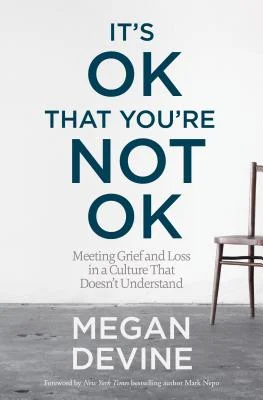
It’s OK That You’re Not OK
When my grandfather died, I didn’t cry in the hospital room or at his funeral — I cried in the corner of my bathroom, behind a closed door, at 3 a.m. I did this because I thought I needed to be strong. I may have lost my grandfather, but my mom lost her dad, and I felt like I had to be her support. I believed I had to overcome my grief and return to normal as quickly as possible. But I eventually learned that we don’t overcome grief — we learn to live with it.
This book tells you exactly that. It’s OK That You’re Not OK by Megan Devine debunks the culturally prescribed idea of “fixing our grief” or rushing back to a normal life. As a therapist and someone who witnessed the accidental drowning of her beloved partner, Megan Devine writes about grief from both sides of the couch. She invites us to build a life alongside grief, rather than trying to conquer it.
The author offers stories, research, life tips, and best practices for navigating grief. She explores the ways that well-meaning advice and spiritual wisdom can often do more harm than good. She challenges the myths of how grief is “supposed” to look and offers gentle guidance on improving sleep and easing anxiety, without trying to fix your pain.
Overall, this book is for those who are grieving, those who love them, and those who want to learn how to love themselves better.
Stop Being a People Pleaser
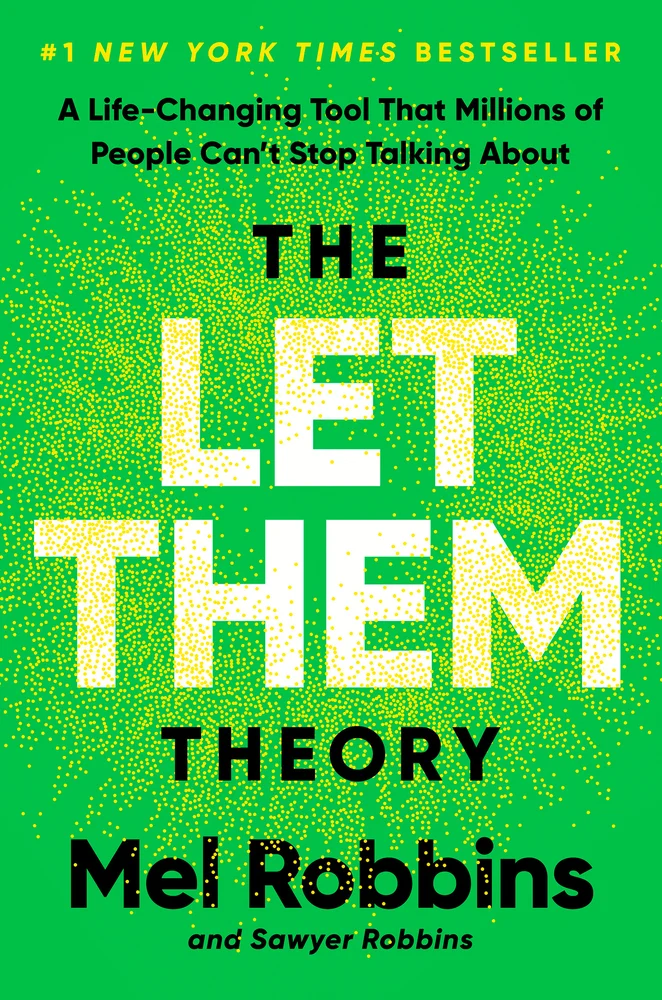
The Let Them Theory: A Life-Changing Tool That Millions of People Can’t Stop Talking About by Mel Robbins explores how we often give other people too much power over our emotions and try to control things that are ultimately out of our control. At its core, the book encourages you to just let people be — to stop letting their choices affect your peace. Robbins reminds us not to waste time or energy trying to get others to meet our expectations. If people don’t show up the way you hoped they would, they’re simply revealing who they are — and that gives you the power to decide how you want to respond.
She gives examples like: “If your friends don’t invite you to brunch this weekend — let them. If the person you’re into isn’t interested in commitment — let them.” Forcing people to fit your idea of who they should be only drains you. That time and energy is better spent on yourself. Some may say this is common sense — we know we should let go — but actually doing it is the hard part. We want something or someone so badly that it’s hard to just let them go. But often, that’s exactly what we need to do.
This book may not resonate with everyone, but I found it to be a powerful reminder: the focus of your life should be you. If you want to find peace, you have to let go of the people who bring chaos into it.
I Have No F*ks To Give
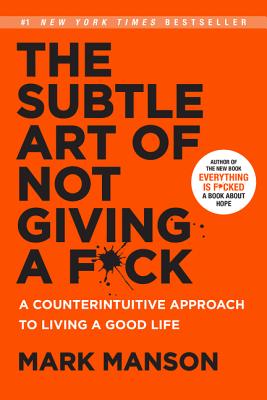
The Subtle Art Of Not Giving A F*ck is one of my favorite books to recommend when it comes to self-help. As someone who’s worked in environments where being overly positive all the time was basically a requirement, I found it exhausting. Constant positivity can actually have negative effects in the long run, especially when it’s used to mask real struggles.
In life, we only have a limited number of f*cks to give, so we have to choose them wisely. Acknowledging our flaws and limitations isn’t weakness — it’s the first step toward building a more fulfilling life. The key isn’t to make lemonade out of lemons, but to learn how to stomach the lemons better.
We can only develop the courage, perseverance, honesty, responsibility, curiosity, and forgiveness we truly need by facing painful truths.
Mark Manson explains all of this through blunt honesty, real-life stories, and just the right amount of profanity. This book is meant to help a whole generation live more grounded, realistic lives.
It may not be for everyone — Manson’s message is direct and doesn’t sugarcoat much — but that’s exactly why it hits so hard.
It’s the End of the World as We Know It
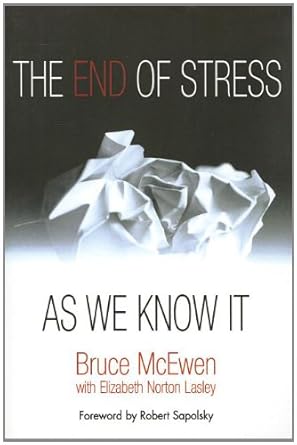
In today’s day and age, if you ask people how they’re doing, most will probably answer that they’re stressed out. There are even songs about it — it’s a feeling that constantly overwhelms us and seems to be a permanent part of modern life. In fact, I am stressed as I write this article, trying to recommend self-help books that go beyond the usual privileged advice that often gets criticized in the genre.
The End of Stress as We Know It by Bruce McEwen offers a refreshing and grounded perspective. Instead of dishing out motivational quotes or oversimplified fixes, McEwen dives into the science of stress — what it does to the body, how it shapes our behavior, and why it’s so hard to manage. The book focuses on the biological side of things, showing how stress is essentially our fight-or-flight response kicking in, often at the worst possible times. It’s our body’s way of reacting to perceived danger, but in today’s world, the “danger” can be anything from an email notification to a deadline.

McEwen, a renowned neuroscientist, explains how chronic stress can alter the brain and body over time, affecting everything from memory and mood to immune function and physical health. But this book isn’t all doom and gloom — he also explores how understanding the science behind stress can empower us to manage it better. He talks about the importance of recovery, the role of social support, and how small, sustainable changes to our routines can make a big difference.
What makes this book stand out is that it doesn’t promise a miracle cure. Instead, it gives you the tools to understand what’s really going on inside your body and mind — and that knowledge alone can be incredibly powerful. So if you’re looking for a deeper, more realistic way to approach stress — especially one that acknowledges your very real stress without trying to silence it— this is a great place to start.
I Had a Black Dog
I’m a food lover — I love to eat. Honestly, I go to the gym just so I can eat more. That’s how much joy food brings me. So, the lowest moment of my life wasn’t marked by something dramatic; it was when I stopped caring whether I ate or not.
I don’t often revisit that particular chapter of my life, but for the sake of this article, I think it’s worth reflecting on how far I’ve come. You never truly understand depression until it touches your life — until it’s not just a distant concept but something that settles into your body, your routine, your environment. When it happened to me, everything became a struggle. Getting out of bed felt impossible. Taking basic care of myself required a strength I didn’t always have. I had to force myself to feel better, even when I didn’t believe I could.
In those moments, I didn’t want listicles or 10-step plans to “beat” depression. I just wanted to feel understood. And I never imagined that understanding would come from a small, illustrated book.
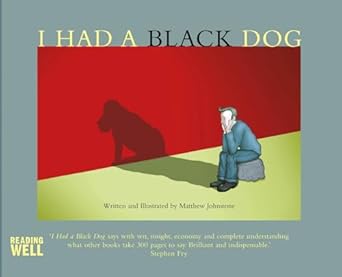
I Had a Black Dog by Matthew Johnstone captures depression in the form of a black dog—one that follows him around, lurks in his daily life, and actively works to keep happiness out of reach. The advice it gives isn’t revolutionary: things like exercise, mindfulness, and not being afraid to ask for help. But there’s something deeply comforting about how simply it’s told. The visuals make it easier to absorb, and somehow, seeing depression drawn out like that makes it feel less lonely.
It helped me. And if you’re going through something similar, I hope it helps you too.
In The End….
Mental health is not a one-size-fits-all journey. Whether you’re grieving a loved one, trying to reclaim your peace from people-pleasing tendencies, or simply trying to function under the weight of daily stress, there is no “right” way to feel — and certainly no magic fix. The books in this list don’t pretend otherwise. What they offer instead is honesty, relatability, and gentle tools for healing, understanding, and growth. Some are practical, some are blunt, and some are deeply personal. What they all have in common is their ability to make you feel seen, to help you make sense of what you’re experiencing, and to remind you that healing doesn’t have to look like constant progress.
Sometimes, it’s just about making it through the day — and that’s enough.
So whether you’re standing in the thick of it or supporting someone who is, I hope one of these books finds you at the right time. And if nothing else, may they remind you that you are not alone — even in your darkest moments.
If you or someone you know is battling with mental health-related distress, we urge you to be kind and hold space for them, and contact the 988 Suicide and Crisis Lifeline (confidential, free, available 24/7/365):
→ Call or text 988
→ Chat at 988lifeline.org
→ Connect with a trained crisis counselor
Are you looking to improve your mental health? Click here.
Give yourself a check-in with our Mental Health bookshelf on Bookshop.