

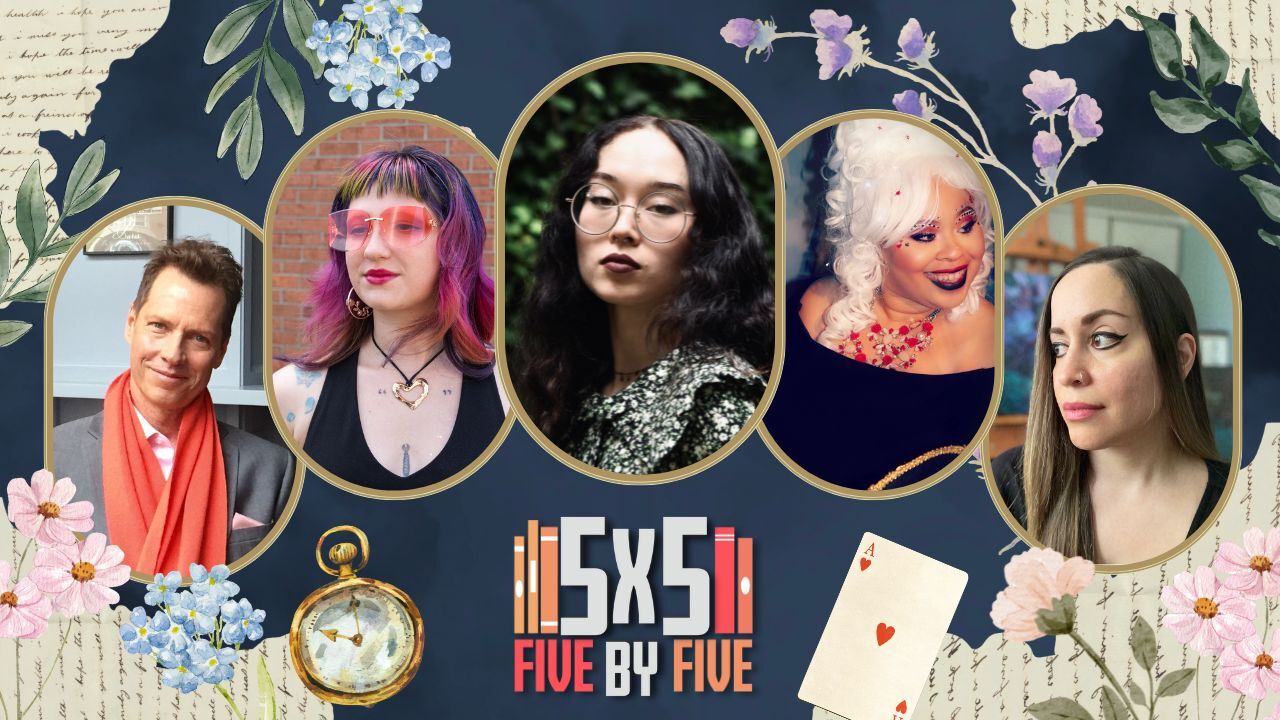
Alice has been tumbling down the rabbit hole for over 150 years, and yet her story feels as fresh and boundless as ever. From whimsical wonderlands to eerie gothic realms, every generation of authors finds new ways to spin Carroll’s timeless classic. In this feature, five trailblazing voices share how they’ve bent, twisted, and reimagined Alice’s world into something startling, strange, and beautiful. Their takes remind us that Wonderland is a living, ever-changing mirror of our own imaginations.
The Authors
Mia Araujo

Mia Araujo is an Argentine American artist and writer, born and raised in Los Angeles, California. She co-hosts and co-produces Painted in Color, a BIPOC art podcast on YouTube. Mia graduated as valedictorian from Otis College of Art and Design, with a BFA in Illustration and a minor in Creative Writing. She has shown her work in prominent galleries and conventions across the US and around the world, including Roq la Rue, Copro Gallery, Spoke Art, and Corey Helford. She won the Juror’s Choice Award at GenCon in 2019. Her work has been published in Hi-Fructose Magazine, Juxtapoz, Spectrum Fantastic Art, Society of Illustrators LA, and IBA, among others. Clients and collaborators include Penguin Random House, HBO, Imagine FX, and the Washington Post. She’s also a twin sister. Learn more at art-by-mia.com.
Beatrice Lebrun
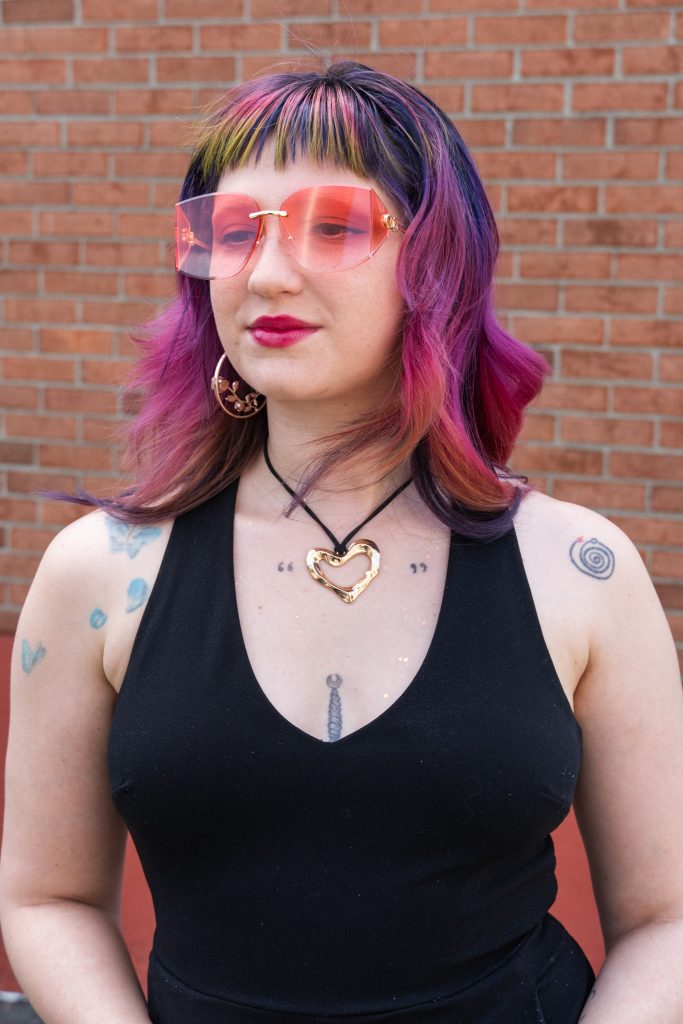
Beatrice Lebrun writes the kind of stories that make people cry, scream, or whisper, “I shouldn’t relate to this.” She’s an author and illustrator obsessed with emotional horror, queer longing, and the quiet devastation of being alive. Born in Venezuela and now based in the U.S., Beatrice grew up living in another world entirely. Dealing with intense maladaptive daydreaming since a very young age, she spent her childhood caught between realities: one mundane and expected, the other wild, dangerous, and hers. When the world demanded she stay grounded, she turned to writing since then, just to keep the other realities alive. Glowrot, her debut novel in English, is deeply personal to her; a love letter to the versions of herself she never got to be, and a cautionary tale she once needed to hear. Her protagonists are raw, flawed, and cathartic reflections of her own wounds. If someone wants to call that a self-insert, she’s not offended. It just means they’ve never needed to write themselves back together. When she’s not writing about haunted girls and broken realities, she’s helping others do the same as the Creative Director of StoryForge, where she builds safe spaces for writers and stories that don’t fit the mold.
L.L. McKinney
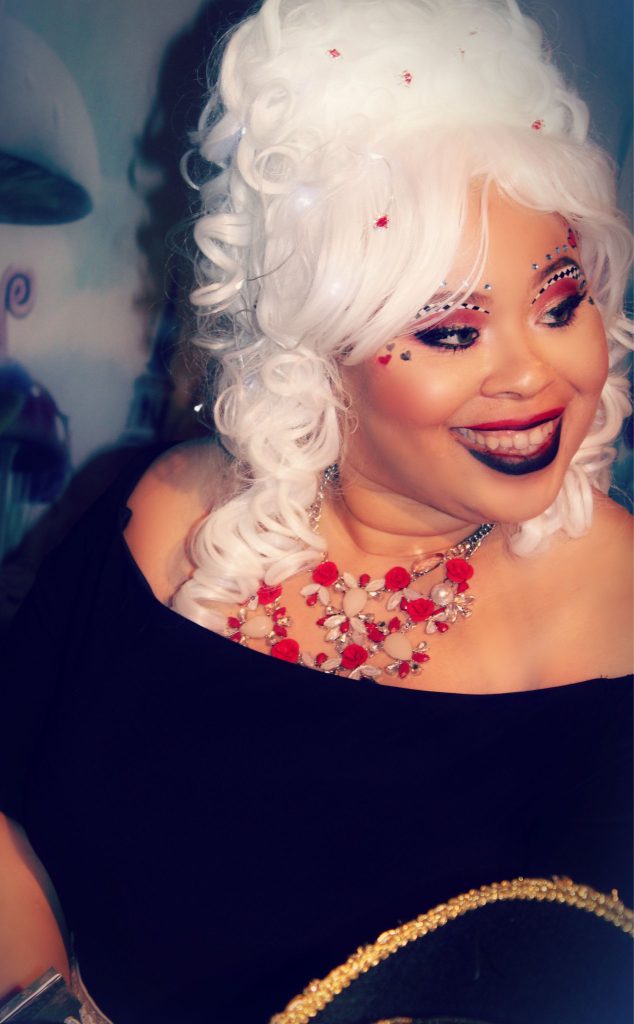
Named one of The Root’s and BET’s 100 most influential African Americans, L.L. McKinney is an advocate for equality and inclusion in publishing and the creator of the hashtags #PublishingPaidMe. A lover of comics, anime, video games, sci-fi, and fantasy, she strives to push these mediums towards representation that better reflects the diverse world we live in. Her works include the Nightmare-Verse books, the award-winning Nubia graphic novels through DC, Marvel’s Black Widow: Bad Blood, Power Rangers, World of Warcraft, and more.
Frank Beddor
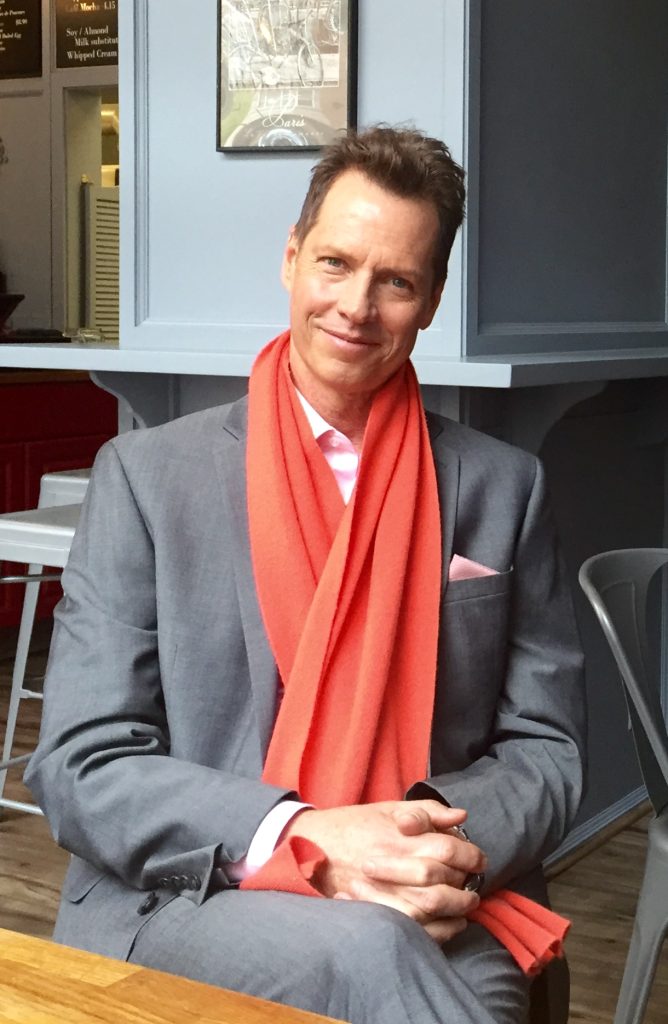
Frank Beddor had scaled the heights of professional skiing (as a two-time freestyle world champion) in his early 20s before moving to Los Angeles and becoming a producer and author. Beddor is the New York Times bestselling author of The Looking Glass Wars trilogy, the Hatter M graphic novel series, and the middle-grade novel Hatter Madigan: Ghost in the Hatbox. Beddor is also the producer of the smash comedy There’s Something About Mary and the Sundance Film Festival favorite Wicked. He is the founder and president of Automatic Pictures, a nexus of creative minds that develops projects across multiple platforms and mediums — film, publishing, games, audio, and television. He is currently in development on a sci-fi feature film with Oscar-winning producer Chuck Roven, a television adaptation of the Looking Glass Wars universe, a new Looking Glass Wars graphic novel series featuring Hatter Madigan, and a Looking Glass Wars musical with Shaun McKenna (The Lord of the Rings musical) and Pippa Cleary (The Great British Bake Off Musical).
Zoe Hana Mikuta
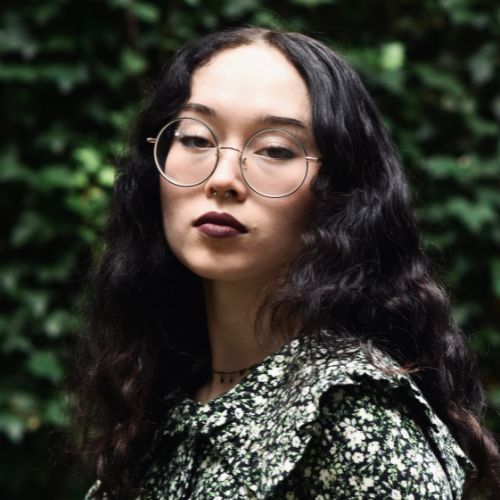
25-year-old Zoe Hana Mikuta has a B.A. in Creative Writing from the University of Washington with a minor in History of Religion. She enjoys writing about deteriorating worlds and horrible people. She is the author of the sci-fi Gearbreakers duology (F&F/Macmillan), and fantasy horror standalones Off With Their Heads and The Coven Tendency. Her YA rom-com debut, A Totally Fake Love Story, is upcoming from S&S BFYR. She is based in Seattle.
The Questions
Alice’s Adventures in Wonderland is a classic piece of children’s literature, and one that readers often revisit at different times in their lives. How were you first introduced to the whimsical world of Wonderland, and what inspired your unique take on it?
Mia: I grew up on animation, so I’m pretty sure the animated Disney film was my first introduction to Alice in Wonderland. Soon after, I read Lewis Carroll’s original story and immediately fell in love with the characters. I’ve read it several times since, in English and in Spanish, and every time it’s just as fresh and wonderfully inventive. I adore the conversations Alice has with herself and how wacky the Wonderland characters are. And of course, I love the artwork and imagery. I have always wanted to reimagine Alice in Wonderland myself, and when I left home for the first time in 2012, I decided to write a story for my twin sister to reconnect with her.
The original Alice has a sister who appears in the first and last chapters of the book, so I couldn’t resist the idea of an identical twin who needs to face her fears of parting with her sister and journeys into a mysterious wonderland to discover who she is. I chose to set Afia in the Land of Wonders in a fantastical world inspired by West African kingdoms of the 10th-16th centuries to pay homage to a part of the world that I wish more fantasy stories were based in. In addition to writing, I also painted the 30 acrylic illustrations and created nearly 20 pencil drawings to further immerse readers in the world. This book was a true labor of love that took me over a decade to finish.

Beatrice: I have loved Alice in Wonderland for as long as I can remember. I think my first introduction to that world was the Disney movie when I was little, and I have never stopped wanting to go there since then. I’ve always felt like there has to be something beyond what meets our eyes. The idea of stumbling upon a place like Wonderland obsessed me my whole life. But the truth is, reality is not as whimsical as we might want. Sometimes the places beyond our eyes hide secrets, traps, and pain. Sometimes we get obsessed with the idea of something better, just to find out it was just another illusion. That’s what NIU is — Glowrot’s own Wonderland — a place that seems to have everything you need at first sight, but hides a deeper truth beneath it.
L.L: To be completely honest, I don’t remember the exact moment I first encountered the tale. It’s one of those things you feel you’ve known, like how 2 + 2 = 4. I get that someone had to teach me; people aren’t born knowing math. At least I wasn’t. I don’t remember when it happened, just that it did and that it was probably the Disney version. As far as my inspiration, I have always loved science fiction and fantasy, fairy tales included, but those genres did not love me back. Not as a little Black girl. So when my sisters started having kids, and I could see those kids falling in love the same way I had, I knew something had to give. I didn’t want them searching the shelves for adventure and being told they didn’t belong. I remembered how that felt. The way some people were, and still are, downright hostile about it. There was gonna be at least one book for my babies. Everyone can enjoy it, of course, but this was and is for them.
Frank: I was introduced to the story when I was 10 years old. My grandmother’s name was Alice, and the book was my mother’s favorite — so, they of course thought I should read it. To be truthful, I didn’t really like it at that time. I wanted to be outdoors, spending my sunny summer day playing. Alice wasn’t a big part of my life as I went on to professionally ski and produce movies, not until I discovered an incredible set of playing cards in the British Museum many years later. The images on the cards seemed to be telling a story, and it was evocative of a very different Wonderland than I had rebuffed as a kid. I chased down the missing cards from the deck, and soon, the full story of exiled Princess Alyss Heart began to take shape in my imagination. The intriguing possibility of alternate facts behind Lewis Carroll’s timeless fiction inspired me to write The Looking Glass Wars.
Zoe: I loved the animated movie when I was a kid, and as I grew up, I encountered all kinds of horror spins on the original movie, always wanting to throw my hat in that particular ring (and make it Korean and sapphic, might as well). But no matter the genre, experiencing Wonderland is something relatable regardless of my stage of life — disorientating settings, weird characters, occasional awkwardness, and the sense of “the only way out is through.”
When retelling a well-known tale, it must be difficult to tell the story freshly while retaining many of the familiar and iconic elements. Did you find it challenging to keep this balance?
Mia: Definitely. I found it especially challenging because I was constantly comparing my story to Lewis Carroll’s original. I’m super grateful to my writer and artist friends who encouraged me to lean into my vision and my own versions of the characters. For example, the theme of curiosity and fear was my interpretation of the original story’s themes of sense and nonsense. But I also added the focus on sibling relationships, which is the most important part of my story. Once I embraced that, it was a lot of fun to pay homage to my favorite book by coming up with my own world and characters. And knowing that I was writing this for my sister helped guide me whenever I doubted myself.
Beatrice: It was funny because the original story wasn’t intended to be a retelling. Some of my readers, after reading the first draft, began pointing out similarities between Bo and Alice, NIU and Wonderland, and certain plot points. And then, I just couldn’t unsee it. I suppose Alice in Wonderland has lived inside me for so long that it has bled into my words! From there, I re-read the original story and started making more conscious connections, asking my character who their counterparts are and adding elements I first didn’t know the story needed. There are a lot of references to the original story, both subtle and blunt. Some sentences are even taken verbatim from it and recontextualized within Glowrot, which was one of my favorite parts for sure.

L.L: Not really. I went in knowing this wasn’t going to follow the plot or whatever of the original. Didn’t care. As long as Wonderland was recognizable for what and where it was, and the characters could be connected back in some small way to the original, that was enough for me. There was no balance to try and maintain; this was a whole new take on things. That’s when I started pushing the language of calling it a reimagining. No one was using that term, and I got a little bit of pushback, but I held firm. I insisted that it wasn’t a traditional retelling, and people who came looking for one might be disappointed. Eventually, the language around these sorts of stories shifted. Publishing is so very rigid most of the time, but I’m stubborn.
Frank: While the honor of reimagining such an iconic piece of literature was incredibly intimidating at times, I was fortunate that the actual writing lent itself to playing off the original content easily. People love familiar stories told in unfamiliar ways. The original story serves only as a referential jumping-off point for the story I chose to tell. My Wonderverse pays a lot of homage to Lewis Carroll’s creation, but the individual elements all distinguished themselves quite dramatically. Alice, for example, is decidedly different from my Alyss. They share underlying qualities like strength of conviction, but they do not share the same origin story, and therefore, I think each carries a unique sensibility.
Zoe: I think coming at it from the angle of dark fantasy/horror allowed me to navigate the story elements in my own way — the original source material is so ripe for the horror genre, with its madness and eccentric characters. The thread of the original book, in my opinion, is more on an anthological side, where certain scenes could have been rearranged on the timeline without it having much effect, which is very helpful when it comes to retellings. Keeping the core “occupation” of the character and distorting it, usually into relationship dynamics or some form of magic, for example: stitching magic for Hattie, dissipating magic for Cheshire. As for relationship dynamics, in the initial momentum of the story, Alice follows the white rabbit into Wonderland, and that immediately spoke to me as a place to inject some sapphics — Alice following her lover, Rabbit, into Wonderland Forest, which in Off With Their Heads, is basically a death sentence. Can’t get more gay than that.
Lewis Caroll’s original story is full of memorable scenes, including the Mad Hatter’s tea party and Alice’s encounter with the Cheshire Cat. Were there any scenes that you were especially excited to reinvent in your reimagining?
Mia: You guessed them! Ojike, my version of the Cheshire Cat, was one of my favorite characters to write — his irreverence and playful nature are so different from how I move through the world, so I really enjoyed coming up with his dialogue in particular. I also loved creating Amadi and Ndeye’s own version of the Tea Party, which takes place underground, hosts outcasts from the Queen’s Court, and is a bit like a chaotic family.
Beatrice: Yes! I had a lot of fun subverting the iconic Tea Party and making it a game of drunken haze where everyone seems to be out to get you. The trial was an element that the original draft didn’t have, and adding it to the book really showed the consequences of Bo’s actions. The nods to the Walrus and the Carpenter made the Walrus character even creepier. But my favorite has to be the Caucus Race. In this scene, Bo is already confused, dazed, and desperate to find her White Rabbit, so much so that she doesn’t really understand what’s happening at first. She stumbles upon a scene she doesn’t understand. The floors are spinning, and she holds onto things for balance. Things keep spinning and spinning, and people keep cheering. And then you realize it was a race, a game. Everyone won, and she was the prize.
L.L: I was more interested in reinventing the vibe of the overall story rather than individual scenes. I wanted the tone, the atmosphere, to be familiar. No tea parties, but my version of the Mad Hatter runs a midtown dive bar called The Looking Glass. Alice doesn’t run into a smiling cat in the woods, but she does get ambushed by a wisecracking knight who has similar teleportation abilities. When it happens, she’s just as flustered and frustrated, but then she gets into a sword fight with the guy, so it’s a bit different!

Frank: What thrilled me about Wonderland wasn’t any single scene, but the way it connects us to our own imaginations. Wonderland lives in the sparks of dreams, in sudden bursts of inspiration, in works of art, or in the laughter of children at play. It’s an invisible thread that binds us all to that realm. In Carroll’s version, our world was excluded — it was one-sided. You had to physically cross over, and once there, everything felt bewildering and disorienting. My vision was different: I wanted Wonderland to interface with our world, to feel like a form of imaginative telepathy. At its core, the theme is simple — if you want to fully tap into your imagination here on Earth, you must open your mind to it, and trust it, just as Alyss learns to do in Wonderland.
Zoe: The Tea Party for sure! In Off With Their Heads, I wanted this to be a big moment, especially for Hattie, the Mad Hatter/Red Queen character. She uses the event to bring the love interests — her royal butcher (the white rabbit) and the dark witch (Alice) — together after their falling out/in Wonderland. It’s also an appointment to display why Hattie is the unassailable Queen — as she creates a new monster in front of her court — though that won’t stop Alice from wanting the crown. It’s such a wild scene, and also, the tea setting was the perfect place to feature some of my Korean culture.
Alice’s Adventures in Wonderland has its fair share of retellings and reimaginings, from picture books to YA to horror to romance. Why do you think the story continues to fascinate contemporary authors?
Mia: For me, compelling characters are what make a story timeless. Alice’s way of speaking is very much of Lewis Carroll’s time, but she still feels relatable because her way of seeing and reacting to the world around her is so amusing and thoughtful. The fantasy elements like the “drink me” bottles and “eat me” cakes have become iconic because they’re inventive, but also easy to understand. And the theme of being lost in a world that doesn’t make any sense is incredibly relatable, no matter how old you are or where you come from.
Beatrice: It’s truly the story that keeps on giving. Besides the elements that people absolutely love — like the Cheshire Cat, I haven’t even talked about my Cheshire Cat yet! — Its themes are a fundamental part of the human condition. Identity, the desire to be what others say you should be, learning to go through changes, exploring a world that’s unknown to you. I didn’t realize how much I resonated with the story until after I started writing and seeing in this story how much I was like Bo, like Alice, having arrived in a different country and not knowing who I was or how to even survive in a place like this.
L.L: Probably because you can do just about anything with it. The stranger the better in a lot of cases. Wonderland and its magic, the topsy-turvy way of existing there, the rules and regulations that make sense in some places but are purposefully nonsensical in others — it’s the perfect fantasy playground. I get that it was meant to be a social commentary of the time, and much of the context has been lost to the past without research, but that lends the tale some of its charm.
Frank: Alice is an avatar for imagination, which creatives use to engage with and confront the issues of their time. She is a muse. Regardless of what is present in the zeitgeist of the moment, Alice is a touchstone of culture universally recognized around the globe. This omnipresence through time and geography makes her and the story of Wonderland an open opportunity to be creative. The story Lewis Carroll gave us is now a shared language for everyone to use.

Zoe: My theory is that Alice’s perspective in the original — that of a child — allows for the story to be further unraveled by contemporary authors. Her wonderment and curiosity are elements that are ripe for fascination — or in the horror genre, for corruption! I kept that awe of Wonderland in my characters, since that becomes a horror element when Wonderland is full of monsters (which isn’t that far from the original, either).
In honor of Mad Hatter Day, the Mad Hatter is one of Wonderland’s most recognizable characters. What drew you to his character in the original story, and what aspects of it did you want to draw out in your recreation of his character?
Mia: I’ve always loved how rude the Mad Hatter is to Alice, and I’m also drawn to characters who are a bit over the top — the dramatic host, the master of ceremonies. While Amadi isn’t rude to Afia, I wanted to capture this larger-than-life personality, but give him more of a connection to Afia. They both come from the same reclusive home, and both chose to leave…his story is actually the cautionary tale that Afia has heard all her life of why she should never leave home. So it was a lot of fun to write the moment where she finally meets him again, sees who he’s become and how they’re similar, but realizes that she doesn’t want the same things he does. Amadi’s costuming is a nod to the Mad Hatter’s as well, which I really enjoyed designing.
Beatrice: I love how the Mad Hatter is unapologetically himself. It’s something that has fascinated me since I was a child, since I didn’t really feel like I had the right to fully embrace my true self. It makes more sense now, finally being formally diagnosed as autistic, how I was so focused on masking my quirks my entire life. For Glowrot, I wanted my Mad Hatter to represent that part of me. Nick, at first glance, seems like someone who doesn’t really care what people think, who wants to have fun and party 24/7, but if you see a bit deeper, you can realize that it’s just a facade. Through the cracks, he’s just another human being desperate to fit in, trying to do what people expect of him, forcing himself to smile even when he doesn’t want to, running away from reality.
L.L: Confession time! And don’t come for me, but I didn’t really care about the Mad Hatter in the original. I mean, I liked him! I enjoyed his hijinks and the little side-stories he and other characters told. He was very silly and fun, and extremely over the top, but that was about it. Seemed simple enough on paper to little Elle. When I started writing, I wondered — no pun intended — in a world like Wonderland with its wild antics and such, what would make a person “mad” compared to everyone else? This led to the concept of The Madness, as well as what becomes the basis of the antagonistic forces overall.
Frank: In the original, the Mad Hatter is such a wonderfully insane free spirit. The best party crasher in the entire Western canon. In my own work, I would say my love for Hatter Madigan comes from an appreciation of a more nuanced brand of madness. He’s actually a very lucid and grounded man. Madigan is a Milliner, like a Wonderland Jedi. A royal bodyguard can’t really afford to be “mad” in a traditional sense. However, when it comes to his loyalty to Alyss and steadfast devotion to his duty, he’s undeniably insane in his determination. Chronicling his search for Alyss over 13 years in my Hatter M. graphic novel series was some of my most exciting work. I’ve been thrilled to revisit the character in a new comic book series, due out in 2026.
Zoe: In Off With Their Heads, I ended up merging two of the most iconic characters — the Red Queen and the Mad Hatter — into the mad queen, Hattie November Kkul, whose magic involves “stitching” (haha) nightmare monsters together. The Hatter is such a mysterious and sporadic character, and though Hattie is written as the calmest and most methodical of the characters, I enjoyed making her decisions have the most gravity of any of the characters (and be the most insane). I also wanted her to reflect how characters in the story are drawn to the Hatter — people are wary of her, but still flock around her.

Bonus Questions
Outside of your own, can you share one of your favorite literary or film adaptations of Alice’s Adventures in Wonderland? Did any of them inspire your own?
Mia: I didn’t want other adaptations of Wonderland to influence me too much, but whenever I got stuck with writing, I would turn to Lewis Carroll’s original text for guidance on details to reinterpret or reimagine. It’s tough to choose, but some of my favorite versions are Disney’s animated 1950 film, John Tenniel’s iconic pen and ink illustrations, and Arthur Rackham’s enchanting, moody watercolors.
Beatrice: I absolutely love the Alice version SyFy did forever ago. I would love to re-watch it, but it’s not on any streaming services, as far as I know. It’s such a unique and adult take on the original story, and I have no idea how it didn’t get more popular!
Slight spoilers ahead
The Queen of Hearts kidnapping humans to drain their feelings, the Mad Hatter running an auction house and trafficking said emotions, Alice being a martial arts teacher and being engaged to someone from Wonderland without her knowledge? Absolutely amazing.
L.L: The live action version. It didn’t inspire me, but hearing about it definitely was an influence. Disney announced the film, which made me think about what Wonderland would be like if it were a real place with real people. Did that mean the Jabberwocky was real? Do Wonderlandians have to deal with wild Jabberwockies? It would have to be a regular occurrence if there are stories about them and bandersnatches and jab jab birds running around. The answer to all of it: a big sword. So I wrote a fight scene. And I liked it. So I kept going.
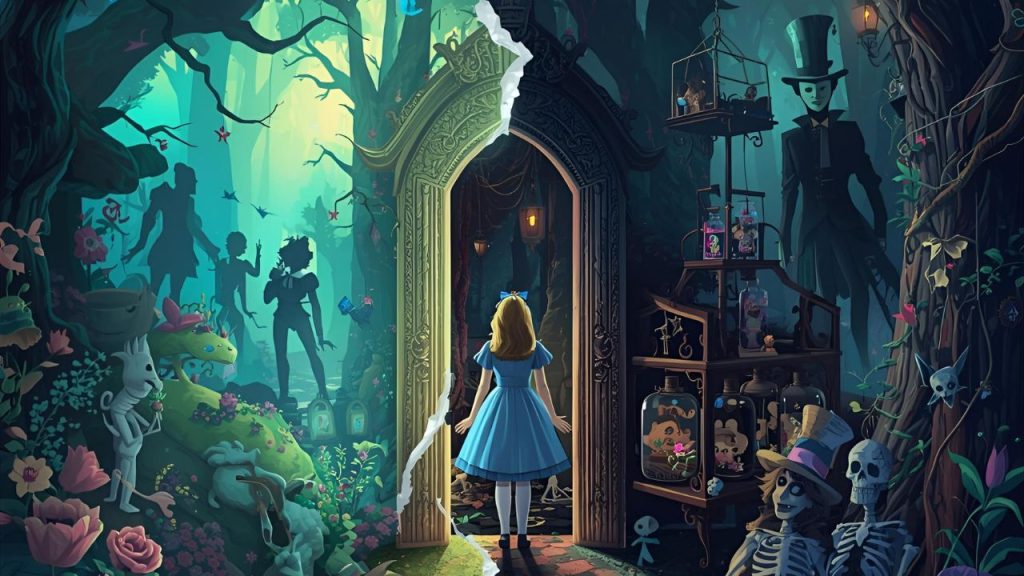
Frank: It’s very difficult to pick favorites from such a vast collection of Alice-inspired work. I have seen the story of Wonderland influence every art form imaginable, from spectacular gardens to unthinkable architecture to culinary extravaganzas. She is an ever-present muse for so many creatives. In the realm of literature, my favorite pick is somewhat of a cheat, but I defend its selection. Ralph Steadman illustrated a version of Alice in Wonderland that remains my absolute favorite edition of the book. Yes, it is the original story, but it is a totally different experience when complemented by his brand of art. It intensifies the disorienting and whimsical qualities of Wonderland in just the right way, and I feel like I have a whole new appreciation for the experience Alice must have had.
Zoe: Svankmajer’s ALICE (1988) for sure! I think it’s the most uncanny film adaptation out there, essentially a one-woman show with Alice being completely alone, surrounded only by stuffed animals, puppets, and skeletons. I was definitely inspired by the general sense of unease.
In honor of Alice’s Adventures in Wonderland’s depiction of childhood imagination, what were some stories from your childhood that sparked your own imagination?
Mia: My favorite stories growing up were ones that took place in fantasy worlds or anywhere outside of my everyday world, like Grimm’s fairy tales, Greek mythology, and stories from other cultures. Aside from Disney animation, Jeff Smith’s Bone and Rose comics, Lloyd Alexander’s Chronicles of Prydain, and Tolkien’s Lord of the Rings were my earliest inspirations to dream up my own fantasy stories.
Beatrice: Besides this one, I’ve always been absolutely fascinated with Peter Pan, and I’m currently writing a retelling of it! I’ve also always felt connected with anything and everything related to fairies and the Fae world. My first name is Ada, which in Spanish is pronounced the same way as fairy, so from the moment I was born, I was showered with Fae-related gifts and decorations. I’m not going to lie, horror stories also played a very important part in sparking my imagination. I saw ghosts, vampires, and ghouls everywhere. I dreamed about mysterious, magical, and horrific places every single night. I devoured Venezuelan myths like La Sayona and El Silbón; I guess it’s just another way to show there really is more than what meets the eye.
L.L: I was sparked by what bunch of what people might consider non-traditional childhood stories. I lived and breathed cartoons, video games, and shows as a kid. Power Rangers, Sailor Moon, the Legend of Zelda series, Teenage Mutant Ninja Turtles, Escalfowne, Brave Star, Mystic Knights of Tir Na Nog. This is nowhere near an exhaustive list. Revolutionary Girl Utena, All The Gundams, it goes on and on and on. These stories with their fantastical settings or fantastical elements set in the real world were my everything, and still are.
Frank: The Phantom Tollbooth by Norton Juster was one of my favorites growing up because of the silliness and the use of language. I think it absolutely shares many qualities with Alice in Wonderland, which I came to appreciate over time.
Zoe: I loved playing in the woods as a kid, especially with my neighbors, and we would always end up making our own village. Loved making a little house with sticks and pretending I was a day away from starving to death, I guess? Imagination needed high stakes, or what was the point?
A huge thank you to Mia, Beatrice, L.L., Frank, and Zoe for sharing their imaginative and interesting takes on Alice in Wonderland. Their passion for storytelling and their ability to reinvent such a timeless tale are truly inspiring. We can’t wait to see what magical worlds they create next and how their visions of Wonderland continue to enchant readers everywhere!
Find Mia Araujo here.
Find Beatrice Lebrun here.
Find L.L. McKinney here.
Find Frank Beddor here.
Find Zoe Hana Mikuta here.
Want to explore more fairytale twists? Click here and discover more in our latest 5×5 author interviews!
Browse A Young Reader’s Escape into Fantasy and Sci-Fi bookshelf on Bookstr’s bookshop page to find your next magical read!