

















A neologism is a newly coined word gradually becoming accepted into mainstream language. If we could point to a single catalyst for the ever-evolving lexicon of the English language, it would be the literature we consume. There’s a reason dictionaries were books before anything else. In some cases, the neologisms we adopt come from poetic wordplay. In others, it’s sci-fi jargon which rolls off the tongue and just…sticks. In others, yet, it’s the futuristic fiction which sets out to name the realities we should aspire to create, and those we should avoid at all costs.
Keep reading to discover the words that stuck, the words that didn’t, and the words that we think should.
Brillig
“Jabberwocky”, Through The Looking-Glass’Twas brillig, and the slithy toves
Did gyre and gimble in the wabe:
All mimsy were the borogoves,
And the mome raths outgrabe.
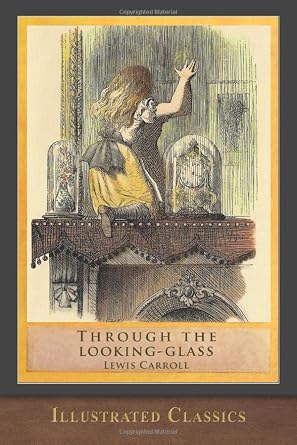
If wacky words were a currency, Jabberwocky would be a gold mine. Lewis Carroll’s “nonsense” poem, which Alice discovers mirrored in a “looking-glass book”, has introduced more than one (albeit obscure) word into the English language. Chortle. Galumphing. But perhaps the most fascinating part of Jabberwocky is that — borogoves and slithy toves aside — we don’t really need to understand every term to know what’s happening. A young hero sets out on a quest to slay a beast and returns victorious to his proud father. And then there are the words we haven’t adopted. There’s frabjous — “O frabjous day!” — which speaks for itself. Brillig, Humpty Dumpty explains to Alice, simply means four o’clock in the afternoon. “The time when you begin broiling things for dinner.” Although, if you ask me, that’s a little too early to be broiling anything.
Wyrd
for Wyrd hath swept them
into Grendel’s grasp.Beowulf
Speaking of young heroes slaying beasts, Beowulf has its fair share of weird words. Including the Old English origin of the word weird itself.
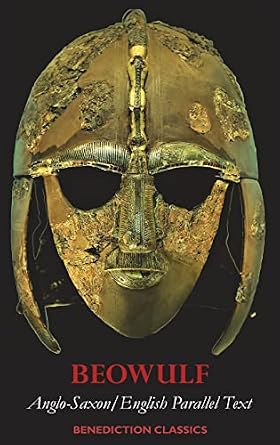
Wyrd is used as a noun, in place of “fate”, or “destiny”. The warriors are swept to their deaths by the beast Grendel. But, ultimately, fate is to blame. However, like weird, this concept is also used in adjective form — wyrde. “Wanode ond wyrde” — the soldier waned by fate. His death was fated. In Shakespearean English, this word has an updated spelling. Macbeth’s three witches are known as the “weird sisters”. But this doesn’t just mean they’re odd or unsettling. They’re medieval oracles, dishing out Macbeth’s royal destiny. They are the fate sisters. So, somewhere along the road from Shakespearean to modern-day English, weird stopped describing pre-determined, inescapable fate, and began to mean odd, strange, out-of-place on a more mundane level.
We’m
‘All right – we’m comin’, said Samuel hastily, flushing all over his face.
The Loving Spirit
Quite possibly my favourite of the list, we’m is a contraction in the place of we’re, merging “we am”. Daphne Du Maurier’s The Loving Spirit follows the free-spirited Janet Coombe, who longs for travel and adventure, but finds herself forced to settle. Her “loving spirit” passes down her family in generations of lifetimes. Like the majority of Du Maurier’s novels — Rebecca, My Cousin Rachel, Jamaica Inn — The Loving Spirit is set in Cornwall, where the locals’ dialect is full of contractions and regionalisms which may sound alien to the foreign ear.
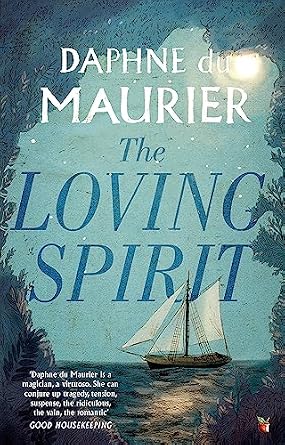
And we’m isn’t exclusive to Cornwall. It’s also associated with the West Country more widely, and the Black Country. It’s a word I couldn’t help but laugh at upon discovery — until the older members of my British family chipped in that it was commonplace in their day. We’m hoping this one makes its way into the dictionary.
Frood
“Well guys, you must be so amazingly glad to see me you can’t even find words to tell me what a cool frood I am.”
Zaphod Beeblebrox, The Hitchhiker’s Guide To The Galaxy
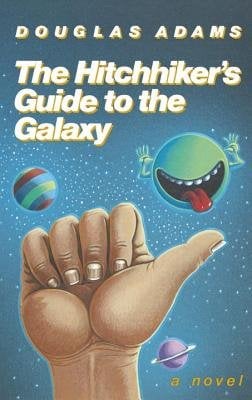
To the perpetually baffled Earth representative Arthur Dent, every other term his new acquaintances utter in his direction is, quite literally, alien. But frood is common in Hitchhiker slang — aka, words that sound unbelievably English, but aren’t. As the narrator informs us, lay Earthlings, a frood is a “really amazingly together guy”. Also from this comes froody — as Zaphod Beeblebrox assures Ford Prefect, “everything’s cool and froody”. If you ever find yourself in the Betelgeuse system and want to go all out with the compliments, you could even call someone a hoopy frood.
Gruntled
I could see that, if not actually disgruntled, he was far from being gruntled.
The Code of the Woosters
If you thought we’d done with the English-isms, you’ll be gruntled to hear there are plenty more. Comedy novelist P.G. Wodehouse is full of them — and his iconic gentleman-and-genius-valet duo, Jeeves and Wooster, represent the 1920s English aristocracy with all of its colloquialisms. Bertie Wooster, especially, is fluent in them. Spiffing, is one, or what ho! But perhaps the most underrated term comes from The Code of the Woosters.
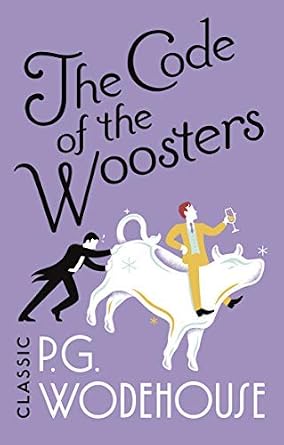
If disgruntled means “angry or dissatisfied”, we can only presume that gruntled here underscores a more content, collected demeanour. Wodehouse may have intended it as wordplay, but gruntle has actual roots in the English language. In the 1500s, to gruntle was to complain. Back when “dis-” amplified an adjective, disgruntled came to mean, essentially, “very gruntled” — it was only when the French root associated “dis-” as a negative prefix that it could be misused as an antonym to gruntled. But don’t tell Wodehouse.
Thoughtcrime
The thought police would get him just the same. He had committed – would still have committed, even if he had never set pen to paper – the essential crime that contained all others in itself. Thoughtcrime, they called it.
1984

Thoughtcrime is one chilling compound word. Although it’s technically English, 1984 re-imagines London as the totalitarian state Oceania — the word comes from Newspeak, a language enforced by the Party members. Thoughtcrime encompasses any private thought that goes against the Party’s totalitarian ideology. Harbouring rebellious urges, questioning Big Brother’s authority, and even unauthorized sexual attraction. And what’s more, there’s a thought police bent on penalizing this. Even when unspoken or unacted upon, thoughtcrime risks death if discovered; throughout the novel, Winston Smith fights to keep his accumulating crimes hidden. Let’s hope this one stays out of the dictionary.
Grok
Grok — either you get it, or you don’t. To grok is to understand something completely. And if you grok with others, you empathize so intensely that you almost merge with them, become them.
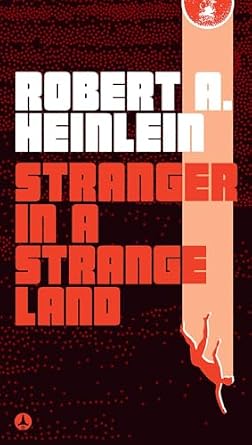
Robert A. Heinlein coined the term in his 1961 sci-fi novel Stranger in a Strange Land. As the sole survivor of an expedition to Mars, Mike Smith becomes the first human raised by Martians. When he’s taken back to post-world-war-three Earth by the second expedition, Earth is more alien to him than Mars. He’s a “stranger in a strange land”. In a novel essentially about interplanetary culture shock, there’s nothing more important than to grok and be grok-ed in return.
Kipple
“Kipple is useless objects…When nobody’s around, kipple reproduces itself. For instance, if you go to bed leaving any kipple around your apartment, when you wake up the next morning there’s twice as much of it. It always gets more and more.”
Isidore, Do Androids Dream of Electric Sheep?
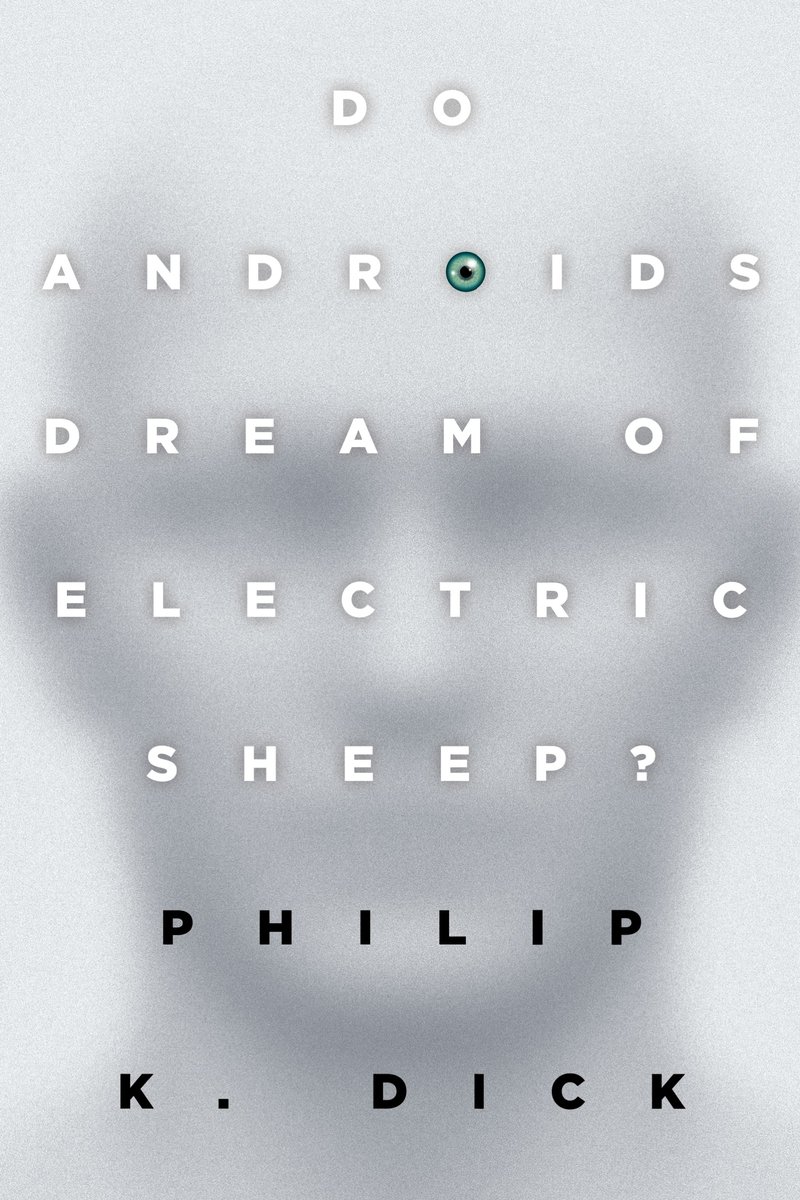
Kipple is another term you may just need to grok. Perhaps the point of kipple is that it’s pretty much impossible to contain, even within the English language. But we’ll try. In Philip K. Dick’s sci-fi novel Do Androids Dream of Electric Sheep? — the inspiration for the Blade Runner movies — kipple describes entropy in the form of ever-multiplying junk. Kippleization reflects society’s accumulation of useless objects. It’s tied in with consumer culture and society’s subsequent decay. From this deceptively concise word comes nonkipple, kipple–ized, and kipple factor. And it’s even inspired exhibitions, like Dan Tobin Smith’s The First Law of Kipple, which re-purposed kipple donated by members of the public.
Quark
Three quarks for Muster Mark!
Sure he hasn’t got much of a bark
And sure any he has it’s all beside the mark.Finnegans Wake
Until the 1960s, protons and neutrons were the smallest known matter. When theoretical physicist Murray Gell-Mann accurately predicted the existence of subatomic particles that make up protons and neutrons, he took naming inspiration from a James Joyce novel.
Finnegans Wake mixes dreams and reality, following a fractured storyline to nonsensical, almost Kafka-esque events. Tim Finnegan, a construction worker, dies at work, and at his wake, his wife serves his body as a dish. And the poem, directed at King Mark from the Tristan legend, doesn’t seem to be spoken by anybody in particular. To quark was to caw or croak like a bird. As a testament to the power of poetry, what Joyce likely intended as surrealist jibberish shaped the language of physics.
Utopia
Thomas More’s 1516 Utopia is set on an island whose society is harmonious, perfect, idyllic — and, most crucially, non-existent. For the name of the island, More combined the Greek “ou” (“not”) and “topos” (“place”), creating Utopia. So a utopia is “no place” — it doesn’t exist.
With the prevalence of dystopian fiction (let’s face it, worlds where things go wrong tend to be a lot more interesting), it’s tempting to think of utopia as conceived in relation to dystopia. Actually, though, it’s the other way round. The first recorded use of “dystopia” was by utilitarian philosopher J.S. Mill as late as 1868, and many consider H.G. Wells’ 1899 novel When The Sleeper Awakes to be the first piece of dystopian fiction. More’s term has introduced to the English language a whole realm of new topias, including ecotopia, technotopia, and cybertopia.
If this list has shown us anything, it’s that words don’t exist in a vacuum. Whether or not their authors intended whimsical wordplay or biting social commentary, they have the power to name concepts beyond the scope of their stories. Beowulf reveals to us our retrospective misconceptions of terminology. More’s title encouraged society to aspire, Joyce’s wordplay labelled the very matter around him, and Heinlein gave a name to the otherwise inexpressible intimacy everybody truly desires. And it’s important not to let the words that matter most slip. If we cease to name the world around us, 1984 warns us that “In the end, (they) shall make thoughtcrime literally impossible, because there will be no words in which to express it”.
For further reading, check out Erin Dzielski’s article on famous titles that became popular catchphrases here.
If you’re inspired by 1984, Do Androids Dream of Electric Sheep?, or Stranger in a Strange Land, check out Bookstr’s recommendations for Dystopian Worlds, Technology, and the Universe in Science Fiction here.
