



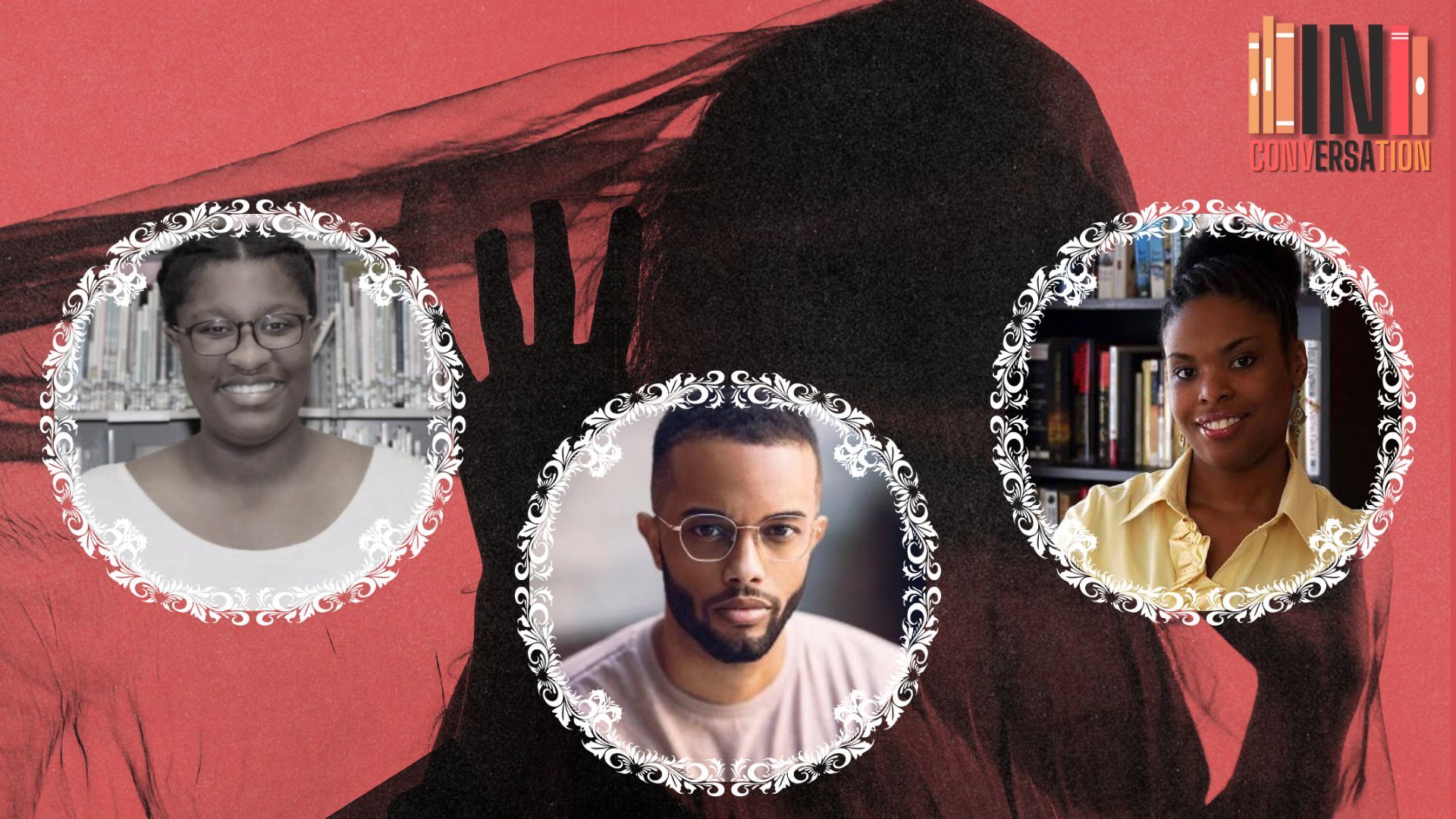
The landscape of contemporary horror is being redefined, its shadows deepened and its narratives enriched by a powerful wave of Black voices. L.S. Stratton, Sami Ellis, and Ryan Douglass are at the forefront of this movement, each wielding the tools of suspense, terror, and cultural insight to craft stories that resonate far beyond the jump scare. From the nuanced exploration of identity to the unflinching examination of societal wounds, these authors are not just writing horror; they’re excavating the complexities of the human experience. In this exclusive interview, we explore their creative processes, their inspirations, and their visions for the future of the genre. Prepare to journey into the heart of their stories, where cultural heritage, the art of suspense, and the enduring power of narrative collide.
THE AUTHORS
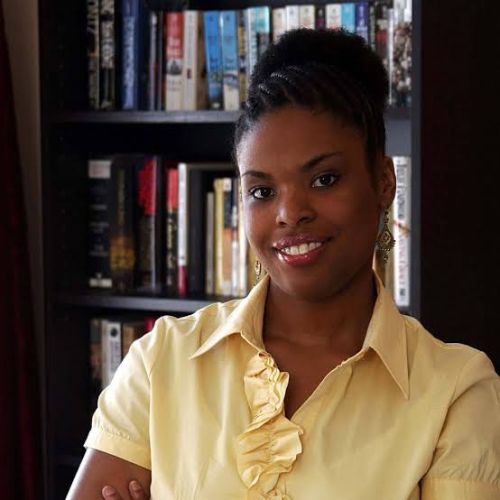
L.S. Stratton
L.S. Stratton is an NAACP Image Award-nominated author and former crime newspaper reporter who has written more than a dozen books under different pen names in just about every genre from thrillers to romance to historical fiction. She currently lives in Maryland with her husband, their daughter, and their tuxedo cat.
INSTAGRAM | FACEBOOK | TWITTER | WEBSITE
Sami Ellis
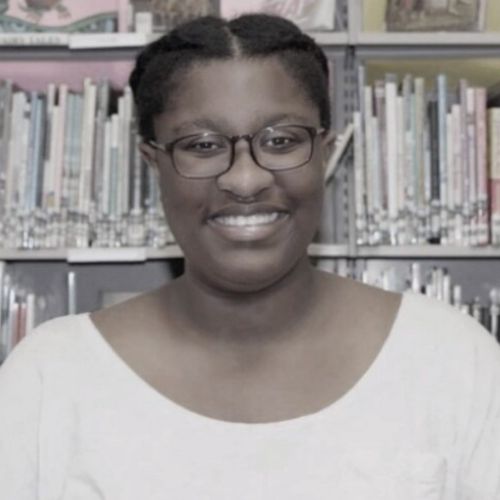
Sami Ellis is a queer horror writer from the Carolinas (bofa dem), and co-founder of the Write Team Mentorship Program. You can follow her @themoosef on Twitter, use her writing resource, the Agent Adjacent Cheat Sheet, and check out her words in the upcoming Black horror anthology, All These Sunken Souls (2023) and in her debut novel Dead Girls Walking (2024).
INSTAGRAM | TWITTER | WEBSITE
Ryan Douglass
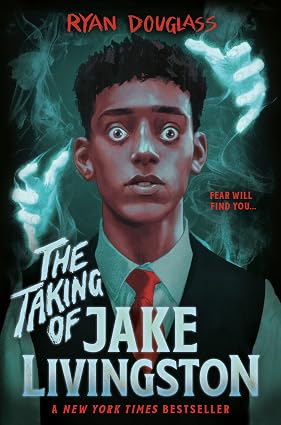
Ryan Douglass is a queer author and poet from Atlanta, Georgia. He is the author of the New York Times bestselling YA horror novel, The Taking of Jake Livingston, which was an ALA Rainbow Book List Pick, a Tor.com Young Adult SFFH Best Book Pick, and a Black Caucus American Library Association Best of the Best Booklist Pick.
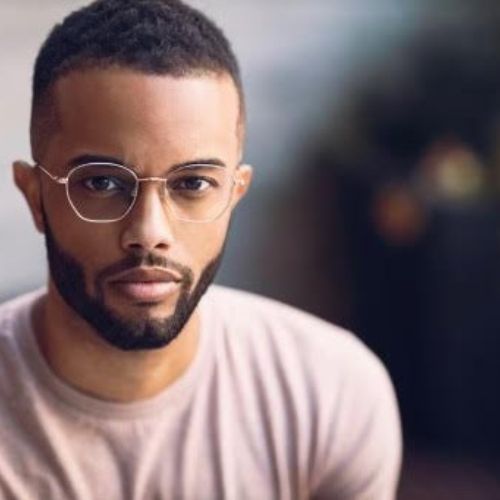
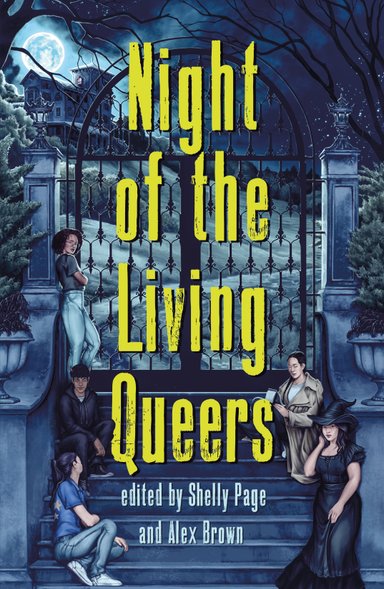
His short stories appear in the YA horror anthologies All These Sunken Souls and Night of the Living Queers, and his poetry can be found in the poetry anthologies Poemhood: Our Black Revival and He/She/They/Us, in addition to his self-published poetry collection, Boy in Jeopardy.
He received his BA in theatre from Hofstra University. In addition to authoring, he is a highly sought after sensitivity reader, and he continues to seek out positions that allow him to help the underprivileged in a variety of ways.
While he is a nomad, often found beach bumming in various parts of the world, he is currently based in Atlanta, Georgia.
INSTAGRAM | WEBSITE
Thank you so much for talking with us, let’s get started!
THE INTERVIEW
How does your cultural background influence the themes and characters in your stories? Are there any historical events or figures that have inspired your writing?
L.S. Stratton: Minority authors often get asked this question, but as a writer, I think it’s almost impossible for anyone not to include elements of your identity in your writing. As a Black American woman, most of my characters and stories are filtered through that lens. That being said, I do go out of my way to write horror and thriller fiction with black female protagonists because: 1) There’s a small percentage of traditionally published books with those kinds of main characters, and we need more diversity in representation, and 2) Black American culture and history have a treasure trove to dive into for literary inspiration.
I’ll include details or little touches that readers from that Black American experience will notice—from music to food to even frequently used sayings. Others, not from that background, probably won’t recognize those nuances but still enjoy the overall story. I think it gives it a type of authenticity that I appreciate when reading. It makes it more real.

Sami Ellis: I like to say that I’m from the Carolinas because my mom is from South Carolina, and my dad is from North Carolina. However, I spent most of my childhood going to school in Prince George’s County, Maryland. I call so many different places home, and it shows in my work. You will find any of those places as the location. For example, my debut novel, Dead Girls Walking, takes place in the fictional town of North Point, Virginia. Why? Because being from PG County, I know the DMV is filled with affluent Black families—which Dead Girls Walking is full of. However, when I’m looking to explore hoodoo in a work, I’m more likely to base it in South Carolina. And if I want to tell a woodsy, hick-filled story, it’ll probably take place in North Carolina. It always moves for me.
Ryan Douglass: I always write about Black characters because my perspective is heavily influenced by my culture. I like exploring how we navigate various systems and how community and culture shape identity, regardless of the genre I’m playing in. I also like exploring what isolation can feel like, considering how community-oriented we are.
How do you maintain a balance between building suspense and delivering moments of shock or terror in your stories?
L.S. Stratton: To be honest, I’m still learning that balance. I started my fiction writing career in romance and wrote in that genre for more than a decade, so I knew the “romance beats” down pat before I was ready to try something different. I’m much newer to the horror genre, and still have yet to develop my “magic formula”.
Each novel is a new challenge of how to have readers on the edge of their seats or create that eerie mood or unease that lets the reader know the main character is in danger but also has a payoff at the end that makes the reader feel it was worth investing their time for 300-plus pages. Each novel is an adventure for me, and I’m enjoying the journey of perfecting my technique.
Sami Ellis: I think the priority for me is always to entertain myself. Sometimes, it backfires on me because while readers are reading my novels in a span of days, I wrote them over months. So I need to be entertained much more frequently. However, when it comes to moments of shock, it’s never fun if there is no build-up to get there. If I think about all of my favorite horror movies, there’s always a stretch of interpersonal before an explosion of the horrific. I think that’s why I gravitate toward it in my writing.

Ryan Douglass: I think suspense is about holding back, so you give the reader a chance to anticipate what might happen before pulling the trigger. But when it’s time to hit with shock or terror, the sudden, visceral imagery works best.
Do you prefer open-ended or resolved conclusions in your stories? How do you decide what’s best for a particular narrative?
L.S. Stratton: To the great frustration of some of my readers, I try to tie 90 to 95 percent of loose narrative ends in my standalone novels, but I’ll leave a few questions unanswered. I feel that’s more realistic; life doesn’t give you tidy endings. Villains aren’t always punished by the end. Heroes don’t always live happily ever after. The story continues off page.
Sami Ellis: I like a mixture of both open-ended and resolved endings. I know that sounds contradictory, but to me, the best horror endings are ones that leave on a high note, but if you think about it just a little longer, you realize it certainly was not an absolutely good ending. I am always writing my stories from the perspective of: the characters can get what they want, because the tragedy is the cost at which they gained it. For example, think of Romeo and Juliette. If I were in charge, they wouldn’t have died at all. They would have gotten the chance to be happy together—and completely disowned by their families. Bittersweet. Resolved: they’re together and the main issue of their romance is set in stone. However, open-ended: where do they go now? They’ll have to be either poor and happy or rich and lonely.
Ryan Douglass: Usually, I prefer if there is some kind of resolution, but I don’t mind if there are some things that are unanswered, left open to interpretation. I think leaving things hanging can feel really haunting, and that can be fun for horror. It depends on the story, though. I think stories that are more harrowing throughout can benefit from open ends but for stories that are more heartwarming and feel-good, it’s nice to have closure.
What impact do you hope your book will have on readers, and how do you see it contributing to ongoing conversations about its themes?
L.S. Stratton: I try my best to write horror and thrillers that give you a fright, thrill, or a chill—and something more. It will make social commentary on racism, trauma, and abuse, like I did in Not So Perfect Strangers. I wanted readers to have discussions about these topics and the characters. How do the two main female characters respond to abuse and trauma, and how does that bring them in conflict? How does systemic racism impact the justice system and the decisions each character makes in the novel?

And when I can, I want to educate readers about parts of Black history they may not have known. For example, the inspiration of my latest novel, Do What Godmother Says, a gothic thriller with horror elements, was based on the real-life toxic relationship of Harlem Renaissance author, Zora Neale Hurston, and her controlling art patron, Charlotte Osgood Mason. Many readers said they had never heard about this or even Mason before reading the novel. A horror YA that I have slated for release in early 2026, The Sundown Girls, was inspired by the history of Sundown towns where Black people had to leave before dusk or risk their lives. There are some towns in the U.S. where these laws are still on the books though no longer enforced.
Sami Ellis: All of my books focus on themes of empathy. I write angry, bitter girls. Girls who are absolutely delusional about their capabilities, their strengths, and their weaknesses. In spite of all that, I want readers to root for my characters. They will never make better choices in my books because if they only made good choices, readers wouldn’t have to try to empathize with them. They automatically would. And thus, when a reader is following Temple Baker in Dead Girls Walking or Akeela in The Teeth Come Out at Night or Rashida in This Is a Witch Hunt, I’m fine with readers being frustrated about their actions. However, if they want to be a part of the conversation I’m having, they can’t stop at frustration. They have to get to understanding, then awe. Because I always write characters meant to inspire awe at the way they go through so much and still come out on top.
Ryan Douglass: I hope it will encourage young people to step into their power and know that they have everything that they need to pull themselves out of bad situations.
What advice would you give to aspiring Black writers looking to begin their creative journey and make their voices heard?
L.S. Stratton: Understand that your first draft is not your book. The work has just begun. Books are made better and even something entirely different during the editing process.
Rejection doesn’t necessarily mean your book is bad or deficient. Acquisitions are a highly subjective process. Getting that first “yes” from an agent or editor could just be a matter of time and persistence.
Make peace with the fact that publishing not only produces art but also, first and foremost, is a business. A lot of decisions in publishing houses are made according to the bottom line, which is particularly challenging for black authors who are statistically the least likely to get book contracts. Read widely, know the market, and write your best work. Also, don’t give up on yourself. Try and try again.
Sami Ellis: I’m going to give more practical advice in believing in yourself. Never throw an idea away. It doesn’t matter if it’s three words or a quick cliche you remembered. It was something that excited you and made you want to write. Keep a journal or a Google Doc, and jot them down. I have a thirty-page document full of various tidbits that make absolutely no sense to anyone but me, but whenever I’m looking to add some life to a story of mine, I look through ideas I’ve had before. Whenever I’m thinking of what I’m going to write next, I write the idea I’m most passionate about at the time. And these are not fleshed-out synopses. I’ve got one note in the Doc that says, “Only the head was found,” and nothing else. Another that says, “MacGuyver but Tessa Thompson.” These are not novels. They are little pieces of an idea that excites me.

Ryan Douglass: Focus on strengthening your style and what you want to say because it will be the main thing that sustains you. There are a lot of people in the business with sway over what writers say so you need to be really clear on your intention, so it follows you if you have to do agent changes or go from publisher to publisher.
If your writing style had a soundtrack, what three songs would be on it?
L.S. Stratton: Brutal by Olivia Rodrigo; Everything is Everything by Lauryn Hill; Whatcha Waiting For? By Gwen Stefani
Sami Ellis: I’ve always maintained that Tyler, the Creator would be on it. I actually believe that Igor is Dead Girls Walking‘s theme in my head. I’d also have some Megan Thee Stallion on there, something that fully utilizes her commanding presence. I’ll say Girls in the Hood. And finally, I’ll add Solange on there for the more emotional scenes—though it’s gonna be Binz because I still love to have fun.
Ryan Douglass: Space Song by Beach House, I Was All Over Her by Salvia Palth, and Peacefall by Purity Ring.
What is the most bizarre or unexpected piece of research you’ve done for a story?
L.S. Stratton: I found out one of the biggest art patrons of the Harlem Renaissance was a big believer in the occult, and it was one of the primary reasons she funded the artistic movement. Her husband was also one of the founders of a paranormalist society that still exists today in Europe.
Sami Ellis: It’s funny to me, but I remember when drafting Dead Girls Walking, I spent maybe a full 12 hours familiarizing myself with the names of birds. Not with the calls of birds. I went on YouTube and just found hour-long videos of bird calls, and if the call was familiar, I would write the bird’s name down. I’ve never been an animal person, so I was basically working backward—identifying the birds of my childhood by remembering the sounds first, then researching who the sounds belong to. I still don’t know which bird it is that makes the car alarm sounds though!
Ryan Douglass: One of the strangest research deep dives I’ve done was about the town of Danvers — which is near Salem — when the witch trials were going on. It was for a creature feature-type story about portals in the earth that made way for strange creatures. So, learning about how this town experienced strange supernatural phenomena in real life, but the attitude they have toward that history is not to make it this touristy thing like it is with Salem but to look away from it. I found that very interesting because it feels like a more authentic response to something like that, it feels like a more traumatic wound in the town’s history.
Final Thoughts
Through their diverse experiences and shared passion, L.S. Stratton, Sami Ellis, and Ryan Douglass illuminate the power of horror to not only frighten but to reflect, challenge, and, ultimately, connect. Their stories, steeped in cultural richness and crafted with meticulous attention to suspense, offer readers more than just a thrill; they provide a lens through which to examine the complexities of identity, the weight of history, and the enduring resilience of the human spirit. As they continue to push the boundaries of the genre, these authors remind us that the most profound terrors, and the most enduring triumphs, are often found within the depths of our own humanity. Their voices, distinct and powerful, are shaping the future of horror, ensuring that the shadows within our stories continue to reveal new and vital truths.
Want to read more from Back Horror Writers? Check out this article on Black Female Gothic Horror Authors here.
Don’t forget to pick these titles up from our Bookshop shelf.