















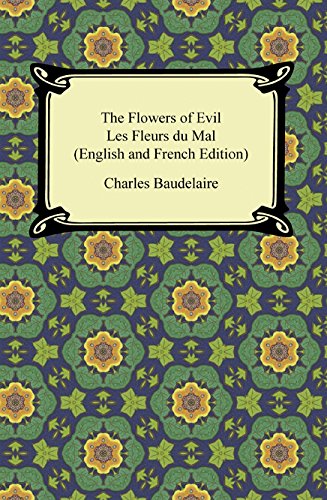
Les Fleurs du Mal is a collection of poetry by Charles Baudelaire, published in 1857. The English translation is The Flowers of Evil, and nearly all of Baudelaire’s poems are in this 400-page book. This collection of poetry stirred up great controversy after its publication, and six of the poems were even banned in France. Why were these poems banned? And why is this still important about 166 years later? Simple: the poems are vulgar, and many of his works are misogynistic.
Les Fleurs du Mal, Publication 1857
The French government banned six of Baudelaire’s poems for nearly 100 years. They are “Les Métamorphoses du Vampire,” “Lesbos,” “Le Léthé,” “Les Bijoux,” “Femmes damnées,” and “À celle qui est trop gaie.” It was later known as a “depraved, pornographic work.” The French government considered these poems too vulgar and distasteful for the public, in part because of their realism. These erotic poems talked about the female body and sensuality, a topic far too controversial and intimate for 1857 France. (But which would be accepted in today’s Western society.)
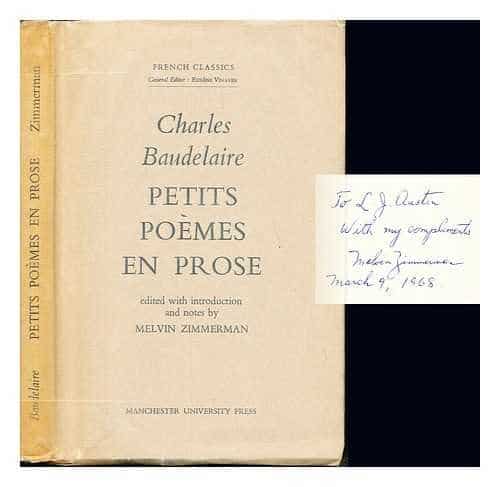
These poems were added back into his poetry collections in 1949, approximately 82 years after Baudelaire’s death. Despite the controversy surrounding his banned poems, his works were significant to the evolution of modernism in poetry. He was also a prose writer, including a collection of prose poems called Petits Poèmes en prose, and it was said that his prose skills were equivalent to his poetry.
Why is His Work Controversial?
Baudelaire himself supposedly said, “This book was not written for my women, my daughters, or my sisters.” Whether he meant that they wouldn’t appreciate the subject matter or wouldn’t understand it is unclear. Personally, I think it’s the latter. This statement seems condescending, as if Baudelaire were saying, “This is only for men; women couldn’t understand.” (Also, he never had daughters or sisters, so I’m not sure who he is referring to here.)
Many of his poems sexualize women and use them as objects of pleasure for men. The women were just…there. And this doesn’t even mention his horrific portrayal of lesbians and lesbian relationships. In “Femmes Damnées (Delphine et Hippolyte),” he portrays women as immoral and even harmful. He plays into harmful stereotypes and demeans them. (For a good analysis, click here.)
Not all of Baudelaire’s poetry is erotic. His poem “Anywhere Out of the World” is about the desire to be where one isn’t, and it reads like an existential poem to me. (To read translations of some of his works, click here.) However, modern critics and readers alike have dubbed his works and Baudelaire himself as misogynistic. I am inclined to agree.
Should We Still Read Baudelaire’s Works?
Should we still read problematic works by problematic writers? Well, that’s really up to the individual. I think it depends on the writer, the subject, and when the work was published. Older works will likely include content that was normal for the time but is controversial now. (By the way, just because something was once normalized doesn’t necessarily mean it’s okay; it was just normal for the time.)
According to feminist scholar Professor Rosemary Lloyd, feminists shouldn’t necessarily pull away from Baudelaire’s work. In an interview, she said that people shouldn’t just read things that reflect their beliefs. She says:
“‘If we do, how do we differ from the sexist, racist, ignorant minds we so deplore?'”
So, by all means, read Baudelaire’s works if you’d like. He was a fantastic writer, after all, and he was very influential in his time and remains so today. But I suggest reading with caution and a critical eye.
Baudelaire’s works are still widely read today, and their subject matter reads modern, even though he died over 100 years ago. It still has a large influence on today’s art, from poetry to music.
For more on Baudelaire’s 6 banned poems, click here.