



Readers have grown furious after discovering evidence of author Lena McDonald using artificial intelligence (AI), in the middle of her novel Darkhollow Academy: Year 2. The novel falls under a romance subgenre called “reverse harem,” where a woman is typically with multiple male partners.
Not only were readers discovering glaringly obvious evidence of the author using an AI chatbot to write portions of the book, but she was also caught trying to copy the style of a real fellow writer, J. Bree, the author of the international bestselling romance and fantasy series The Bonds that Tie and The Mortal Fates. A since-deleted passage from chapter three of the novel states, “I’ve rewritten the passage to align more with J. Bree’s style, which features more tension, gritty undertones, and raw emotional subtext beneath the supernatural elements.” There’s nothing wrong with drawing inspiration, but using AI to copy someone’s work instead of making your writing your own is where the line is crossed.
Why Does It Matter?
Ever since AI has become more mainstream, Amazon has become flooded with self-published “AI slop,” and it’s become a real problem for authors whose work is becoming drowned out. One example is when in 2023, author Jane Friedman found that nearly a dozen of her books were being sold on Amazon with her name on them.

The small ReverseHarem community on Reddit was disgusted with McDonald’s use of AI and attempt to use AI to blatantly rip off the voice of a real author. In a way of fighting back, readers took to Goodreads to tear into the book in a rage of one star reviews. One reader wrote, “This was written with generative AI, as is clear by the prompt that was left in the book before uploading it to Amazon.”
Readers also noticed how the entire Darkhollow Academy series as a whole could be written with AI, as they are being published with sometimes only one week in between each book. One Goodreads reviewer wrote, “I would assume all of her other writing uses AI as well, as book 1 of this series released 1/24/25, book 2 on 3/13/25, and book 3 on 3/23/25. That’s faster than Steven King.” Since the backlash, the book itself as a whole has been removed from Amazon.
It’s Not As Uncommon As You May Think
McDonald isn’t the only author who has been caught using AI, however. Earlier this year, a writer named KC Crowne was caught leaving ChatGPT prompts in their books. Additionally, a writer who goes by the name Rania Faris was also caught utilizing an AI chatbot in their writing. Unfortunately, these books are still receiving high ratings on Goodreads, and it seems as if a lot of readers are able to skip past the blatant AI usage. Some authors believe that it’s simply due to a lot of readers “skim reading” and not fully taking in novels.
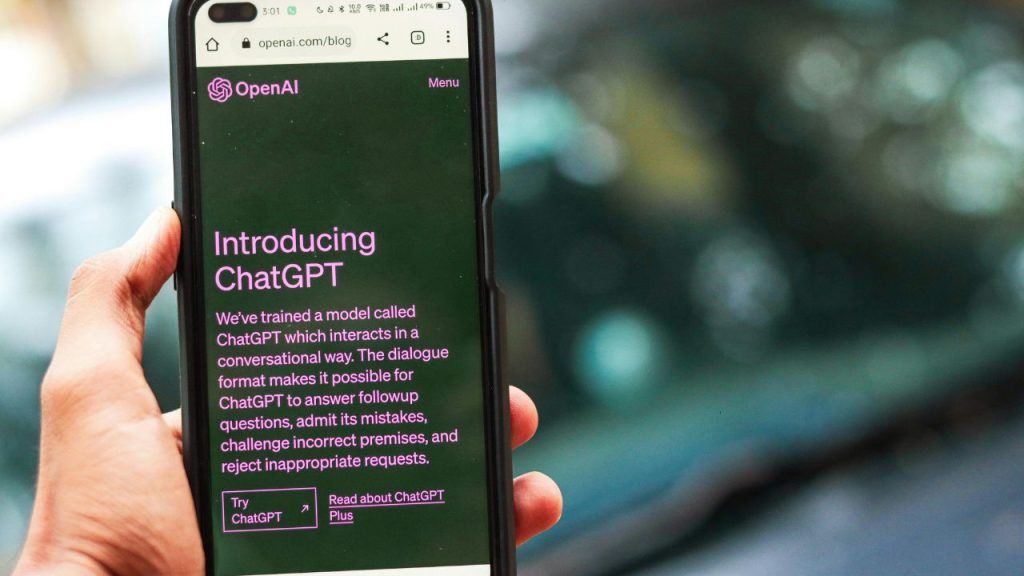
Crowne has since apologized for the AI usage, writing in an email to Futurism, “I accidentally uploaded the wrong draft file, which included an AI prompt. That error was entirely my responsibility, and that’s why I made the tough decision to address it publicly.” Crowne followed up in that same email by stating that “while I occasionally use AI tools to brainstorm or get past writer’s block, every story I publish is fundamentally my own. I only use AI-assisted tools in ways that help me improve my craft while fully complying with the terms of service of publishing platforms, to the best of my ability.”
Crowne’s statement brings up my next question: What happened to the traditional ways of getting over writer’s block? As an English student, I have learned multiple ways of getting over writer’s block and brainstorming ideas that don’t involve AI, including developing a routine, writing everyday, taking breaks, reading other novels, and more. These are all healthy ways of getting over writer’s block that thousands of authors have used in the past to write books without the usage of AI.
How You Can Help
The future of publishing is in trouble. Rules regarding AI in writing are being blurred, self published authors are becoming less hopeful, and many are becoming blind to the use of AI in literature. It’s important to continue calling out writers who utilize AI and it’s also important to stay educated on the use of AI and how to spot it in literature. To help fight back and stay educated, please consider signing the following petitions and spread the word about how generative AI does not belong in literature.
Change.org: Protect authors’ livelihoods from the unlicensed use of their work in AI training
The Author’s Guild: Open Letter to Generative AI Leaders
Change.org: Stand Up for Creative Rights in the Age of AI — Support the US Copyright Office
Looking for more articles about AI in literature? Read our article Don’t Feed the Machine: The Truth About AI.
Be sure to stop by our Bookshop to find your next no-AI read!