


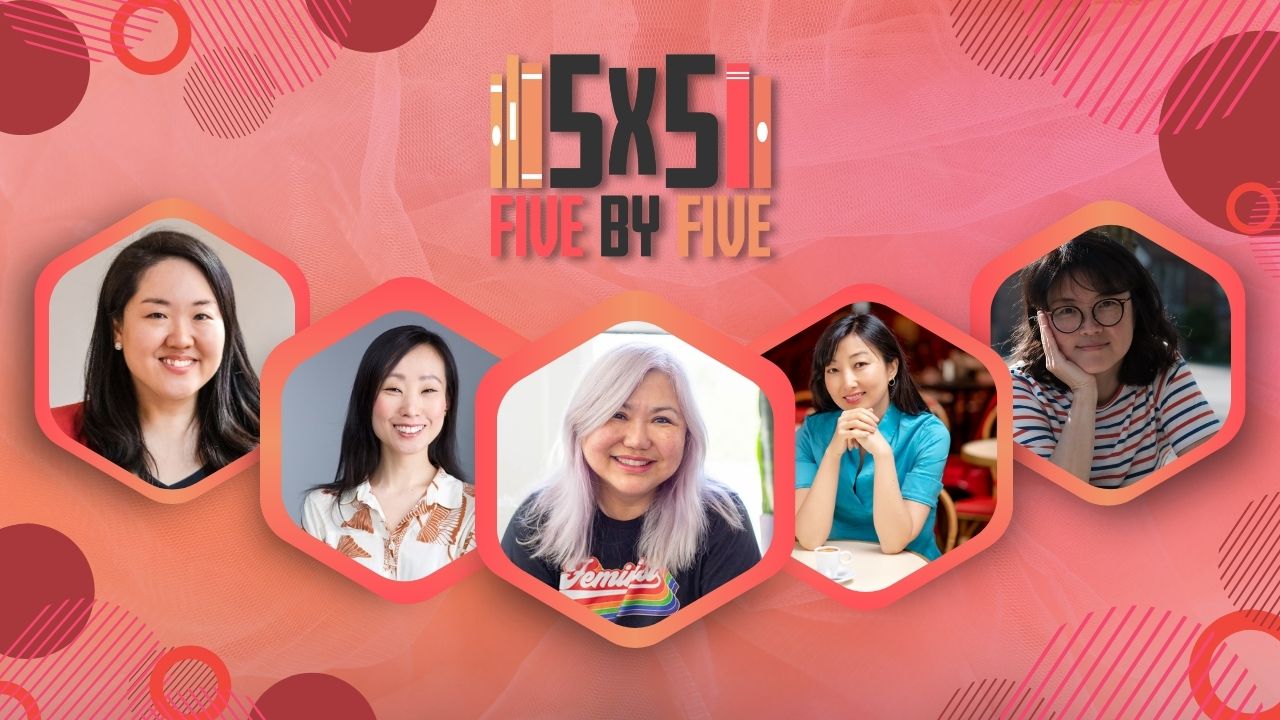
In this edition of our 5×5 series, we’re talking to Korean American authors about their work in children’s literature. As of 2022, an estimated 1.8 million Americans are of Korean descent, making it the 20th largest diaspora group in the United States. As such, younger generations of Korean Americans are often searching for authentic representations of themselves and their unique blend of cultures in media, and these five authors are among the creators who have dedicated much of their work to providing it. Let’s learn more about the authors and how they are bringing their culture and experiences to the page.
The Authors
Aram Kim
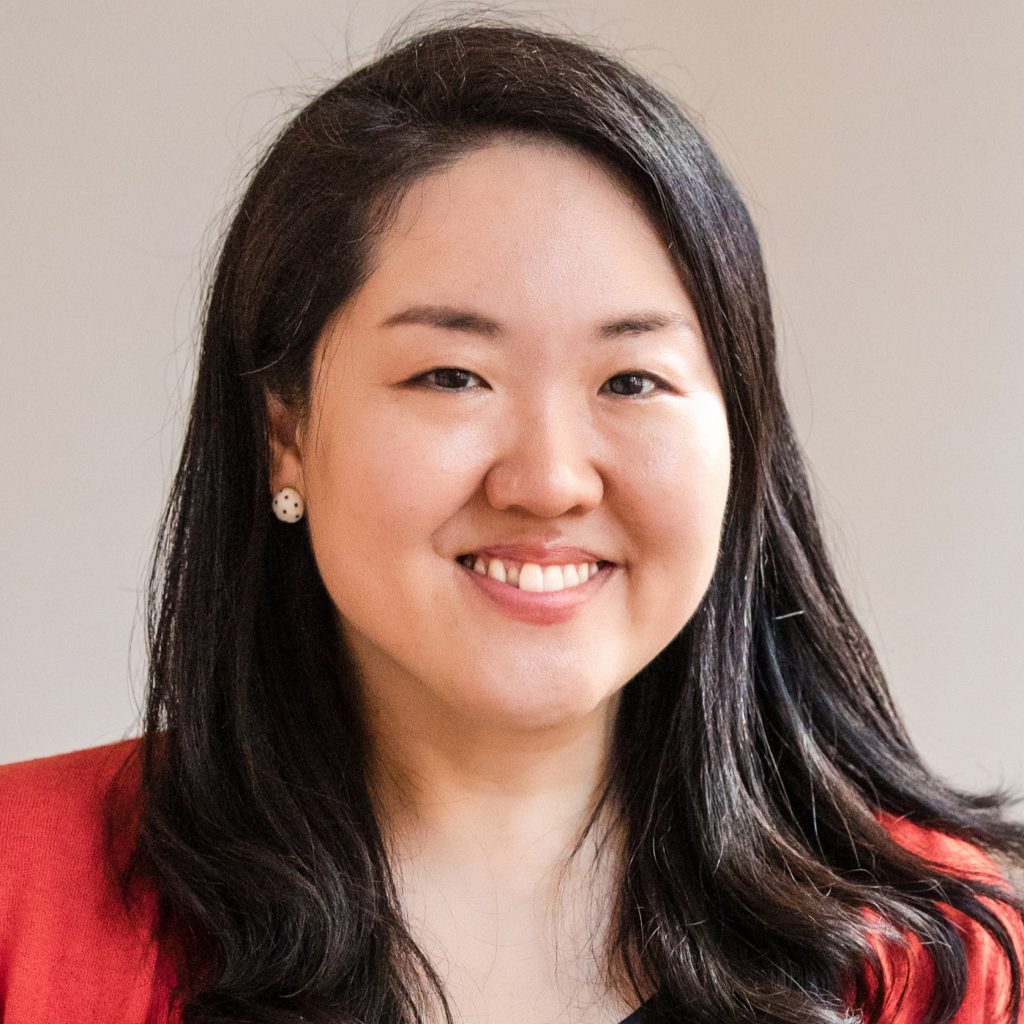
Aram Kim is an author and illustrator of many acclaimed picture books. She was born in Ohio, grew up in South Korea, and now lives in New York, enjoying diverse food and culture. She has always been surrounded by books and always loved stories. As a child, Aram used to write and illustrate her own stories in school notebooks. Since moving to NYC to attend the School of Visual Arts and obtaining a B.F.A. in Illustration and an M.F.A. in Illustration as Visual Essay, Aram has written and illustrated several books, including Cat on the Bus (Holiday House) — called “a solid debut” by Publishers Weekly — and Tomorrow Is New Year’s Day (Macmillan), a Junior Library Guild Gold Standard Selection. Her latest book, Baby Cousin’s Big Day, is the fourth installment in her popular picture book series Yoomi, Friends, and Family, which is scheduled to be published in July 2025.
Ellen Oh
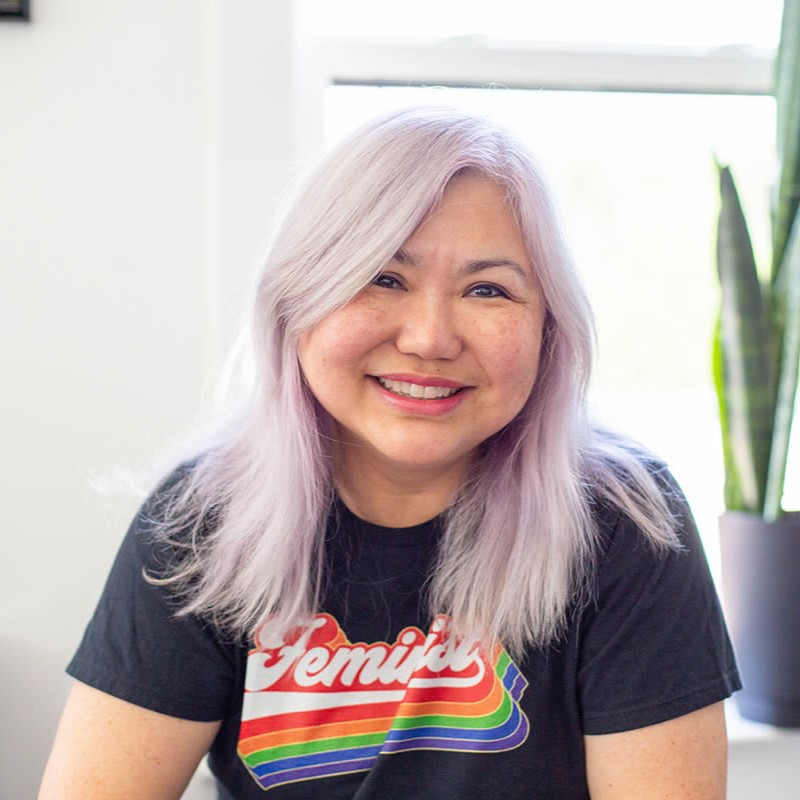
Ellen Oh is a former adjunct college instructor and lawyer with an insatiable curiosity for ancient Asian history. She is an award-winning author and editor of middle-grade and young adult books, such as The Colliding Worlds of Mina Lee, You Are Here, Finding Junie Kim, the Spirit Hunters series, and the Prophecy trilogy (Prophecy, Warrior, and King). Ellen is a founding member of We Need Diverse Books (WNDB), a non-profit organization dedicated to increasing diversity in children’s literature. She is also the editor of WNBD’s middle-grade anthology Flying Lessons and Other Stories and the YA anthology A Thousand Beginnings and Endings. Originally from New York City, Ellen now lives in Rockville, Maryland, with her husband, three children, two dogs, and has yet to satisfy her quest for a decent bagel.
Susie Oh
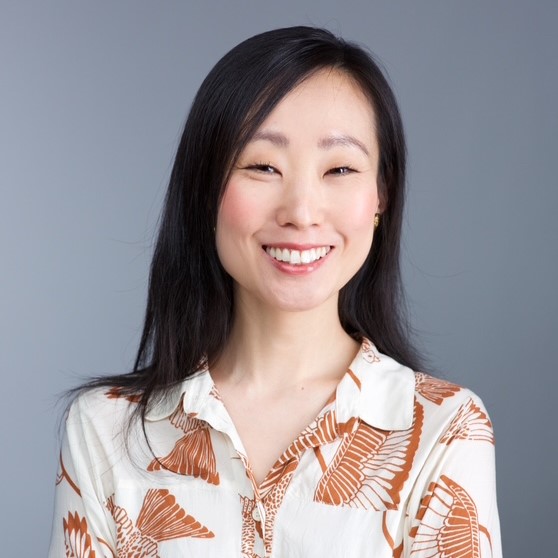
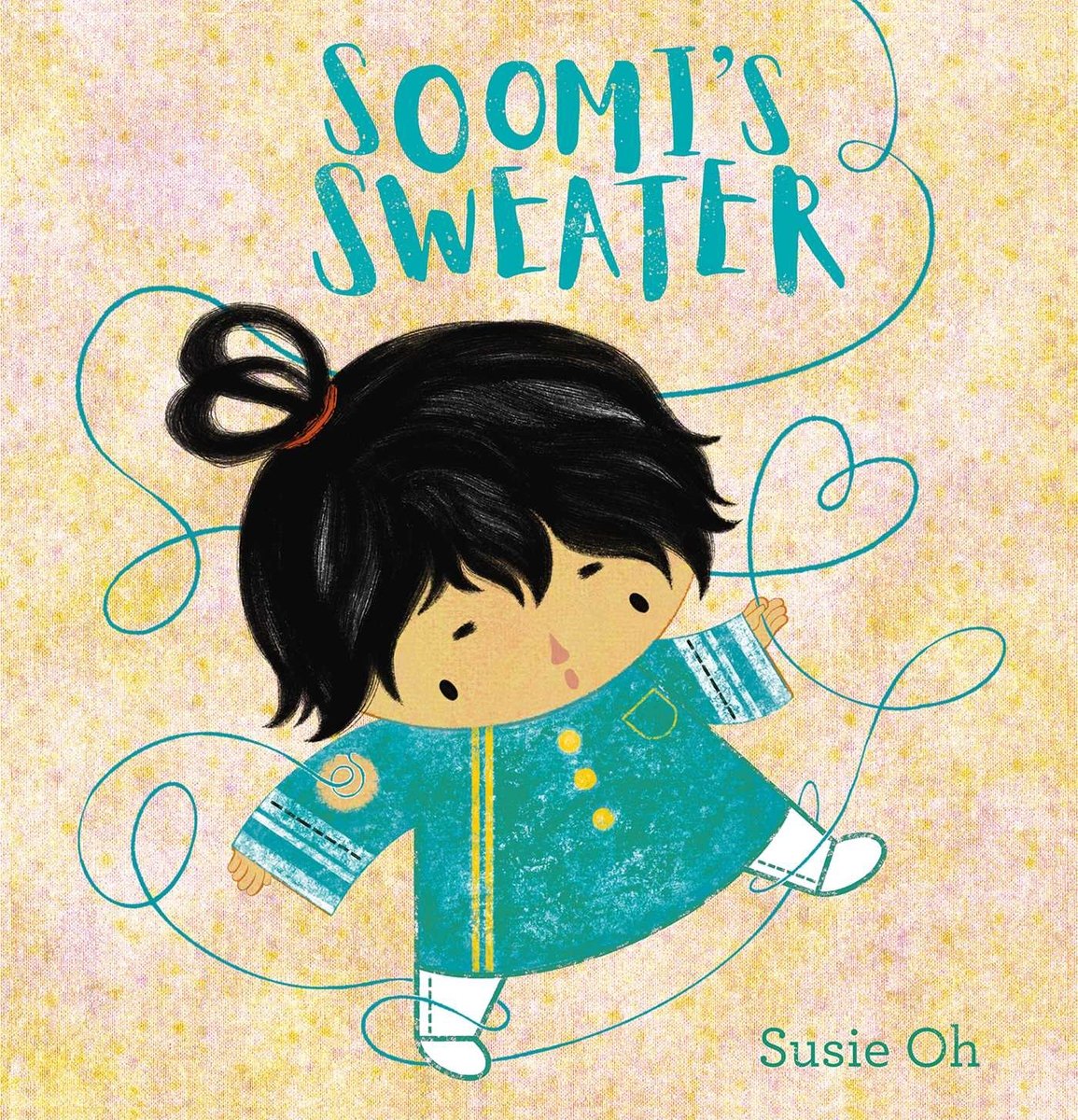
Susie Oh is a New York-based illustrator and artist from South Korea. As a child, she developed a fascination with nature in South Korea’s rural backwaters and a passion for narrative art in New York City’s public libraries. She went on to study illustration at the Pratt Institute and to take classes in animal drawing and urban ecology at the American Museum of Natural History and the New York Botanical Garden. Her debut picture book, Soomi’s Sweater, was a silver medal winner of the 2020 Key Colors Illustrators Competition.
Helena Ku Rhee
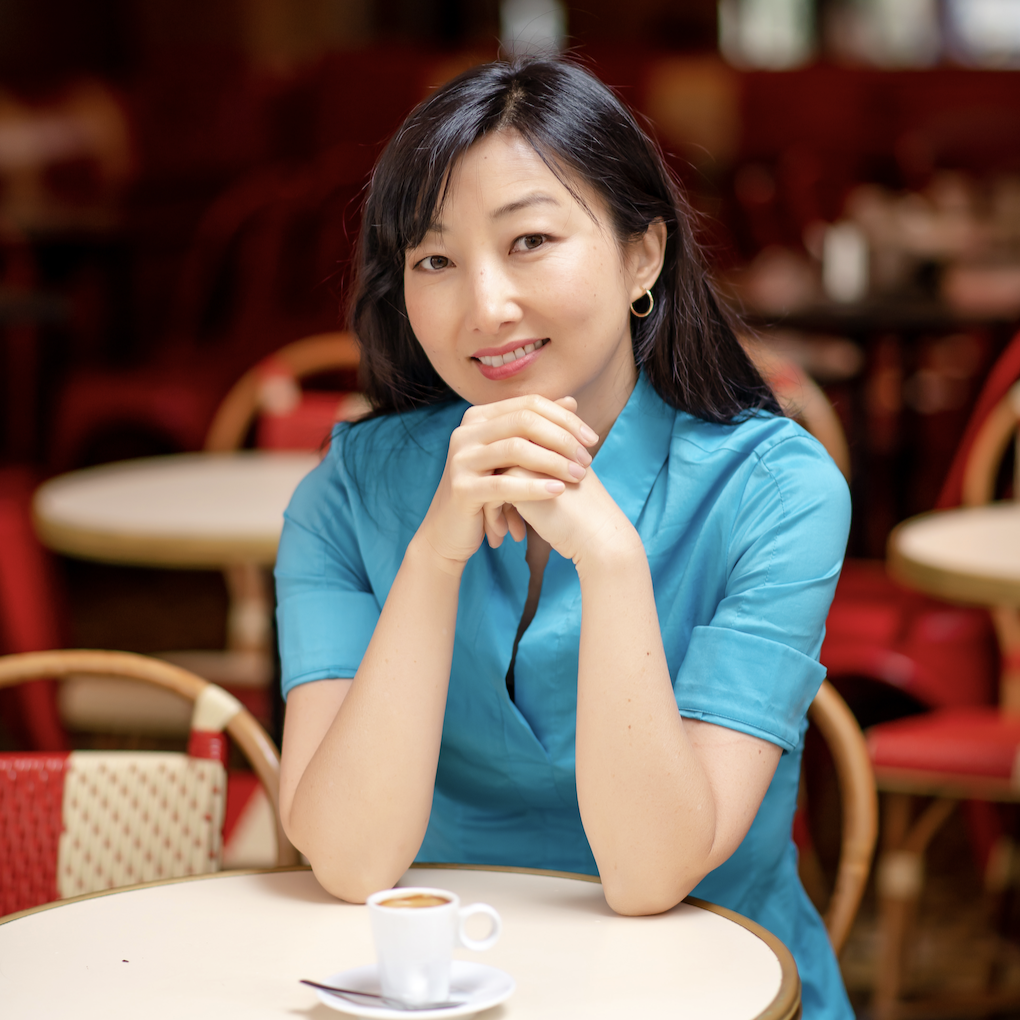
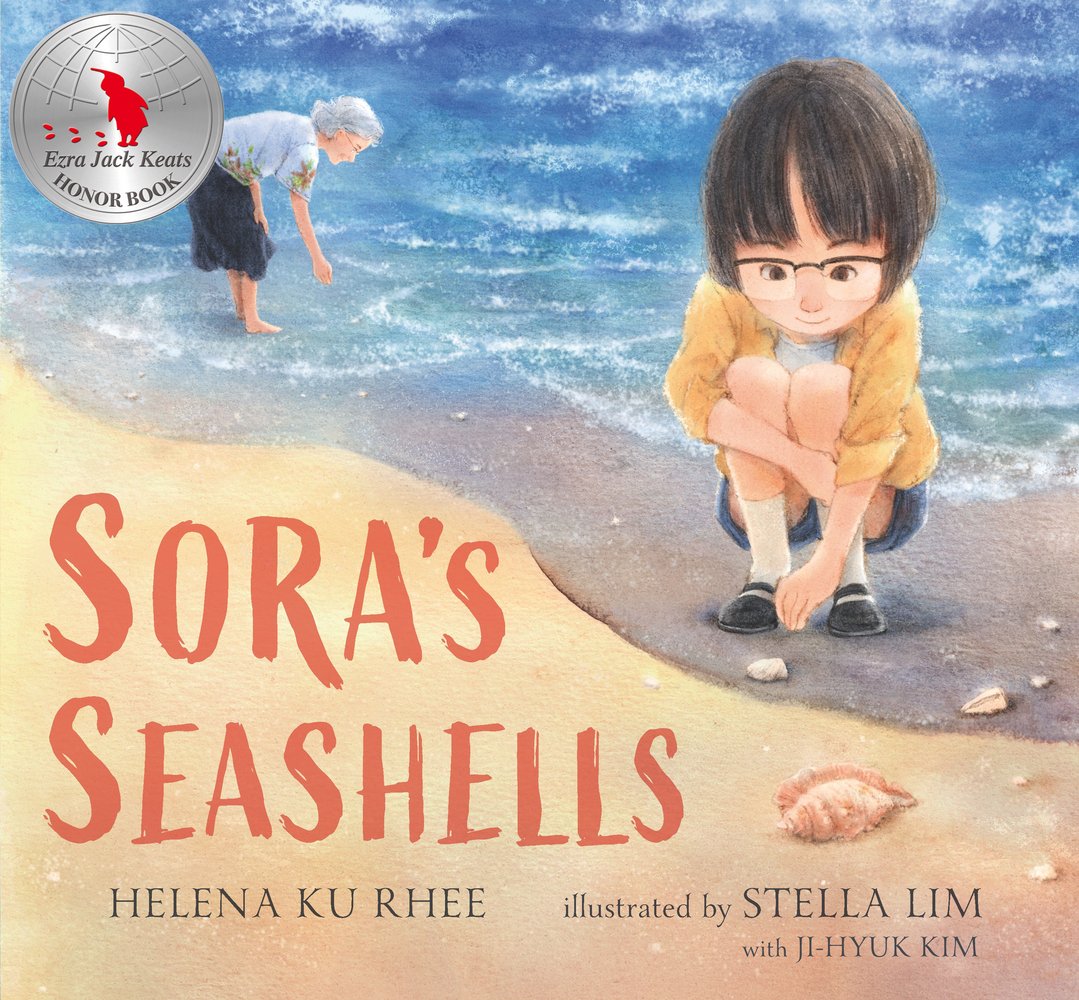
Helena Ku Rhee is an award-winning author of children’s books and an essayist for publications such as the Los Angeles Times and Salon. She received the 2024 Ezra Jack Keats Award Honor for her picture book, Sora’s Seashells. Her bestselling picture book, The Paper Kingdom, was on many year-end Best Books lists, including NPR, BookPage, Kirkus, Parents magazine, and the Los Angeles Public Library, among others, and was featured on Good Morning America, Entertainment Weekly, and ABC-TV. Her other titles include Rosa’s Song, The Turtle Ship, and her forthcoming Shoes Off, Please (June 2025). Helena draws story ideas from her travels as well as her childhood, and she loves speaking with audiences about the power of imagination and creativity. She currently lives in her hometown of Los Angeles, CA.
Susan Yoon
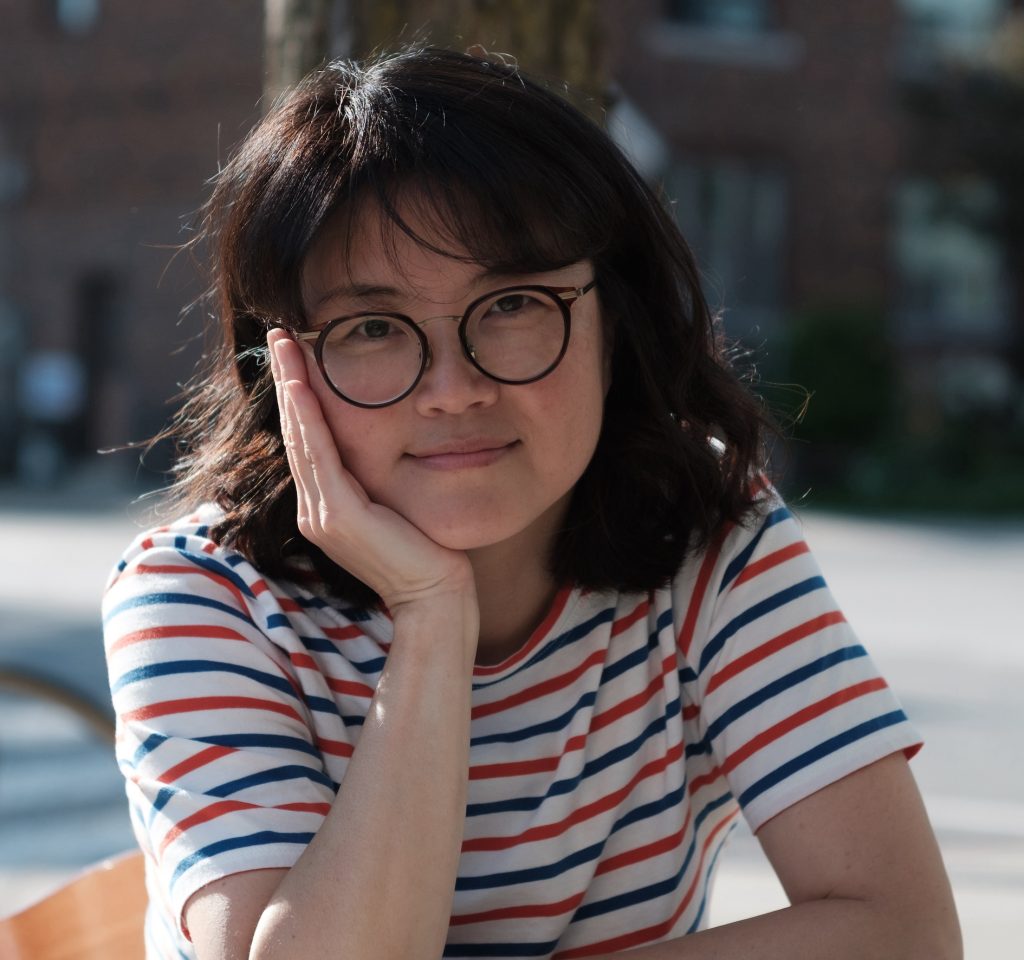
Susan Yoon is a children’s writer who draws inspiration from her family and friends, as well as small creatures and life’s quirky details. She is the author of Waiting for Tomorrow and Gwendolyn and the Light, and her essays have appeared in The Globe and Mail and The New York Times. She currently lives in Toronto.
The Interview
1. What dreams and desires led you to become a storyteller for the next generation?
Aram: I have always loved stories. Although I didn’t start off dreaming of being a storyteller for the next generation, my favorite medium to tell stories happened to be picture books because I love both writing and creating art — and picture books are the perfect combination of the two! Only after I started making picture books [did] I also learn about myself that I love[d] my audience of young children!
Without fully realizing it, every decision I made brought me closer to becoming a children’s book author/illustrator. I feel honored that the stories I create can impact the next generation and I take that responsibility seriously. Picture books serve as gateways for kids to learn about the world around them, about themselves, and others. Most importantly, picture books are fun! There is so much to enjoy — stories read to them, the details they discover in the illustrations every time they revisit a page, and the comforting familiarity of repeatedly returning to their favorite stories.
Although my passion is picture books, my appreciation for good stories extends across various genres, including television, movies, comics, and other art forms. Anyone who loves good stories has the potential to be a great storyteller.

Ellen: I had never thought I would be a writer until I had children and went looking for Asian American books to fill their bookshelves with. And while I was happy to see Linda Sue Park, Lisa Yee, and Grace Lin, there were far too few books. So I decided to write the stories I wished I’d had when I was young.
Susie: I’ve always been a reader and compulsive scribbler, so a life without drawing or storytelling was never an option. My family still holds a grudge over all the times I forced them to read The Ugly Duckling when I was an illiterate gremlin of a toddler (they eventually, conveniently, “lost” that book). Decades later I got to write and illustrate my own version of the story with Odd Duck Out. Dear family: not only can I read on my own now, but I can write my own stories.
Helena: A book is a lonely child’s best friend, so I’ve always loved books and stories. My childhood dream was to be a writer, probably to reach out to and inspire kids like me, who yearned for a big life full of adventure. But growing up in a working-class household, the overwhelming message was that I had to do something very practical with my life. After majoring in English during college, I went to law school to become a corporate lawyer. So practical, right? I worked both at a firm and in-house for a while, but I never let go of my dream of being a writer. I love the transportive effect of a good story, how you can be swept into another person’s life and another world altogether, so I kept writing even while working full-time as a lawyer. Sometimes, it felt like I had to write to breathe.
Susan: This is going to be a boring answer, but I think for me it’s more about self-expression and connecting with kids through that self-expression. I don’t feel like I have a grand message or mission, but to speak to the kid in me in the hopes that it will speak to other kids.
2. What threads of Korean heritage weave through your work, from art and characters to the stories you tell?
Aram: All the main characters in my stories are of Korean heritage and live outside of Korea, whether they are in cat forms (as seen in the Yoomi, Family, and Friends series) or human forms (as in Tomorrow Is New Year’s Day). Each story features a distinctive Korean element, such as kimchi, taekwondo, Koreatown, or Seollal, the Korean Lunar New Year celebration. However, the narratives I create through these specific elements are universal.
For example, the story about kimchi (No Kimchi for Me!) explores sibling relationships and intergenerational living, and many readers also view it as a story about picky eaters. In the tale where the main character struggles during taekwondo lessons (Let’s Go to Taekwondo!), the focus is on universal feelings of fear and bravery, as well as the concept of lifelong learning. I enjoy writing stories that reflect my personal experience as a Korean living outside of Korea while also conveying themes that resonate with everyone, as we are all human, regardless of our backgrounds.
Ellen: What started me on this journey was researching Korean history and being utterly fascinated by it. My very first book, Prophecy was the first of a Korean YA fantasy trilogy published in the US in 2013, before all the K-drama interest. It was clearly before its time.

Susie: My first picture book, Soomi’s Sweater, features a Korean protagonist; her heritage is never explicitly stated because I never wanted that to be the focus of the story, but it’s in her depiction and name. I’ve been told my stylization of cuteness is distinctly Korean. It must be all the Dooly the Little Dinosaur I watched as a kid. I also think folk artist Park Soo-Keun’s work heavily informs the nature-inspired textures and warm family interactions I love to draw. He hails from my hometown, and exposure to his drawings left a lasting impression.
Helena: Since many of my stories are based on my childhood, my heritage plays a large part in shaping my characters and their respective journeys, even at a subconscious level. But to be honest, while I think representation is critical, my primary goal is to tell a good story that readers will be eager to experience from start to finish. And if readers can take away some cultural understanding or if they can identify with any of my characters, then I feel like the story has achieved the richness I aim to capture. This was actually top-of-mind as I wrote The Paper Kingdom, a story about how I had to go to work with my parents during the years they worked as night janitors. Instead of a miserable time, I often had a wonderful time, thanks to the power of imagination.
And while my heritage isn’t front-and-center in the narrative (nor are the illustrations culturally specific), some readers have interpreted the story to be an immigrant’s tale. Other readers, however, have read the story to be mainly about socioeconomic class. But I absolutely love the way kids view the book: as a story about a boy going on a cool adventure with his parents in an empty office building. That boy could be any boy in the world, not just a Korean American one.
Susan: My first book, Waiting for Tomorrow, has obvious connections to my Korean heritage. It’s about two Korean sisters attempting to make a special surprise for their dad while they wait for him to return after he’s been away for a long time. It’s actually based on a real experience between me and my older sister as kids, and it has a lot of personal details from my childhood. In my second book, Gwendolyn and the Light, there isn’t an obvious link — it’s about a nocturnal creature that goes in search of the sun thinking they could be friends. It takes place in a forest and then at sea and there aren’t any recognizable Korean objects or characters.
But someone recently said that my stories have a warmth about them, and I wondered if it’s something ingrained in me through growing up Korean. In Korean culture, there is something called jeong, which doesn’t have a direct English translation but often described as a combination of affection, attachment, and sympathy — a specific kind of bond between people, places, and sometimes even things. And I wonder if that idea, or value, is a key part of all my writing, maybe manifesting as warmth.
3. Why do you think it’s so important for young readers to have Korean and Korean American representation in their books and media?
,Aram: It is important to represent all cultures and heritages in books and media because they have the power to give voice to diverse communities. When a culture is authentically depicted in media that is accessible to the public, it empowers both the culture and its people. When I created No Kimchi for Me!, my hope was for young children of Korean heritage growing up in the United States (or any other country outside of Korea) to see their culture reflected in the fun storybooks they can easily find in their classrooms and libraries. I wanted the book to be fun so that they enjoy it for a story while feeling connected to its familiar elements. I wanted the book to be casually placed alongside others, easy to pull out and read with friends.
I envisioned the kid pointing at a page and saying, “Oh yeah, I eat kimchi, too!” to a friend who may not know what kimchi is. This could spark curiosity and encourage other kids to try kimchi and learn more about their friend’s cultural heritage! But for children to do that, the story itself has to be fun. I want young kids to view Korean culture in the books around them as a normal part of their lives. When books with Korean themes receive recognition because they are well-crafted, not just because they feature Korean themes, we can be confident that we are making progress in Korean and Korean American representation.
Ellen: I think it is particularly important now with the rise of K-pop and K-drama that has exotified all things Korean in not necessarily good ways. Non-Koreans seem to have an expectation of Koreans that is not based in reality but on the very cultivated, manufactured ideals set by the Korean entertainment industry. Books written by Korean and Korean Americans will keep our stories more grounded in truth because they are our lived experiences. Korean culture, history, and its people have both good and bad aspects and should not be lionized or demonized due to unrealistic standards that have been spread out into the world.
Susie: I want young Korean American readers to see themselves in fully realized characters; I want them to see themselves as main characters who are empowered, humanized, and heard. I once had a student who loved drawing her own fairy tales, but this Chinese American third grader who’d grown up in Chinatown always drew characters with blond hair and blue eyes, emulating what she saw in books and cartoons. Young readers suffer psychic wounds when media from an early age both perpetuates the image of a “default” human and sidelines everyone else as an “other” defined by their race or ethnicity.
Helena: I’ll answer this question with an anecdote. A reader recently e-mailed me about reading my book, Sora’s Seashells, with her young daughter. She wrote that her daughter was amazed because her name is also Sora, and just like my character, she was a bit ashamed of her unique-sounding name at first, especially when bullies at school teased her about it. But by the end of the story, Sora (both my character and the real-life Sora) learned to stand up for her name and to feel proud about it. In my story, Sora learns that her name means “seashell” in Korean and that her grandmother had named her Sora because finding a perfect shell at the beach is like receiving a wonderful gift. Sora understood that she was named after a treasure from nature. As a writer, it’s so gratifying to know that your stories and characters have touched someone’s soul, and have quite possibly impacted the way they view themselves and/or the world.
Susan: Seeing ourselves and being curious about others in the books and media we consume are important. I think it’s natural to gravitate towards books that validate our own experiences of who we are, and it’s crucial that young Korean American readers have their experiences reflected back. It also gives non-Koreans a chance to read about experiences that are not their own. It’s tricky though, because, of course, each Korean or Korean-American child’s experience of their Korean-ness is different too. And representation goes beyond having Korean artists creating pre-defined Korean stories. It’s ultimately about having the freedom to tell stories that are authentic to who we are. And the more diverse stories — of all kinds — we have out there, the more we can do that.
4. What are your thoughts on non-AAPI authors, particularly white authors, writing about the AAPI experience or using an AAPI protagonist in their stories?
Aram: I believe that authors have the right to write about what they want to write about and what they feel strongly about. It is also the author’s responsibility to do justice for their subject matters by thoroughly knowing, understanding, and respecting what they write about. If the writer doesn’t fully understand the topics they are writing about, their stories often fall flat, representations become distorted, and characters can be stereotyped.
This not only harms others but also results in poor storytelling. So, it’s the author’s responsibility to know, research, learn, and represent with accuracy and respect. Also, every writer should examine why they feel compelled to tell a particular story. Ask questions like, “Am I the one to tell that story?” and “Am I the best one to tell that story?” When writing outside of their own lived experiences — especially when dealing with cultural heritage — writers should hold themselves to an even higher standard in answering these questions. In the end, I don’t believe that one cannot write beyond their cultural background. Good stories are good stories, and bad stories are bad stories, regardless of the author’s background.
Ellen: It can be deeply problematic and cause harm unless it is done with a serious amount of research and respect. I’m all for including diversity in stories, but there’s a difference between having diverse characters in your story cast and telling the marginalized experience of a racial and cultural experience that is not yours.
Susie: Every year a publisher has to apologetically fridge a book that, despite the author’s best intentions, offended an already marginalized group with whitewashed history or racist tropes. So, as a general rule: don’t. Let us tell our own stories and own our lived experiences. There are exceptions: you’re writing an ensemble cast like The Baby-sitters Club in which representation matters, or you’ve collaborated closely with (and credited) cultural consultants.
Helena: I admire writers who can represent all types of characters and experiences with accuracy, sensitivity, and mindfulness. Of course, there’s an authentic quality when someone writes about their own lived experience and cultural background. But I do believe that the job of a writer is to exercise empathy and to be able to enter the minds and hearts of their characters, no matter what their characters’ background. That said, sensitivity readers are absolutely critical. For instance, I was once asked to be a sensitivity reader for a screenplay that featured a couple of AAPI characters. The screenwriter, though not a member of the AAPI community herself, had tried to reflect the characters in a realistic way.
However, there were some unconscious biases that surfaced in several scenes, and I had to point them out — certain characters spoke with thick accents or exhibited mastery of martial arts. These easy/lazy stereotypes about Asian characters still come out in mainstream content all over the place, and I’m so tired of it. But I believe that skillful, thoughtful writers should have the freedom to explore all types of experiences and all walks of life, without being hemmed in by their own specific background. I often tell students during author visits that the imagination is one of the greatest tools in a writer’s toolkit, along with empathy.
Susan: I think it’s important to write characters and about experiences that are outside of our own. There is value in learning and leaning into aspects of cultures that are different from the ones you come from. It can engender understanding and empathy. But it hinges on people doing the research and taking responsibility for the stories they are putting out there. I think it’s great that people are taking an interest and finding creativity in Asian cultures. But writing about other people’s cultural identities and cultural experiences, especially ones that aren’t well represented, or with a historically problematic representation, comes with a huge responsibility and there has to be due diligence and accountability.
5. As children’s publishing undergoes a noticeable shift towards diversifying both what and who it publishes, what do you see as the next crucial steps in fostering authentic and inclusive representation in storytelling? How can the industry deepen its commitment to diversity beyond surface-level changes?
Aram: Many Asian authors have faced rejection letters stating that their stories are “too Asian” in the past, or “not Asian enough” in the present. A true step toward diversifying publishing and storytelling will occur when authors from diverse backgrounds are evaluated solely by their works rather than by their cultural representations.
Moreover, authors from marginalized groups, especially those just beginning to be published, should be given second, third, and fourth chances to fail and learn. Unfortunately, the opportunity to fail and grow is a privilege that many marginalized authors do not enjoy. Often, the expectations for new authors from underrepresented groups are set higher. When their work or sales do not meet these elevated standards, they seldom receive a second chance, in contrast to their white counterparts, who may have published numerous mediocre works yet continue to receive opportunities. Everyone deserves the chance to fail and grow. This approach will lead to genuine diversification in storytelling and publishing at a deeper level.
Ellen: Before we can answer this question, we really need to address the current book-banning crisis happening in the US. As a founding member of We Need Diverse Books, it has been very clear that our success has directly led to the rise of book bans targeting marginalized creators. And particularly in children’s literature, without access to schools, we will lose all the progress that we have made these past 10 years. This fight is against racism, bigotry, and hate. Pen America charted over 10,000 book bans over the past two years. My book Finding Junie Kim which is about my parents’ experiences as children during the Korean War, was challenged and banned. When we ban historical fiction, we become no different than authoritarian regimes that rewrite their history and hide the ugly truth of their past actions. It is incredibly dangerous. We all need to be alarmed by what is happening and raise our voices against book bans.
Susie: The publishing industry has to commit to inclusivity on all levels; diversify acquisitions teams and marketing boards, and hire sensitivity readers! I’ll never understand how Cho Changs and Master Wongs get past the first draft, past editors’ eyes, and end up in print before dumbfounded readers like me. I’d also like to see a broad range of stories; it’s lovely to have books and films that celebrate our varied cultural backgrounds, but it’s also nice to have a character like Russell in Pixar’s Up who’s visibly Asian-American but whose story has nothing to do with his heritage.
Helena: I really think we need to feature diverse characters in myriad stories, not just in culturally specific ones. We need to normalize diversity in all types of content, whether books, films, or shows. For instance, take the sitcom Friends (I’m referring to this older show since most adults have seen it, unlike the gazillion shows that are produced today, many of which I haven’t seen!). Why couldn’t one (or two or three) of the main characters have been someone from a minority group? The show doesn’t have to be about Asian food or martial arts just because there’s an Asian character featured in it. That’s why I absolutely love movies, shows, books about diverse characters just living normal life, as we all do. New Girl is one of my favorite TV sitcoms for this very reason. The episodes featuring Korean American actress Greta Lee cracked me up. She’s so great.
Susan: I’m no expert in publishing and I don’t really keep a handle on who’s publishing what, but I think generally speaking there could be more books from BIPOC authors and artists not specifically about their culture in question. Giving BIPOC creators the freedom to tell the stories that are authentic to them. I think that’s also an important aspect of having representation in publishing.

Bonus Questions!
What is your favorite children’s book that isn’t yours, and why?
Aram: Saturday is Swimming Day by Hyewon Yum. It transports me back to my childhood, evoking emotions I felt so vividly as a kid. Yum beautifully and effortlessly captures the universal experience of feeling anxious when you’re reluctant to do something or stressed about an upcoming event, especially as a child who feels compelled to go along with what you’re told. I have always been amazed by Yum’s incredible ability to authentically and honestly express children’s emotions and perspectives. The stomachache that comes with nervousness but remains unspoken — who hasn’t experienced that? The way the main character’s body language and facial expressions evolve in the locker room, at the edge of the swimming pool, and later while swimming is incredibly relatable and extremely satisfying!
Ellen: I have far too many favorites for me to answer this question in a short paragraph. But I will answer it by saying my favorite book when I was young was A Wrinkle in Time.
Susie: Leo Lionni’s Frederick is an icon to all maladaptive daydreamers turned artists, and I still love Arnold Lobel’s Frog and Toad series (the older I get, the more I relate to Toad’s lack of impulse control and need for sleep). Maybe because I didn’t see myself or my close circle reflected in the books I had growing up in America, I gravitated towards stories starring animals.
Helena: OMG so many. I have a lot of friends who create picture books, so I won’t list them here (for fear of accidentally leaving someone out!). So, I’ll mention a middle-grade novel that made me cry: The One and Only Ivan by Katherine Applegate. That book has so much heart, humor, and lovely animals. I’m starting to tear up just thinking about the book and about the beautiful gorilla, Ivan. I’ve always loved mountain gorillas and read about the primatologist Dian Fossey when I was in high school. I hope to go on a gorilla trek in Uganda or Rwanda someday. Please support the Dian Fossey Gorilla Fund! And read The One and Only Ivan. Your heart will expand.
Susan: It’s really hard to pick a favorite but I think one of my favorites would be Pool by Jihyeon Lee, a Korean artist. It’s wordless and perfectly encapsulates the feeling of overwhelm as a kid and then finding that peace. I was a really shy kid and crowds really overwhelmed me, and that book gives me that visceral sense of chaos, and then the peace, and finding a secret world. A beautiful book.
What is your favorite reaction that a young fan has had to your work?
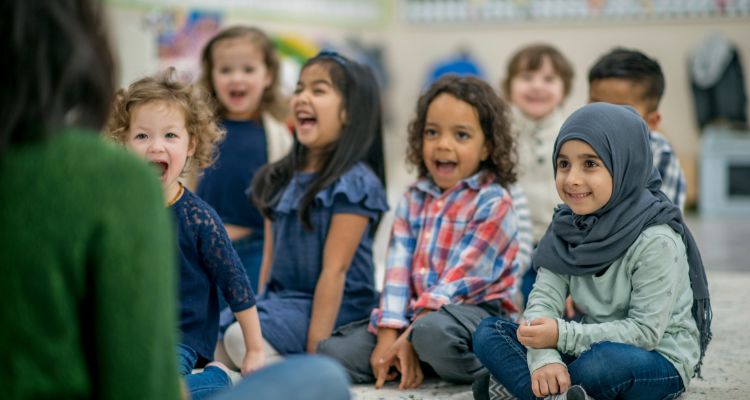
Aram: When I do storytime in bookstores or libraries, kids often sit a little far. They like to be closer to their caregivers. But as the story goes on, some kids move closer and closer. Sometimes, so close that it feels like they are about to climb and enter into the physical book. I absolutely love seeing this reaction. They are so immersed in the story, razor focusing on what’s going on, busily reading the pictures with their eyes while listening to the story. It gives me great satisfaction that I entertained this often difficult and brutally honest audience with good stories.
Ellen: Any reader who tells me that they have read and enjoyed my books are immediately my favorite reactions. But I do take great delight whenever I hear that a story of mine has moved someone to tears or scared them. Both [are] reactions that make me very happy.
Susie: A mother told me Soomi’s Sweater is her four-year-old son’s favorite book. She’s read it to him so many times that he can recite it from memory, and sometimes he babbles to Soomi as he falls asleep. I’m glad he’s found a friend in Soomi.
Helena: I was told that a young reader asked his parents if they could become night janitors so that he could go on office adventures like my character Daniel in The Paper Kingdom. I thought that was hilarious!!
An enormous thank you to Aram, Ellen, Susie, Helena, and Susan for taking the time to share their work and insights with us. The perspective of Korean American creators and characters offers so much to the world of children’s literature for readers of every background, and we’re grateful that these authors and illustrators are sharing it to further enrich the lives and minds of young readers.
Find Aram Kim here.
Find Ellen Oh here.
Find Susie Oh here.
Find Helena Ku Rhee here.
Find Susan Yoon here.
To read more about AAPI representation in children’s literature, check out our article on books celebrating the Lunar New Year.
To see all of our recommendations for mini bookworms, check out our Bookshop bookshelf.