

















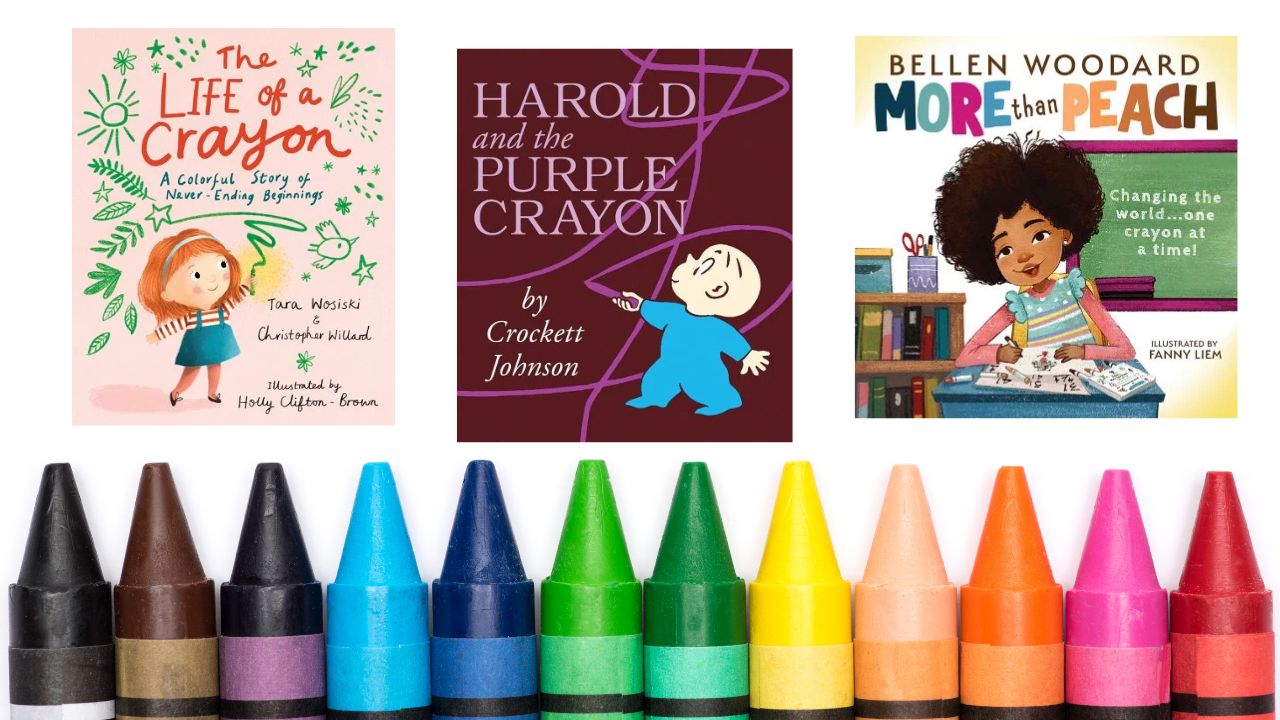
It is no secret that coloring books and a box of crayons are the source of a child’s joy. What is that? Their imaginations can run wild, imagining their favorite characters in different colors. They can color their world however they want to, and make it a beautiful masterpiece. At some point, whether at school or home, a child gets to use crayons and get creative because a black-and-white world is no fun!
When kids color using crayons, they can make mistakes and go back with another colorful vision. Their happy friends smiling up from the page are thanking these kids for bringing them to life. The early creative freedoms and visions that these kids have led us to give you seven children’s books about crayons!
Trigger Warning: There are mentions of mental health and racism. Please be careful while reading this article and consult your TWs before picking up these books.
Harold and the Purple Crayon by Crockett Johnson, Illustrated by Crockett Johnson
Did I mention that children can also world-build with crayons? For Harold in Harold and the Purple Crayon, he walks along a moonlit path at nighttime (don’t try this at home). However, Harold has a large purple crayon that he uses to draw landscapes with. His imagination runs wild as he travels with this huge purple crayon through woods and seas, while even encountering dragons! Somehow, Harold makes it back to his bed, all safe (no scratches from the dragons). Harold successfully finished his journey with the purple crayon.

Encouraging creative imagination with children is so important. While kids can’t truly make physical landscapes and worlds of their own with crayons, they can emulate this behavior in real life. While coloring landscapes and characters of different colors, their point of view flashes to life. Once their small world becomes bigger, they can start coloring their world with adventures of their own.
The Day the Crayons Quit by Drew Daywalt, Illustrated by Oliver Jeffers
What does a kid do when their crayons go on strike? In The Day the Crayons Quit, Duncan really wants to color, but his crayons are so sick of him using the same crayons for the same landscapes! The blue crayon is tired of being used to color water. The black crayon wants to be used for coloring, and not just outlining figures on the page. The orange and yellow crayons disagree — they believe they each are the true color of the sun! Duncan finds that he has to play mediator just to get the crayons back to doing what they do best.
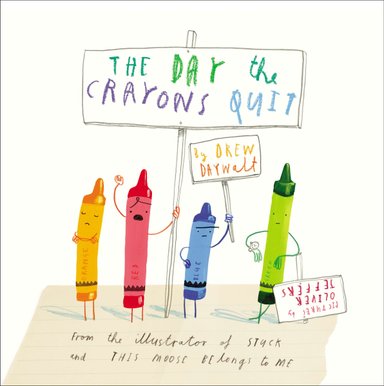
Exploring the other purposes of these crayons helps children expand their imaginations too. There is no one correct way to color, as long as you’re having fun! This book also teaches children about how social structures work, and how to solve problems. The crayons feuding teaches children how life might present some uncomfortable situations, but you can work through them one crayon at a time!
The Crayon Man: The True Story of the Invention of Crayola Crayons by Natascha Biebow, Illustrated by Steven Salerno
Let’s go back to where it all started: Crayola Crayon inventor Edwin Binney! In The Crayon Man, we learn the real-life story of how Edwin Binney set out to empower children to dream in colors. Now, we can’t imagine a world without crayons, but there was a time when children couldn’t draw in color. Edwin was inspired by the colors of nature and thought to bring all of those colors together. He decided what he would do was make crayons that came in a green box for only a nickel in that time period! While experimenting with colors and listening to what people said about the colors, Edwin collaborated with Crayola to bring crayons to children, so they never had to color or draw in black or gray anymore.
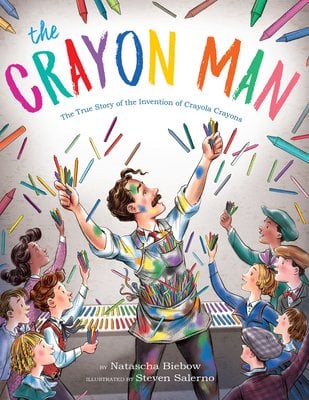
Crayola is an extremely well-known crayon company along with its other art supplies. It’s wonderful to look at the humble beginnings of how crayons were invented — with someone who cared about nature’s vivid colors to bring them to life! Edwin saw the world in its beautiful features which encouraged him to show children the beauty of colors the way that he saw them. This is an inventor that we will never forget!
Red: A Crayon’s Story by Michael Hall, Illustrated by Michael Hall
When people are told to do or be something that they aren’t, it can cause a lot of anxiety for those people. In fact, people who are told this work even harder to prove to others that they are right! This causes the victims to not be sure of themselves. In Red, we learn about a red crayon who has a label that says he’s red, but he’s actually blue. His teacher tells him to draw strawberries, but no matter what, he ends up drawing in blue.
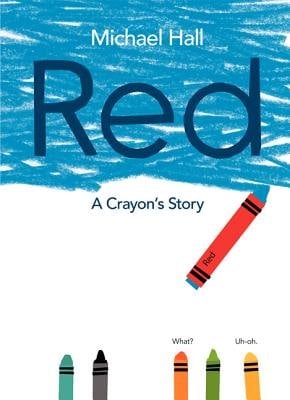
Red’s mother sets him up on a playdate with a yellow classmate to create the color orange, but it doesn’t work. The scissors feel bad for Red, so they snip at his label while trying to help him breathe. However, Red knows he isn’t red and feels terrible. However, when a new friend helps Red come to terms with his identity, he realizes that he has been blue all along.
We should never stuff people into boxes that they don’t belong to. In Red’s case, no one understood him, even when he drew in blue instead of red. This also helps open the conversations with kids about appreciating our differences and loving each other in validating who we are. The book teaches children about being secure in their individuality, and how powerful this is when difficult situations challenge this.
More Than Peach by Bellen Woodard, Illustrated by Fanny Liem
While kids are taught that the crayon color “peach” is the color of one’s skin, Bellen Woodard sat among her classmates and reset that narrative. As the first Crayon Activist, Bellen Woodard made sure to teach people that “skin can be any number of beautiful colors.” As a young black girl, she wanted people, including children, to know that skin colors came in various crayon shades, and not just “peach.”
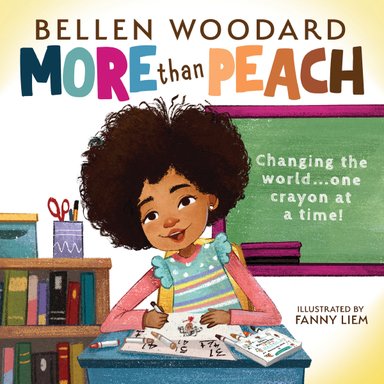
While talking about the empowerment of skin colors represented in crayon colors, Bellen kickstarted the “More Than Peach Project.” Her mission is to inspire the next generation of adults to grow into a diverse world, with a more diverse crayon industry. By teaching children leadership and holding space for various skin colors represented in crayons, Bellen has achieved what she wants children to achieve: self-confidence.
Representation is a power that children must be taught early in life. When they can see that skin colors are not just reflected in “peach” crayons, children can broaden their acceptance and appreciation of kids with different skin tones. By holding the crayon industry accountable, Bellen could also show how you can take control of past narratives and speak truth into our reality of diversity. Children will definitely be inspired by the lovely Bellen Woodard for years to come!
Creepy Crayon! by Aaron Reynolds, Illustrated by Peter Brown
Some kids really struggle in school, and that causes kids to cheat at times. That was the case for Jasper Rabbit. In Creepy Crayon, Jasper Rabbit is struggling on spelling tests and math quizzes. However, he sees a crayon lying in a gutter that is purple and brand new. The purple crayon was happy to be rescued and wanted to help Jasper Rabbit. This is too good to be true, though.
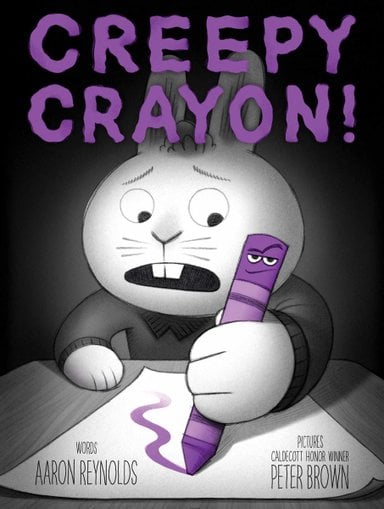
While Jasper uses this crayon on his spelling tests and math quizzes, he finds he’s doing fantastic. That’s only because the purple crayon is doing all the work for him! However, the crayon starts acting up and wants to be in every part of Jasper’s life. Jasper works to find a way to get rid of the crayon before it takes over, but that crayon will not leave.
It’s hard for children to come to the understanding that they need help. They need help voicing this, but the reality is that sometimes young kids cheat because they aren’t sure of what else to do. This book is good for teaching the consequences of a person’s actions through the purple crayon, while also focusing on learning to trust your abilities and seek help. We all make mistakes, but we need to open the way to asking for help when we need it too.
The Life of a Crayon: A Colorful Story of Never-Ending Beginnings by Christopher Willard and Tara Wosiski, Illustrated by Holly Clifton-Brown
We all become connected with a part of our youth that never goes away. This connection helps enhance our experiences throughout our lives far into adulthood. In The Life of a Crayon, we learn about a young girl who receives a box of crayons on her birthday and becomes drawn to the green crayon. The girl uses the green crayon to make art, projects, and greeting cards, which teach the green crayon skills and lessons that the girl also learns. The green crayon gives the young girl and others a purpose. In the worlds and emotions that are conveyed through the use of the green crayon, the girl learns how to love something that gives her so much joy.
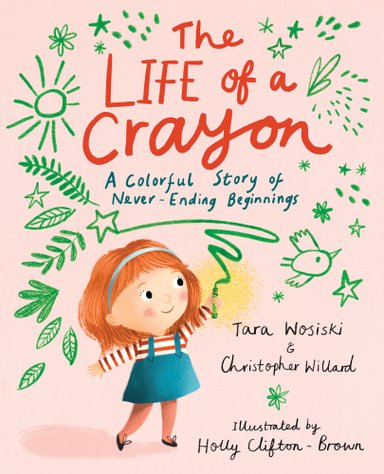
This book teaches children about creating lasting friendships by showing the connection between the girl and the green crayon. This is important as kids learn empathy and grow with challenges or change. Not only did the young girl learn important lessons and skills, but the green crayon did too. This shows how we can create a community of so much love and learning when we lean on each other. While youth may come and go, those lasting connections will never go away. They will always be a part of you throughout life.
We loved talking about these inspiring crayon stories with you! This is definitely going to make us run to the nearby craft store and pick up some crayons and coloring books. We will all continue inspiring change and connection, one color at a time.
Want to read about Keep it Colorful: Capturing Childlike Wonder with 5 Illustrators? Click here.
Read these books and more on our Mini Bookworms Delightful Recommendations bookshelf on Bookshop!
